

Standing in front of a rail of clothes, there are always those colours we love at a glance but put straight back without even trying on. Fuchsia is often one of them. That dense pink that slides towards purple carries a reputation as a "difficult" shade, as if you needed special permission to wear it. In reality, it is no harder to master than camel or brick red — it simply asks you to answer two questions: what to pair it with, and which fabric to choose. Once those are settled, the colour becomes a remarkably effective tool for waking up a slightly flat look.

What fuchsia does for your complexion
Fuchsia belongs to no calm family: too pink to pass as red, too red to melt into purples. This slightly awkward position is precisely its strength. Placed near the face, it creates a sharp contrast with skin, hair and eye colour — and it is that contrast that revives a tired complexion, whereas a more sensible powder pink tends to sit quietly beside the skin without adding anything.
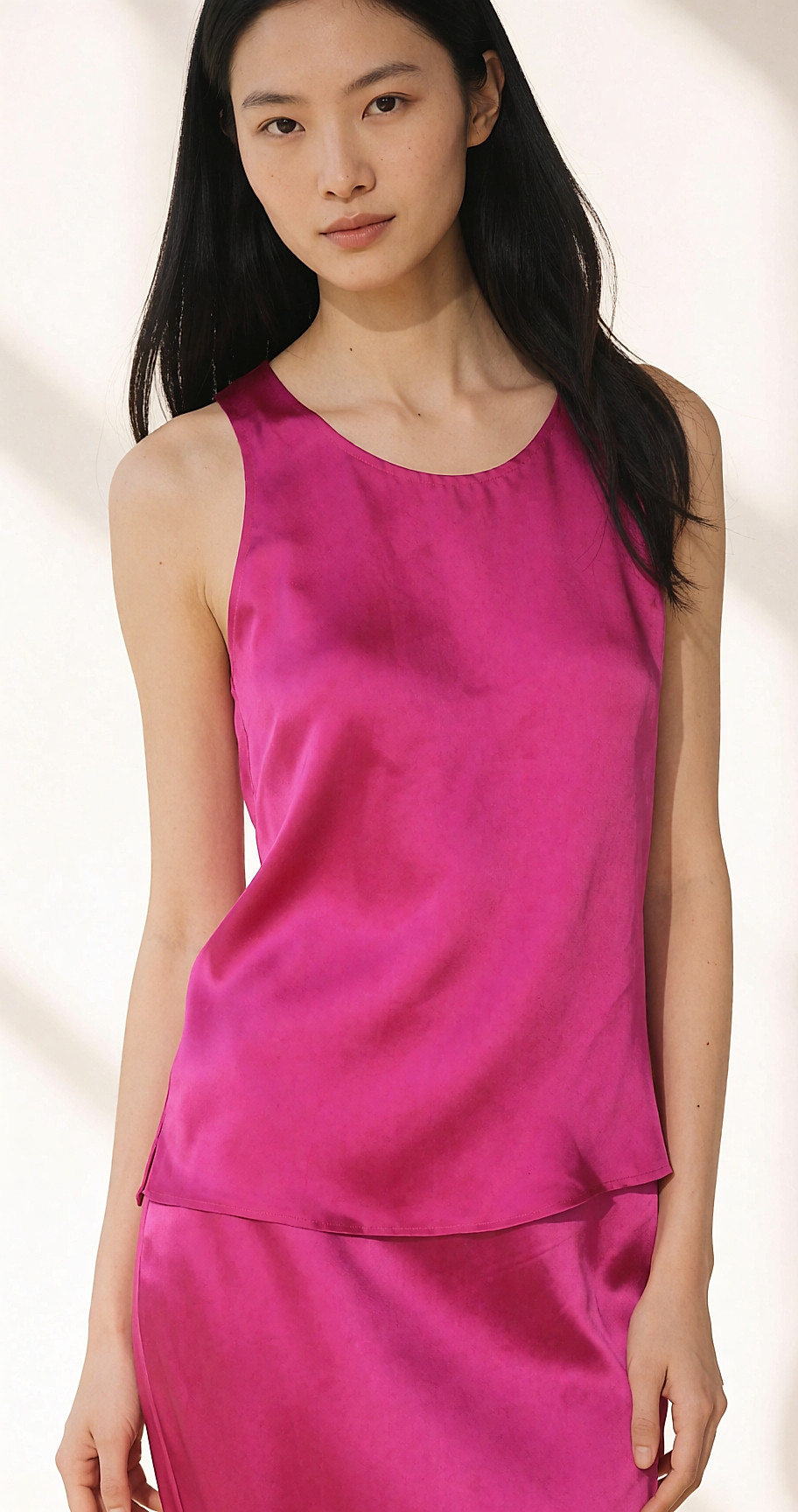
There is one more nuance worth knowing. On very fair skin, a very cool fuchsia, almost magenta, can emphasise a look of pallor. In that case, look for a slightly warmer shade leaning towards raspberry, or keep the piece away from your face: skirt, trousers, shoes. On olive or golden skin, you can go bold: the colour genuinely works for you and asks for no particular precautions.
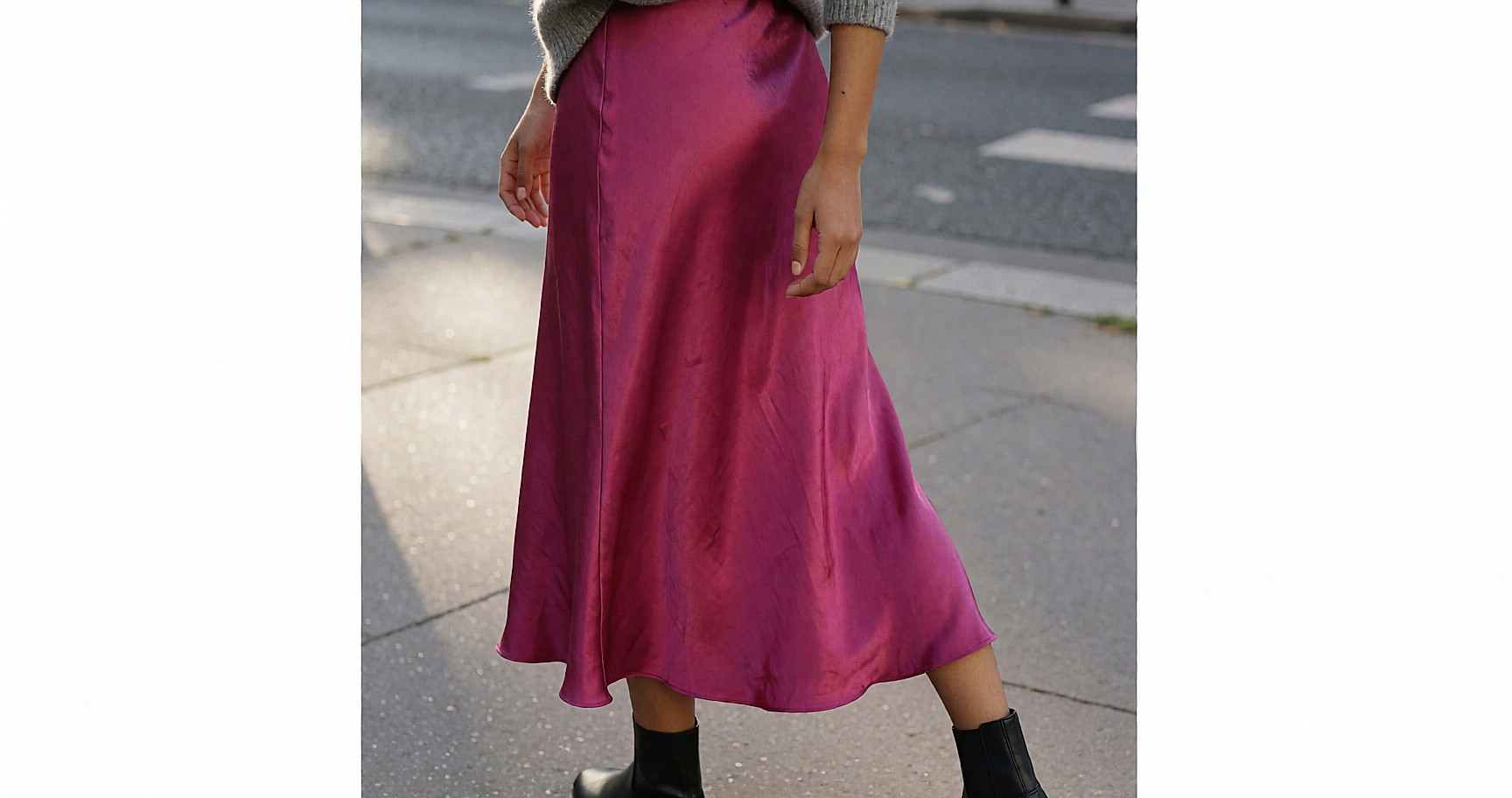
One statement piece, everything else dialled back
This is where failed attempts happen. The head-to-toe pink look, a legacy of the 1980s, stays in the wardrobe — unless it is a fully committed fancy-dress party. The rule that holds up: one statement piece in fuchsia, and everything else in neutral basics. A fuchsia knit over straight anthracite trousers, a fuchsia coat over black layering, a fuchsia satin skirt with a thick white T-shirt. The most obvious pairings are often the strongest: grey, black, off-white, navy. If you really want colours in conversation, echo it with a deep purple or a very pale pink — but not both at once.
Fabric weighs as much as shade in the final result. On satin, fuchsia catches the light and almost tips into neon; on bouclé wool or a heavy cotton, it softens and becomes everyday-wearable. The drape does the rest: a straight cut in a matte fabric gives a cleaner line than a fitted cut in something shiny.

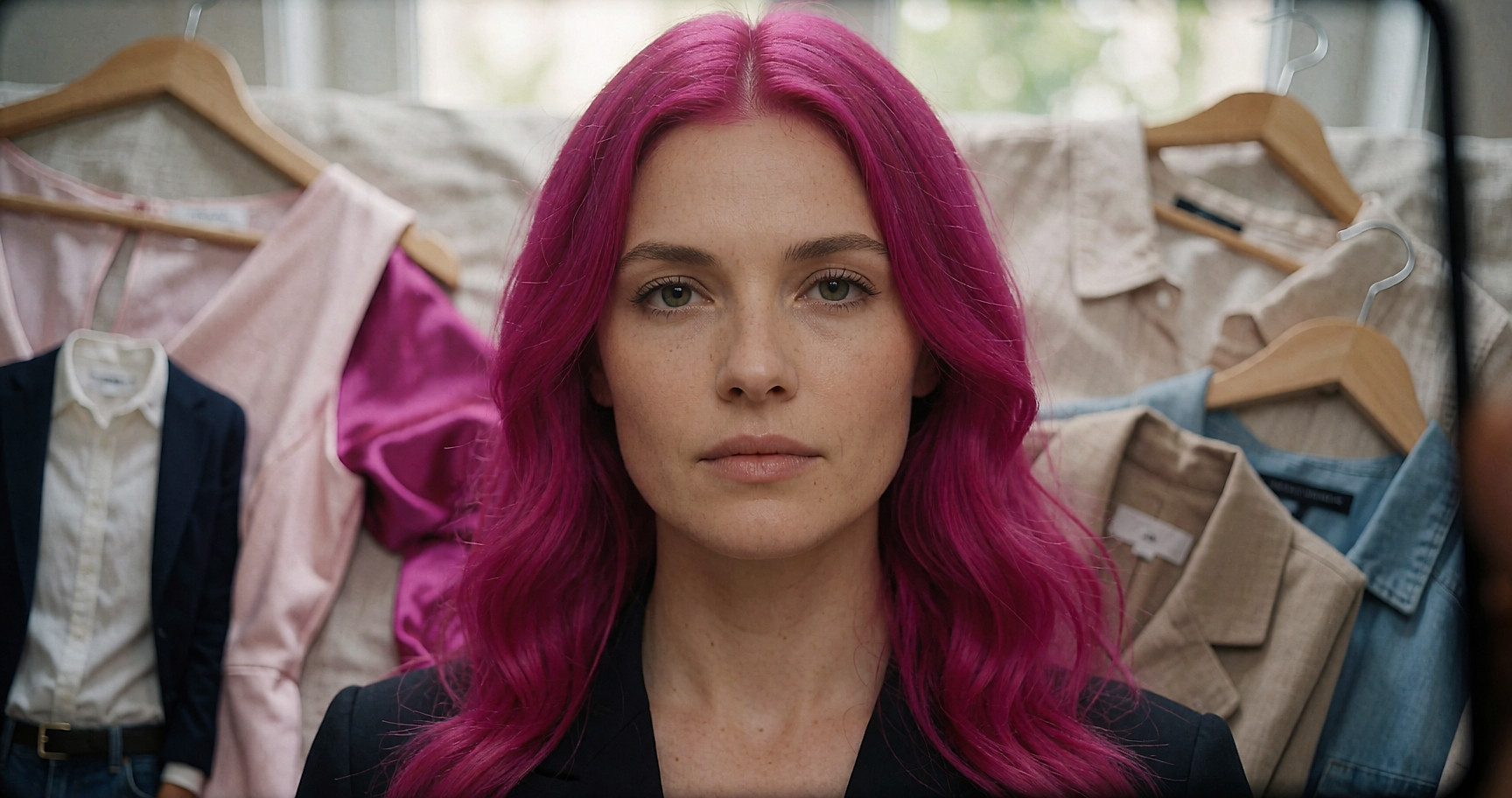
The window test: hold the fuchsia piece under your face, standing in front of a window, with no make-up. If dark circles and redness stand out more than the colour, save the piece for your lower half. If your complexion looks more even, it's a yes.
Make-up: start with the nails
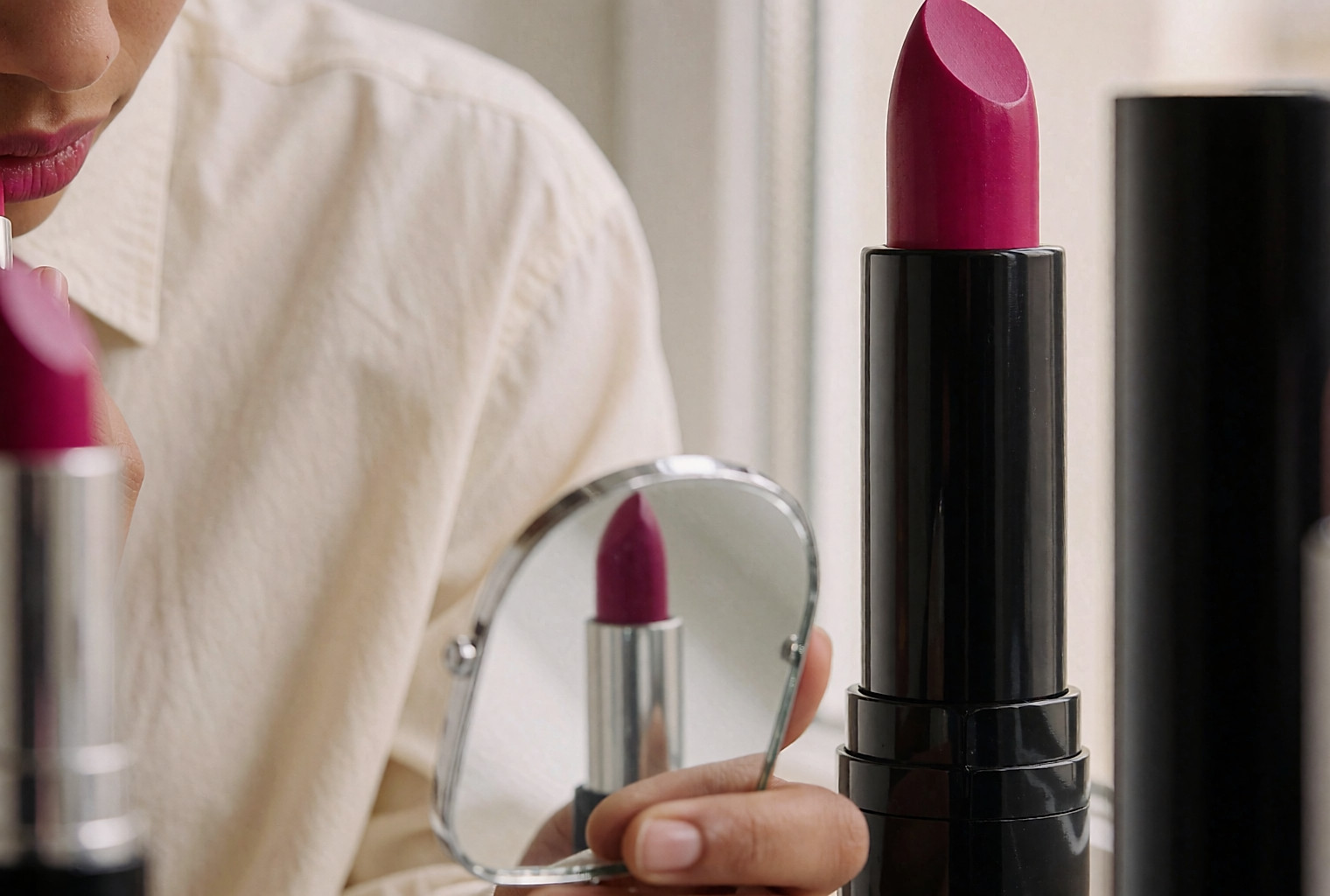
A fuchsia varnish on short, neatly filed nails is the least committing way to try the colour on yourself. Two thin coats hold better than one thick one. For lips, the exercise is trickier: a fuchsia lipstick demands a clean complexion and a precise line, otherwise the result quickly turns messy. Try it in store in daylight, never under strip lighting — that is exactly where colours lie. If it feels too harsh, a tinted balm in the same tones gives the same spirit more gently.

A small note on transparency: none of the products mentioned here were tested over time — we are talking about what you can see on the shelf and what brands document. On packaging, we favour what's refillable or skips unnecessary plastic: glass bottles, solid balms in cardboard cases, refillable lipsticks. Some organic brands carry labels such as COSMOS Organic or Ecocert, which set the rules around the share of organic ingredients and how they are processed. Conversely, a conventional long-wear lipstick is sometimes the only one to make it through an entire evening without touching up: that's a compromise to own, not a crime.

A piece that lasts longer than a season
Before heading to the till, take a look at the composition label and think about the piece's end of life. Three labels are worth a pause: GOTS, which sets rules on the share of organic fibres and how they are processed; OEKO-TEX Standard 100, which limits unwanted substances in the finished garment; GRS, which certifies the share of recycled material. None of them makes a piece eternal, but all give a verifiable baseline, which is already a lot. On care, washing at 30°C and air-drying extend the life of a fuchsia, which fades fast in the tumble dryer. And the day you tire of it, reselling it or dropping it at a textile collection point saves it from the bin bag.

Budget
Landmarks seen on the UK high street, to be taken as rough guides: expect around £5 to £12 for a nail polish in a supermarket or pharmacy, up to £20 for a niche brand; around £8 to £28 for a lipstick or tinted balm. For a scarf or a silk square, budget roughly £15 to £75 depending on the material. For a garment, from around £25 to £140 new, and more like £10 to £55 second-hand.
What moves the price: the material (wool, silk, organic cotton), where it was made, whether there is a certification label, the brand, and the timing of your purchase — pieces from the previous season drop notably at the end of the run. You'll find them in supermarkets, high-street fashion stores, pharmacies, on brand websites, in charity shops or on second-hand platforms.
Sources
- Pantone Color Institute — Pantone Color Institute, consulted in 2026.
- Fédération de la Haute Couture et de la Mode — Fédération de la Haute Couture et de la Mode, consulted in 2026.
- Refashion, French textile collection and recycling body — Refashion, consulted in 2026.
- Global Organic Textile Standard — GOTS, consulted in 2026.
- OEKO-TEX — OEKO-TEX, consulted in 2026.

Comments
Your opinion matters: rate the article, react and reply to comments.
Comments are moderated; AI-assisted comments are flagged. Text emoticons (8-), :-), <3…) are automatically shown as images.