
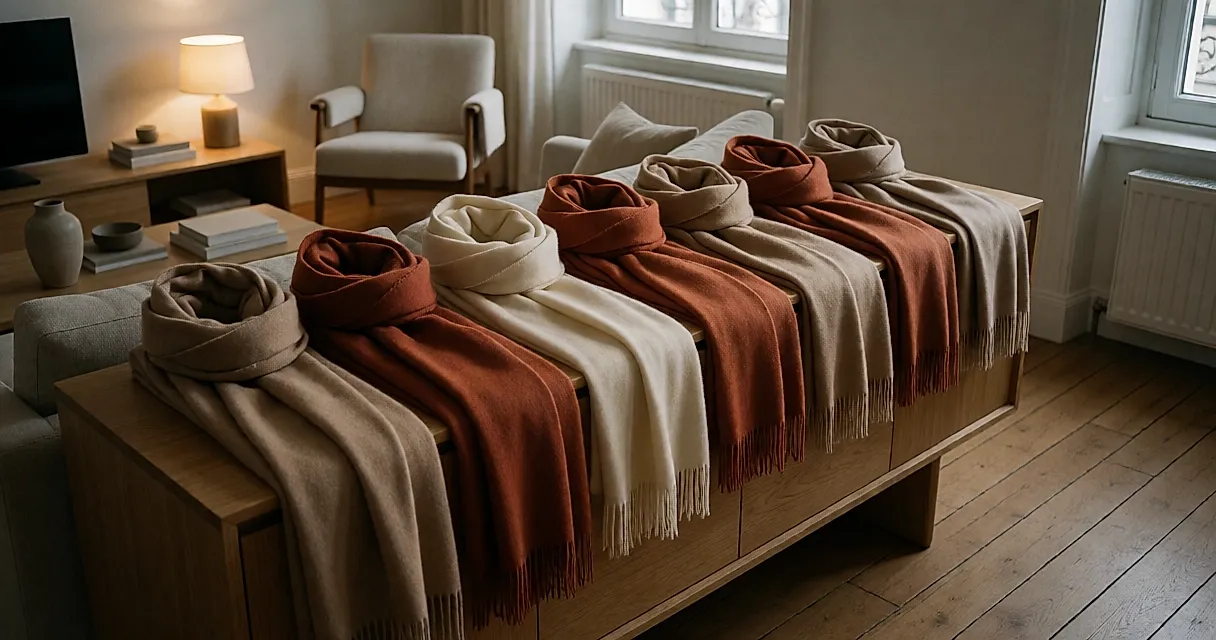
A label can read '100% cashmere' and still leave you frozen on a street corner. Conversely, a thick, tightly knitted wool scarf can get you to your evening Tube stop without a shiver. The word printed on the label doesn't tell the whole warmth story: the knit, the yarn and the dimensions decide.
What 'cashmere' promises, and what it doesn't tell you
Cashmere is the very fine down combed from beneath the outer coat of the cashmere goat. That fineness explains its softness and why it can feel warm for very little material — but it doesn't say how much material you actually have in your hands. Two scarves labelled 'cashmere' can be very different in thickness.
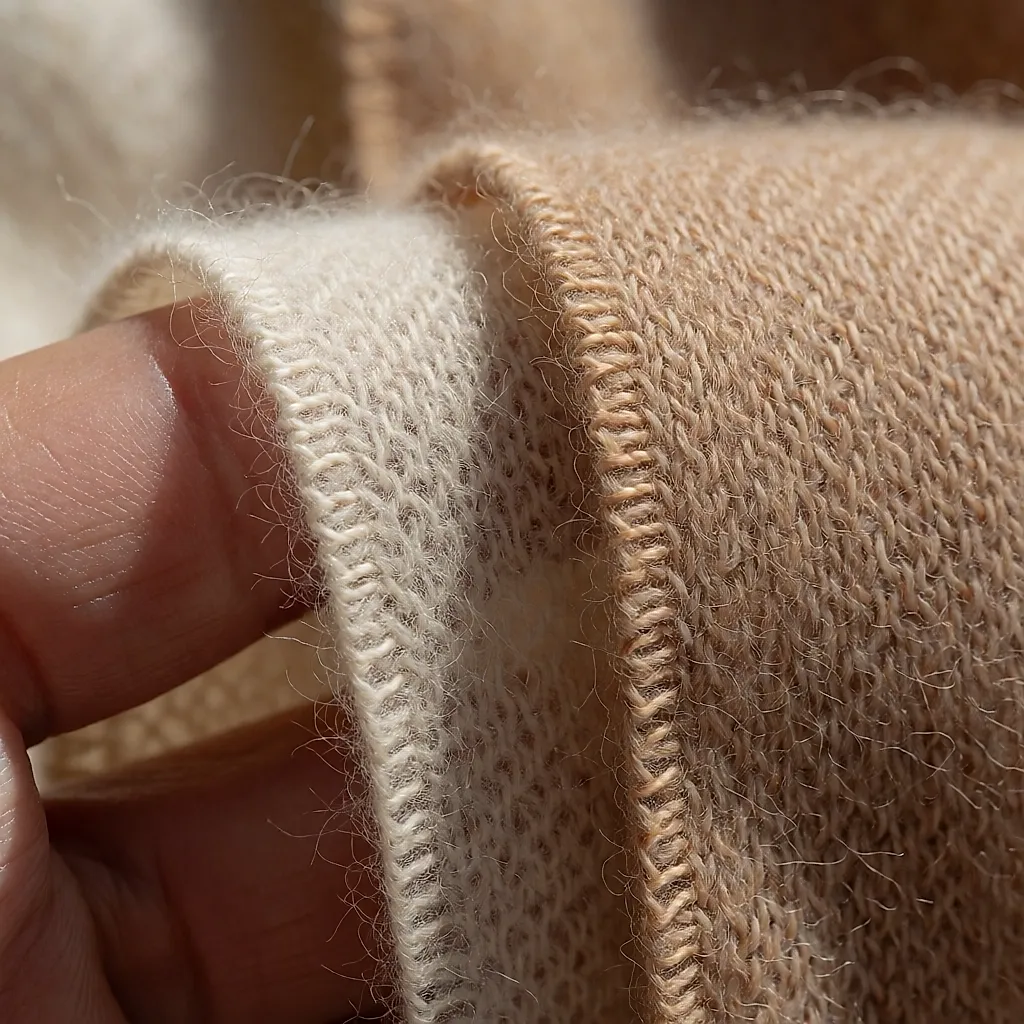
The first instinct in a shop is to read the whole composition and, above all, the exact percentage. A 10% cashmere / 90% wool blend has neither the feel nor the behaviour of a 100% cashmere one, and this is perfectly legal: the wording is allowed, it's just less forthcoming than the headline word printed large on the label. With wool, the same caution applies: 'wool' ranges from thick Shetland to very fine merino, and 'pure new wool' means new wool that has never been used — useful information, not a guarantee of warmth.
The knit: compare like with like
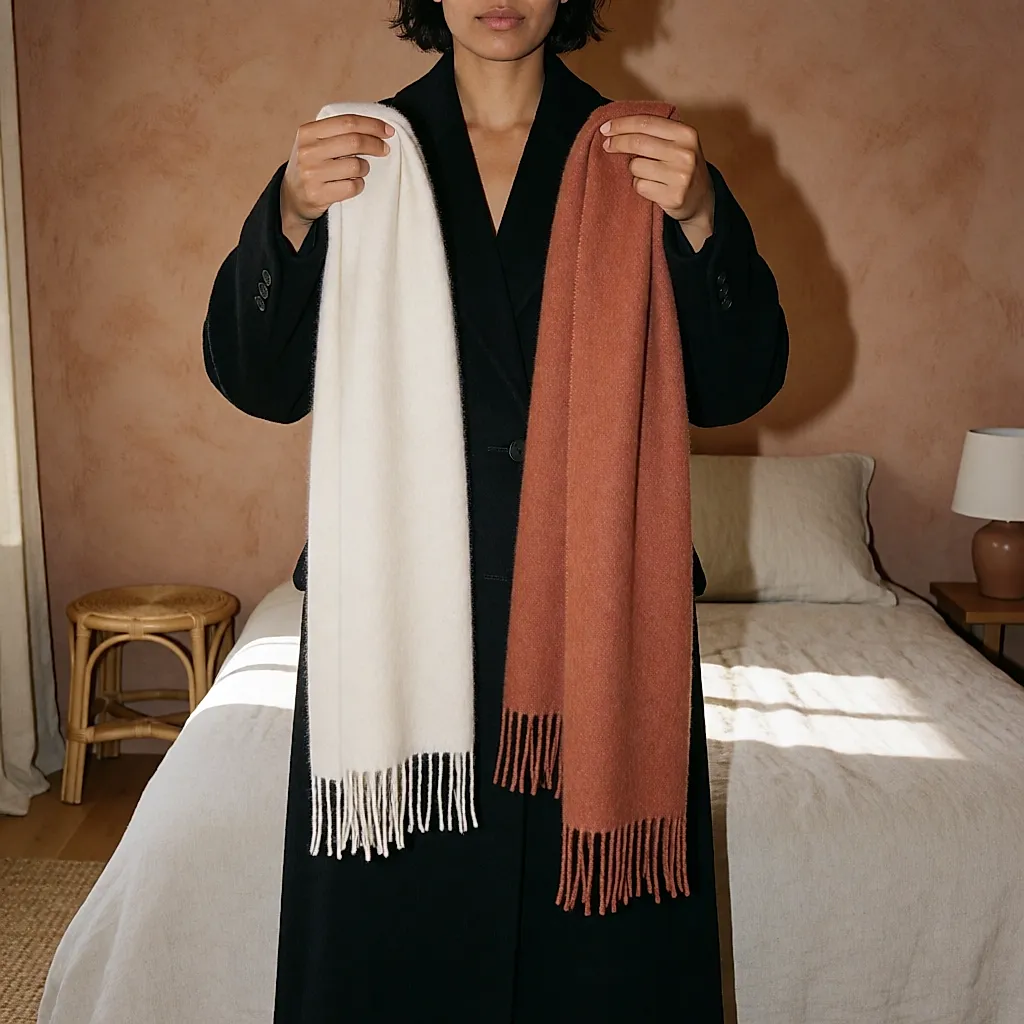
To judge a scarf, the word on the label isn't enough: you need to compare like with like. Take two styles of the same weight, same width and same stitch density — one in cashmere, one in wool — and you'll see that the difference isn't only down to the fibre. A tight or open knit changes the drape, the volume and the way the scarf wraps around your neck. The general principle is set out in our article from 1 November 2026, 'What keeps you warm under a jumper isn't thickness'.
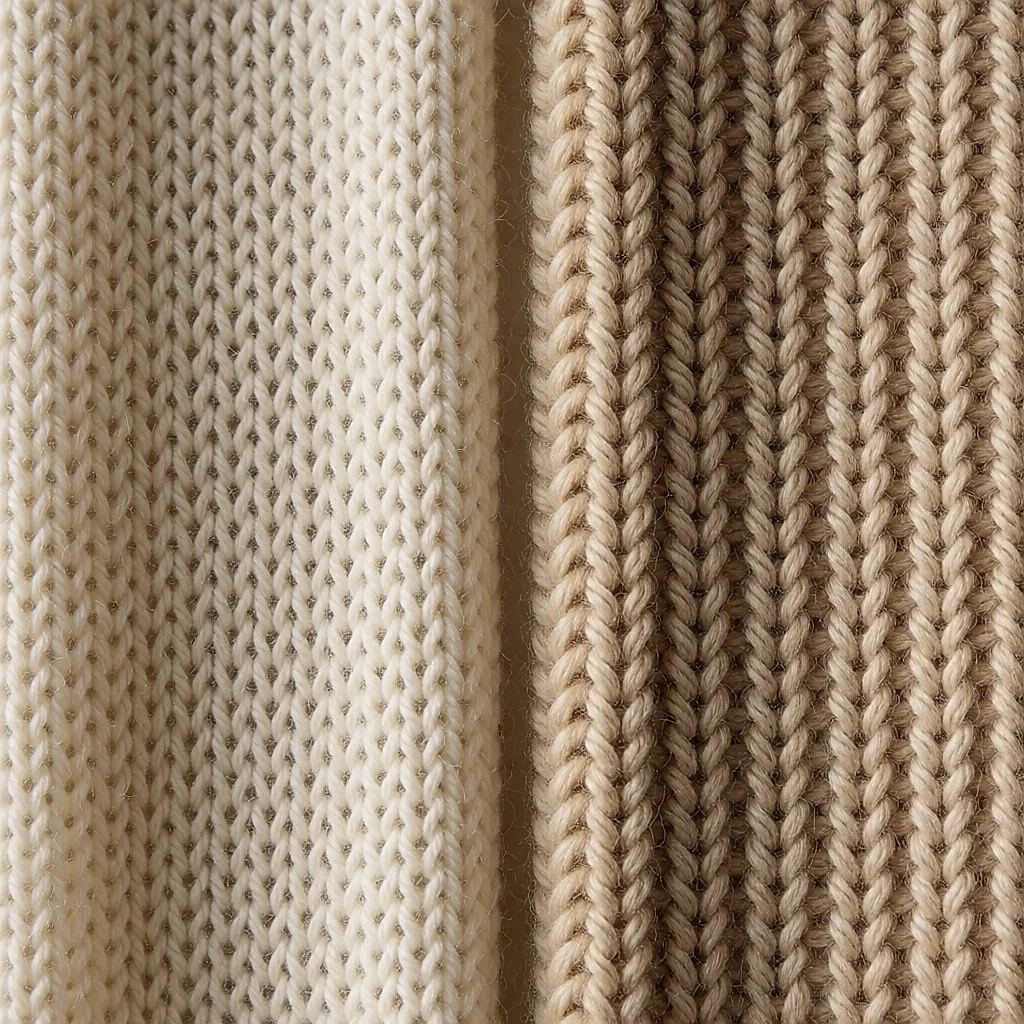
So look closely at the knit. A very fine, almost sheer stocking stitch is a veil of elegance, not a barrier. Tight ribbing, packed stitches and plied yarns (several strands twisted together) give you more material per square centimetre. In practice, a decent winter scarf often weighs at least 150 g — that's an editorial rule of thumb, not an official standard, but it helps you tell apart two styles that look similar on screen.
Dimensions do half the work
Here's the angle that is so often forgotten: a thin but wide scarf folds, wraps, tucks into a collar and creates layers around the neck. A thick but narrow scarf covers nothing. So ask yourself how you'll wear it before comparing weights.
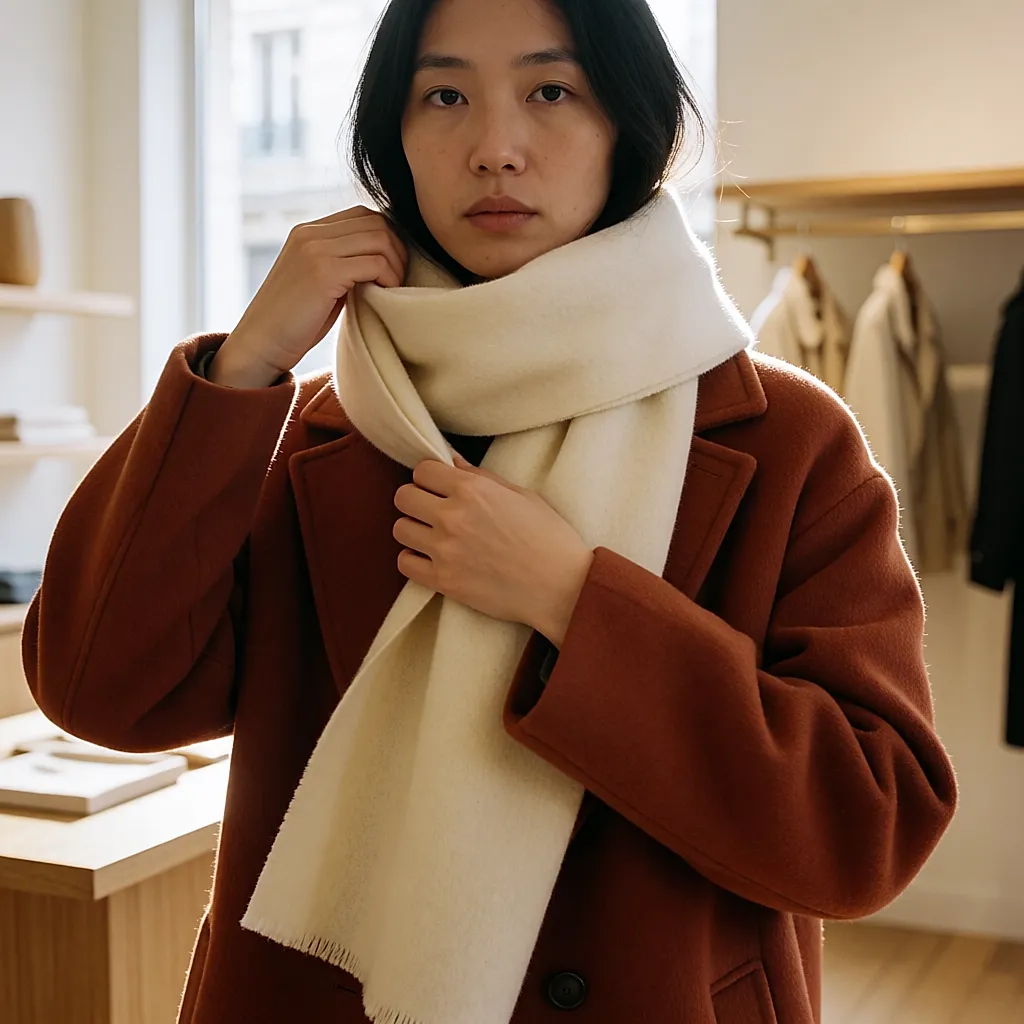
A large square folded into a triangle, a style 35 cm wide and 2 m long, a 70 cm stole: each creates a different volume. And it's that volume, more than the fibre, that makes the difference between 'lukewarm' and 'properly warm'. A simple question to settle it in the changing room: can you wrap it twice without feeling stifled?
Cashmere or wool: what each is best for
Cashmere wins on warmth-to-weight ratio and on feel: it generally doesn't prickle, and it slips easily under a tailored coat. Its limit is fragility: it bobbles where a bag strap rubs, and it dislikes both hangers and a rough washing machine cycle. Merino, a fine wool, holds up better over time, resists abrasion better and often costs less. For a scarf you throw into a rucksack every morning, it's the sensible choice.
One detail worth checking without making a rule of it: the share of synthetic fibres in blends, which can make a piece heavier without always adding warmth. A note of caution is enough; no need to demonise them. And when it comes to care, restraint always wins: air it, fold it, wash it little and keep it for a long time.
Budget
Expect to pay around £20–£70 for a decent wool scarf on the high street or in supermarkets, £50–£100 for a well-knitted fine merino, and £80–£220 for an honest 100% cashmere. Beyond that, you're often paying for the label as much as the knit. Blended styles labelled 'cashmere' can be found from about £35, but read the percentage before you fall for one.
Where to look? Specialist knitwear brands and high-street chains for new pieces; charity shops and second-hand apps for pre-owned cashmere at around £15–£50 — often already worn, so softer, as long as you check for snags at the edges. A good move: end-of-season sales, when winter pieces drop below £45.
The three-second test, in the changing room: lay the scarf flat and look at the light through it. If you can clearly make out the scene behind, the knit is open. Weigh it in your hand, roll it into a ball — it should keep some volume, not flatten like a pancake. And turn over the label: full composition, where it was knitted, care instructions. Three lines that will tell you more than the word in the shop window.
In the end, if your budget is tight and your winter is real: a thick, wide, densely knitted wool scarf for around £35 will do the job with a smile. If you're after lightness under a good coat and you're happy to look after it, a well-chosen £130 cashmere scarf will see you through several winters. And if you're itching to decide without spending a fortune, charity shops are a good school: you learn to recognise a dense knit by touch, without trusting a label.
Comments
Your opinion matters: rate the article, react and reply to comments.
Comments are moderated; AI-assisted comments are flagged. Text emoticons (8-), :-), <3…) are automatically shown as images.