
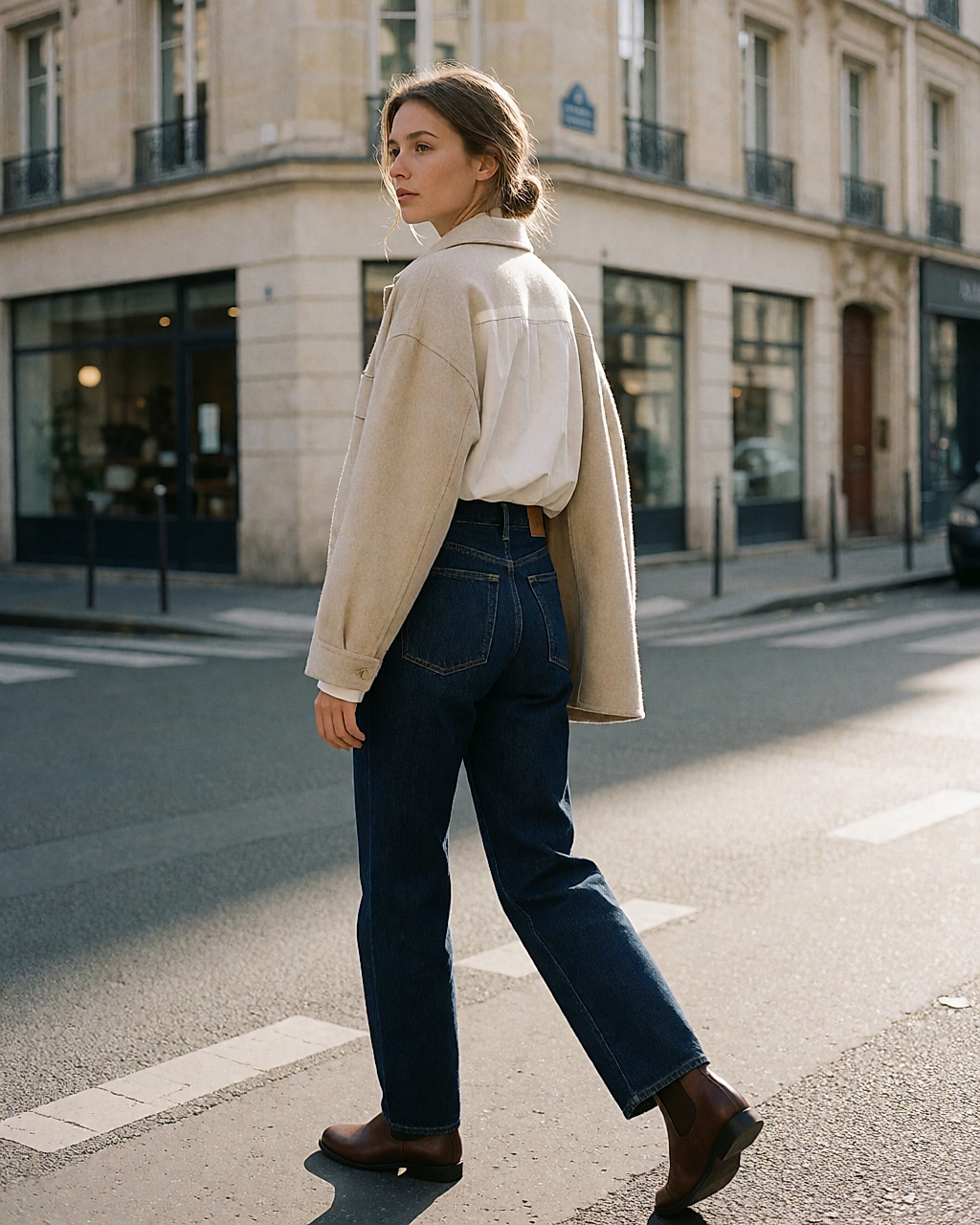
You will have seen it this week. On the street, in your feed, on the legs of people walking at an easy pace, as if it were nothing: a raw cloth, a high waist, a clean hem. Untreated denim is back at the top of the silhouette charts, and if you've opened a product page, you've probably closed the tab after reading 'unwashed' and 'leaves colour on contact'. That gives you pause. This kind of jean isn't bought like the others, and it isn't cared for like the others either — but once you understand its logic, it becomes surprisingly easy to live with.

What exactly is raw denim?
A raw jean is made from denim that has undergone no treatment. No industrial washing, no sanding, no added wear with acid or pumice: the cloth leaves the loom and goes straight to garment making. Two things stand out immediately.
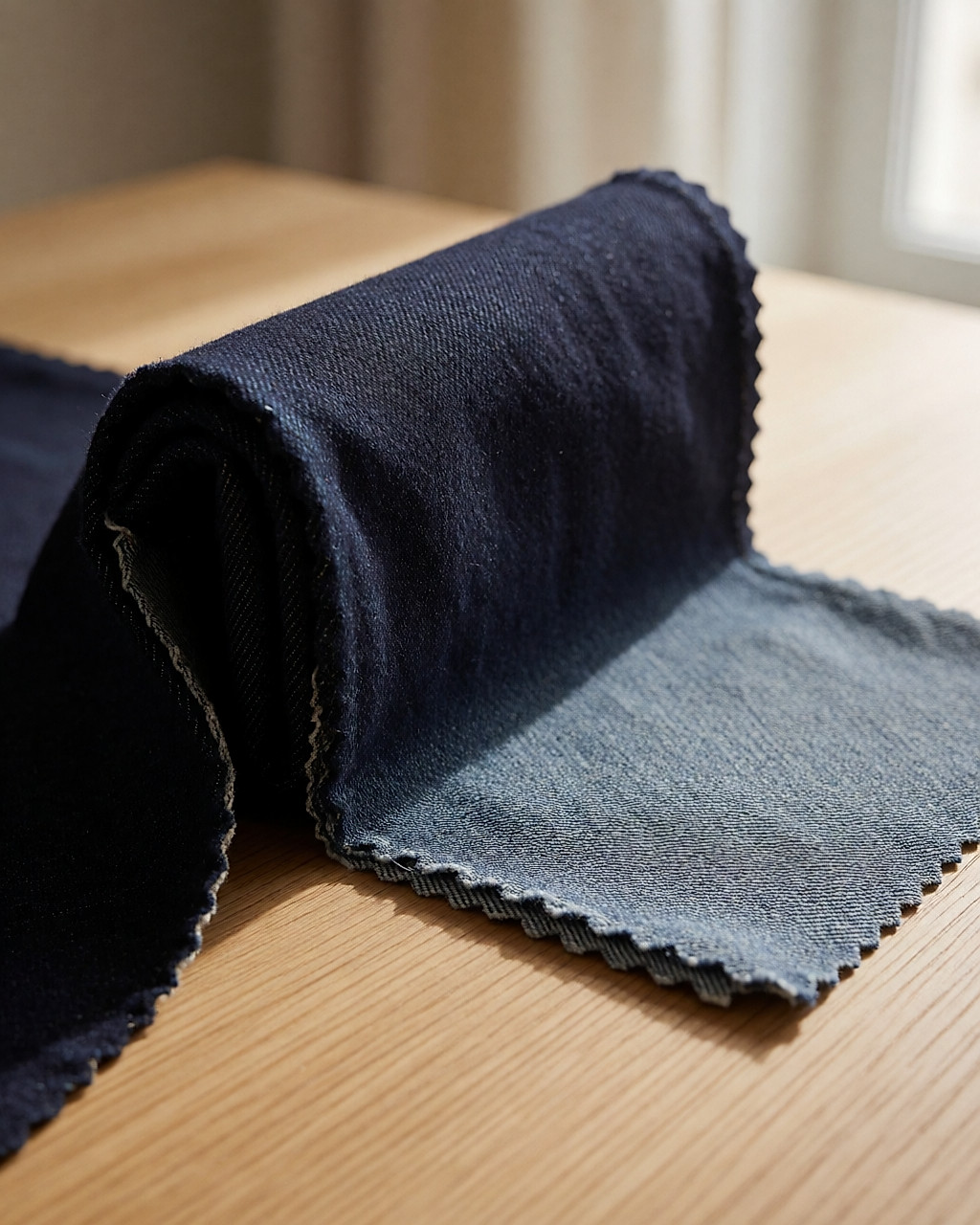
Weight first, measured in ounces. A lightweight cloth, 10 to 12 oz, keeps its flexibility and can be worn from day one like a classic pair of jeans. A heavy cloth, 14 oz and above, brings a stiffness that structures the leg: the drape is cleaner, the crease sharper, but it takes a few weeks for it to relax and mould to your shape. This isn't a myth, it's cloth at work — work with it, not against it.
Colour next. Raw denim shows a deep blue, almost black, and it lightens precisely where you move: hip creases, knees, turn-ups, back pocket. It's this patina that turns the piece into a statement, and it's also why you don't wash it every Sunday.
Cut and finishing: what determines the look
A straight-leg cut, or one that flares slightly from the knee, remains the one that ages best. It doesn't date and it balances the silhouette by extending a continuous line from hip to foot. A slim fit in rigid cloth is, in truth, a trap: a narrow leg plus stiff denim means three weeks of discomfort for a crease that sits badly. Yes, it helps, but don't expect wonders from that kind of cut.

Then look at the finishing; that's what holds the leg. A clean hem, stitched short and evenly, gives a leg that falls straight. Contrast stitching, orange or mustard-yellow thread, structures the piece: it highlights the side seams, the back yoke, the belt loops. A wide waistband holds the waist better than a narrow one. None of this is decorative: these details determine how the jeans wear after a year.
How to choose it for your shape
Three things to check in the fitting room, in this order.
Length. The hem should skim the top of the ankle or break by a centimetre on the shoe. Shorter, and the leg looks cut off. Longer, and the cloth wears under the heel and the hem frays within a few months.
Rise. A high waist assumes a long rise: the waistband sits near the navel, the waist is held in, the leg looks longer. If you have a short torso, a mid-rise is enough and will save you from a corset effect.
How it sits on the hip. Slide a hand down the back, at waistband level. If it gapes, the cut is too straight for your hips: go down a size or change style. Raw denim relaxes a little with wear, but it's better not to rely on that to make up for a cut that's too loose.
Care, the real issue
It all comes down to this. Wash rarely: the first wash after several weeks of wear, then only when it smells or a stain has settled in. Cold, 30°C maximum, delicate cycle, inside out, only for the first few washes — indigo transfers onto anything light. No fabric softener, which clogs the fibre and prevents natural fading from happening. No tumble dryer either: it breaks down the cloth and sets creases. Air-dry in the shade.
Between washes, air your jeans outside overnight and brush marks away while dry. The freezer trick is widely shared: it doesn't replace a wash.
The move that changes everything: wash your raw denim inside out, slipped into a laundry bag or pillowcase. You limit friction in the machine, protect the indigo and keep the contrast of the stitching for longer.
Budget
Expect to pay around £45 to £105 for a decent raw pair from a workwear label or an accessible denim brand: 12 to 14 oz cloth, straight cut, solid stitching. This is the range where the balance between fabric and price is clearest.
Beyond that, from around £130 upwards with no real ceiling, you're mainly paying for selvedge, where the cloth comes from and the making. The jeans will be more pleasant to wear, not necessarily more hard-wearing.
In charity shops and on second-hand platforms, you often drop below £25, sometimes to just a few pounds. Raw denim is actually a good candidate: a cloth that has been washed little has barely changed, and you get a piece already softened by someone else. Check the condition of the crotch seams and hems; they're the first points to give way.
Where to look: specialist workwear and denim shops, men's sections of large stores for basic styles, charity shops, reuse centres and second-hand platforms. Always try them at the end of the day, when your waist is slightly fuller: that's when you'll know whether the waistband is genuinely comfortable.
Verdict: a well-chosen raw pair is something you wear for years without thinking about it, and it comes to look more and more like you. Take the time to try it on, choose the cut that follows you rather than the one that pinches, and let the cloth do its work. These jeans will ask only one thing of you: a little patience!




Comments
Your opinion matters: rate the article, react and reply to comments.
Comments are moderated; AI-assisted comments are flagged. Text emoticons (8-), :-), <3…) are automatically shown as images.