
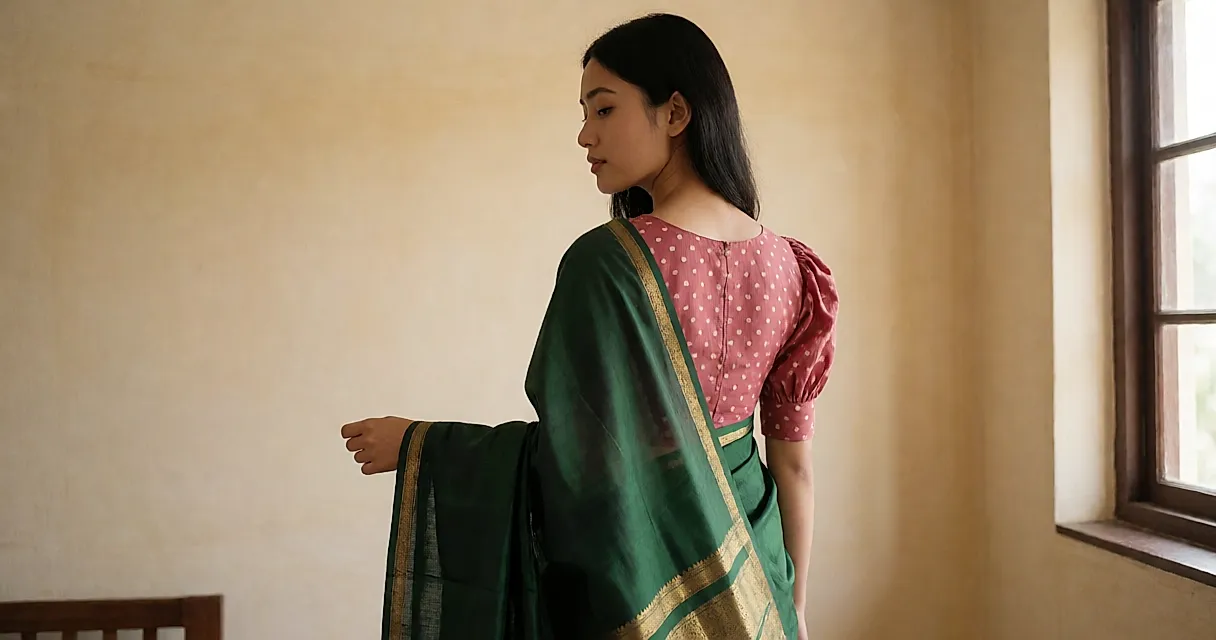
A bride in a bottle-green sari, a procession of aunts in silk, and the eye snagging on a detail the size of a napkin: the blouse. Pink. Polka-dot. Puff sleeves. In the middle of an ocean of well-behaved fabric, it is the blouse that sets everything alight. The whole lesson from southern India is there: in a two-piece outfit with very strict codes, it is the small piece that carries the daring.
The big panel and the small piece
A sari is one uncut length of fabric, several metres draped, pleated and pinned. The codes are not up for much debate: the overall design follows tradition, and in southern India, Kanchipuram silks woven in Tamil Nadu often set a solid ground against a contrasting border. The frame is sumptuous. It is also very well behaved.
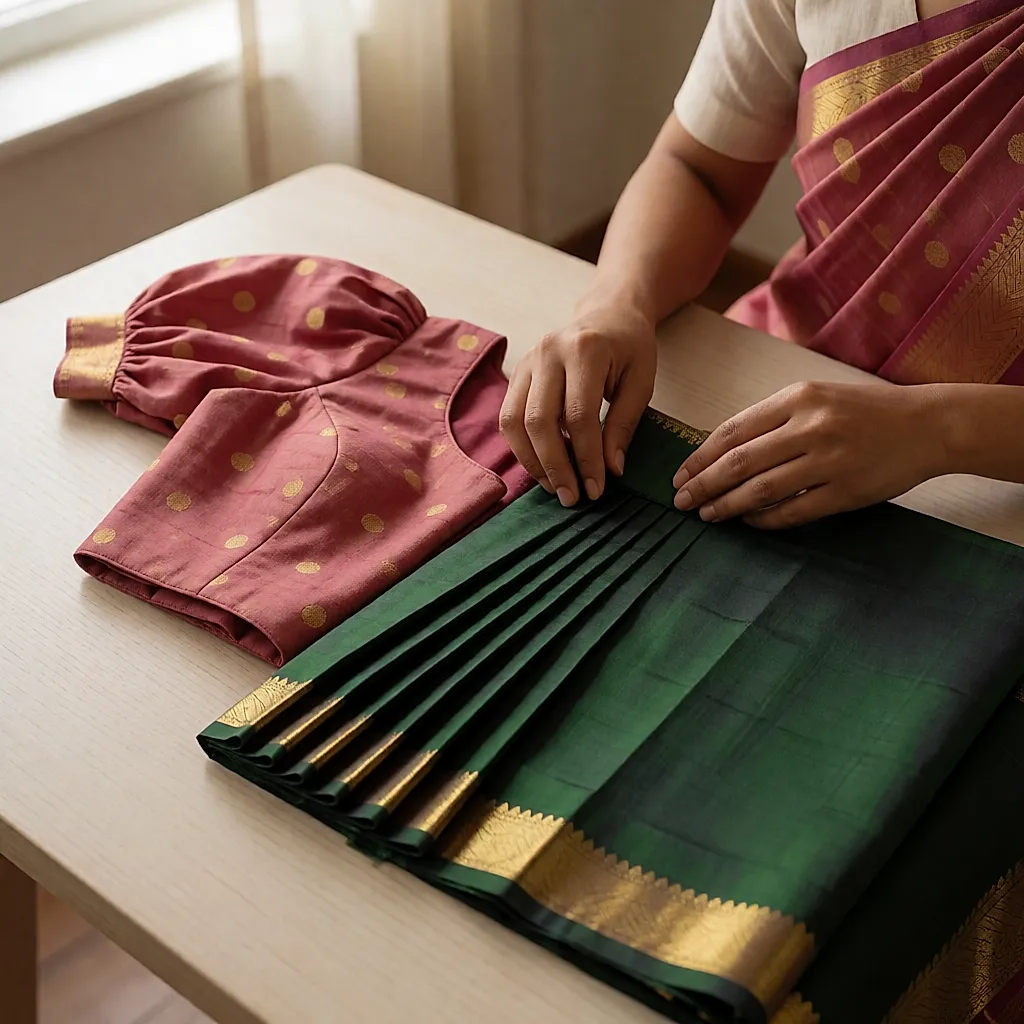
The blouse, by contrast, takes only a few dozen centimetres of fabric. Neckline, sleeves, length, back: it is tiny, and yet that is where the fun happens. A short sleeve, a straight collar, a discreet print — and the big bottle-green panel changes character without a single pleat being touched.
See the principle? The large surface stays calm; the small one does the talking. The eye, which needs somewhere to settle, knows exactly where to land.
Why it works so well
Because contrast has an attention budget — not a money budget. An outfit that is contrasting from head to toe is exhausting; an outfit that is entirely plain falls asleep. By concentrating the daring in one small piece, you get calm and playfulness in the same move, without ever raising your voice.
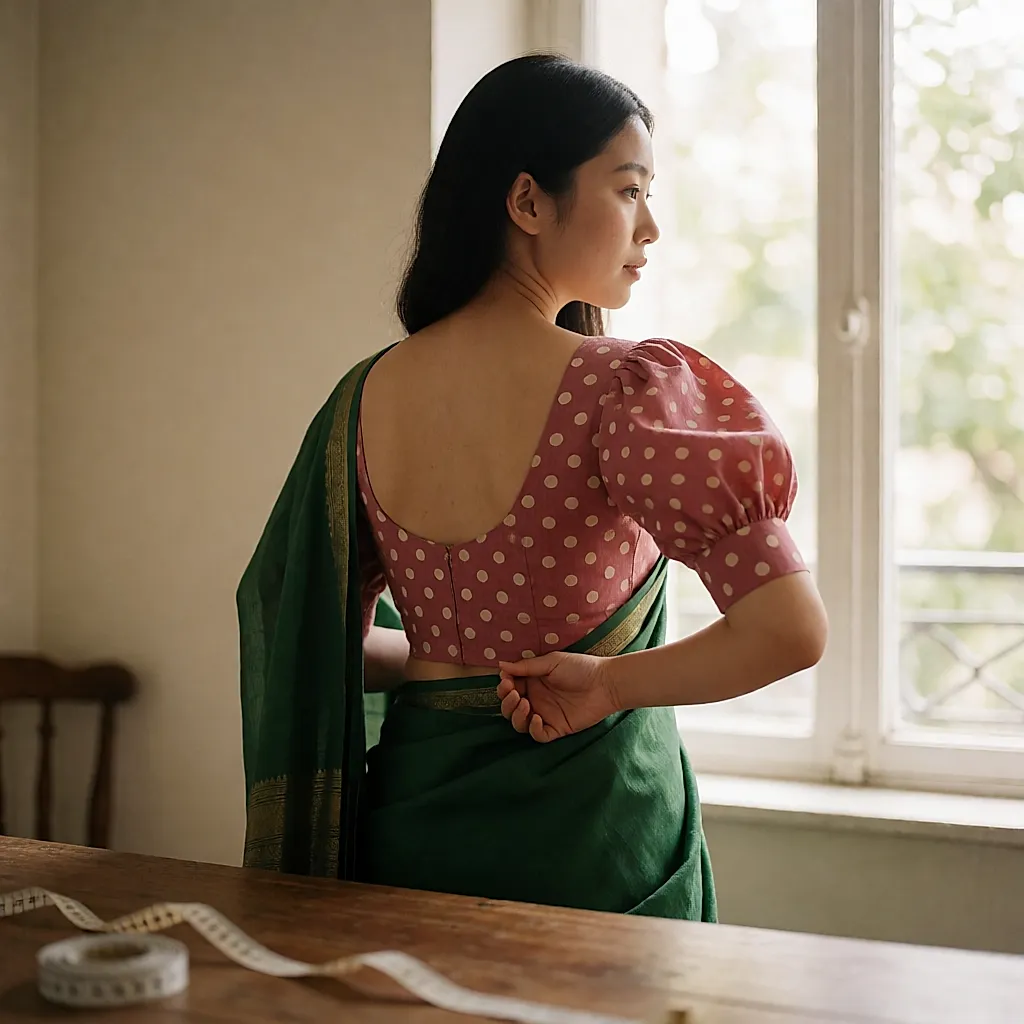
There is also the cut. A sari blouse is often fitted by a tailor, and that is what separates a blouse that falls exactly right — a decision — from one that floats, looking like an afterthought. Contrast does not forgive halfway measures: a strong colour on a badly placed shoulder, and daring becomes hesitation. Who wants that on a Tuesday morning?
Then there is texture. Smooth silk against matte cotton, and the contrast happens through touch, without a single colour raising its voice. It is the quietest version, and often the most elegant.
How to borrow the idea at home
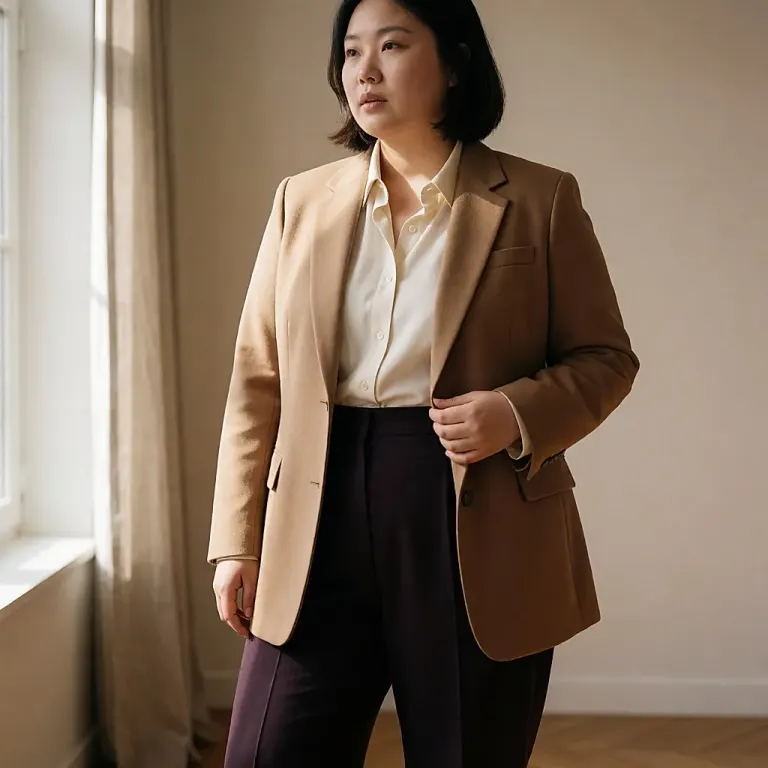
Open your wardrobe and find the most sensible piece you own: a black blazer, a wool pinafore dress, raw denim dungarees. That is your big panel. All you have to do is choose what goes underneath.
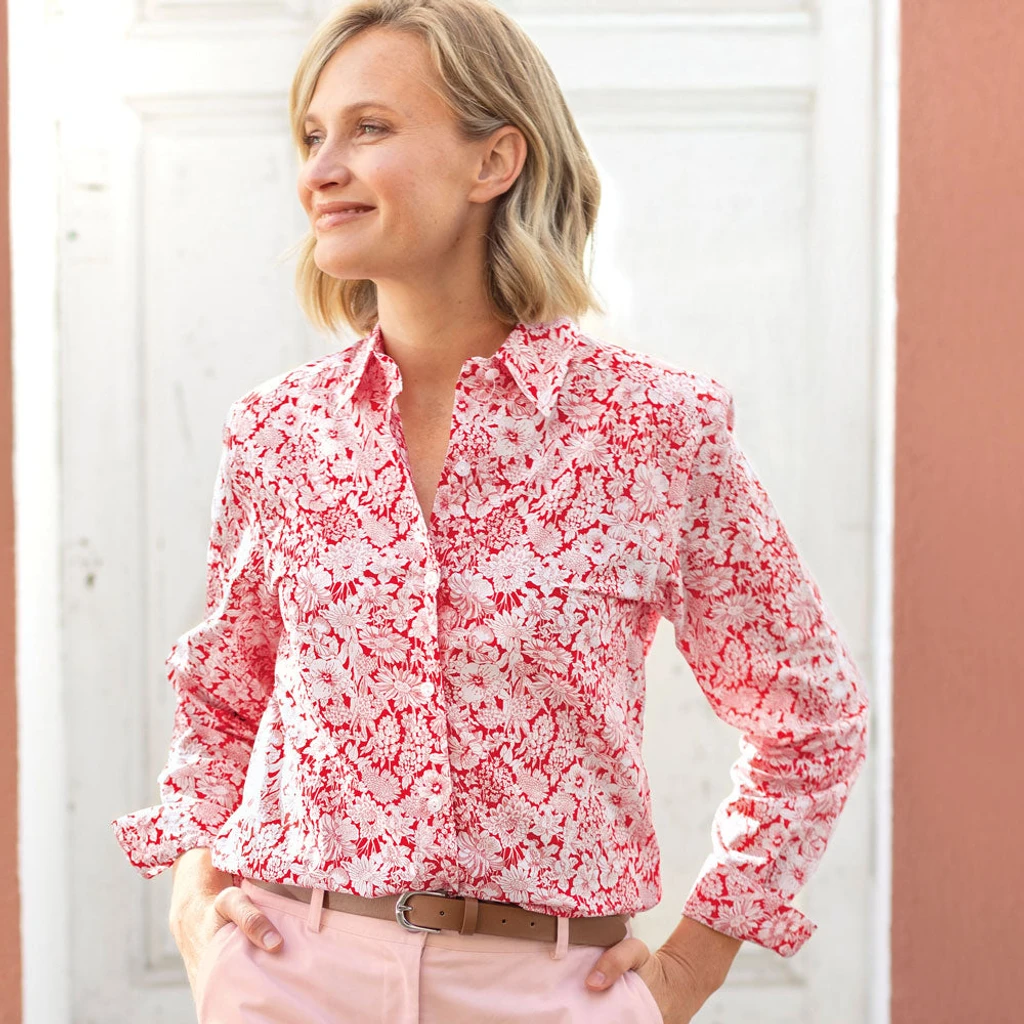
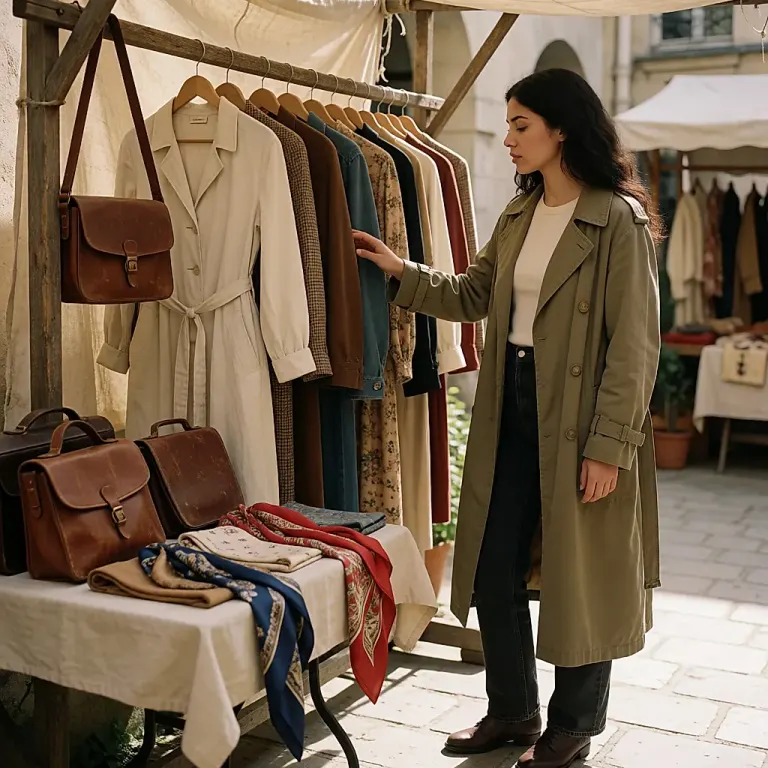
A colourful cotton blouse under a dark blazer, a silk blouse under a cream cardigan, a printed top under a plain dress: three ways to change your look without buying a new main piece. And to test the idea without commitment, charity shops are ideal.
Beware of too much chatter, though. If the outer piece is already busy — a strong print, embroidery, gold buttons — two pieces start talking at once and you cannot hear either of them.
When to leave it alone
Not every silhouette wants fireworks at the bust. If you do not like drawing the eye there, or if high necklines and gathers bother you day to day, move the idea elsewhere: a plain but textured blouse, an unexpected sleeve, a collar that only just shows.
And then there is real life. Silk goes to the dry cleaner, linen creases in ten minutes, white cotton needs ironing on a Monday morning. Contrast is charming as long as it does not turn your morning routine into a performance.
Budget
As a rough guide on the UK high street, expect to pay around £25 to £60 for a cotton or viscose blouse with good structure, and £60 to £120 from a more established brand or for neater finishes. In silk, the range climbs to £120 to £250 depending on fabric quality and where it was made. In charity shops or second-hand, you can test the idea for £5 to £25.
What affects the price? The fabric, the finishes (hem, buttons, lining) and where you shop — London prices are rarely the same as elsewhere. Also budget for alterations: taking in a blouse or shortening a sleeve often costs £15 to £40, and it can be what turns an almost-right piece into a genuinely right one.
The three-top test. Take the most sensible outfit in your wardrobe and lay three tops over it: one plain in the same family, one colourful, one printed. The one that makes you smile without making you back away is the right one. If it makes you back away, save it for Sunday.
The sari does not ask you to adopt it, only to borrow its method: a calm main panel, a small piece that speaks up. Next time you spend twenty minutes in front of an outfit that says nothing, look at the blouse rather than the main piece. It is often in that square of fabric that the day's smile was hiding.
Comments
Your opinion matters: rate the article, react and reply to comments.
Comments are moderated; AI-assisted comments are flagged. Text emoticons (8-), :-), <3…) are automatically shown as images.