
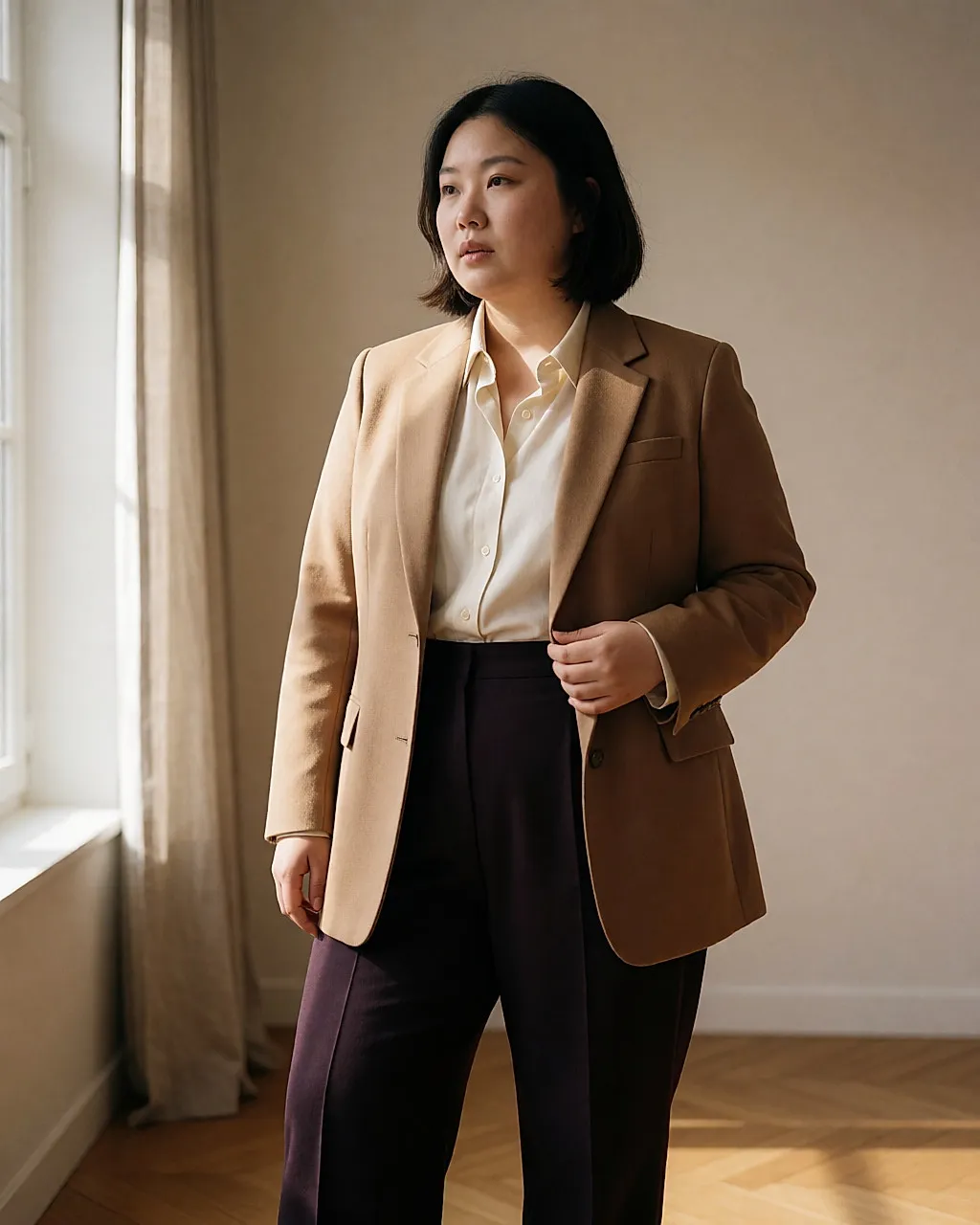
“I’m not made for this dress.” I heard it on Saturday, behind a fitting-room curtain, and it’s the reflex that irritates me every time. Twenty years after articles listing what a curvy silhouette “should avoid”, the idea that a garment can be forbidden to a body is still going strong. In truth, the problem is almost never the body: it’s the cut, designed for someone else, or the fabric, which forgives nothing. Curvy and sexy isn’t about body shape — it’s about drape, cut and light. Let’s take it from the top.
Colour doesn’t slim, it lights you up
Forget the old rules. Black has never made anyone thinner: it absorbs light, and an all-black look in a matte, flat fabric mainly flattens the face. White isn’t forbidden — quite the opposite: it reflects light, which is often exactly what you want near your complexion. What matters is contrast: a deeper shade below, a lighter one above, so the eye travels up to your face. The styling move worth making: play with tonal variations in the same family (camel, terracotta, plum) rather than stacking blocks of colour.
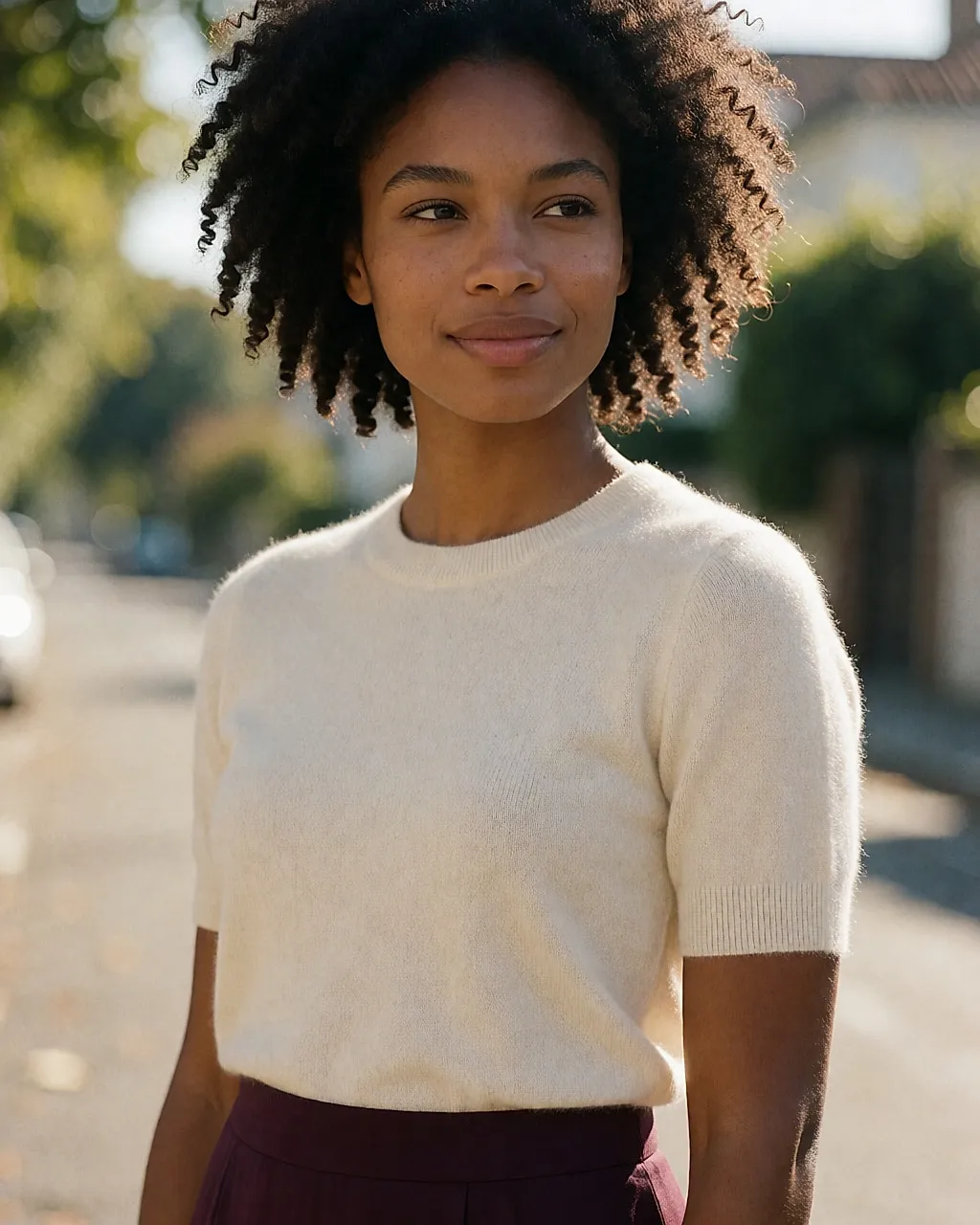
Cut first, label second
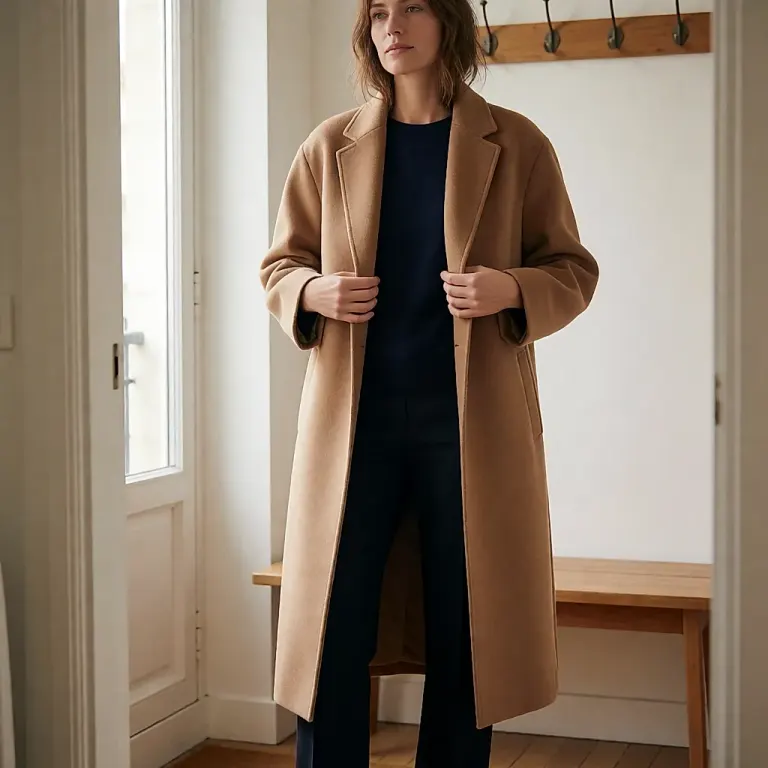
A well-cut garment drapes; it doesn’t cling. Look for pieces that sit on the shoulder and fall straight: a slightly oversized poplin shirt, an open jacket worn as a layer, high-waisted pleated trousers. The drape of the fabric matters more than the size on the label — a heavy jersey or a dry wool holds the line, whereas a fine viscose remembers every crease.
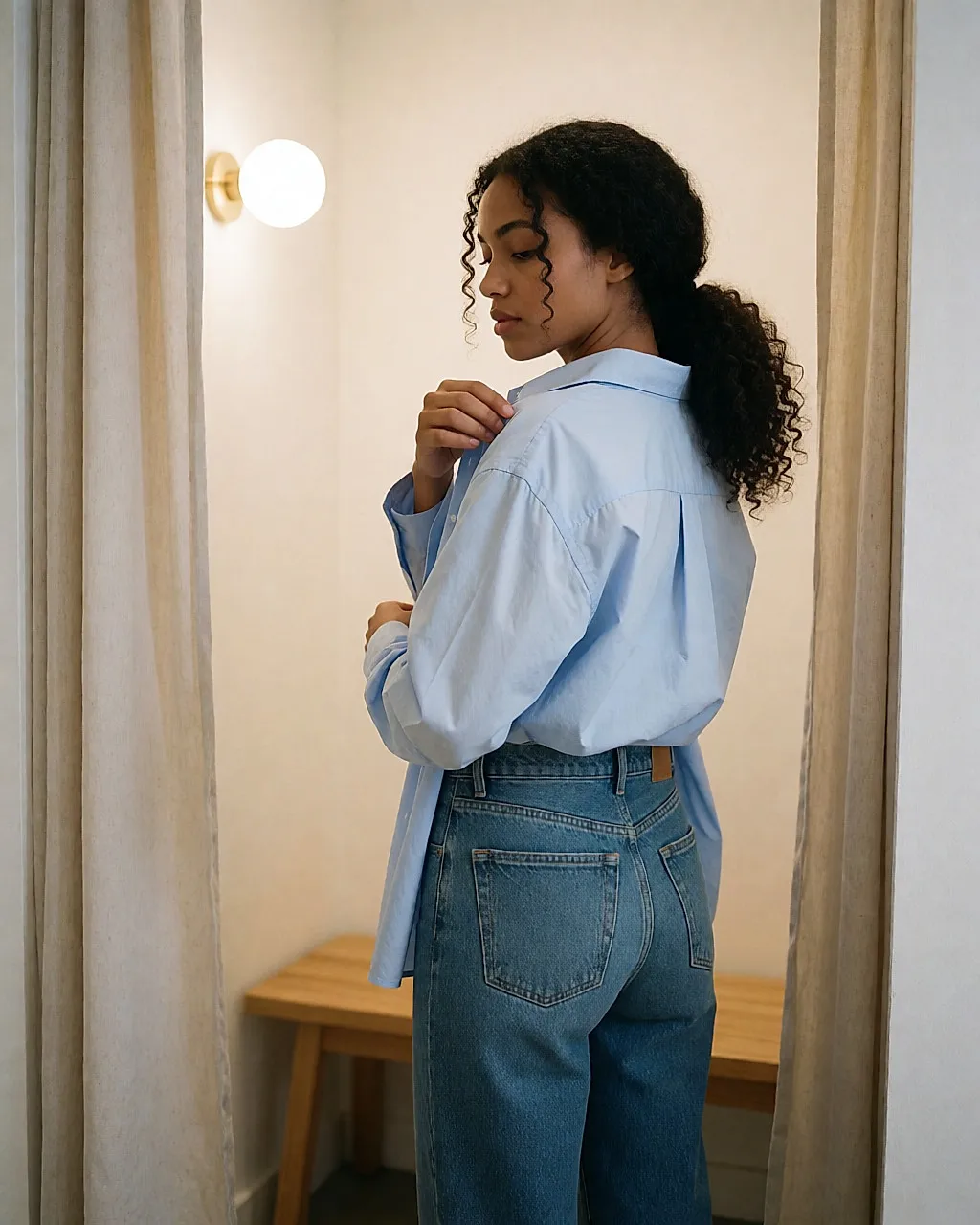
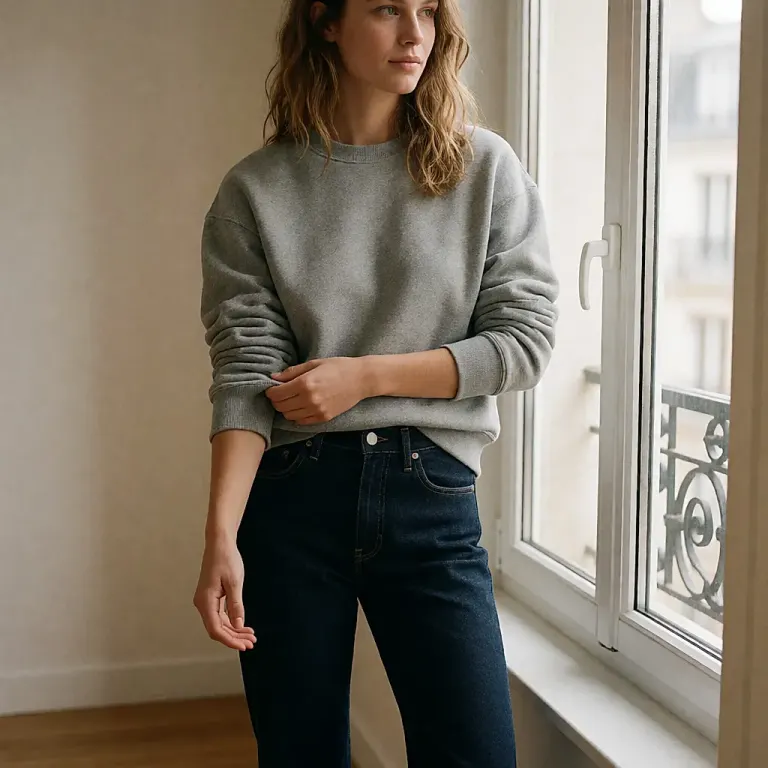
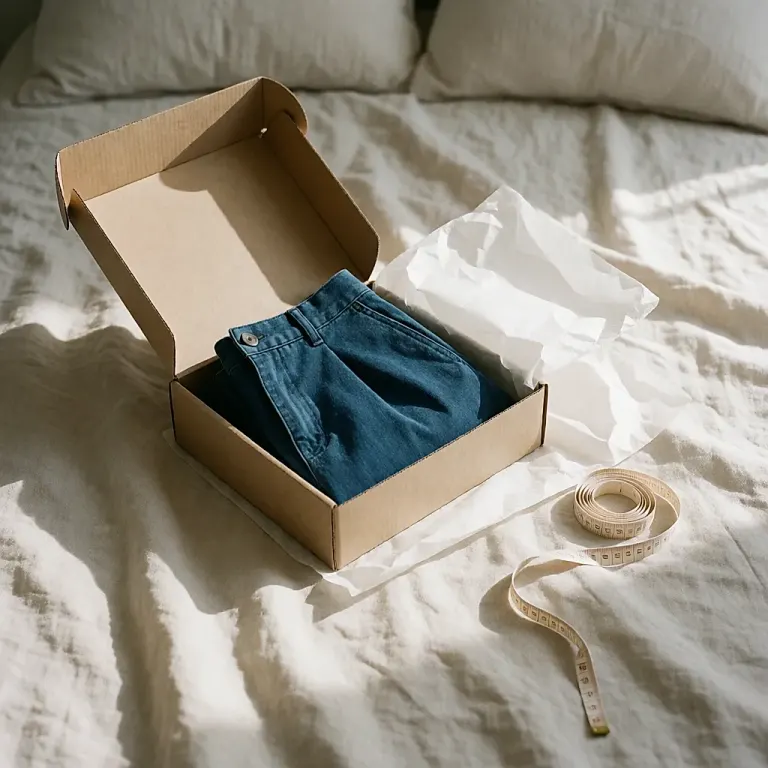
For bottoms, a straight or slightly flared cut is the easiest to live in. And don’t be ruled by the number: between two sizes, take the one that sits well at the shoulders or hips, then have the rest altered. Having a piece taken in at an alterations tailor often costs less than a poorly fitted new buy that ends up unworn.
Prints and textures: stop censoring yourself
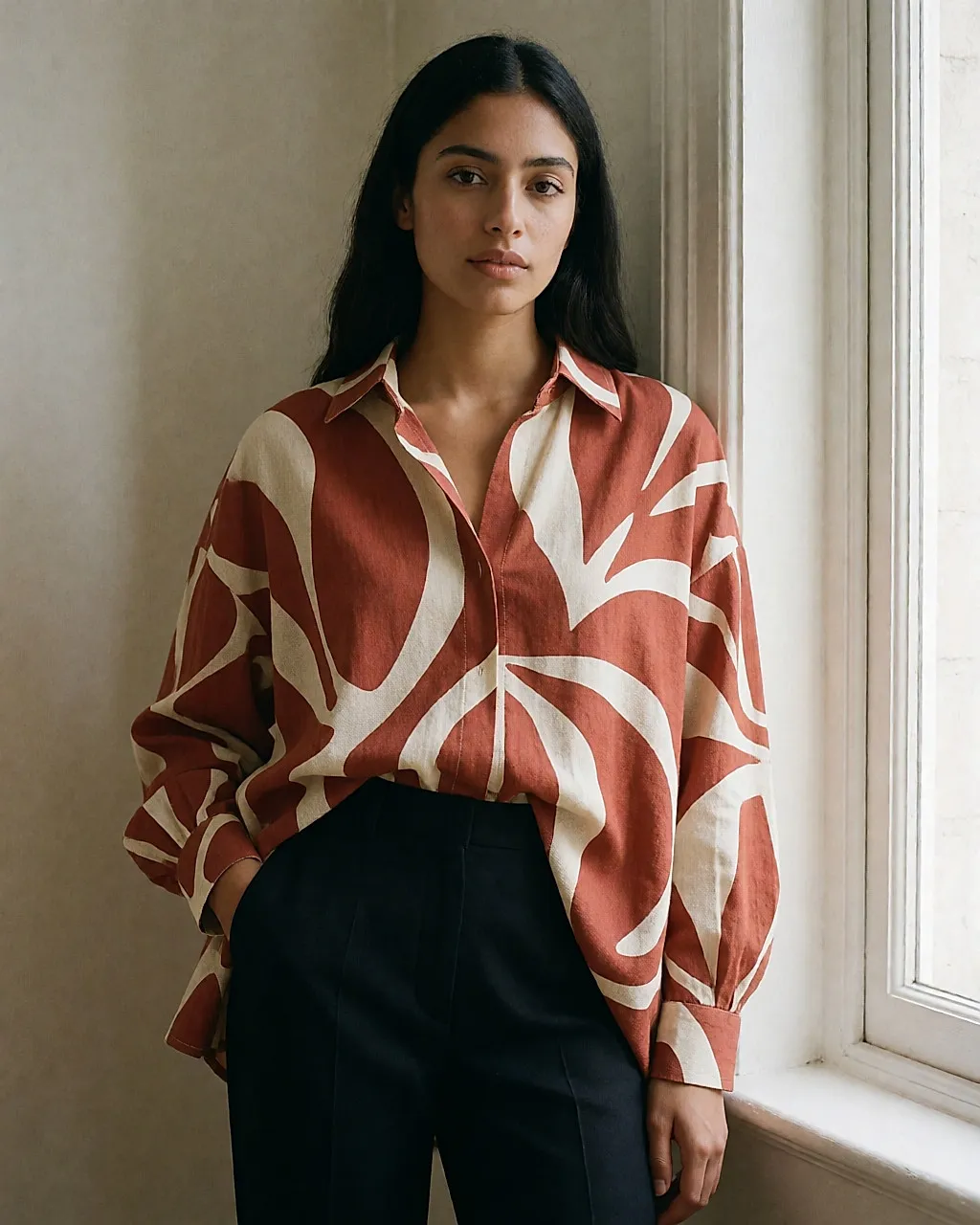
A large print doesn’t make you look bigger, contrary to myth. And vertical stripes don’t magically lengthen: what matters is contrast and how the pattern is cut and pieced together. What really works, though? A texture that adds relief — ribbed knit, raw denim, short-pile velvet — a statement piece worn alone, with nothing competing for attention, and opaque fabrics over the areas you’d rather keep low-key.
Accessorise, don’t overload
A high-waist belt redraws a silhouette in seconds. A short-strap bag lifts the eye line; a long pendant necklace does exactly the same. On the shoe front, nobody is making you live in heels: a chunky-soled Derby or a block-heeled court shoe lengthens the leg without the constraints of a skinny stiletto.
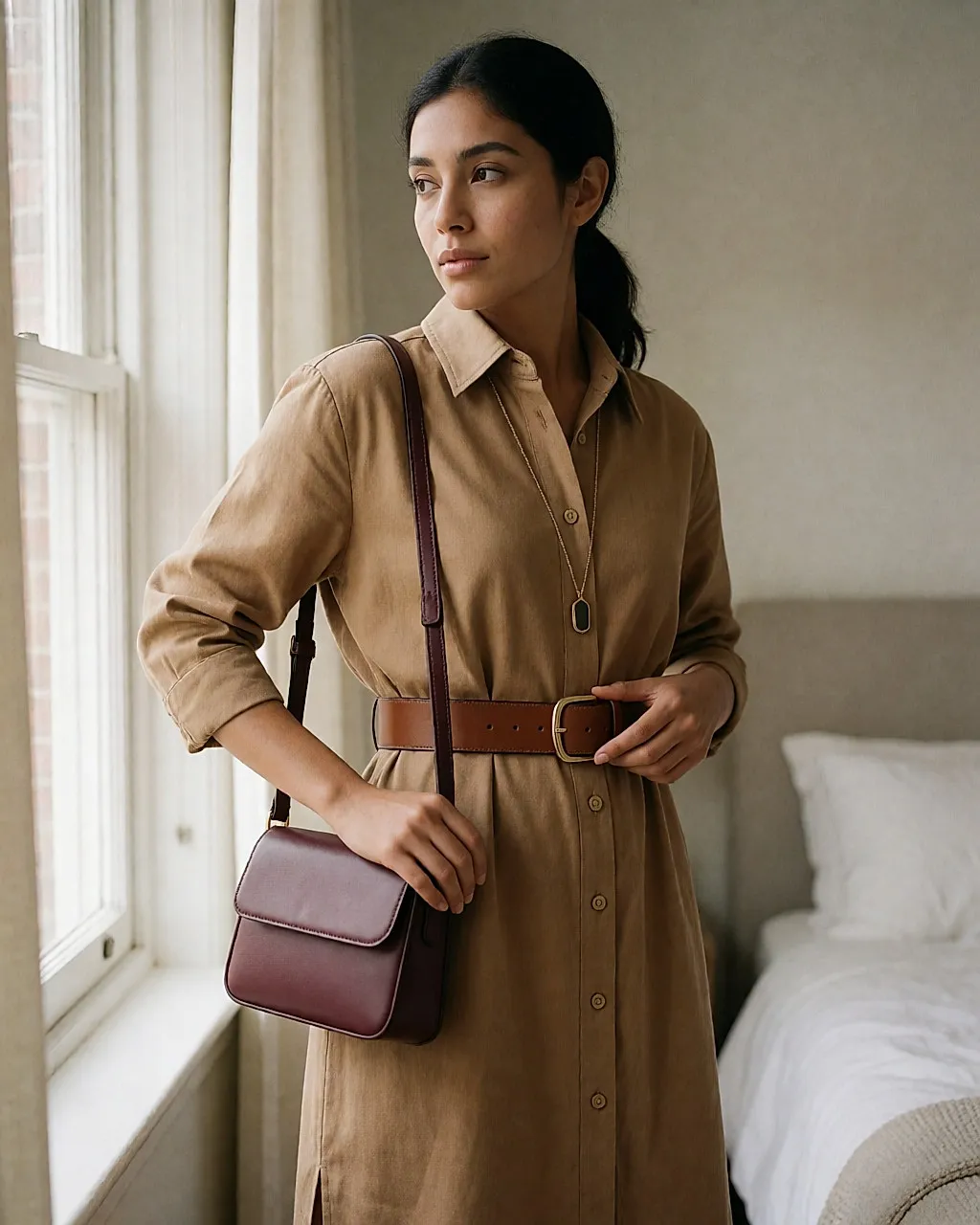
The fitting-room checklist I repeat at every try-on: does it fasten without pulling? Can I raise my arms without the whole thing riding up? Does the fabric settle back into place when I move? If you have to hold a strap or suck in your stomach to keep it in place, it’s not your size — it’s the wrong cut.
Budget
Typical UK prices for a basic wardrobe:
- GOTS-certified organic cotton top or T-shirt: expect £25–£45 from an ethical brand, against £8–£18 from a high-street chain, often with no fibre traceability — a trade-off you accept.
- High-waisted straight-leg jeans: £50–£120. Price varies with fabric (organic or recycled cotton), where it’s made and how well the denim holds its shape.
- Unlined blazer, wool or blend: £70–£180.
- Belt: £20–£60 in leather; often less in plant-based leather or recycled textile.
- Alterations: hem £10–£20, taking in £15–£35. It’s the most cost-effective part of any wardrobe.
Where to find it all? Supermarkets and high-street chains for basics, specialist plus-size brands and second-hand (charity shops, resale platforms) for the rest, local alterations tailor for adjustments. On labels, three reference points and their limits: GOTS certifies organic fibre and social criteria; Oeko-Tex Standard 100 tests for harmful substances, but it is not a comprehensive environmental label; Refashion organises textile collection and end-of-life in France. None is enough on its own to judge a piece — and it matters to say so, because a label on display is not proof of quality.
The main thing remains: try it on, move, judge the drape rather than your front-on reflection. Style can be fixed with three alterations, not three diets.
Sources
- Légifrance, Décret n° 2017-738 of 4 May 2017 on commercial photographs of models whose appearance has been modified (France).
- ADEME, the French Agency for Ecological Transition — publications on the environmental impact of textiles.
- Refashion, activity reports for the French textile sector.
- Global Organic Textile Standard (GOTS), official standard.
- Oeko-Tex, Standard 100, official documentation.
Comments
Your opinion matters: rate the article, react and reply to comments.
Comments are moderated; AI-assisted comments are flagged. Text emoticons (8-), :-), <3…) are automatically shown as images.