

Have you ever turned over a label and wondered who sewed your T-shirt? In 2007, that reflex wasn't yet second nature. Since then, it has become a wardrobe criterion in its own right.
A prize, twelve labels, a Paris museum
That year, the French women's ready-to-wear federation presented the fifth edition of its Élan de la mode award. Twelve committed brands were recognised, rewarded as much for their creative daring as for their ability to make fashion and fair trade work together. The ceremony took place at the Musée des Arts Décoratifs in Paris, presided over by Lady Owen Jones, a UNESCO goodwill ambassador.
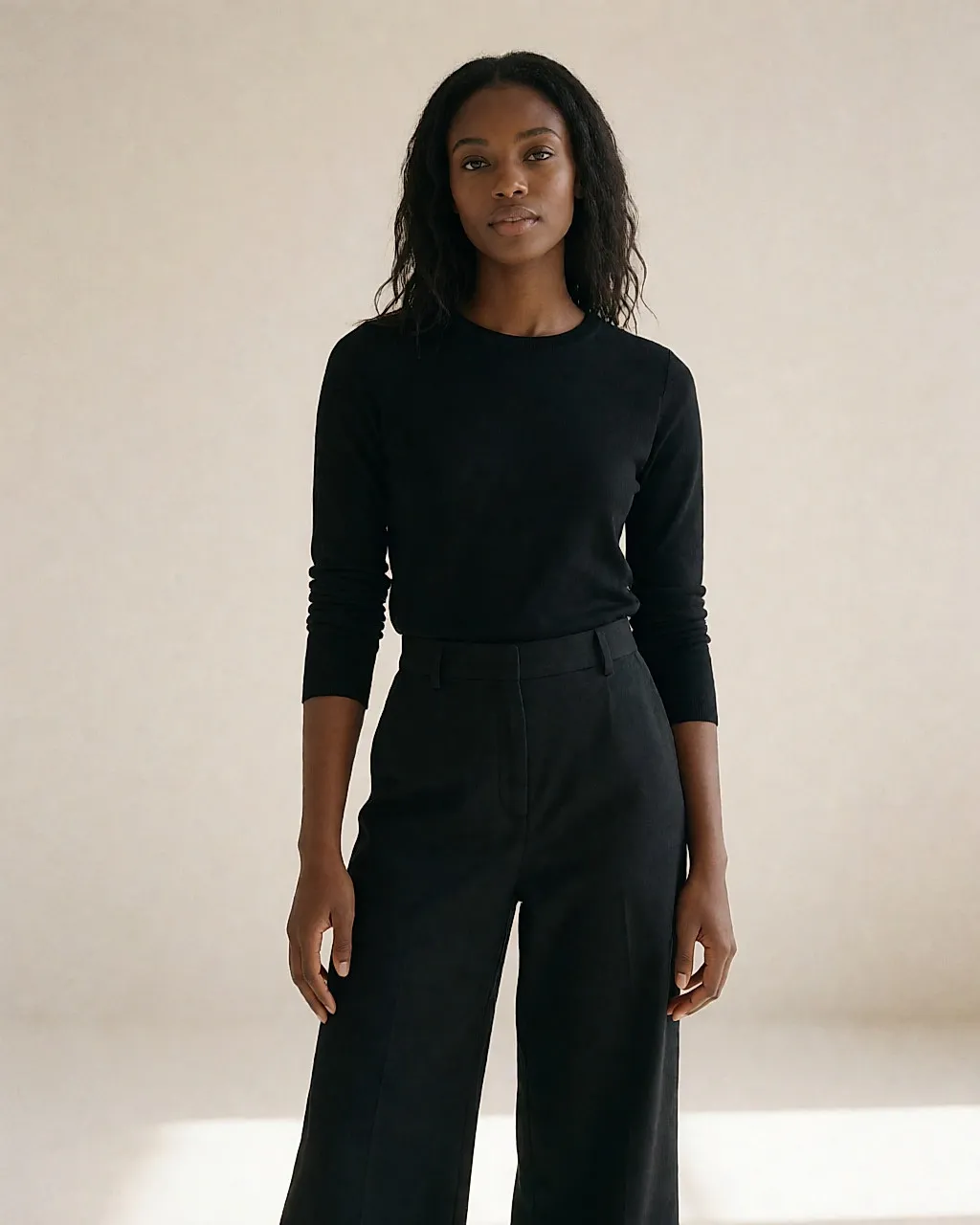
Article 23 was among the winners. Backed by the Compagnie du Commerce Équitable and designed by Adam Love, the label worked with fair-trade organic cotton certified by Max Havelaar. Its lines married evening wear and sportswear, with unapologetic fifties and seventies influences. Indian-made, with a claimed 120 jobs for women in a context where caste often barred access to work. Distribution: the Alter Mundi network.

What remains
The 2007 page has yellowed. The question hasn't budged.
Today, you dissect a brand's approach rather than taking a label at its word. GOTS oversees organic cotton from fibre to finished product. Fairtrade Max Havelaar France sets a minimum price for producers. OEKO-TEX Standard 100 limits harmful substances in fabric. B Corp, meanwhile, assesses the governance of the whole company.
The real shift comes down to the fabric, which is now chosen like a cut: an organic jersey with a dense texture, a traceable dye, a drape that doesn't lose its shape in the wash. That's what holds a silhouette season after season, more reliably than a statement print.
The one move that changes everything in the fitting room: read the composition before you look at the price. If no certification is named on the label or product page, it's safer to assume none is being highlighted.

Budget
- GOTS-certified organic cotton T-shirt: expect around £20 to £40
- Eco-designed jeans, European-made: £70 to £130
- Trainers made from recycled materials: £75 to £140
These are only ballpark figures: it all depends on the fibre's origin, the country of manufacture and the size of the production run. You'll find them in shops, supermarkets or online; second-hand, expect £10 to £25 for a statement piece.
Sources
- GOTS, Global Organic Textile Standard — global-standard.org
- ADEME, textile and environment resources — ademe.fr
- Fashion Revolution France — fashionrevolution.org



Comments
Your opinion matters: rate the article, react and reply to comments.
Comments are moderated; AI-assisted comments are flagged. Text emoticons (8-), :-), <3…) are automatically shown as images.