

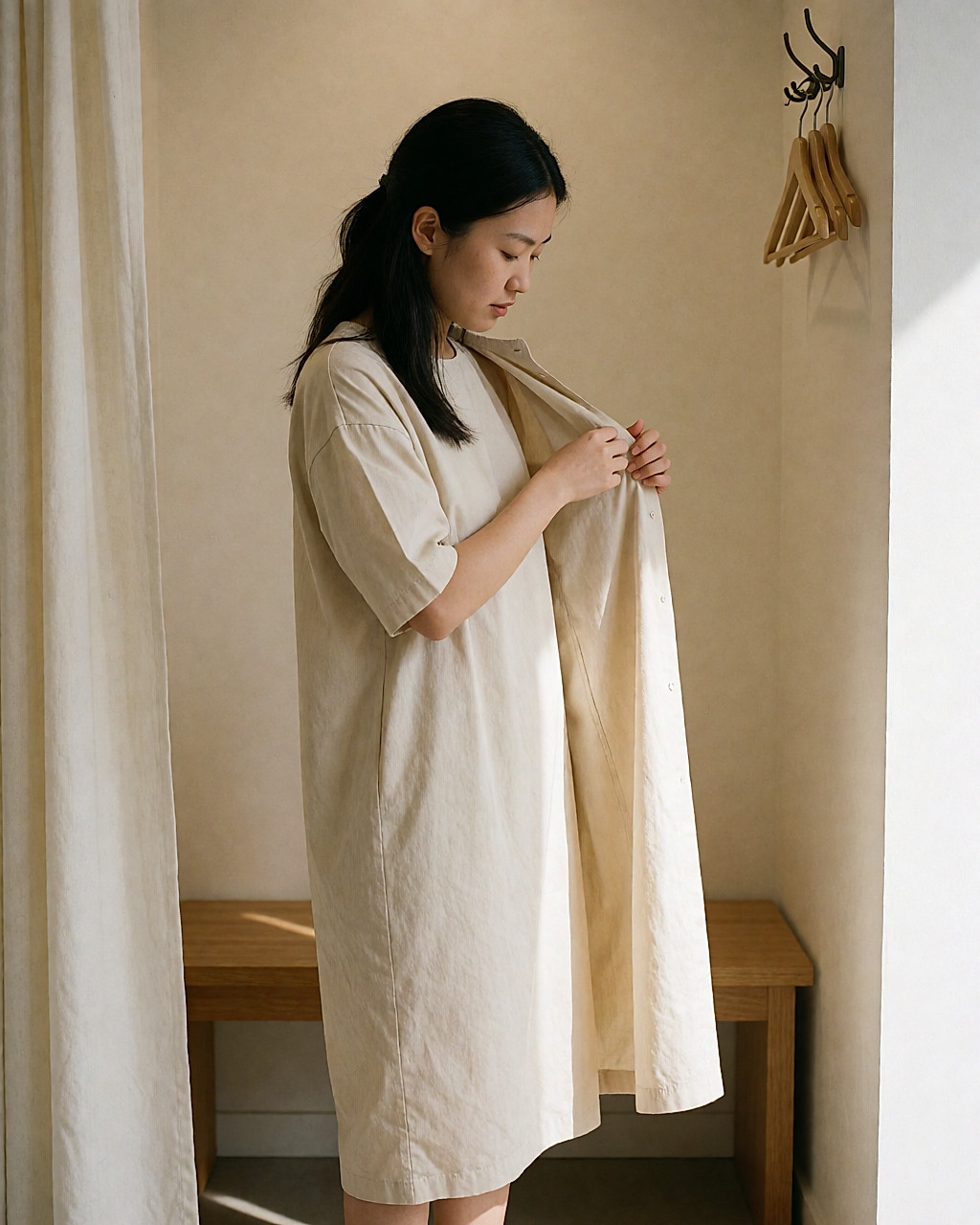
You're in a fitting room, turning over the label of a dress priced at £19. Composition: polyester. Origin: complete silence. It sounds silly, but the question comes back every time: who sewed this, and under what conditions? Let's be honest, a low price proves nothing, and neither does a high one. Except that today we finally have some markers for building a look without closing our eyes.
What still doesn't sit right
The subject has lost none of its relevance, sadly. The collapse of Rana Plaza in Bangladesh in 2013 killed more than 1,100 people, mainly garment workers. Since then, there has been progress, but cascading subcontracting remains the norm across much of fast fashion: an order passes from one workshop to a subcontractor, then another, until no one knows who is sewing what. The result: days that are too long, wages that don't cover the rent, and materials chosen for their price rather than their drape.

The labels that actually mean something
Three markers worth knowing, because they commit the whole chain, not just the label sewn inside.

GOTS (Global Organic Textile Standard): at least 70% organic fibres, control of chemical substances, minimum social criteria among manufacturers and traceability back to the spinning mill. It is the label that says the most about the material you wear next to your skin.
Fairtrade: a guaranteed minimum price and a development premium paid back to cotton producer co-operatives. Strong on the upstream supply chain, quieter on garment making.
B Corp: a company certification, not a product one. Useful for judging a brand's governance, insufficient for validating a specific T-shirt.
Be wary, however, of vague wording. "Natural cotton", "conscious fashion", "eco-designed" without a logo: behind them, nothing verifiable. A label is a set of specifications, an independent auditor and a certificate number.
Before you get to the till, three questions: is the composition precise? Is there a label, and which one? Will this piece last three seasons in your wardrobe? If you answer "I don't know" three times, you know what to do next.
Second-hand and alterations: the move that changes everything
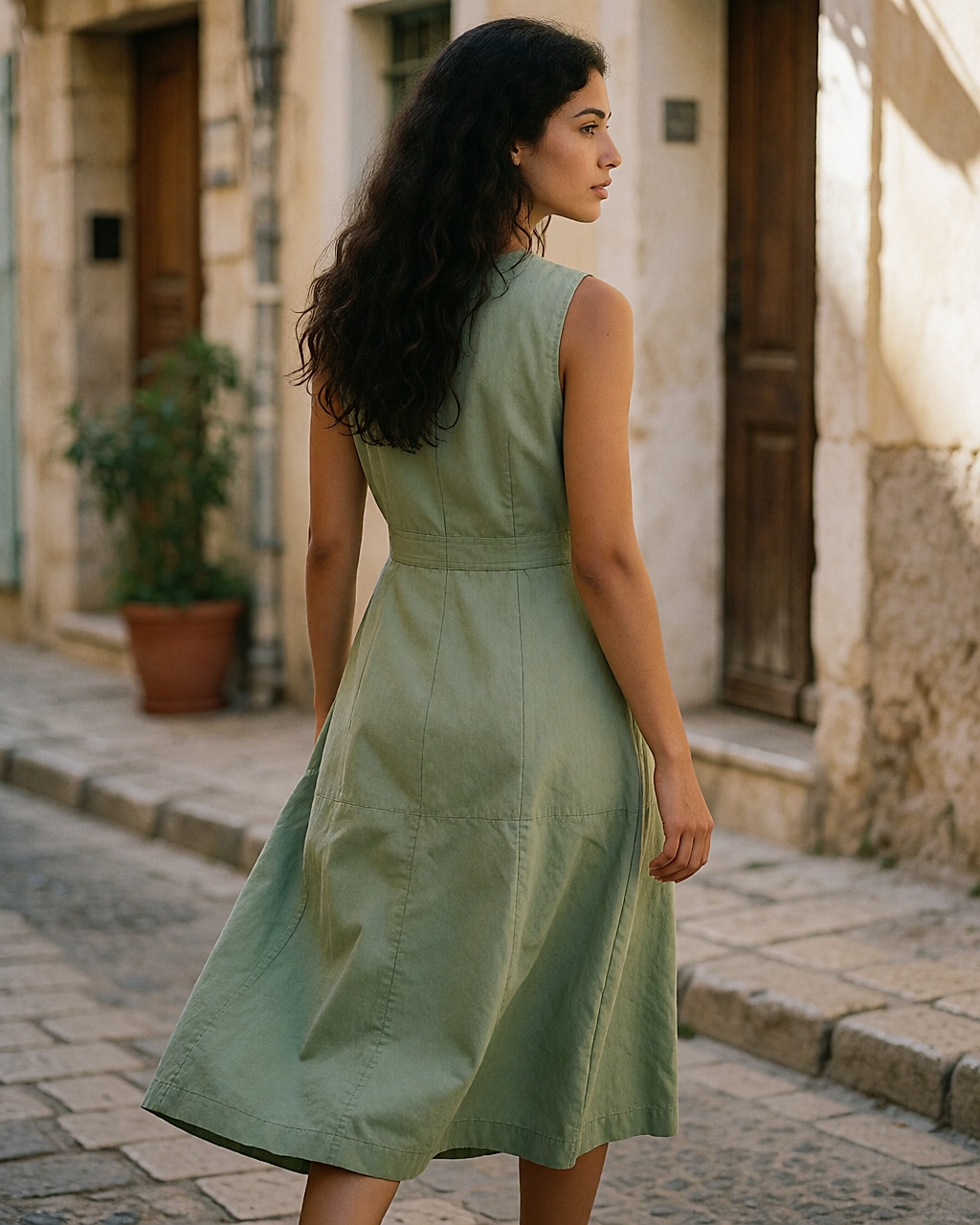
The most responsible garment is still the one that already exists. Charity shops, reuse centres, Vinted, Vestiaire Collective: for a statement piece or a print no longer in the shops, that's often where it happens. Another too-often-forgotten habit is alterations. Taking in a seam, cinching a loose cut, adjusting a drape: fifteen minutes at the machine and a piece is saved, with a look that's completely transformed. In the UK, textile collection and recycling is organised through local council schemes and WRAP's Textiles 2030 — the recycling banks at the end of your street are part of it.
Brands, but no magic list
The names cited fifteen years ago have moved on. American Apparel, long held up as a model with its Los Angeles factory, went bankrupt in 2015 and again in 2016, and its local production stopped after the brand was bought. In other words, no list of "ethical brands" lasts ten years.


For current leads, look at transparency in production chains: Veja and its Brazilian organic cotton trainers, 1083 and its jeans assembled in France, Atelier Tuffery, Faguo. The idea isn't to worship a label, but to check who makes it, where, and with what written commitments. A full look can quite easily be 80% second-hand, and a capsule wardrobe of a few well-cut basics beats an overflowing cupboard.
Budget
- T-shirt in GOTS-certified organic cotton: expect around £22 to £40, compared with £4 to £13 for conventional cotton. The gap comes from the price of the fibre, lower volumes and the cost of certification.
- Trainers in traceable materials: from £85 to £140, in shops and online.
- Jeans made in France: £80 to £155 depending on the denim and construction.
- Alterations: £9 to £22 for a hem or a repair, at a local shop, cobbler or through the after-sales service of some retailers.
- Second-hand: from £3 at a reuse centre to £70 for a designer piece on a resale platform.
Prices vary mainly by material (linen, wool, organic cotton), where it was made and the volume produced. A more expensive piece isn't automatically cleaner — but a £3.50 piece can't pay a decent wage, traceable material and transport.
Sources
- GOTS, Global Organic Textile Standard — criteria and certificate register
- Fairtrade Foundation — textile standard and cotton supply chain
- WRAP — Textiles 2030 and UK textile recycling
- UK Government — Environment Act 2021
- International Labour Organization (ILO) — reports on the Rana Plaza disaster (2013)
- Reuters — coverage of American Apparel bankruptcies (2015-2016) and the takeover by Gildan


Comments
Your opinion matters: rate the article, react and reply to comments.
Comments are moderated; AI-assisted comments are flagged. Text emoticons (8-), :-), <3…) are automatically shown as images.