
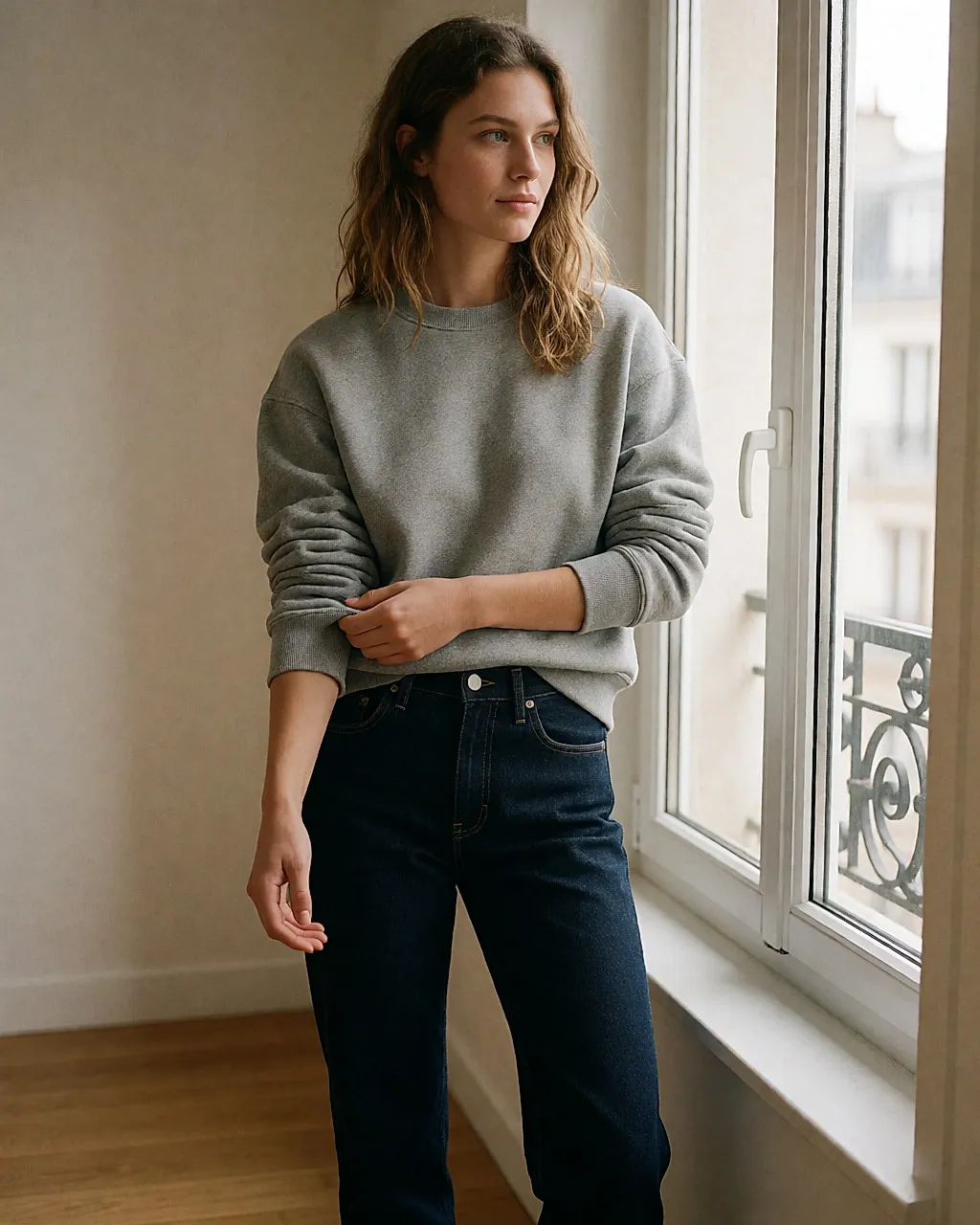
7.40am, you grab the grey sweatshirt draped over the chair, glance in the mirror and decide: it's doing a better job than your wool jacket. Nothing to be ashamed of. Sweatshirt fabric has left the running rails and moved into our wardrobes, and grey marl is still its most wearable incarnation.
From gym staple to a real silhouette
The shift didn't happen overnight. For several seasons, the catwalks have put the sweatshirt centre stage, treating it as a piece in its own right rather than something you throw on in a rush. Since then, the fabric has crept everywhere: elasticated-waist trousers, a straight dress, a button-through cardigan, an A-line skirt. Grey has one advantage: it breaks up the all-sport look and works with black, navy and off-white.
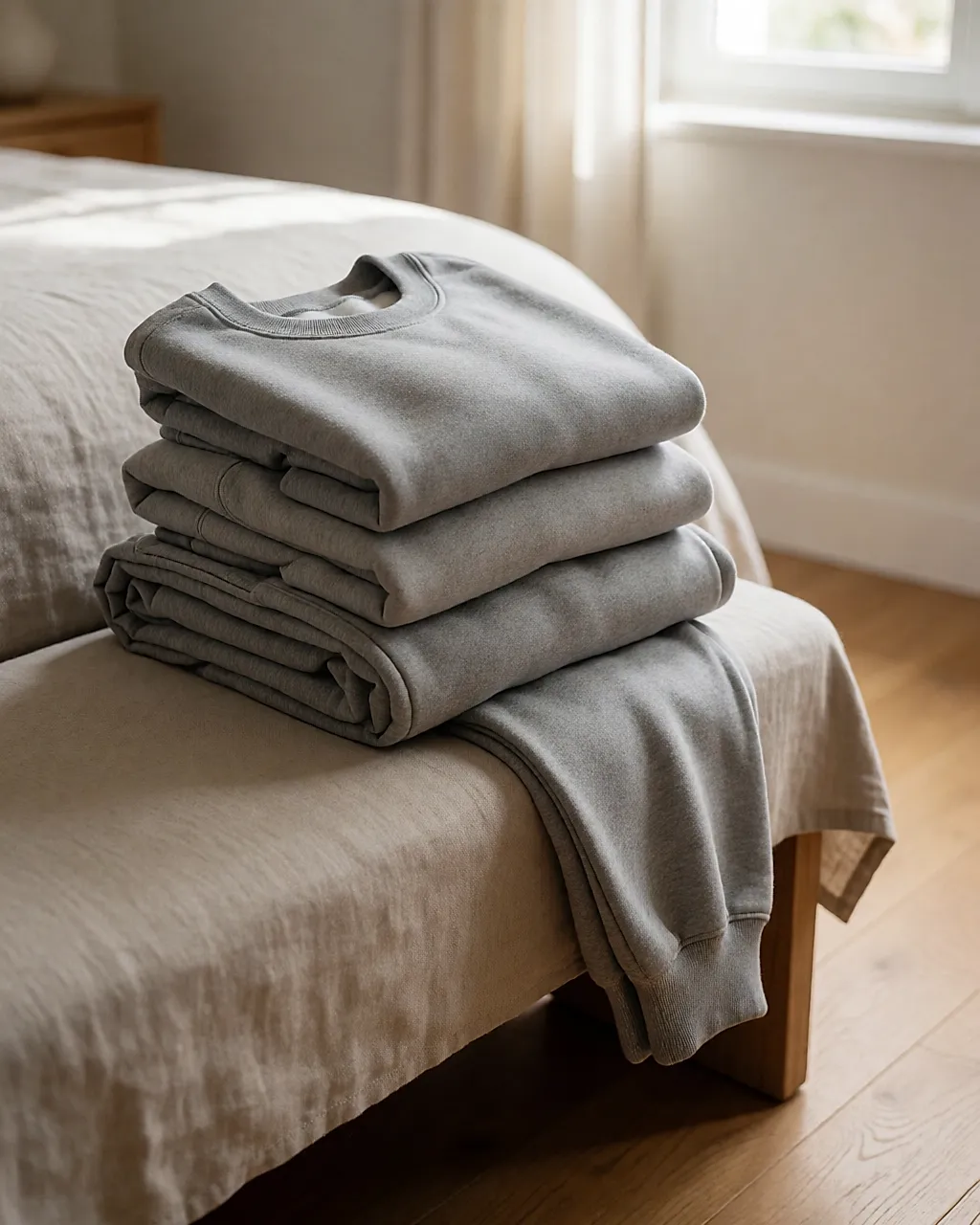
What separates a piece that works from one that sags isn't the colour, it's the drape. A thin sweatshirt fabric barely holds its shape. The denser the fabric, the better it stands on its own, the seams stop pulling and the piece finally looks like a proper garment. Turn it inside out: visible loops mean an unbrushed loopback, which is more fluid; a fluffy surface means a brushed-back jersey, warmer and rounder. Two fabrics, two uses – decide according to the season.
Layering: your secret weapon
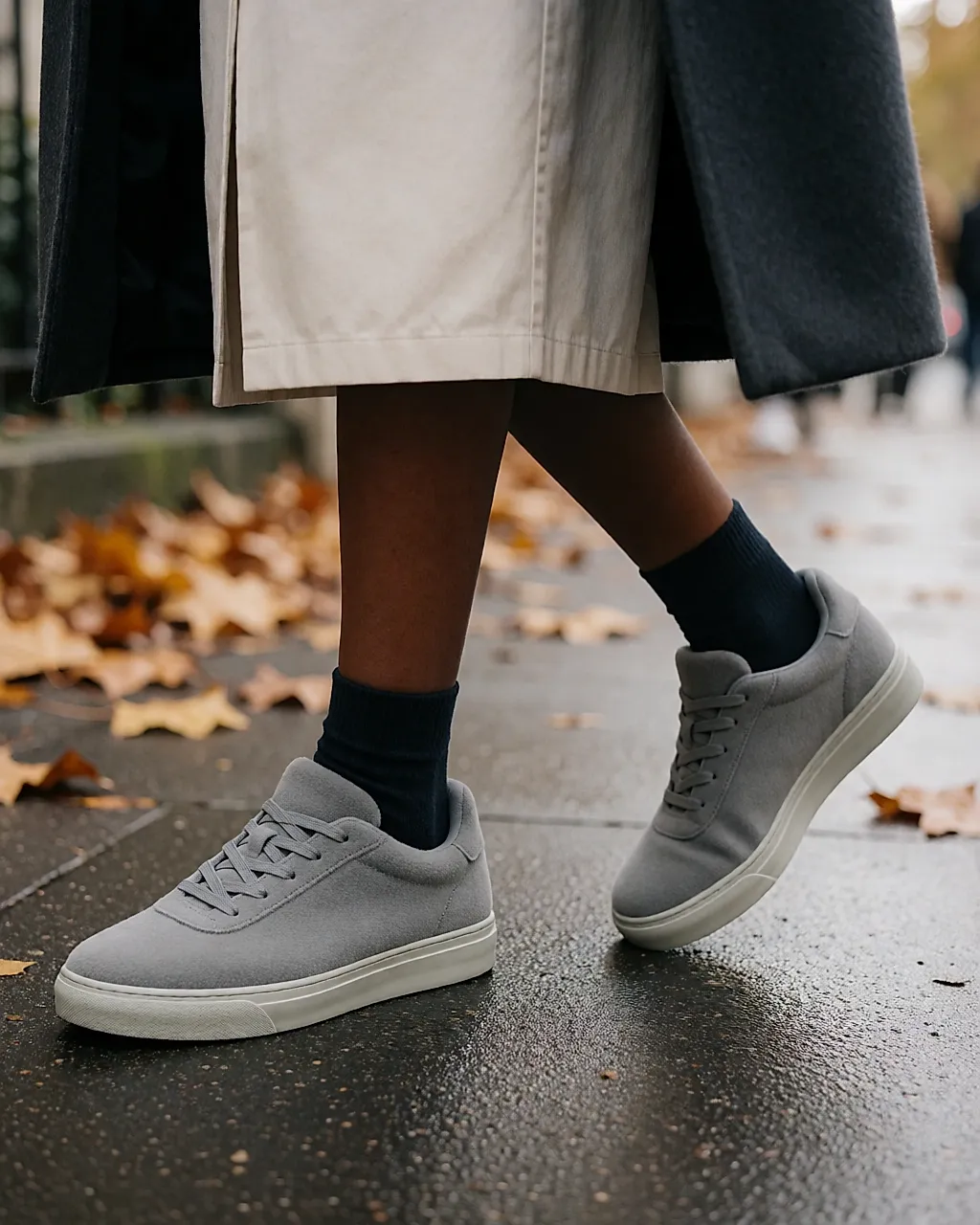
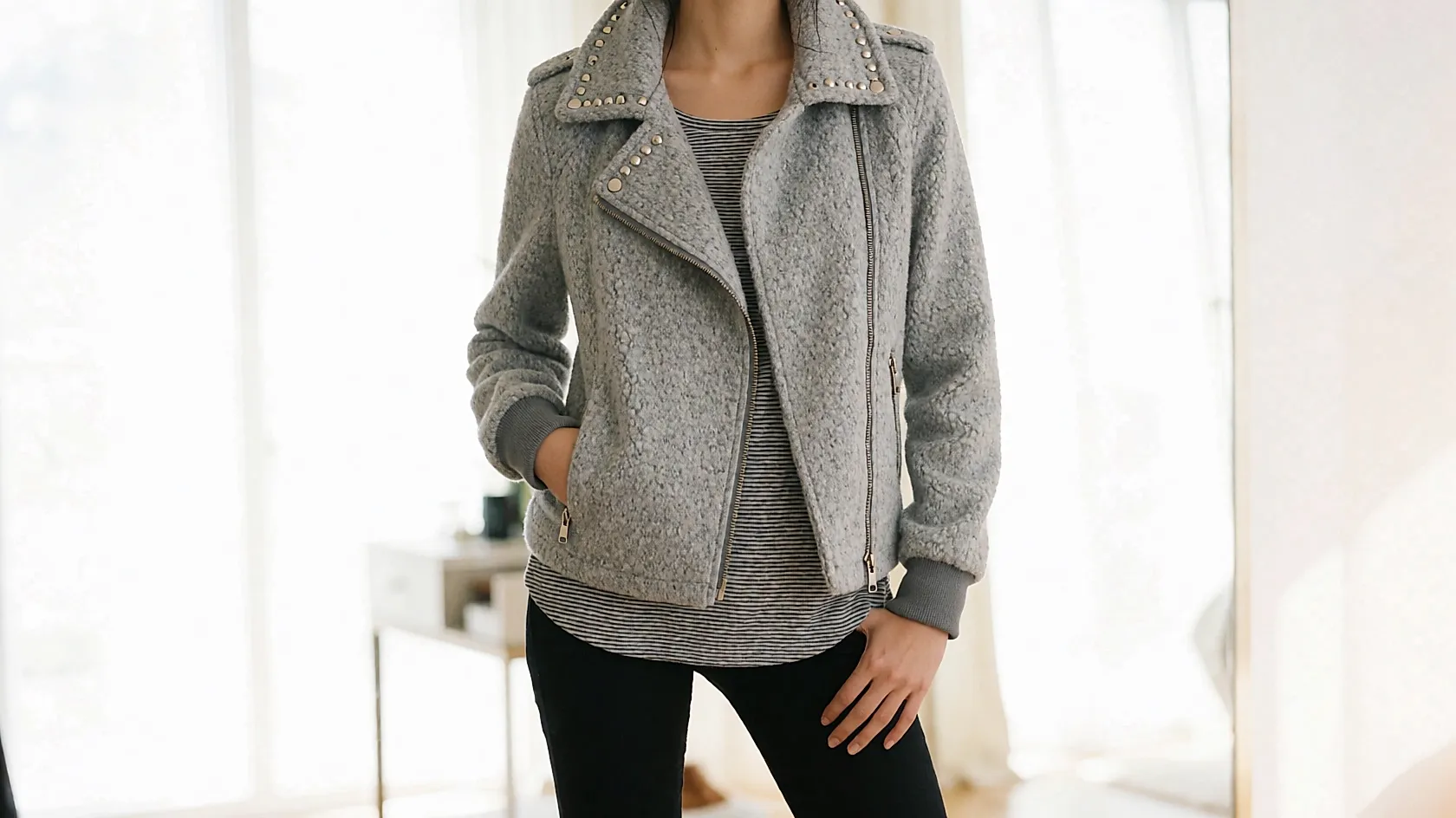
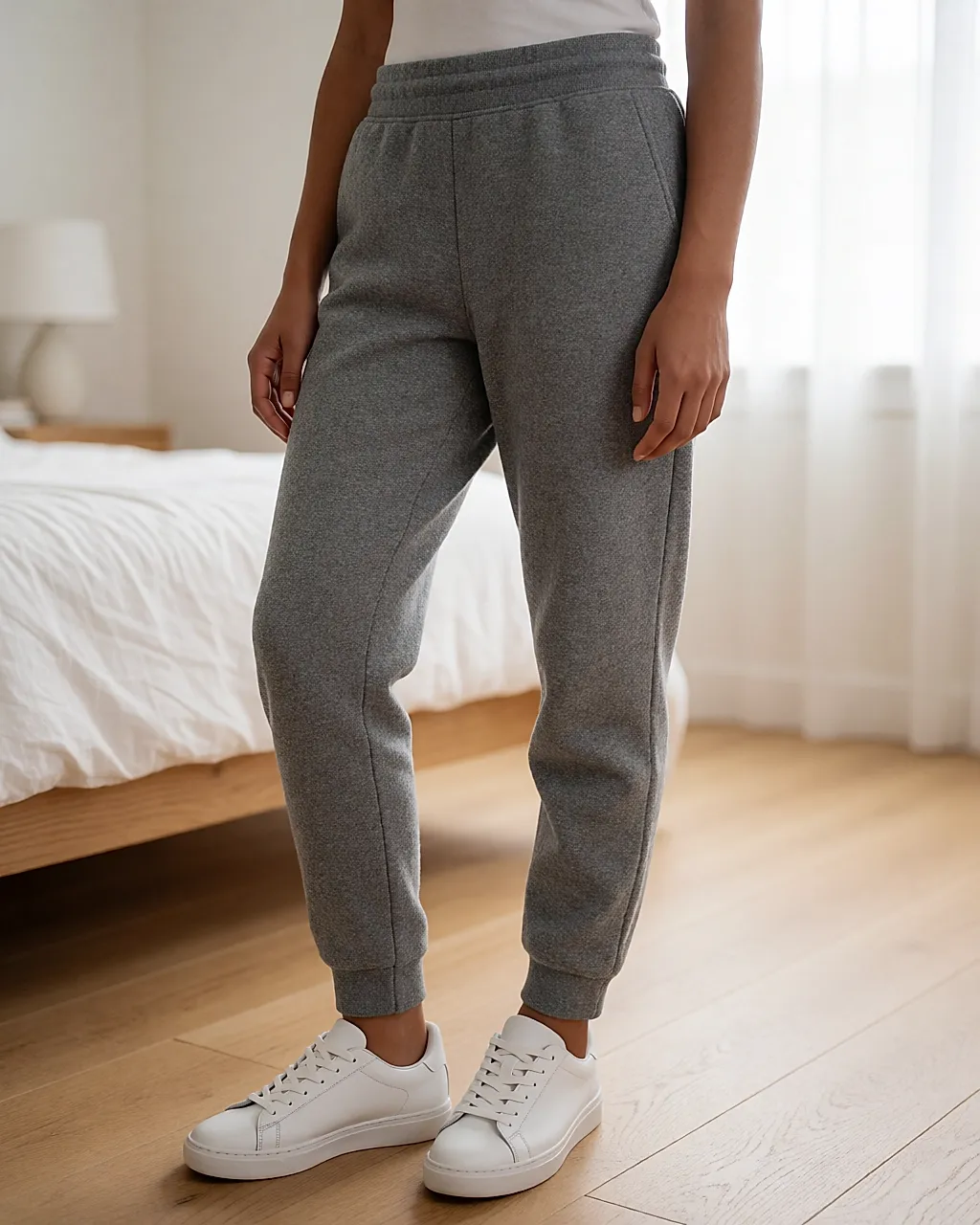
To avoid looking like you're off to the gym, play with layers. A grey marl sweatshirt under a jacket with structured shoulders, collar peeking out, and the whole look changes sides. Sweatshirt-fabric trousers, though, need proper shoes: loafers or low-heeled ankle boots to lengthen the leg, slim, immaculate trainers for a deliberate streetwear feel. The real trap is the anonymous shoe that says nothing and flattens the silhouette.
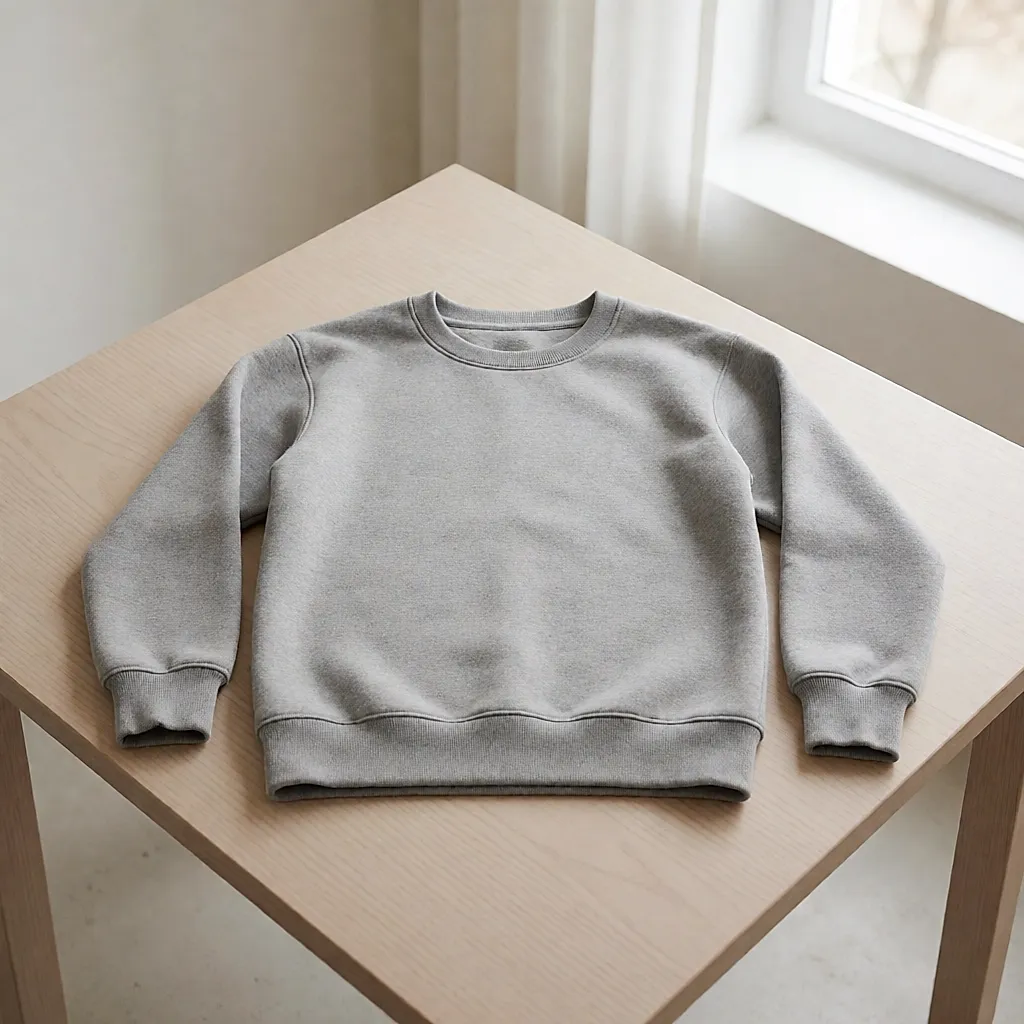
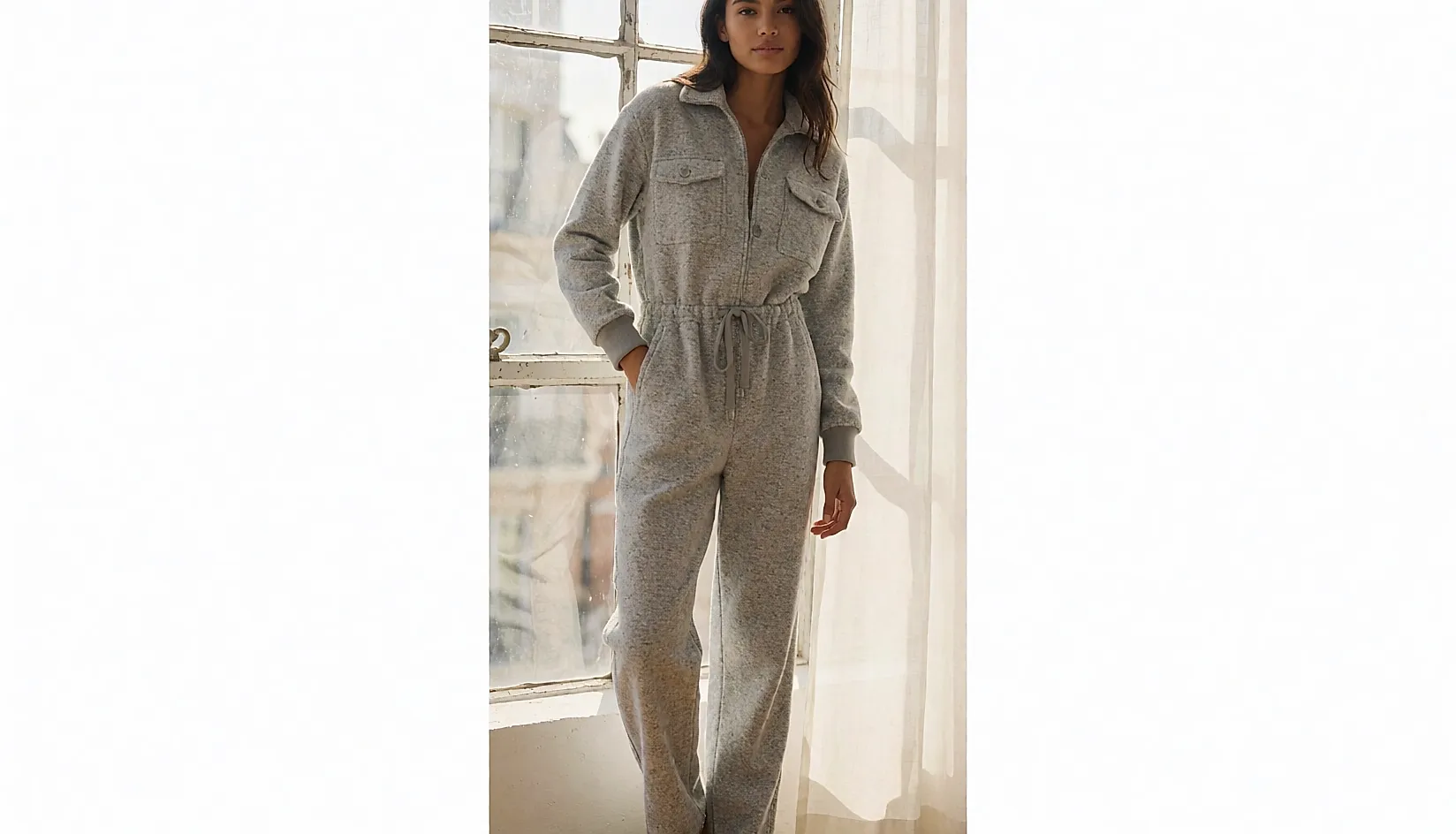
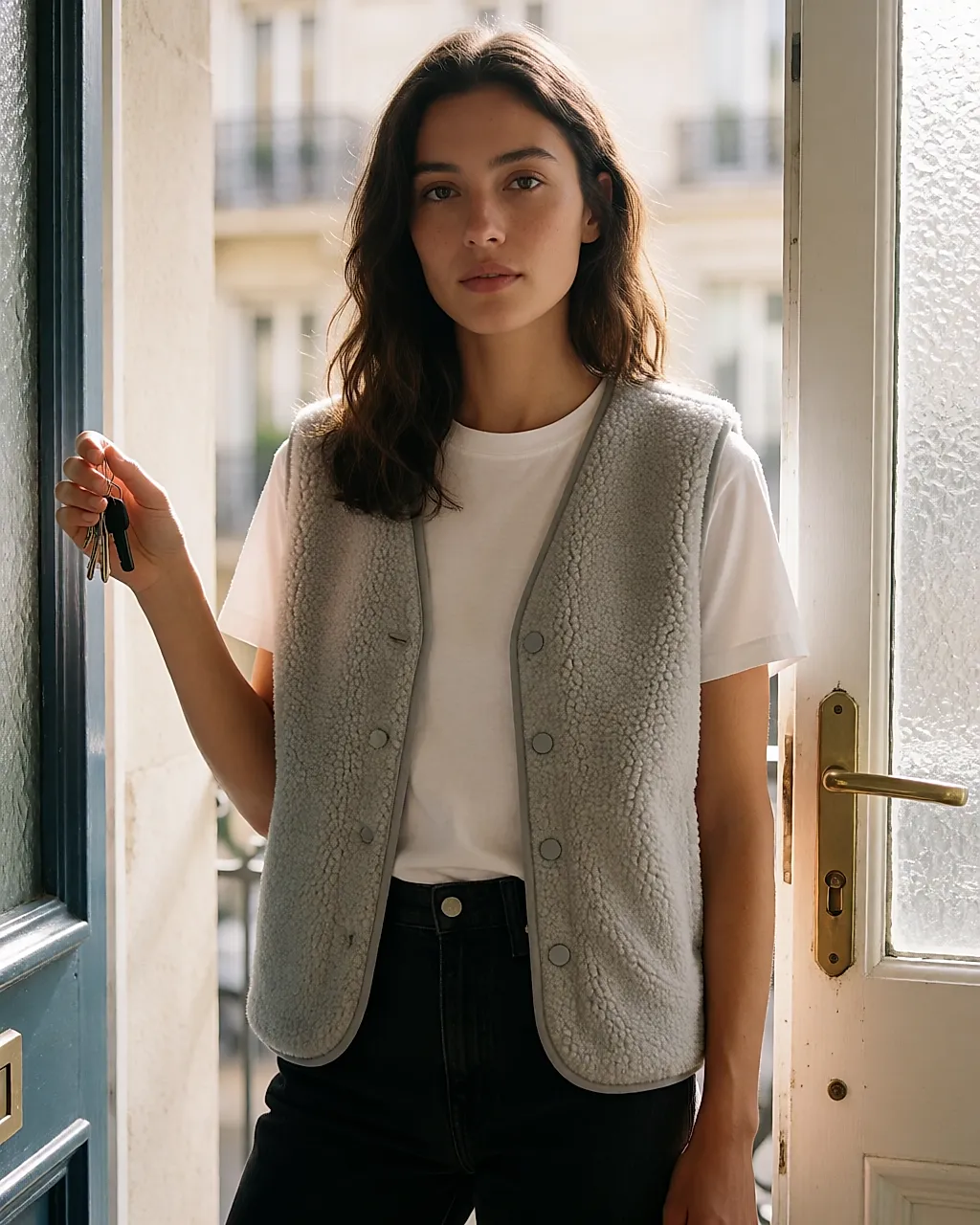
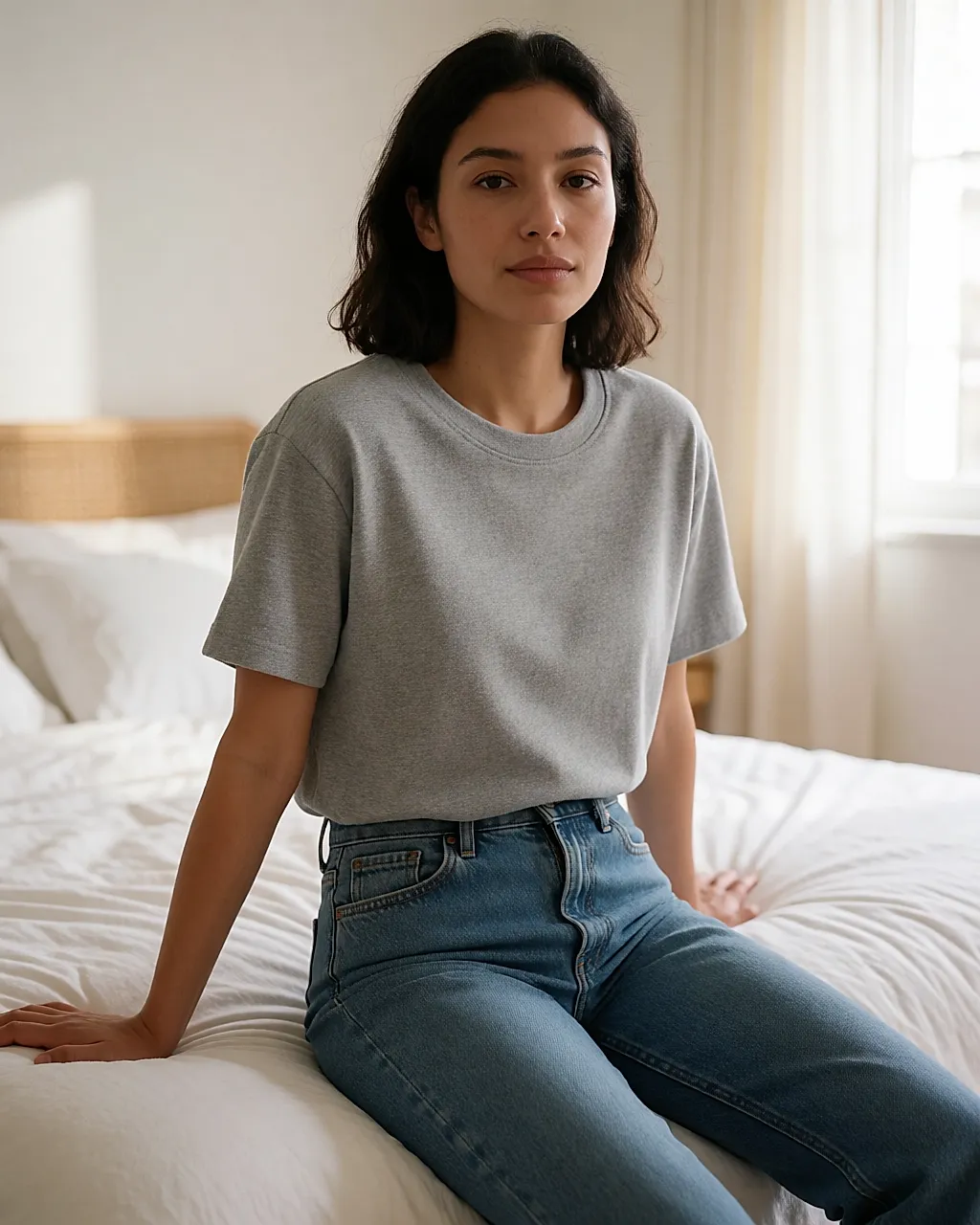
On cut, two options. A slightly oversized straight shape works over raw denim and an open shirt. A short cut, fitted at the shoulders, is best with high-waisted tailored trousers: the waistband defines the waist and the silhouette breathes. A sweatshirt gilet, meanwhile, can be buttoned over a long fine-knit dress – the easiest layering trick to pull off.
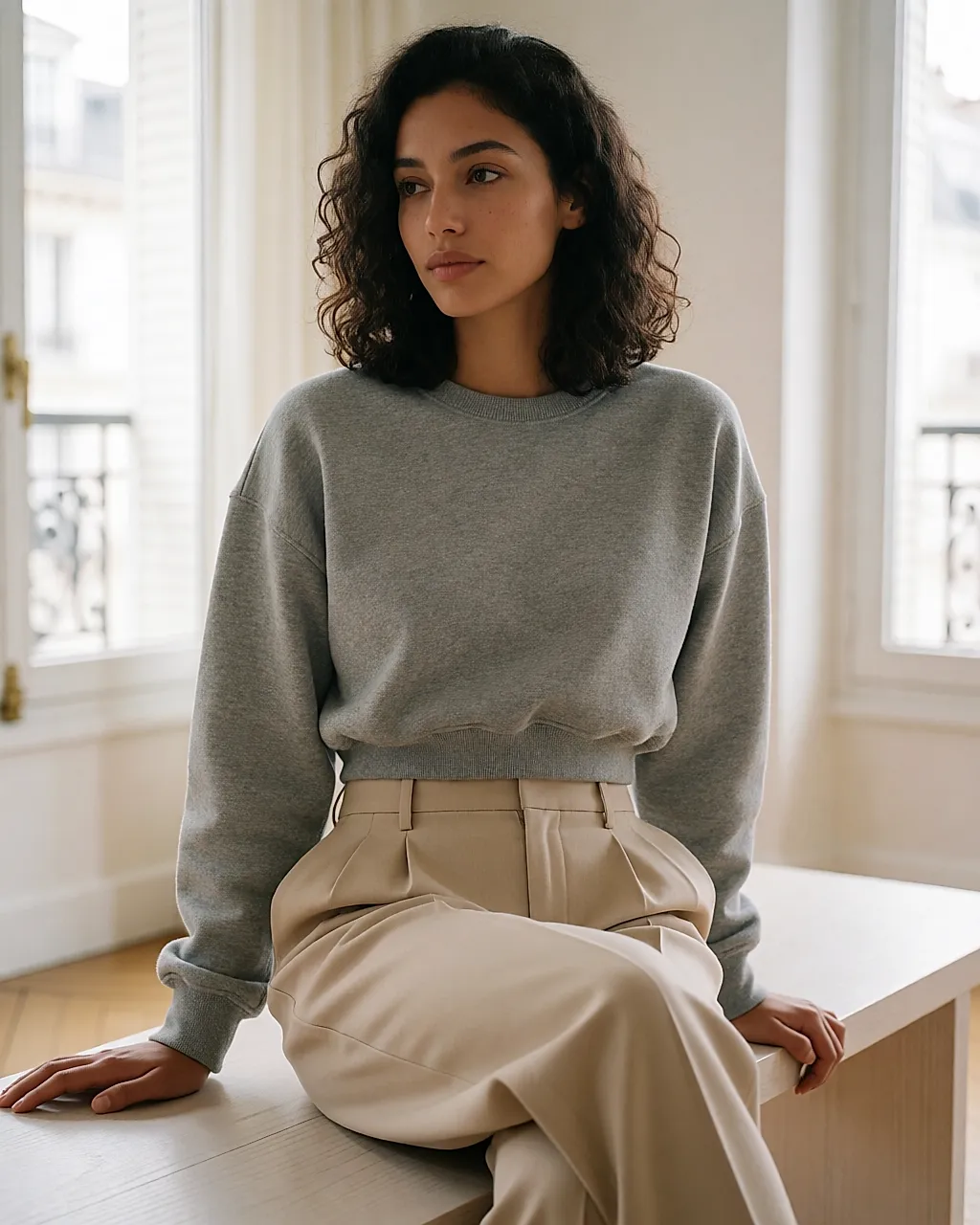
For the dress, choose a fine sweatshirt fabric and a straight line, otherwise the whole thing turns into a sack. Opaque tights, boots, and you're done. This is the kind of piece you keep for years as long as you don't give in to the cheapest price: better a slightly more expensive basic than a sweatshirt fabric that loses its shape after a few washes.
Choosing a piece that holds up
In reality, sweatshirt fabric is knitted cotton. Some blends with a high polyester content can bobble or lose their shape depending on the quality. If you want to go further, look for GOTS-certified organic cotton: the label covers how the fibre is grown and processed, plus social criteria, which a simple 'organic cotton' claim on the label doesn't guarantee. Alternatively, GRS (Global Recycled Standard) verifies a proportion of recycled material. Oeko-Tex Standard 100 checks for harmful substances: useful, but it says nothing about where the fibre comes from.
At end of life, the UK has a growing textile collection network: council recycling centres, charity shops and retailer take-back schemes, with WRAP's Textiles 2030 initiative pushing the sector to improve. In France, Refashion is the dedicated body for textile collection and recycling. Before throwing anything away, think repair – a sweatshirt can be darned at the elbows and ribbed trims can be replaced.
I'll be honest: I haven't tested the pieces mentioned here; these are documented selection criteria.
Four rules that save an all-sweatshirt look
Only one sweatshirt-fabric piece per outfit when the fabric is thick. Always contrast textures: sweatshirt fabric with denim, leather or fine knit. Shoes set the register – ankle boots for a dressed-up look, trainers for casual. And add slightly chunky jewellery, otherwise the whole look falls flat.
Budget
Typical UK price ranges for a sweatshirt or sweatshirt-fabric trousers:
- Fast fashion and supermarkets: around £12 to £40. Fabric weight is often light; how well it lasts is hit and miss.
- Mid-range brands: £45 to £90. Cleaner finishing, denser fabrics.
- Organic cotton made in Europe: £80 to £160. You're paying for the certification and a shorter supply chain.
What moves the price: fabric weight, composition, where it's made, cut and brand. Where to look: fashion retailers and their websites, specialist online brands, and above all second-hand – charity shops, resale platforms, community swap schemes. A pre-worn sweatshirt has often lost its new stiffness, and that's not a fault.
Sources
- GOTS (Global Organic Textile Standard) – organic cotton and processing standard: global-standard.org
- Textile Exchange – GRS (Global Recycled Standard): textileexchange.org
- WRAP – UK textiles, clothing and consumer behaviour research: wrap.ngo
- ADEME (France) – publications on textiles and responsible consumption: ademe.fr
- Refashion (France) – textile collection and recycling scheme: refashion.fr
- Oeko-Tex – Standard 100, harmful substances: oeko-tex.com

Comments
Your opinion matters: rate the article, react and reply to comments.
Comments are moderated; AI-assisted comments are flagged. Text emoticons (8-), :-), <3…) are automatically shown as images.