
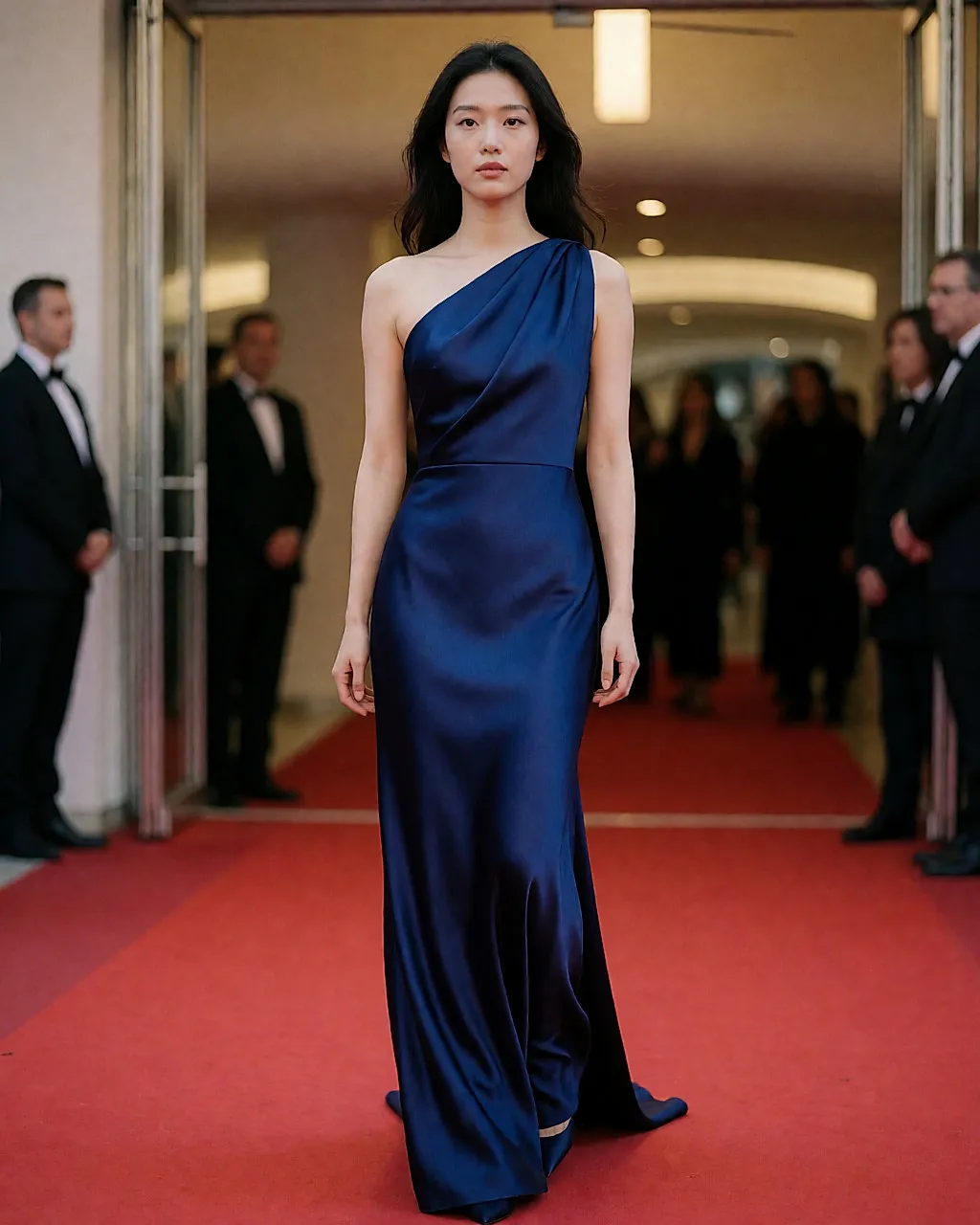
Do you remember the blue dress from the 2009 Oscars? The bare shoulder, the satin with a crisp drape, that deep blue standing out among the safe red-carpet outfits. Under the flashes, a face the wider public did not yet know: Freida Pinto. Seventeen years later, her wardrobe remains a lesson in contrast.
From Bombay to Hollywood, with no career plan
Freida Pinto was born on 18 October 1984 in Bombay, which has since become Mumbai. Her mother runs a school, her father works for a bank — a stable childhood, a degree in English literature at St. Xavier's College, then a contract with Elite Model Management India. Campaigns followed (De Beers, Visa, MTV, Skoda), and she presented a travel documentary series for an Indian channel.
Then Danny Boyle opened casting for Slumdog Millionaire. Months of auditions, deliberations, and the role of Latika eventually came to her. The film was released in 2008 and took home eight Oscars, including Best Picture and Best Director; its cast won the ensemble award at the Screen Actors Guild Awards. What came next? Miral by Julian Schnabel, Rise of the Planet of the Apes, Woody Allen's comedy You Will Meet a Tall Dark Stranger, and more recently Mr. Malcolm's List. For an on-screen debut, that is already a solid path.
Her silhouette: contrast and fabric
Her look rests on a simple rule: two registers, never three. Either a full monochrome look, or a bold print worn against a plain background. The Dior dress designed by John Galliano at the 2009 Oscars sums up the method — architectural cut, one shoulder, no accessories to overload the line.
Day to day, she alternates: high-waisted raw denim, a poplin shirt, then a statement piece that accessorises the rest (gold jewellery, structured bag). Layering stays light, two layers maximum. A matte texture placed against a fluid material, and you're done.
What can you copy? Invest in a fabric that holds its shape, not one that shines. In practice? A budget polyester satin creases and hangs badly; a dense viscose or washed silk falls completely differently — and that's when we fall for it!
The move that changes everything: before buying a statement piece, take a photo of yourself wearing it. If it steals the show from your face, put it back! A strong piece serves your silhouette; it doesn't replace it — we love it, as long as it stays in its place.
Budget
Guide prices seen in the UK, excluding sales. None of these pieces has been tested for this article: these are market ballpark figures, not personal recommendations.
- Long satin dress, ready-to-wear: expect around £60 to £150; for a designer brand, £250 to £600, sometimes more.
- Dress in GOTS-certified fibre or GRS-certified recycled material: £90 to £300 depending on the cut.
- Gold-tone costume jewellery: £20 to £80. Gold-plated: £80 to £200, with the thickness of the plating determining the price.
- Plant-based leather bag (grape, cactus, apple): £100 to £300.
What pushes the price up: the fabric (virgin or recycled fibre), the complexity of the cut, where it was made, the label. Three checkable markers to help you navigate this: GOTS covers organic fibre, processing and social requirements; GRS certifies a percentage of recycled material and traceability; OEKO-TEX Standard 100 checks for undesirable substances in the finished product. None of them makes a garment 'sustainable' on its own — each covers a specific scope.
Where to look: second-hand first (Vinted, Vestiaire Collective, local charity shops) for an evening piece you'll wear once; otherwise independent designers and young online brands, the high street for basics, jewellers for gold plating. The accepted compromise: for shoes and technical bags, truly eco-responsible options remain rare at a comparable price.



Comments
Your opinion matters: rate the article, react and reply to comments.
Comments are moderated; AI-assisted comments are flagged. Text emoticons (8-), :-), <3…) are automatically shown as images.