

Sunglasses: the star attitude trend
Some mornings you go searching for your own gaze in the mirror, and a simple pair of sunglasses changes everything. An accessory you slip on the way you'd slam a door: with intent. This isn't a beach trinket we're talking about, but the piece that signs off a look in a single second, without a word. And this season, the star attitude style is no mystery: just dip into the classics.
The red-carpet star is her: the Wayfarer from Ray-Ban. Launched in 1952 and a runaway commercial success, it remains one of the brand's best-known frames even today. Its trapezoidal acetate shape, which appeared the same year, needs no introduction: it's still one of the most recognisable silhouettes out there, seen as much in music videos as on festival steps. You're not taking much of a risk by adopting it.

Worn by the greats of cinema, the Wayfarer is still going strong on red carpets. And you have to admit that its wrapped frame hides the gaze without hardening the face — a balance that appeals to men and women alike. A retro look, a touch of dandy, a charm both rock and elegant: here's a frame that never goes out of fashion.
The sixties spirit, very ladylike
On the sixties front, it's all about frames mostly in tortoiseshell or black, paired with gradient lenses, riding the wave of retro sunglasses with their old-school glamour. The Prada collection, with its Italian touch, brings this trend into the light — and like the silhouettes on the runway, you can't go wrong.
For the bold, it's the frame that plays with angles: thick material, sharp edges, a graphic drape. Enough to carry a silhouette all on its own! Over raw denim and a white tee, it's already a total look; over an oversized blazer, it structures the layering without weighing it down.

Luxury dares everything
As a luxury accessory, sunglasses dare every audacity. For their design or a precious detail, fashionistas adore this flamboyance that lifts their look. Think of the Dior selection, with its roomy models and decorative motifs: the big heart-shaped padlock borrowed from the jewellery collection, or a sensual braided effect, irresistible like the crossed ribbons of an elegant corset. A strong statement, not for every wardrobe — but what a look when you own it!
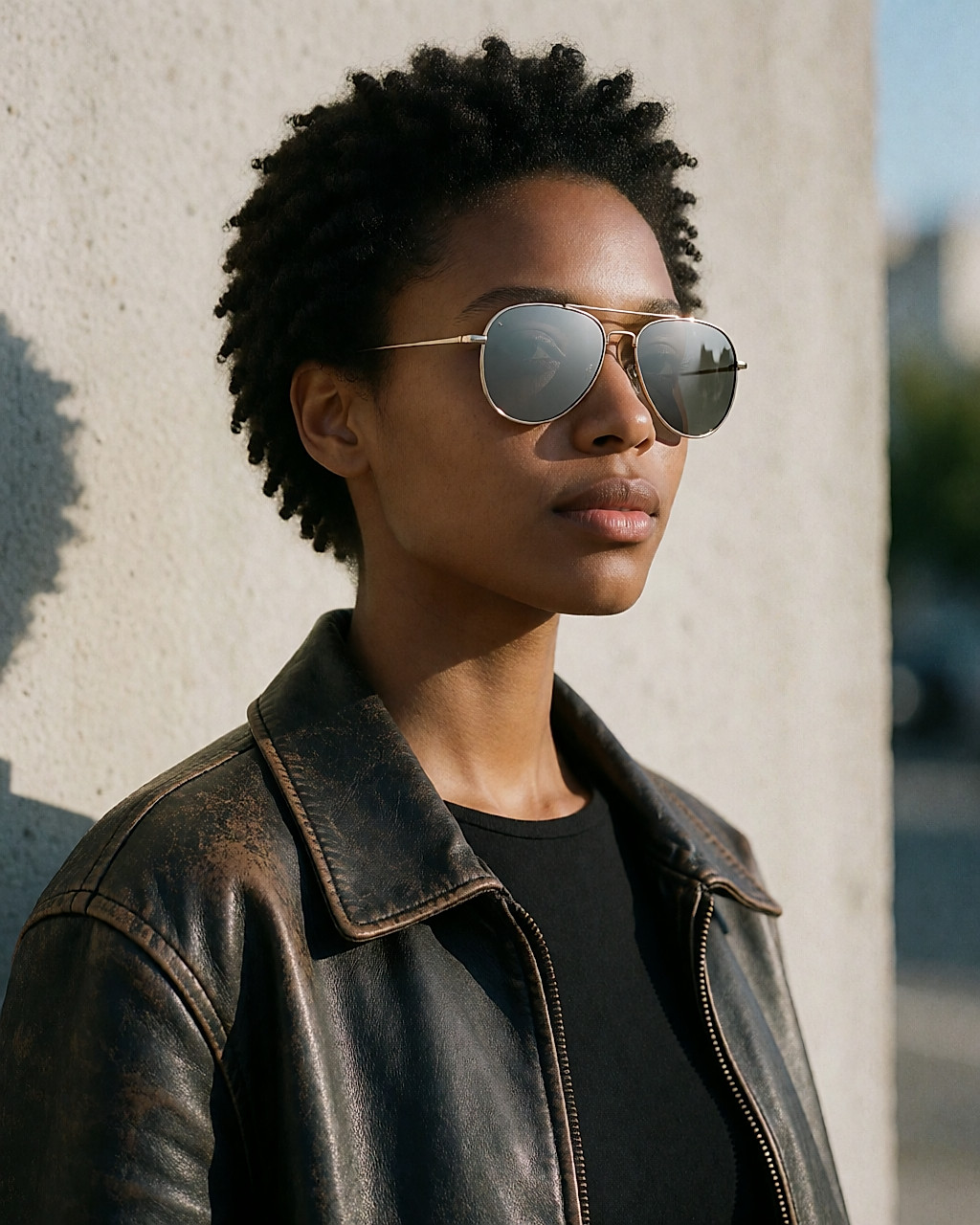
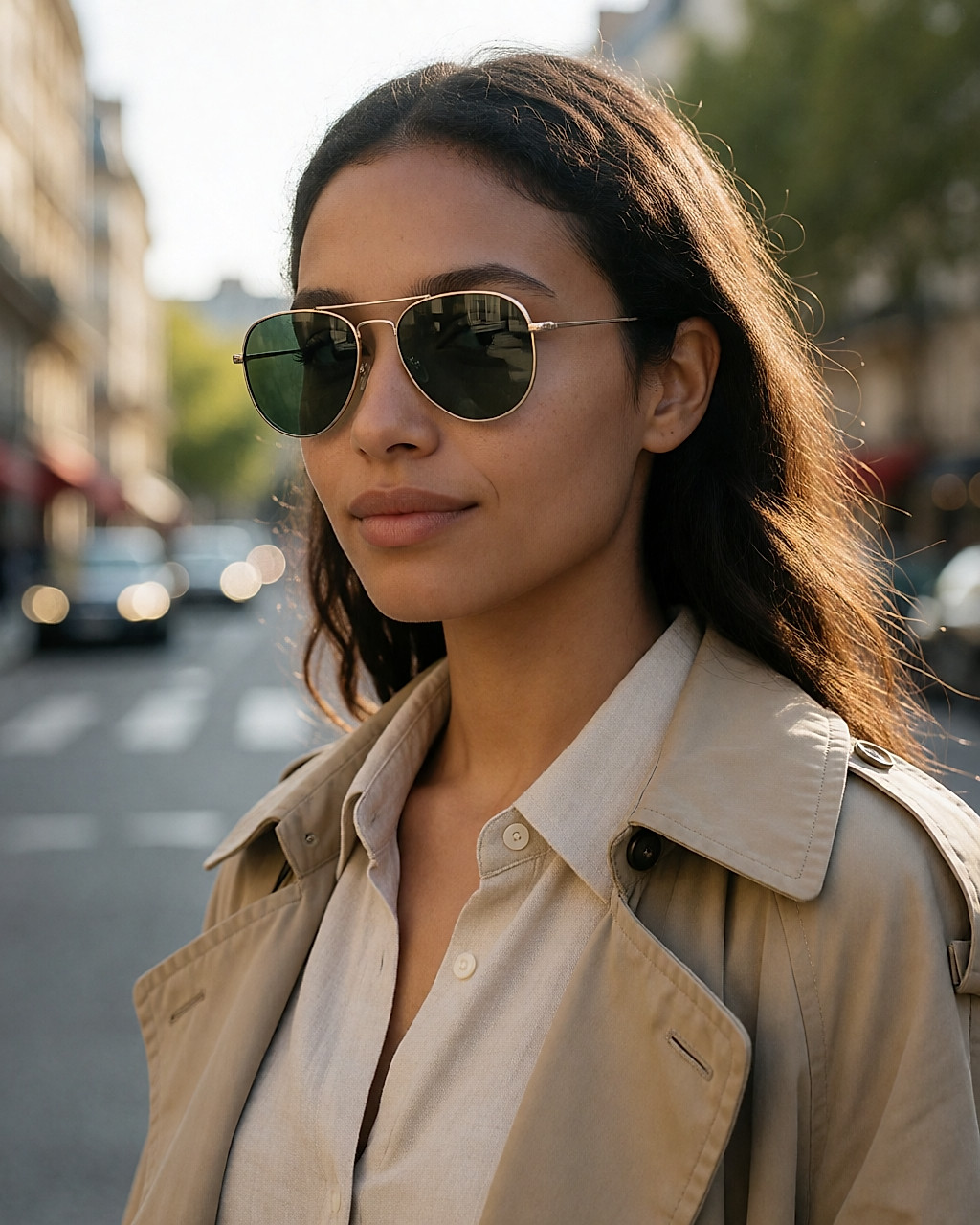
And what about bringing back the Ray-Ban Aviator? The brand's cult model, created in 1936 for US army pilots, then immortalised on screen by a cult 1980s film that fixed it in the collective imagination. Gold or silver metal frame, mirror-effect lenses, engraving on the temple: it's the wardrobe staple of sunglasses, the one that goes with everything, from swimsuit to trench!
What about the making, in all this?
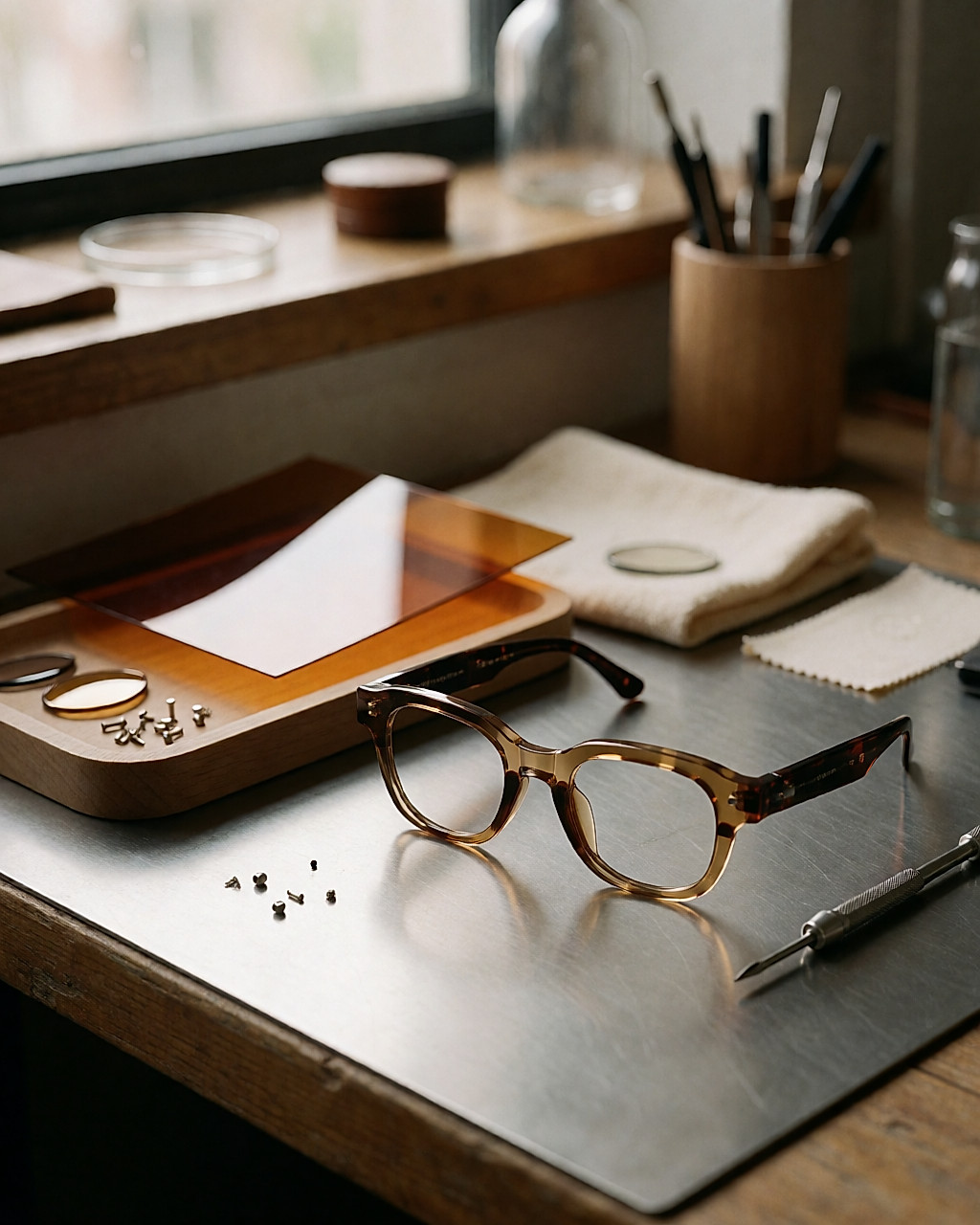
A pair made in France, born in the Jura, the historic cradle of French eyewear, has plenty to seduce well beyond style. The real bonus is the aftercare: a repairable frame, with replacement lenses and spare parts, can, well looked after, stay with you far longer than a pair quickly replaced. You gain in budget as well as in conscience, and that's exactly what we like.
They're not all equal, it's true. A cheap thin-plastic frame will last a season, scratched lenses included. A well-made acetate pair, with solid hinges and treated lenses, ages quite differently. The difference comes down to details you don't see at first glance: the quality of the polishing, the strength of the hinge, the thickness of the material. Take the time to fold and unfold the temple in store, that's often where it fails.
What remains is the essential: sunglasses are the must-have accessory from the first rays, summer and winter. An accessory to see, but also to be seen! So this summer, remember: the star will be you.
A round face will be flattered by a frame with marked angles, a square face by softer curves; small faces do best with a fine, proportionate frame, larger ones with generous shapes. The simplest thing is still to try on in front of a mirror, in daylight, and check that the frame doesn't extend beyond the width of the face.
Budget
Expect around £50 to £130 for a good-quality acetate pair from a big eyewear brand, and more like £130 to £260 for a designer model with gradient lenses or precious details. A frame made in France, in the Jura, usually sits between £105 and £215. Prices vary according to the material — acetate, metal, titanium —, the type of lenses (gradient, polarised, mirror-effect) and the point of sale: independent optician, chain or online shop. Before you commit, ask about the repair policy and the cost of replacement lenses.
Sources
- Ray-Ban — History of the Wayfarer (1952) and Aviator (1936) models, official website.
- Musée de la Lunette, Morez (Jura) — History and know-how of French eyewear.

Comments
Your opinion matters: rate the article, react and reply to comments.
Comments are moderated; AI-assisted comments are flagged. Text emoticons (8-), :-), <3…) are automatically shown as images.