
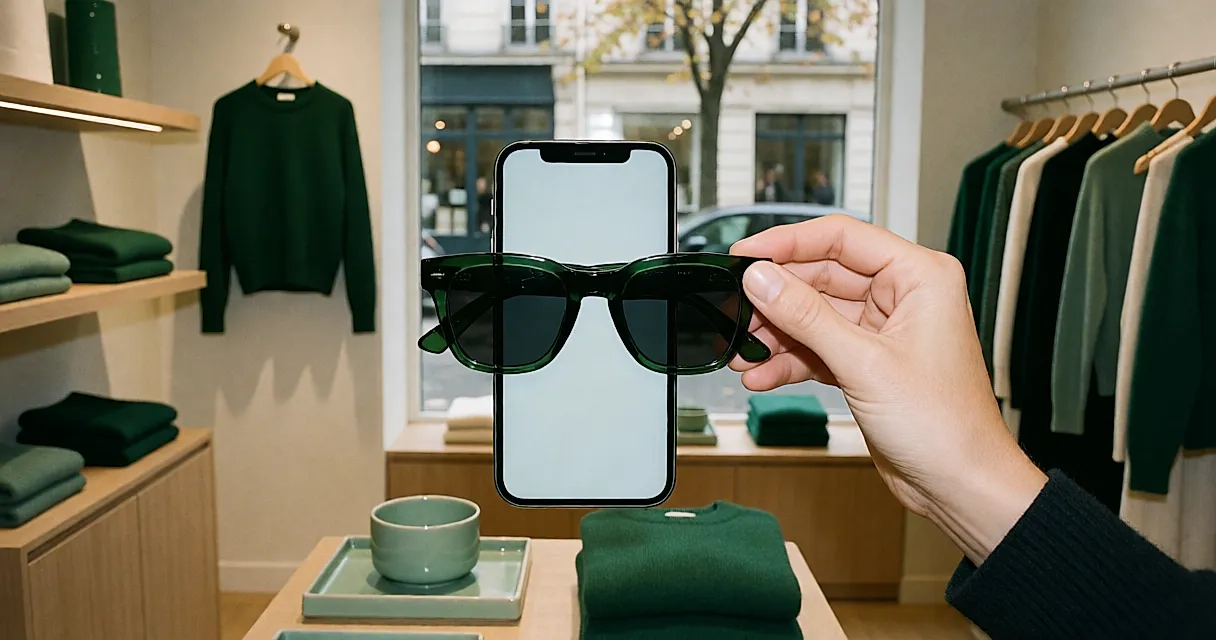
A tinted lens pulls down the blind; a polarised lens takes the reflection away. They are not the same thing, yet it's the most common confusion in front of a display. The first darkens everything, including what you'd like to make out; the second cuts the glare bouncing up from asphalt, a car bonnet or a puddle. Which is why the pair you put away in September as a summer accessory deserves to stay in your bag until December.
A dark lens is not a polarising filter
The tint and the polarising filter are two separate things, and one tells you nothing about the other. The tint is density: it decides how much light passes through the lens, hence categories 0 to 4, from lightest to darkest. The polarising filter, by contrast, targets one specific direction of light: the light reflected horizontally off a flat surface such as a wet road, a shop window or a car bonnet. A dark but non-polarised lens doesn't remove that reflection; it just makes it darker. Which is not exactly a win.
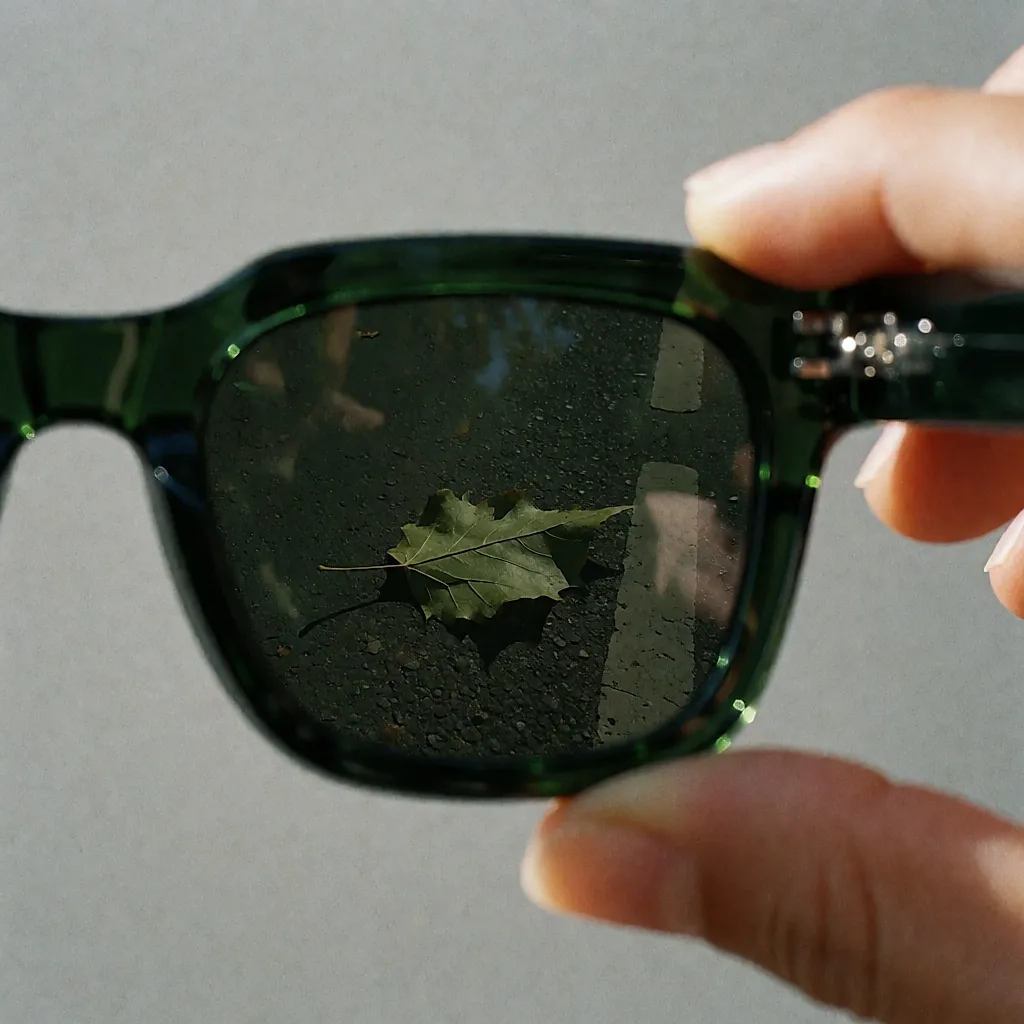
Is the darkest lens the most protective? Not necessarily, and that's where the misunderstanding starts. In November, available light is already low: a very dark lens adds a grey filter over an already grey sky, and you lose detail – the edge of the pavement, the puddle, the cyclist filtering up the queue. In practice, choose a category suited to the light; the darkest lenses are not right for a low-light morning commute.
A light-coloured frame is portable lighting
When it comes to frames, winter plays a different tune. A translucent, ivory, honey or pearl-grey frame lights up the complexion when the sky won't, and it works with seasonal textures: the bouclé wool of a coat, the thick cotton of a trench, a cream roll-neck. Clear acetate gives that lit-from-within effect without looking as if you've just stepped out of a studio. A wrap-around frame, meanwhile, covers more of the eye contour – welcome when walking into the wind, and more comfortable under a beanie.

Do watch the thickness, though: the clearer the acetate, the more you see through it, and the more your brows or make-up show behind the rim. On a fine face, thick crystal creates a nice contrast; on a smaller face, a thin rim is more discreet and often more flattering. And if black is the only colour you'll wear, you don't have to switch sides: a dark frame with a real filter is more useful than a light frame without one.
How to check the filter without trusting the colour
So how do you decide without buying blind? Certainly not by naked eye at the shop window: the colour of the lens tells you nothing about the filter. A grey lens can be polarised, a brown one may not be, and the very pretty pink gradient on the next pair won't tell you anything either. What matters is the information provided: the lens category and whether the pair is genuinely polarised.
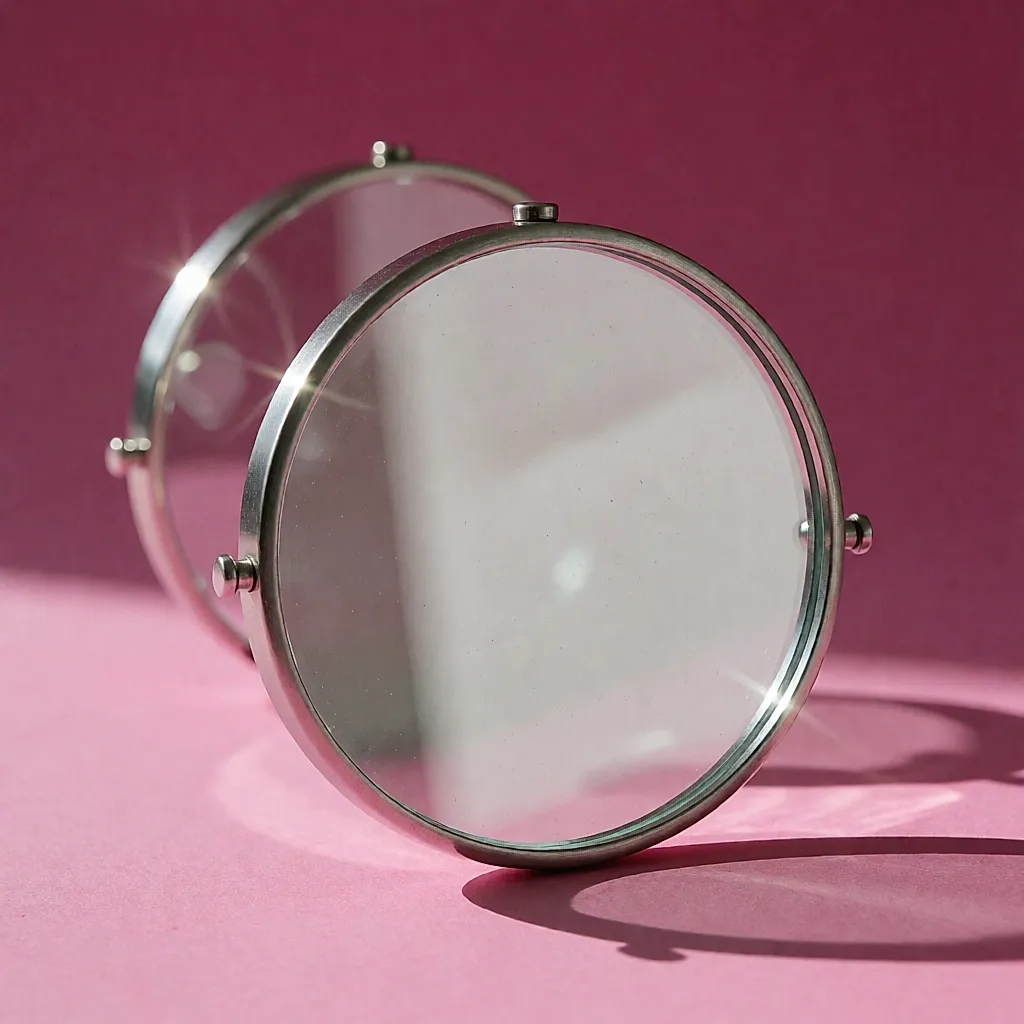
Two simple moves are enough to check a pair in store. The first is within your reach: hold the lens in front of your phone screen, turn it slowly and watch. At a certain angle the screen darkens sharply, sometimes to a blue-black – that's the filter doing its job. For the second, ask the sales assistant: opticians often have a two-lens demonstrator that you cross at 90 degrees, and the overlap goes almost entirely dark. If no one can show you either test, walk away: a pair whose filter can't be demonstrated is not a good buy, whatever the price.
The phone-screen test, quick version: screen on, lens in front, slow rotation. Does the image darken suddenly? The filter is there. Nothing changes at all? It's a tint, not a polarising lens.
What to spend
Expect to pay around £20 to £50 for a simple pair from a high-street chain, a pharmacy or a seasonal display – sometimes very pretty, sometimes with a filter, but the labelling is rarely clear. Between £60 and £150, opticians' own collections and independent brands offer decent polarised lenses, with a demonstration usually possible in store. Above £150, you are mainly paying for the frame, the design and the name: there's nothing wrong with that, it's just that the filter isn't what costs that much.
And if you'd rather avoid buying a new pair? Consider having the lenses changed in a frame you already love, if it's in good condition. It's often kinder to your budget than a new pair, avoids another purchase and gives a new lease of life to a frame that has been sleeping in a drawer. Ask for the price first: it really does vary from shop to shop.
A light-coloured pair with polarised lenses isn't a seasonal purchase to look pretty: it's the accessory that makes the road readable and the morning commute a little less dazzling. Turn the lens, compare, ask for the demonstration – and if you're torn between two frames, keep the one that makes you squint least, not the one with the prettiest lens colour.


Comments
Your opinion matters: rate the article, react and reply to comments.
Comments are moderated; AI-assisted comments are flagged. Text emoticons (8-), :-), <3…) are automatically shown as images.