

There are July mornings when you open your wardrobe and nothing works. Too dark, too sensible, too "I'm off to the office" — and yet the sun is already beating on the window panes. A friend asked me last week: how do you get back that soft, floral look we saw everywhere fifteen years ago, without ending up dressed like a garden centre catalogue? Good news: romance never really left the Naf Naf wardrobe. What's changed is the dose. In 2026, we keep one floral piece — just one — and let everything else breathe. The famous total look, yes, but in its measured form. Fair warning: I don't have these pieces in front of me. I'm talking about silhouettes, cuts and drape, not seasonal references.
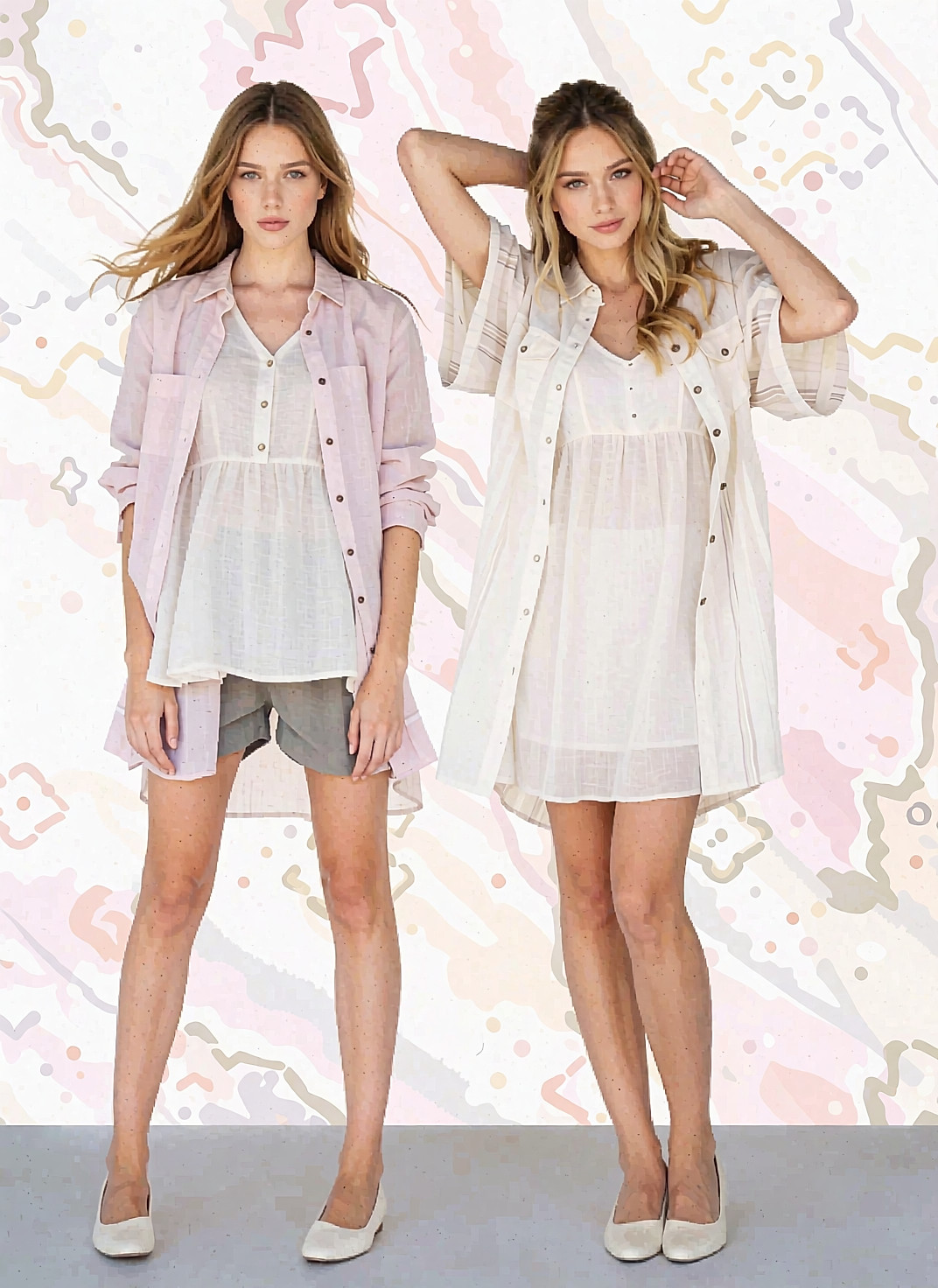
The foundation: fabric and drape before colour
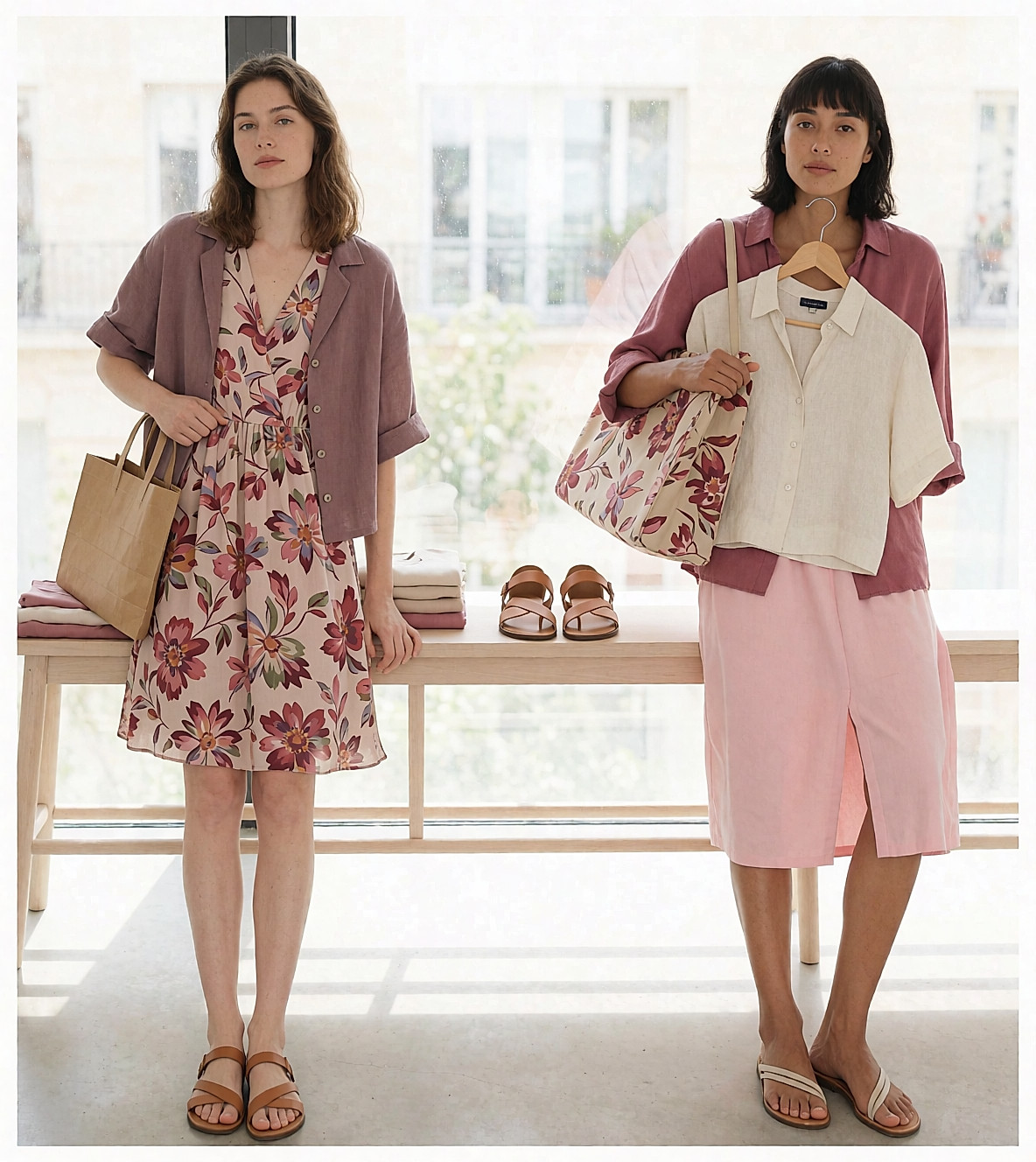
A fluid viscose dress and a heavy cotton dress don't tell the same story on a silhouette. To hold the countryside feel without tipping into costume, go for fabrics that move: washed linen, crepe cotton, slightly heavier viscose. A soft drape, a texture with life, and the look follows — without having to go heavy on the print.

On traceability, two markers are worth more than ten slogans. European linen certified European Flax frames cultivation carried out in Western Europe, and organic cotton certified GOTS sets precise criteria for both organic farming and textile processing. These aren't marketing arguments: they're verifiable specifications you can read online. Which is to say the label is worth a second look.
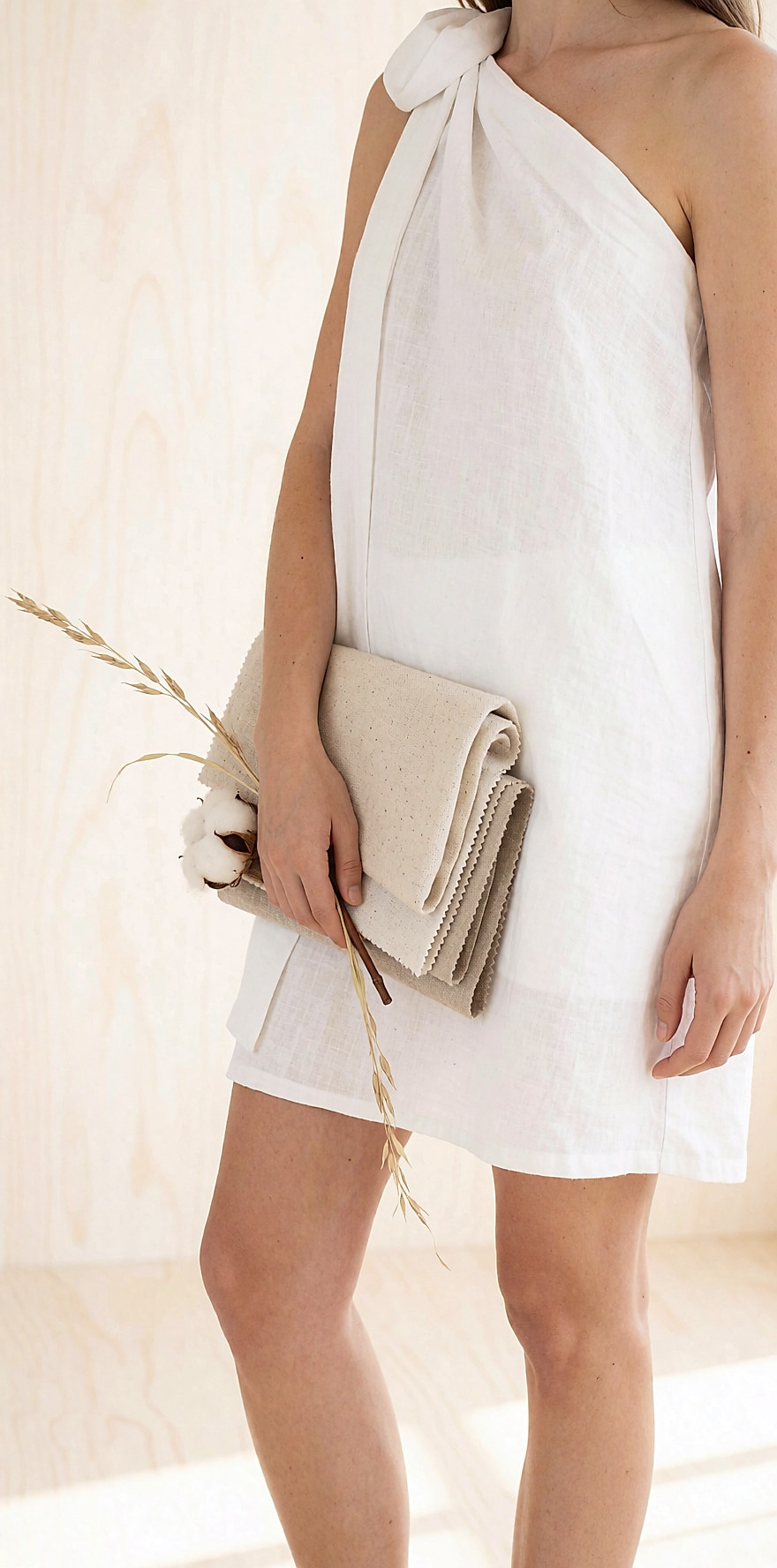
In practice, a well-chosen linen ages better than a synthetic satin that shines from the very first wash. And for a summer wardrobe that lasts several seasons, that's far from a detail.
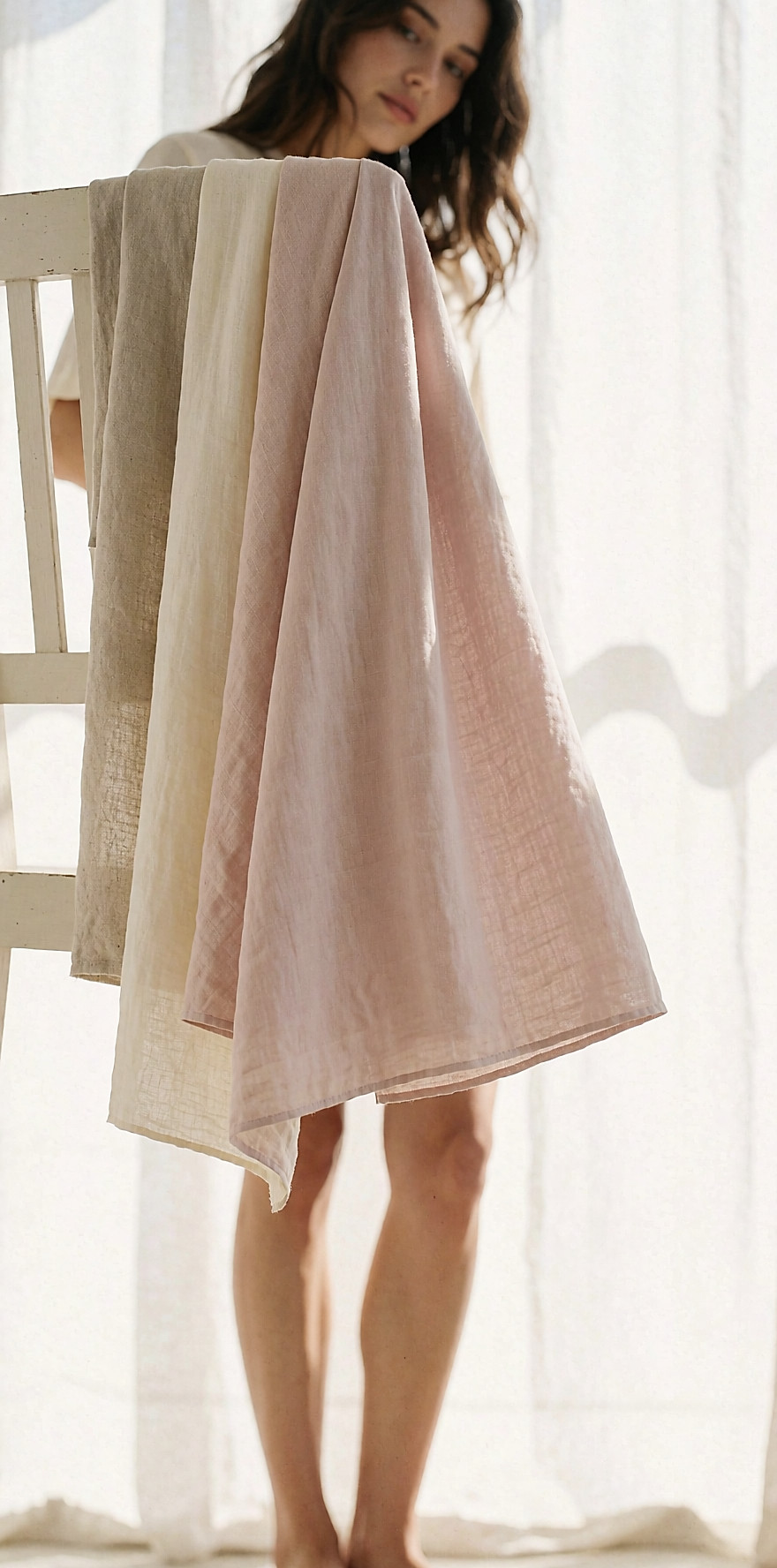
The 12 looks, without the costume
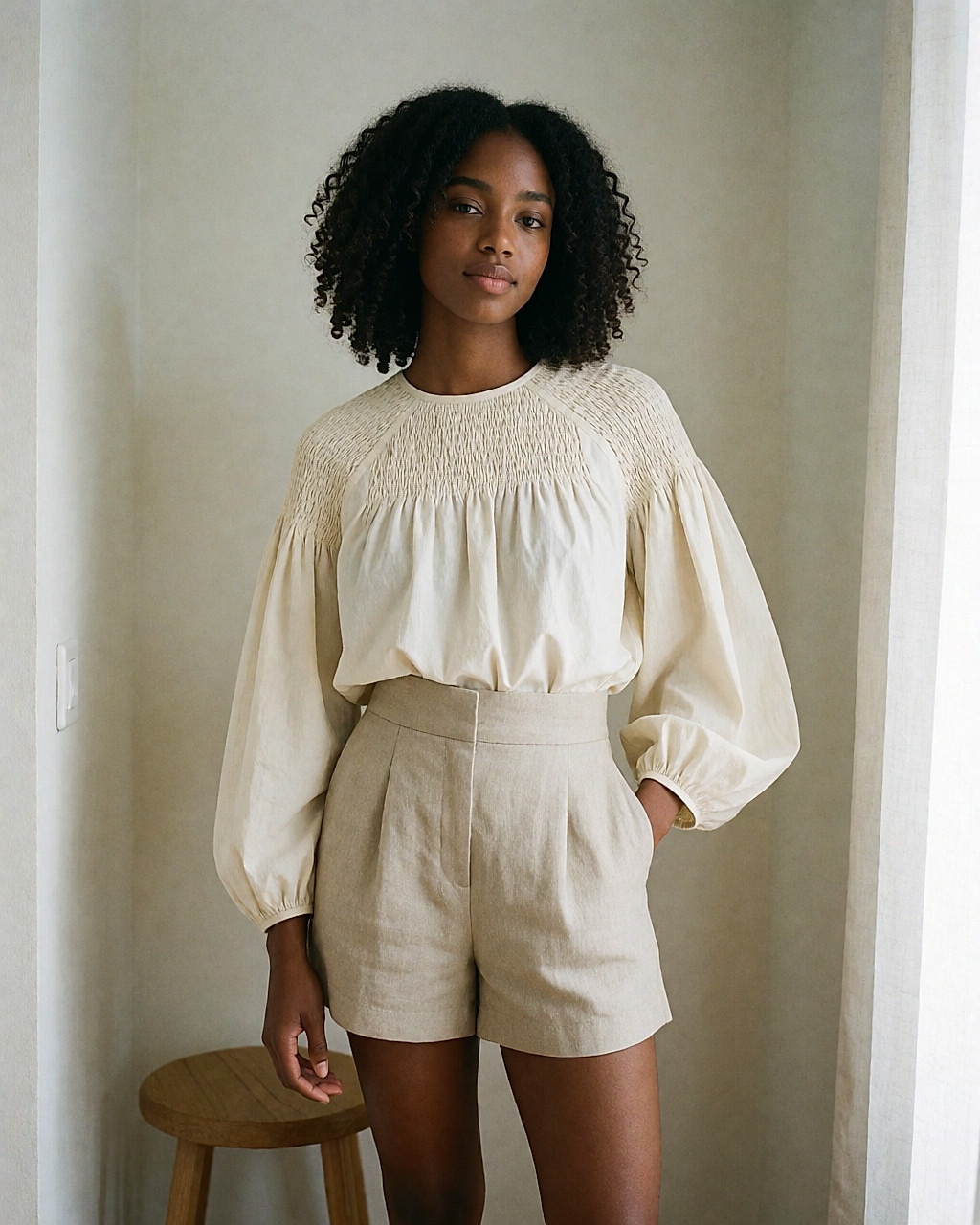
1. The short that stays smart. Forget the low-rise mini short. Take a high-waisted linen short, or one in pre-loved denim, and pair it with a smocked blouse or one with balloon sleeves. The contrast of fabrics does all the work.
2. The jumpsuit. It solves the morning question in a single decision. Short cotton version for the city, fluid trouser version for the evening. Look for a belt at the waist, never on the hips.
3. The satin dress with fine straps. A classic that returns every summer. Choose it long rather than short, and tie a fine belt at the hips to break the straight drape.
4. The fluid co-ord. Cropped top and wide trousers in the same fabric, peach or pale blue. It's the simplest total look to wear, and the most forgiving across body shapes.
5. The printed wrap dress. The liberty spirit redone in large format on a cream background. A single motif, no layering — otherwise the eye doesn't know where to land.
6. The long dress with tied straps. The crochet detail at the neckline remains a good idea, provided you keep it subtle.
7. The bare shoulder. Asymmetric dress with a single strap, edged with a ruffle. More modern than it looks, especially in a solid tone.
8. The checked blouse and fluid skirt. The grey and pink check duo still works, if you let the blouse slip off the shoulders instead of buttoning it to the top.
9. The empire-line dress. Three-quarter or kimono sleeves, high waist, light fabric. For days when you don't want to think about it.
10. The satin midi skirt. With a crew-neck T-shirt and flat sandals, it loses its dressy edge and gains in everyday wear.
11. The high-waisted wide trousers. They replace the old harem trouser without a problem: more structure, less pyjama effect.

12. The embroidered top. A statement piece over a plain skirt. That's where you put your dose of flowers, and nowhere else.
The move that changes everything: one floral piece per outfit, the rest solid in the same family of tones — cream, sand, powder pink, sky blue. You keep the countryside mood without the wallpaper effect.
Budget
Price ranges observed in the UK for everyday women's ready-to-wear, spring-summer:
- Cotton or linen blouse: £35 to £80
- Fluid printed dress: £50 to £130
- Linen short: £30 to £60
- Jumpsuit: £60 to £130
- Satin midi skirt: £40 to £90
- Flat leather sandals: £45 to £120
What changes the price: the fabric first (certified organic cotton costs more than polyester), where it's made, whether there's a certification label, and when you buy — at the end of the season, the same pieces are often found at reduced prices. Pre-loved, expect £10 to £35 for a blouse or dress in good condition.
Where to find them: the brand's city-centre stores, the official website, department stores and online multi-brand retailers. For pre-loved pieces, resale platforms and charity shops: that's where the style-to-price ratio is best, provided you don't mind a bit of rummaging.
The actionable piece of advice I repeat to every friend: start with one piece, not twelve. A well-cut fluid dress, a pair of flat sandals, and you build the rest around them. That's how a summer wardrobe holds up — and not only in a photograph.
Sources
- ADEME — Environmental impact of textiles, accessed 2026.
- Global Organic Textile Standard — Organic textile standard, accessed 2026.
- European Flax — European linen label, accessed 2026.


Comments
Your opinion matters: rate the article, react and reply to comments.
Comments are moderated; AI-assisted comments are flagged. Text emoticons (8-), :-), <3…) are automatically shown as images.