
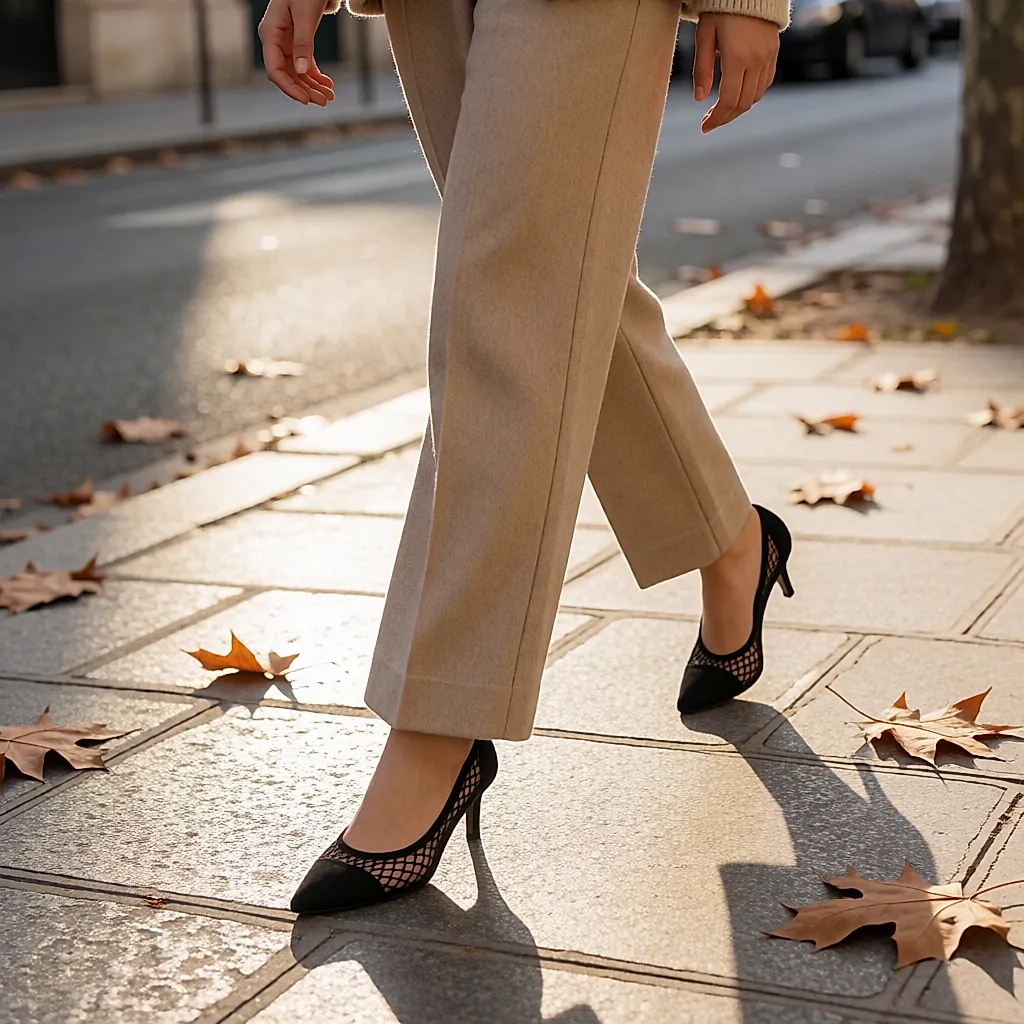
This morning it was raining, and in front of the wardrobe the mid-October argument picked up exactly where we left it: are we still doing sandals? Is it boots yet? Somewhere between the two sits a clever shoe that lets you see the foot instead of covering it up. The mesh court shoe: you see through it, the leg stays light, and you buy yourself a few extra weeks before the ankle boots come out.
What mesh actually does for the foot
Mesh is the open net that replaces a solid leather upper across the top of the foot. The effect is immediate: where opaque leather cuts a hard line across the foot, the net lets skin show through and stretches out the instep. A black pair reads less formal, a nude pair almost disappears, and the heel, however high, looks lighter. It's the sort of detail that means nothing in the box and everything once it's on.
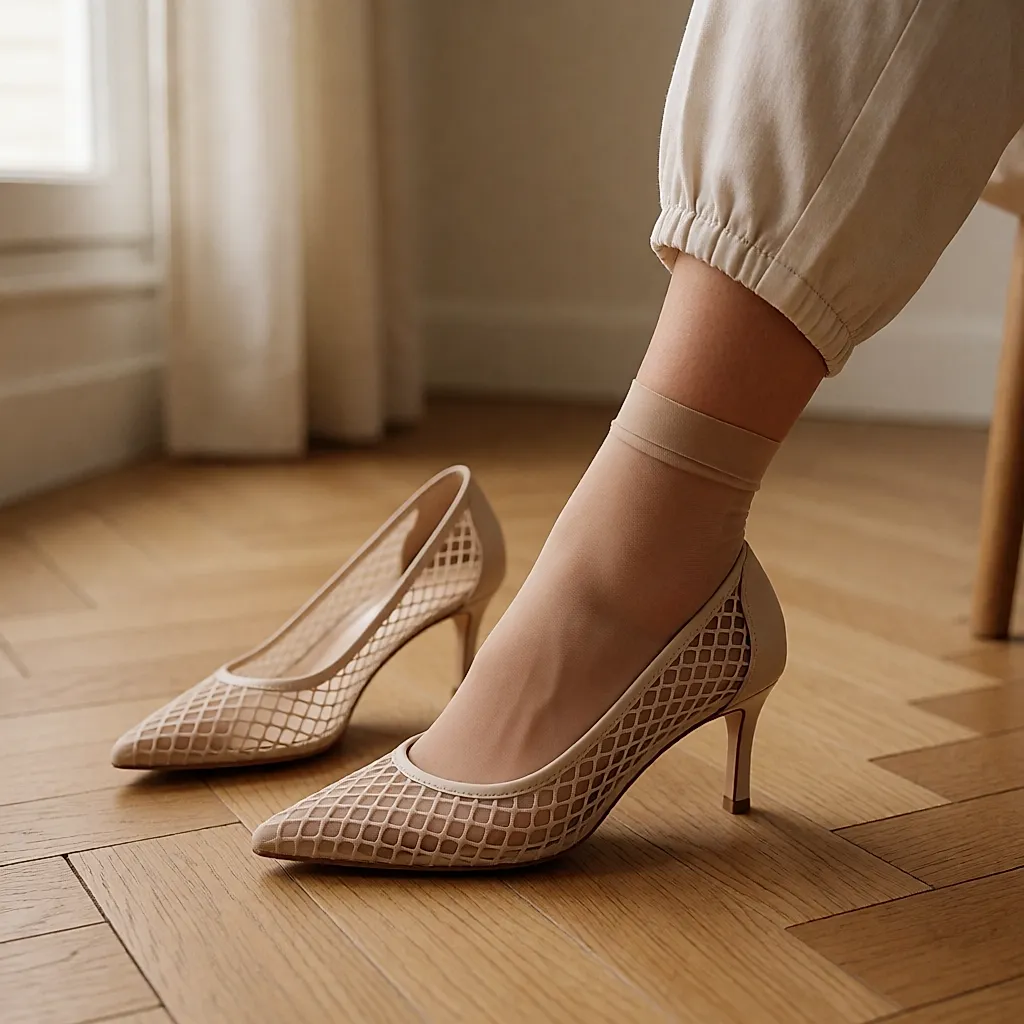
The second consequence is subtler: see-through shoes call for very fine hosiery. A whisper of a denier, almost nothing, that lets the mesh do its job and avoids that "foot sliced in two" look. On fit, you feel the difference: barefoot, the shoe holds you better; over sheer tights, the foot slides a little more inside the upper. Which is why it's worth trying both at home, on your own floorboards, before you head out for the evening — not in the back of a taxi.
The mesh itself, the detail we don't look at closely enough
No mesh is neutral. A tight weave gives an almost opaque finish, very understated, perfectly office-appropriate and better at keeping its shape. A medium weave sits in the middle. A wide one — lozenges, diamonds, a graphic grid — makes a bolder statement, and is also the most fragile. Pick according to the occasion: what's lovely at a dinner can become a liability over a full working day.
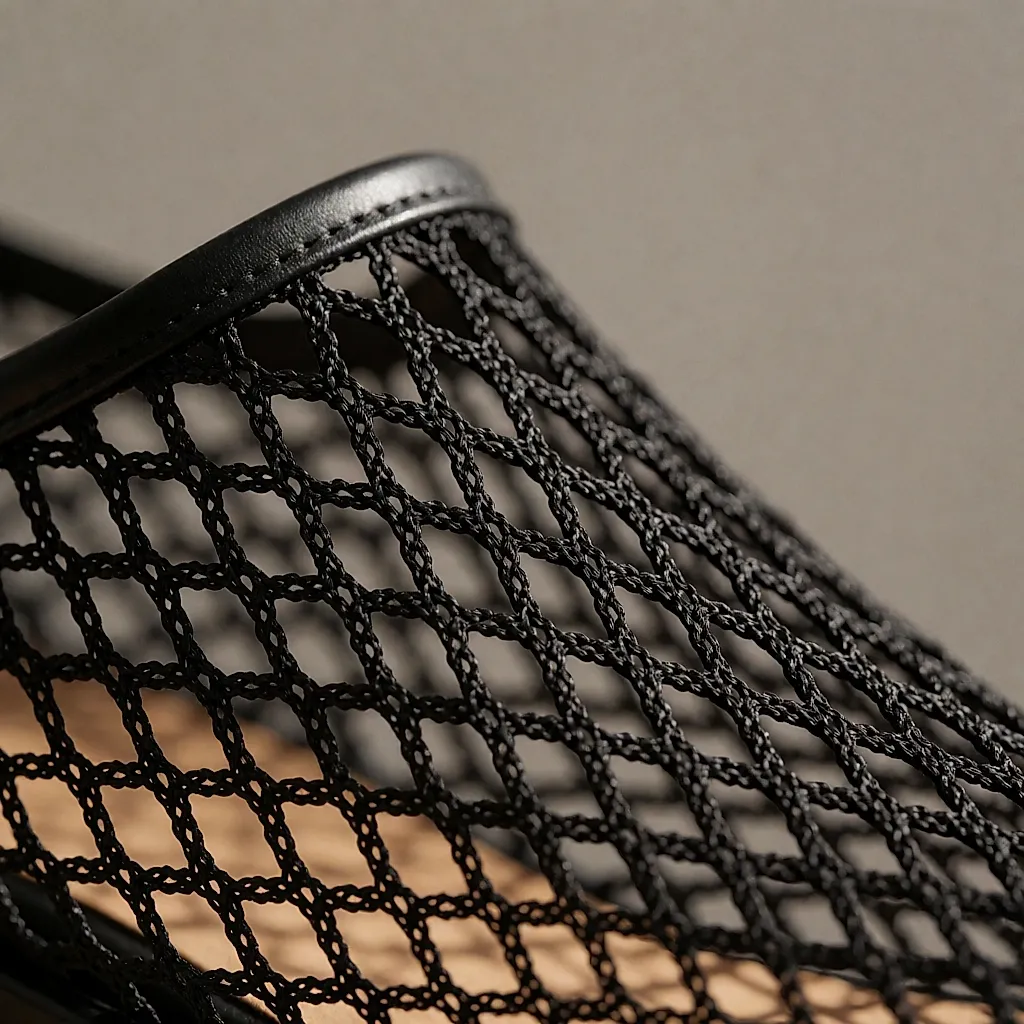
The weak points tend to be in the same three places: the toe, where the toes press; the inner side, where it rubs against the other shoe; and the heel or ankle strap. One slightly long nail, a bag dropped carelessly in the cloakroom, and the mesh runs. A wide weave is less forgiving than a tight one, but neither recovers from a snag pulled between finger and thumb — don't pull, ever.
A few hours in: how it holds up
Honesty first: mesh doesn't support. It's a soft upper that follows the foot rather than holding it. So it won't rescue a badly placed arch or a size you're unsure about. And since it almost always comes on a thin sole, you feel the pavement, the cobbles, the ventilation grille on the tube. Dinner, lunch, a ceremony: ideal. Nine hours on your feet at a trade fair: forget it.

Two fixes that save the day. First, a stick-on non-slip half-sole under the ball of the foot: a small cost at the shoe repairer, and your foot stops sliding forward. Second, the weather. A shower on mesh looks lovely in photographs and considerably less so in real life; if the sky is undecided, take the ankle boot and save the court shoe for a dry day.
Care: mesh can be looked after, gently
Forget the washing machine, hot water and any wonder product. A soft-bristled brush to dust the net, a slightly damp cloth for the leather upper, and drying in the shade at room temperature. If a thread catches, ease it back to the inside with a fine needle rather than cutting it: mesh loses its shape quickly when it's manhandled.
On materials, let's be straight: mesh is almost always synthetic, and that's structural. So don't go hunting for an "eco" mesh court shoe — the real room for manoeuvre lies elsewhere. Prioritise a leather upper and lining, full-grain leather rather than a coated finish, vegetable tanning where that information is available, and above all a pair you'll keep for several seasons. Wear it, look after it, get it repaired: that's the habit that counts most here.
Before you commit to a mesh pair, check three things: the heel holds your foot properly (if it floats, it will slip), the mesh doesn't crease or mark where the foot presses, and the sole isn't so thin that it becomes painful. Mesh tends to relax slightly with wear, so a fit that's a little snug at the start is better than a shoe that's already loose.
What you'll pay
Mesh court shoes sit across a wide range of prices, from high-street and online finds to specialist boutiques and proper shoe houses. At the entry level, in a chain or an online shop, count around €25 to €60 for a pair: more modest materials and construction, but the mesh effect is there. Mid-range brands sit roughly between €80 and €150. In a proper shoe house, expect around €150 to €400 and upwards, where you're paying for the upper, the quality of the leather and the stability of the heel. The city and the season move these figures, as does the detailing — sole, lining, heel height. A sole protector and a new heel from a shoe repairer usually cost far less than a new pair, so it's worth checking resale for a pair worn twice, and brands' own sites for remaining sizes at the end of the season — as shopping windows go, mid-October is usually a good one.



Comments
Your opinion matters: rate the article, react and reply to comments.
Comments are moderated; AI-assisted comments are flagged. Text emoticons (8-), :-), <3…) are automatically shown as images.