
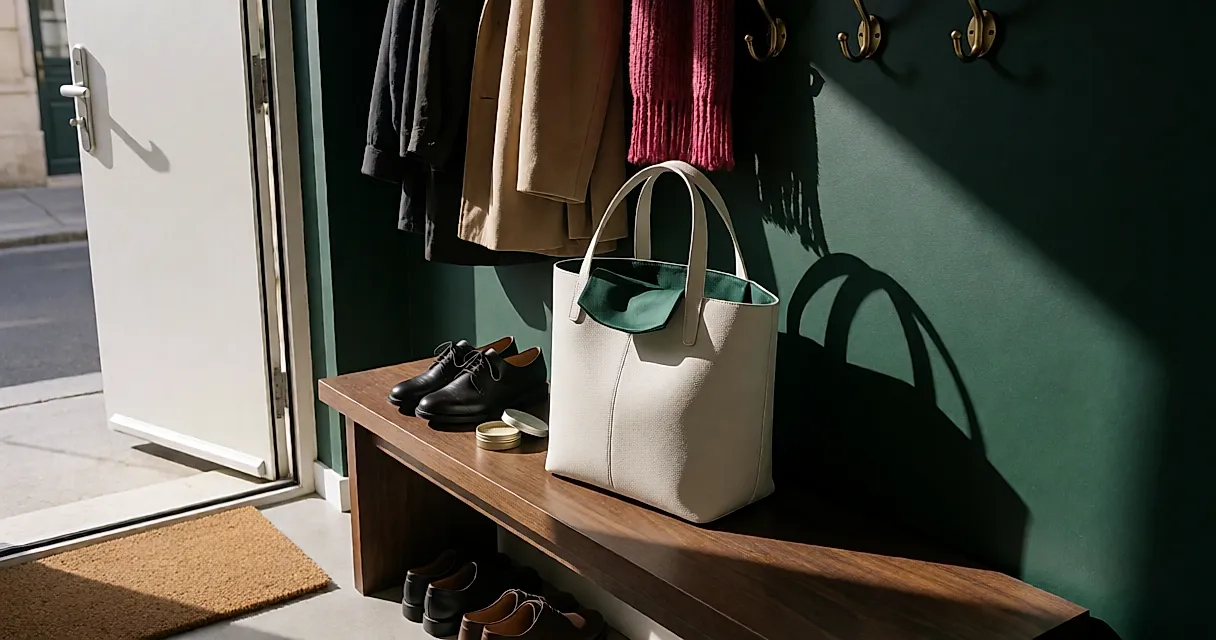
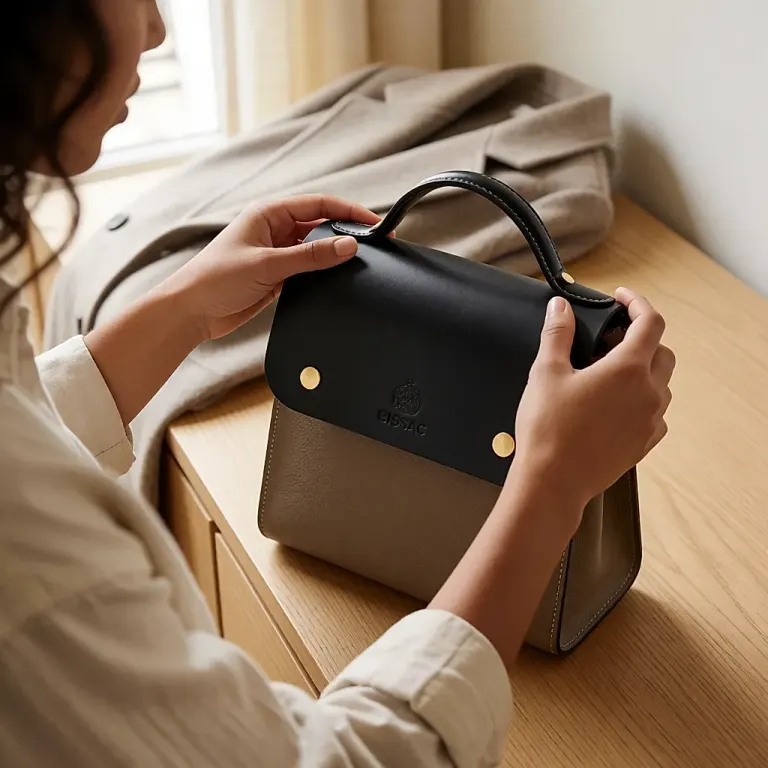
Plant-based leather exists. It is all over the press releases. On the shop floor, though, it is barely more than a token presence: a capsule style here, three limited-edition jackets there, and a lot of promises. Between the material developed in a lab and the bag that ends up on your shoulder, there is a world of difference – and a label worth slowing down for.
Why a young material costs more
A new material rarely arrives ready to go. You need workshops that can cut it, bond it and stitch it without letting it pucker – and at the beginning, few people know those moves by heart. So the first runs are small. It is the law of volume: a small run costs more per unit than a big one, because the research, the set-up and the failed trials are spread over a few hundred pieces rather than tens of thousands.
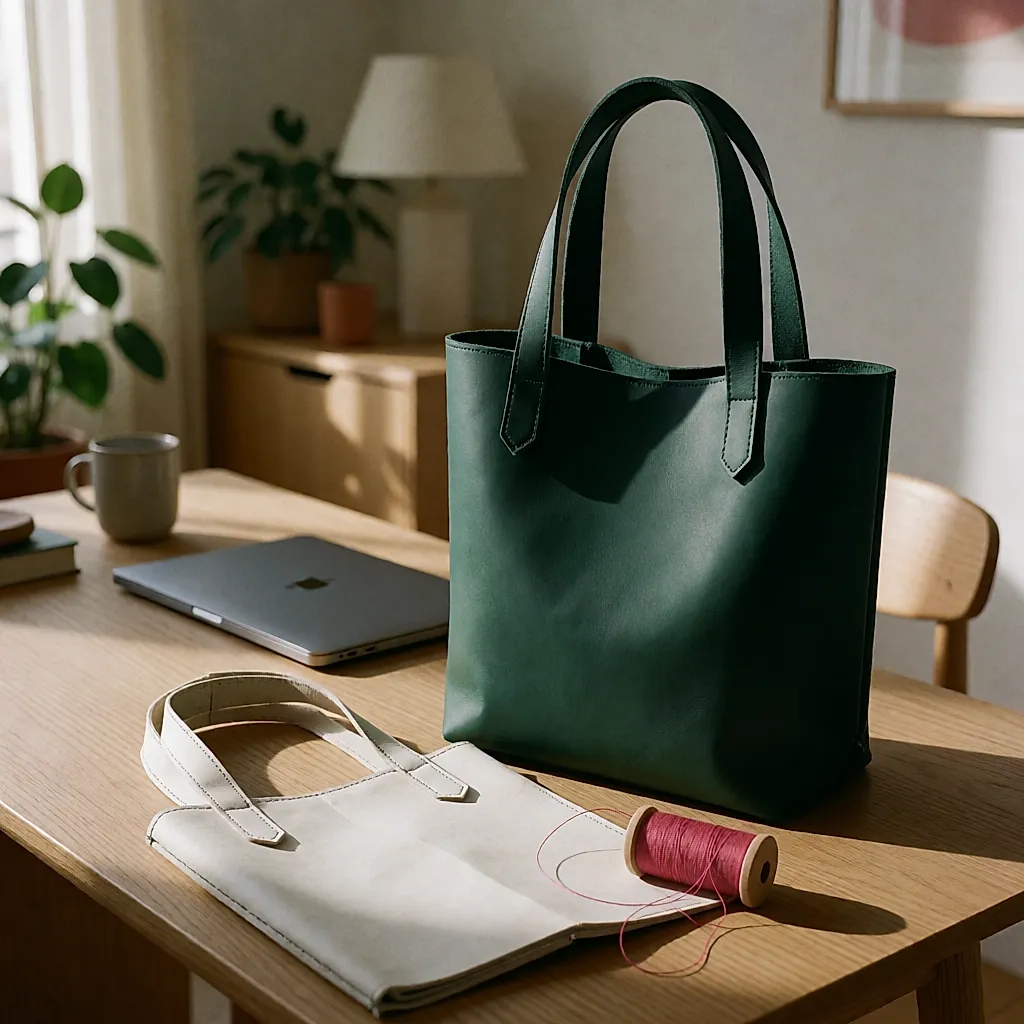
That is why brands tend to go in for capsules: a few bags, a handful of jackets, just long enough to see whether the material survives the winter and whether customers follow. Some announcements get no further than the prototype stage – lovely image, no stock. And when the product finally exists, its price has to absorb everything the brand spent before. Is it really worth the money? Not always, and the answer is often in the small print.
Two very different kinds of leather
The terminology is where the trap starts. 'Plant-based leather' and 'vegetable-tanned leather' are often muddled together, but they describe two very different things. One is vegetable-tanned leather: a real animal hide tanned with plant extracts – bark, mimosa, chestnut – instead of chromium salts. It is a material that develops a lovely patina, has been used by leatherworkers for ages, and is not remotely new.
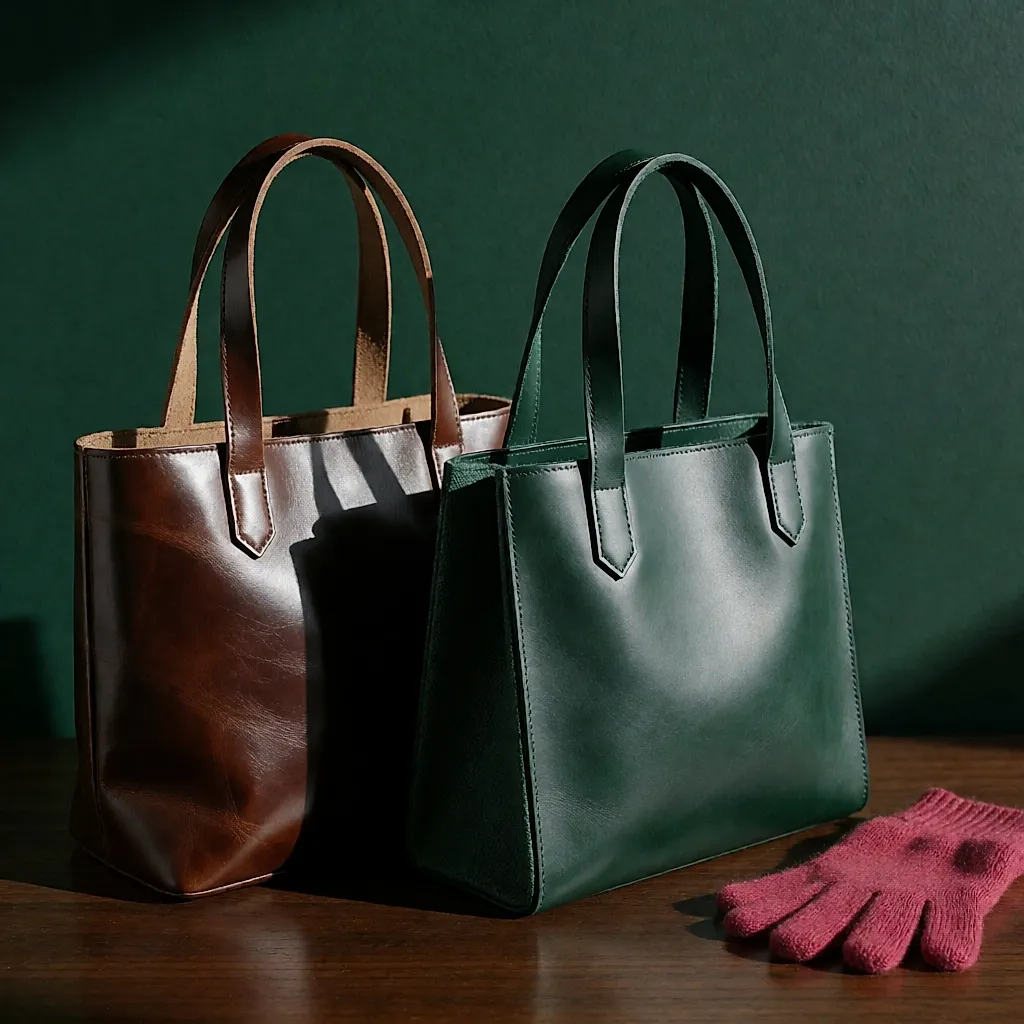
The other is animal-free plant-based leather: a composite made with cactus, grape, apple or mushroom, held together by a binder and usually bonded to a textile backing. Here the word 'leather' is an image, not a composition. Both can be very well made – but they are not the same material, they do not need the same care, and they do not carry the same price. Always ask which side of the shop floor you are on.
What to check before you buy
Start with the share of bio-based material. In an animal-free bag it is often in the minority: the plant element provides the name and the image, while the rest provides the structure. If the percentage is not displayed, that is already an answer – ask, and see what they say.
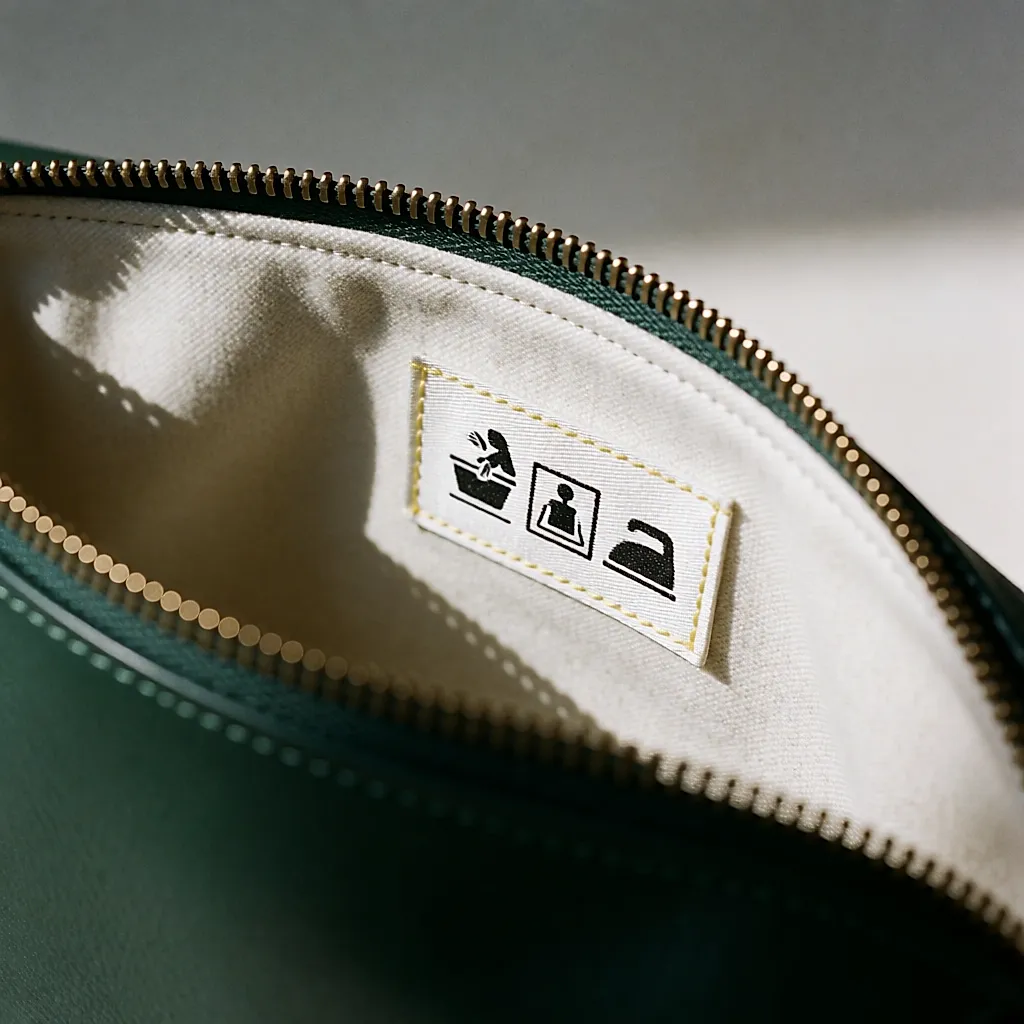
Then look at the backing: the textile to which the material is bonded, which accounts for a good part of the weight and drape. Check its composition, feel how supple it is, and bear in mind that a mostly synthetic backing changes both the care requirements and what happens at the end of its life.
Next, the lining. You may find a polyester lining in a bag whose selling point is the material; it is not a deal-breaker, but it is worth knowing. Then there is repairability: hand or machine stitching, replacement hardware being available, and above all a repair service from the brand. A handle that cannot be replaced can shorten a bag's life, whatever the material.
Three questions to ask in store without looking as if you are conducting an audit: 'What proportion of this is bio-based material?', 'What is the lining made of?' and 'Do you repair this style?' If all three answers are vague, you have your answer – and you will know more than half the shop.
Where to spend your budget
As a rough guide, expect to pay around £150–£400 for a vegetable-tanned leather bag from an independent brand, and £400–£900 for a jacket: vegetable tanning remains a specialist business, and cutting a thick hide leaves little room for guesswork. Animal-free plant-based materials cost much less, at roughly £80–£300 for a bag, with enormous variation depending on how much bio-based content there is and how it is finished. At that price, favour workshops that publish their composition in detail – it is usually a good sign.
Second-hand is worth a detour: £60–£200 for vegetable-tanned leather that already has a patina, having proved itself on shoulders more heavily loaded than yours. You will find it in second-hand shops, independent leather-goods shops, vintage fairs and specialist resale platforms. And if the budget will not stretch, remember that the bag you already own – conditioned and repaired – remains the most understated piece in your wardrobe.
A plant-based leather bag is neither a rip-off nor a magic solution: it is a young material, expensive because it is rare, and sometimes rarer than advertised. So before you reach for your card, turn over the label, ask your three questions, and trust a simple rule: a material whose composition can be explained in one sentence is often one you will love for longer. The rest is window dressing.

Comments
Your opinion matters: rate the article, react and reply to comments.
Comments are moderated; AI-assisted comments are flagged. Text emoticons (8-), :-), <3…) are automatically shown as images.