
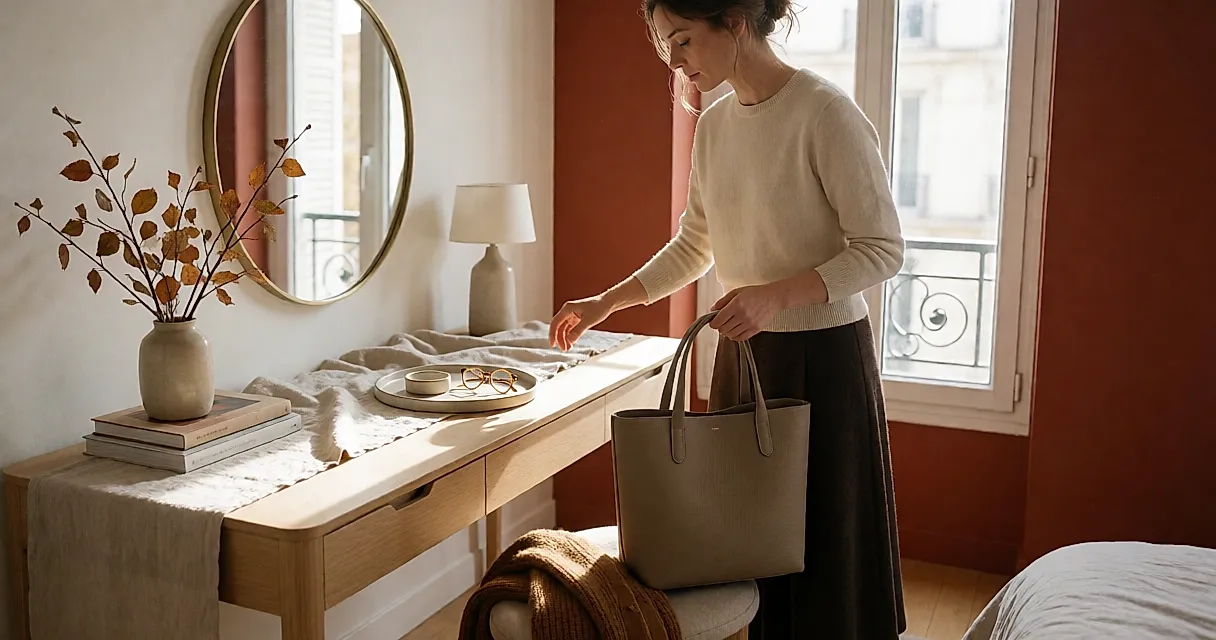
Some cultivated materials already have names that clearly did not come from a chemistry catalogue: they sound like labels you might find on Bond Street. That is not just a cosmetic detail; it is a sign that the market has shifted. Yesterday, the pitch was all about performance: 'leather without livestock, grown in a lab'. Today, the material has to walk into a shop and withstand the scrutiny of someone comparing two bags at the same price, without wondering which one is 'the real thing'.
A name before the material
And that is a far harder exercise than a technical demonstration. As soon as a material is given a name, it becomes a product: it needs a particular feel, a drape, a colour that does not bleed, a care protocol and after-sales support. The vocabulary of fashion, not biotech. Have you noticed that nobody asks a calf leather whether it is innovative, only whether it ages well?
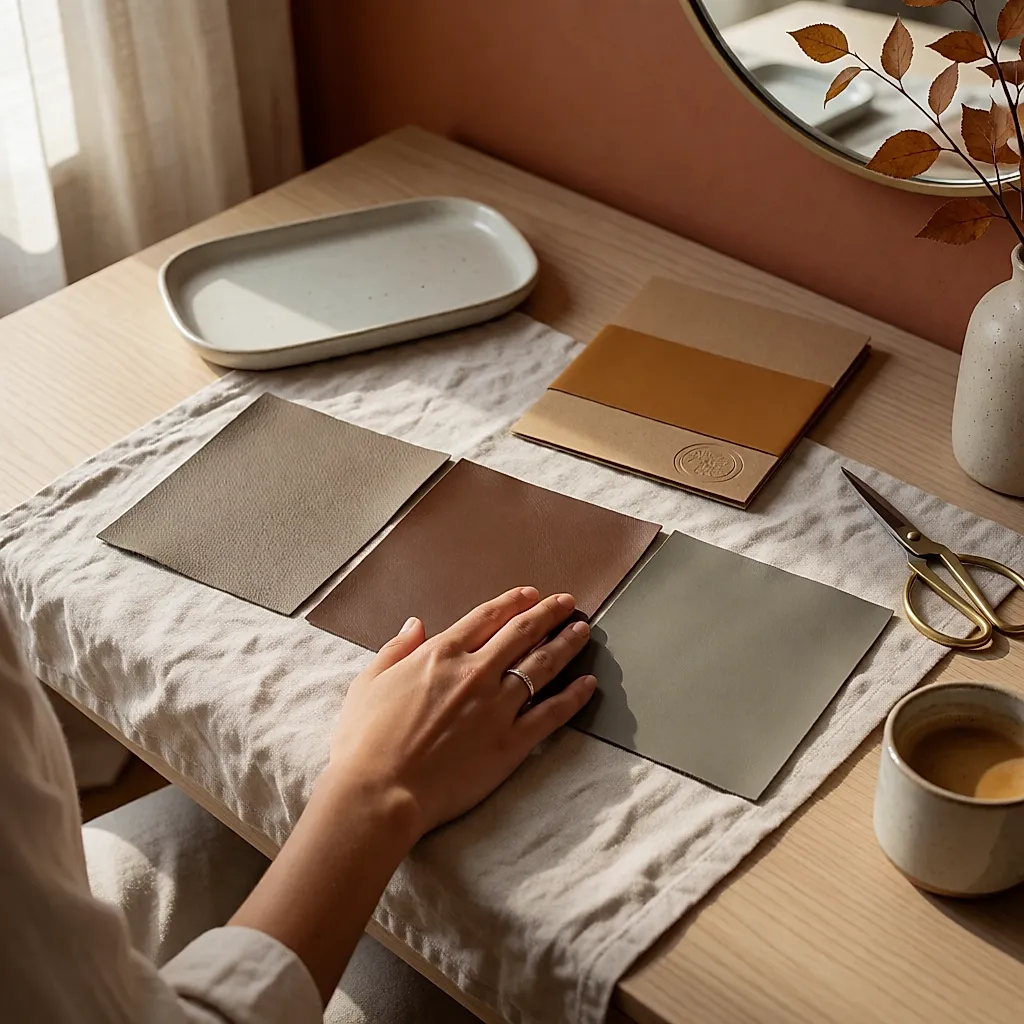
In store, what the eye catches first
Pick up the bag and turn it over. Is the grain so regular that it looks printed, or slightly irregular like a skin that has lived? Look especially at the folds: a material that breaks sharply when folded will not behave like soft leather, and the look of a tote or a pair of Derby shoes changes completely. Here, drape matters more than the spec sheet.
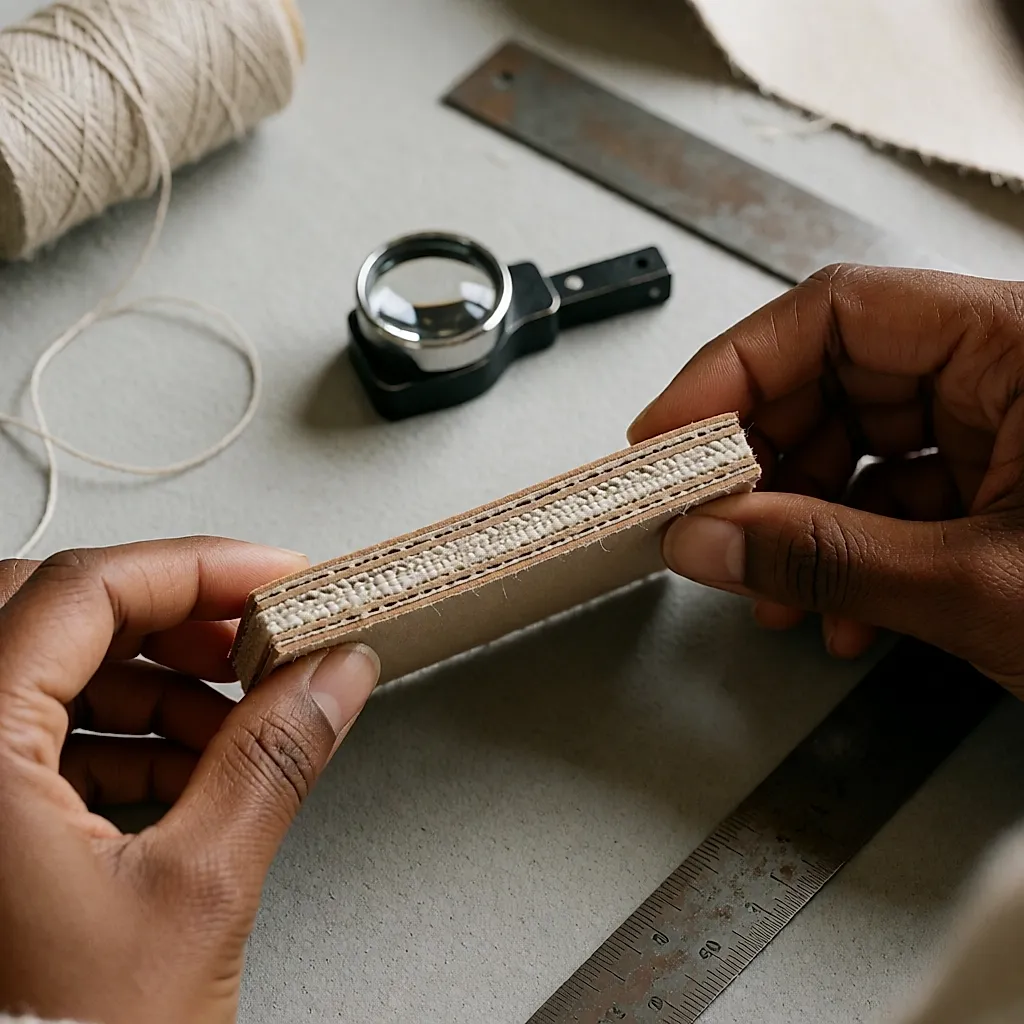
Second reflex: the backing. Many so-called alternative materials are a thin surface layer bonded to a textile, sometimes a synthetic one. Ask what is underneath. This is not a purist's question: it determines the shape, the weight and the end of life of the piece. Look at the edges, the lining and the stitching on the handles too. A beautiful surface over sloppy finishing is a lovely photograph that will not survive a wet Monday morning in November.
How it wears over time, the real unknown
We know what happens to grained calf leather after ten years: a patina, two or three marks and a bag you love even more. With these new materials, there is not enough of a track record, and no one can promise you that kind of patina. The friction points are always the same: gusset folds, handle attachments, corners, exposure to sunlight. Those are the places to inspect in store, not the smooth front under flattering light.

On care, do not assume your usual leather cream will do the job. The brand's care sheet tells you what to use, or what to avoid, and it is often the only genuinely useful document in the packaging. If the information is impossible to find or amounts to 'just treat it like normal leather', put the piece down and come back later. The wrong care product can mark a surface permanently, and it would be a shame to discover the chemistry of the finish at your own expense.
The process, still fuzzy
Under the label 'cultivated leather' sit very different families: animal cells grown in a laboratory, collagen produced by fermentation, mushroom mycelium. They are not the same processes, the same factories or necessarily the same end of life. Yet labels remain tight-lipped: you are given the name of the material, rarely its recipe.
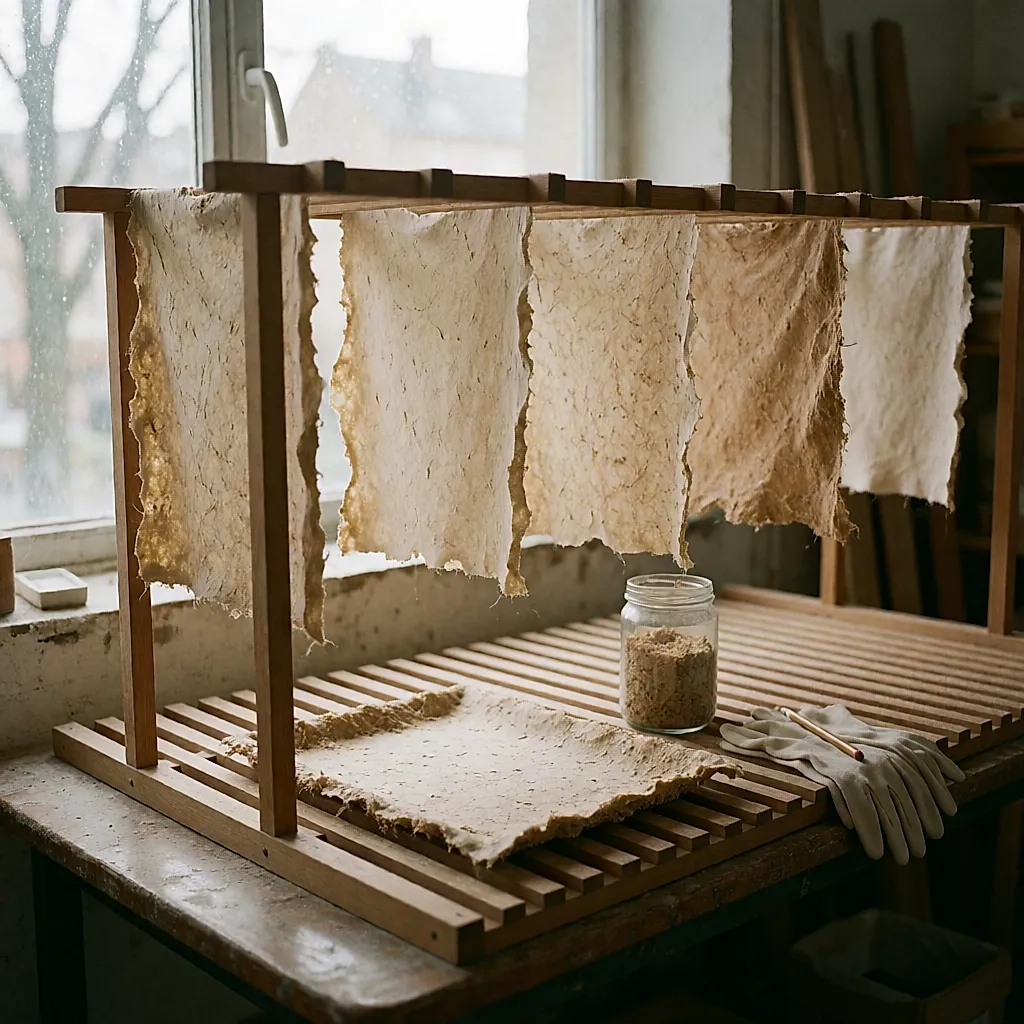
Three questions are enough to see more clearly: how much of the material is bio-based, what backing is it bonded to, and where is the piece assembled? If the brand answers readily about the look and much less about the rest, you have your answer. A poetic name has never guaranteed a clean finish; that applies to a material as much as to a perfume.
Three questions before you get your card out
- What exactly is the material made of, and what backing is it applied to?
- What care does the brand specify in writing (and what should be avoided)?
- Is the piece repairable: handles, lining, fastening, seams?
Budget
Today, pieces genuinely made using these processes are still rare on the shop floor: prototypes, limited runs, a few heavily publicised collaborations. When these materials do reach the shops, they command premium prices. As a rough guide, expect to pay in the region of £250 to £600 for a small item or a bag in an alternative material from a mid-market brand, and often more than £1,000 once a luxury house is involved.
Then there is the sensible option: vegetable-tanned leather or a second-hand piece, often between £80 and £300 depending on condition, with the advantage of a known track record on ageing. And if your current bag is holding up, care costs less than replacement: a careful clean and a dust bag, and you gain another season.
Until cultivated leather truly has a name, a grain and after-sales service, keep your usual standards: you are not buying it for the idea, you are buying it to carry. Small budget? A well-chosen second-hand piece. Mid budget? An alternative material with clear care instructions and serious stitching. Larger budget? Wait until the house stands behind repairs before you stand behind the price.

Comments
Your opinion matters: rate the article, react and reply to comments.
Comments are moderated; AI-assisted comments are flagged. Text emoticons (8-), :-), <3…) are automatically shown as images.