
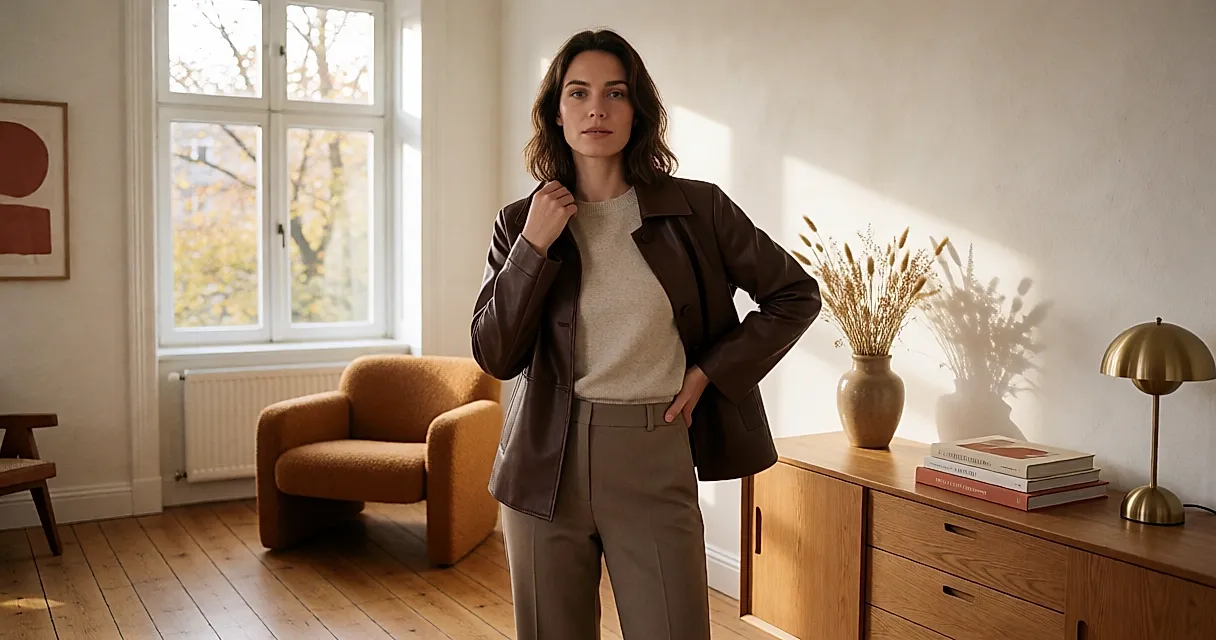
The jacket looks wonderful on the hanger. On you, it gapes at the shoulders, rides up the moment you lift an arm and makes you look as though you've borrowed someone else's biker. The problem isn't your shape — it's the drape. And no fitting-room mirror will ever say that out loud.
Soft doesn't mean thin
Two things get muddled all the time: the thickness of the leather, measured in millimetres at the tannery, and the way it behaves. A thick cowhide can be wonderfully supple if it has been worked for it; a thin leather can stay stiff as a board because it has been loaded with a coating that holds it rigid. Drape is precisely what the spec sheet can't tell you: how the piece sits on the shoulder, breaks at the elbow, falls over the hip.
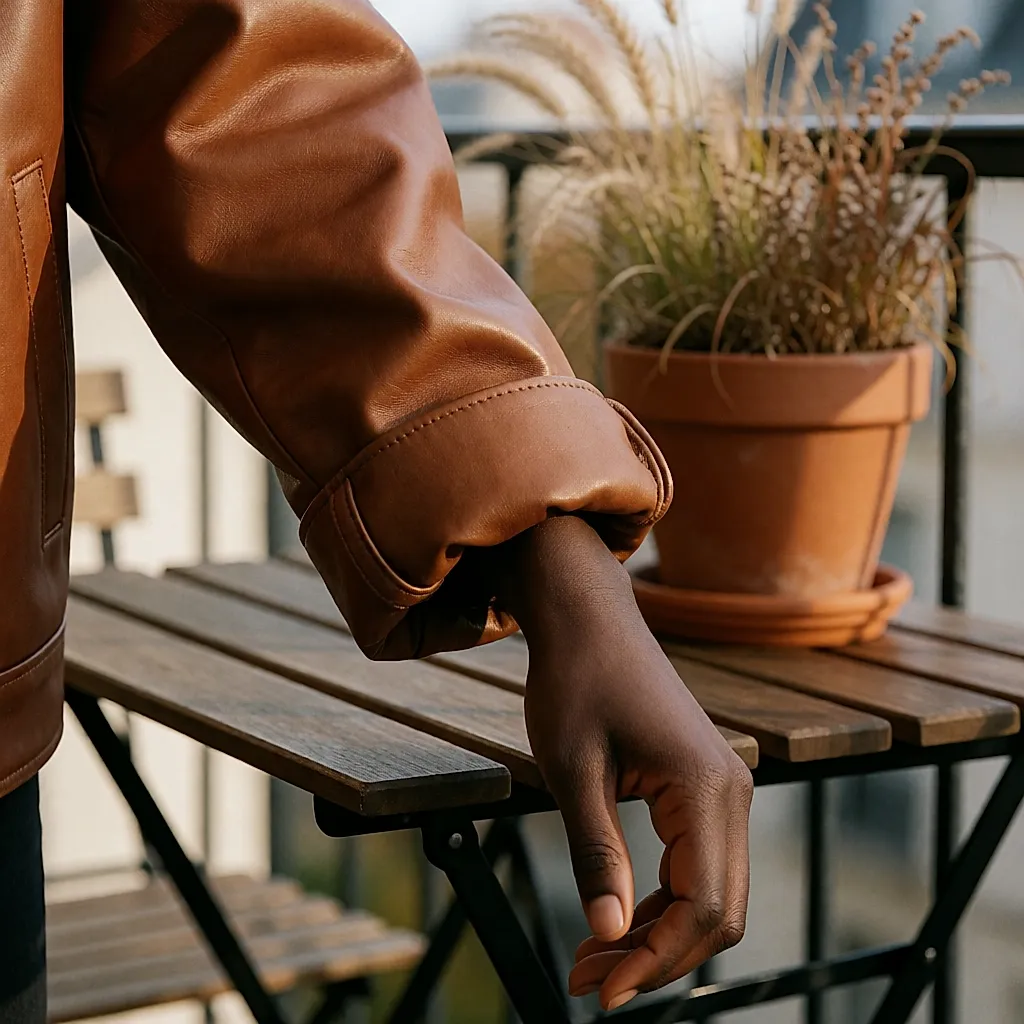
Where do the differences come from? First the hide — lambskin, goatskin and cowhide don't feel the same in the hand — then the tanning and the finishing. Vegetable tanning (barks, tannins) tends to give a firmer leather at the start, which softens and patinas with wear; other processes give immediate suppleness. Neither is "better" in the abstract: what it does on you is the deciding factor.
In the fitting room, the mirror lies a little
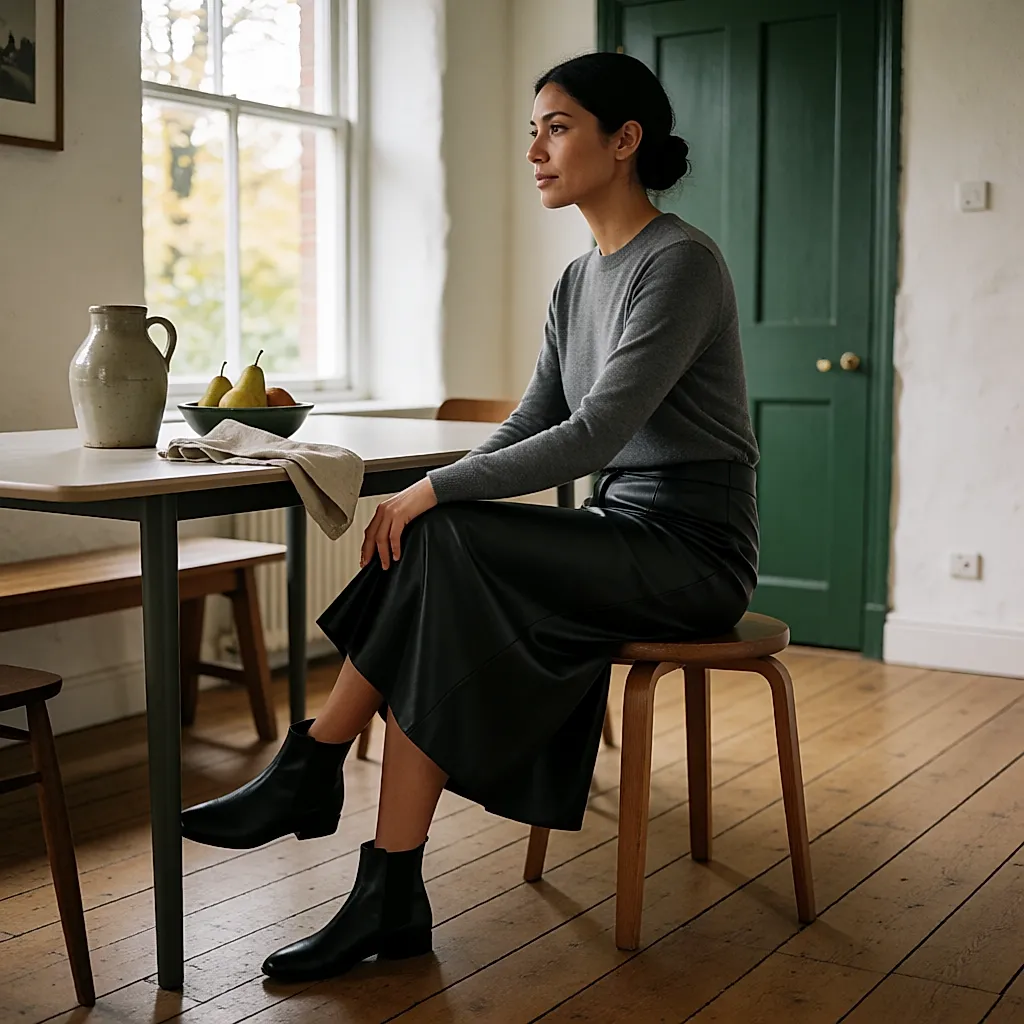
Trying on leather isn't a quick turn in front of the glass. It's a small gymnastics session. Raise your arms above your head: if the armholes ride up to your ears, the cut or the material is holding you back. Sit down — for a skirt, cross your legs, that's where you discover that a piece which is too stiff opens up like a bell. Take three steps with your hands in your pockets if the jacket has them: leather that drapes well moves with you, it doesn't pull you up short at every gesture.
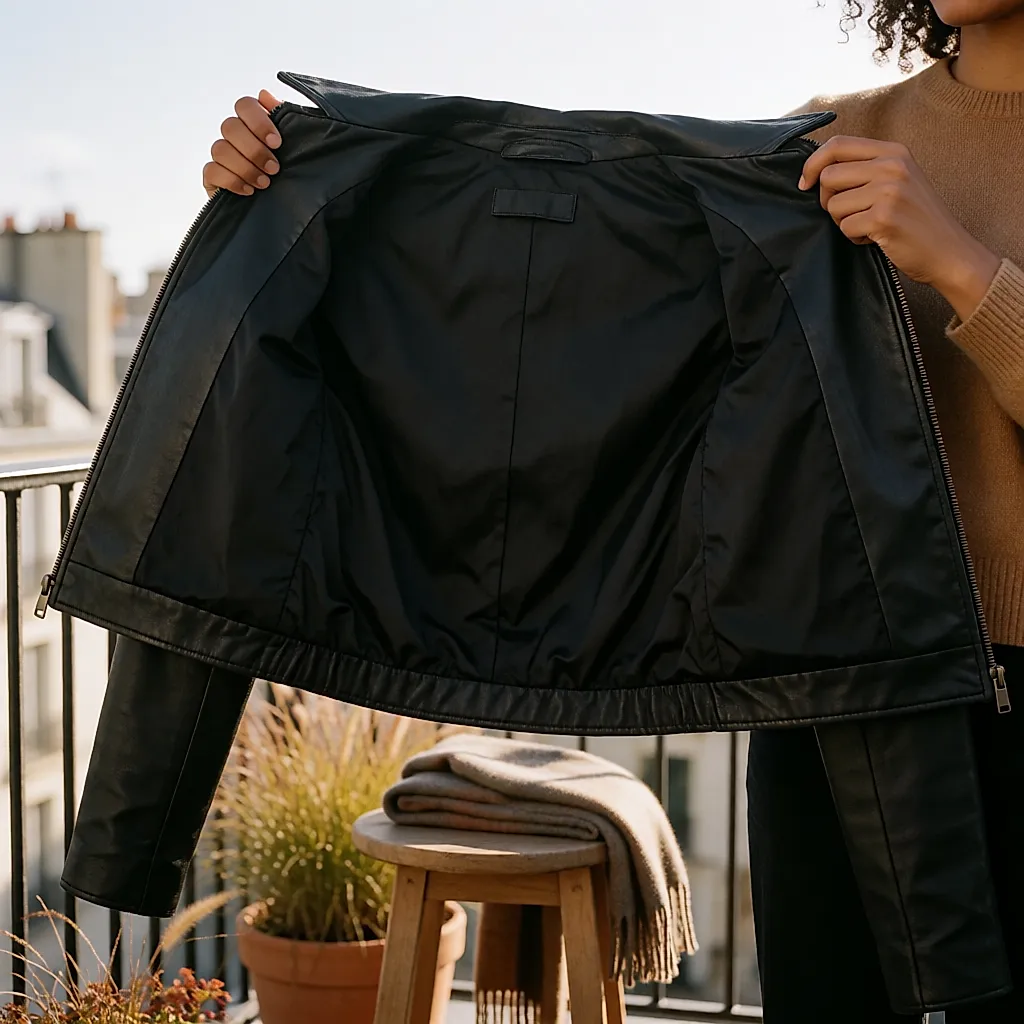
Then look inside, which nobody ever does. The lining should slide over whatever you're wearing underneath — a viscose or a fluid cotton usually does the job better than a synthetic that catches. Check that it isn't pulling at the armholes and that it's properly caught into the seams: it's a classic on cheap pieces. The collar, finally, should fall back on its own, without you having to put it back in place every thirty seconds.
Weight, the false friend
We like to equate a heavy leather with a hard-wearing one. Is that really true? In the fitting room that's rarely what's at stake: a piece that's too heavy drags on the shoulders, breaks the line and tires you out before lunch. With a skirt, weight can be an ally — it hangs better — but only if the waistband is well constructed and the leather supple enough to follow you as you walk. In short, you're not looking for the heaviest: you're looking for the balance.
What ages well
A supple leather needs less looking after than you'd think, as long as you don't do anything daft. A soft cloth, a solvent-free nourishing balm, a wide hanger so the shoulders don't take a crease, and some distance from the radiator: that's the essentials. Do you need to get the pot out every month? No — once or twice a season is plenty in real life. The patina will come by itself, with the creases at the elbows and the colour softening — and that's the nicest thing that can happen to a leather jacket.

Watch out, though, for plastic coatings that make faux leather look like the real thing: they can peel over a few winters and can't be repaired. The label usually gives the main material — a glance at the synthetic fibre content before you pay will save you a disappointment.
What to budget
On price, expect to pay roughly £80 to £270 for a new soft leather skirt, and £25 to £105 secondhand depending on condition and tanning. A new lambskin jacket generally sits between £180 and £620; in vintage shops or on resale platforms, more like £70 to £220. What moves the number: the type of hide, the lining, the tanning, the manufacturing and where you buy — the same style doesn't cost the same on a market stall as in a neighbourhood boutique.
So, new or secondhand? Secondhand is a very good bet here: well-cared-for leather improves with age, and a jacket that has already been worn has already proved itself… on somebody else. The cheaper alternative is a slightly firmer cowhide, less expensive, which will need a few weeks of wear to soften — an investment in patience.
In the fitting room, wear the top and bottom you'll actually pair with the piece: a leather jacket tried on over a summer dress will tell you nothing about your Monday morning. And do a lap of the shop — ten steps is enough to see whether the skirt keeps up or holds you back. That's usually where it's all decided.
Which leaves the question that matters, the one you ask yourself in front of the mirror: does this piece look as though it was cut for you, or just placed on you? If it moves with your body, if you forget you're wearing it, you're onto a winner. Everything else — the brand, the label, the crossed-out price — will never hang quite so well.

Comments
Your opinion matters: rate the article, react and reply to comments.
Comments are moderated; AI-assisted comments are flagged. Text emoticons (8-), :-), <3…) are automatically shown as images.