
Friday, 7.40pm. The mesh pair is on the doormat, still warm from a week of hitting the pavement, and it looks as though it has come straight off a park run. You have ten minutes to decide what goes on your feet — which is precisely the moment smooth black leather takes its revenge.
It isn't a colour, it's a material
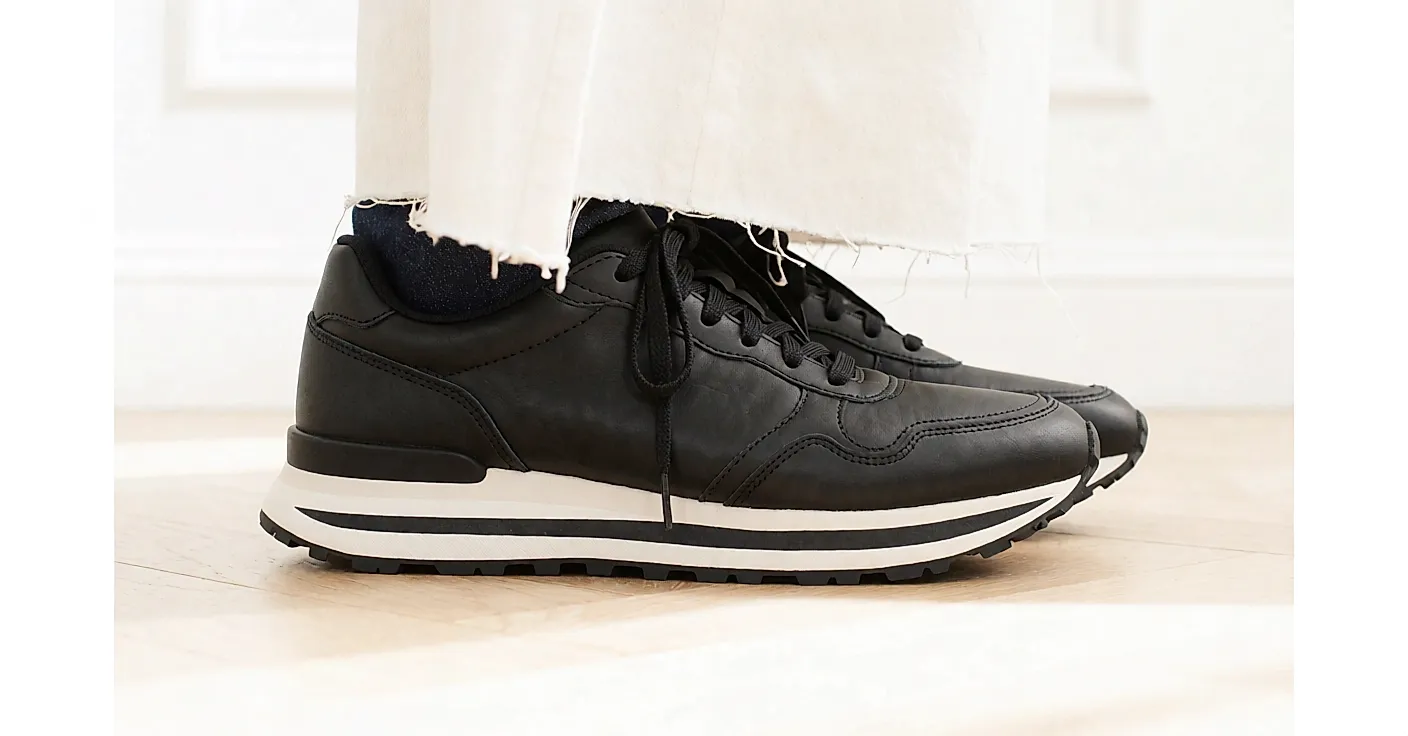
On a running silhouette, a change of material is hard to read: you think you're seeing a new colour, when in fact the whole surface has changed nature. Look closely. The technical mesh — the stuff that lets air through and, incidentally, lets your eye in — disappears in favour of a full leather upper. The shoe no longer bounces light back the same way. Mesh clings to every curve and shows up every crease of the foot; leather holds its shape and sits crisper across the upper.
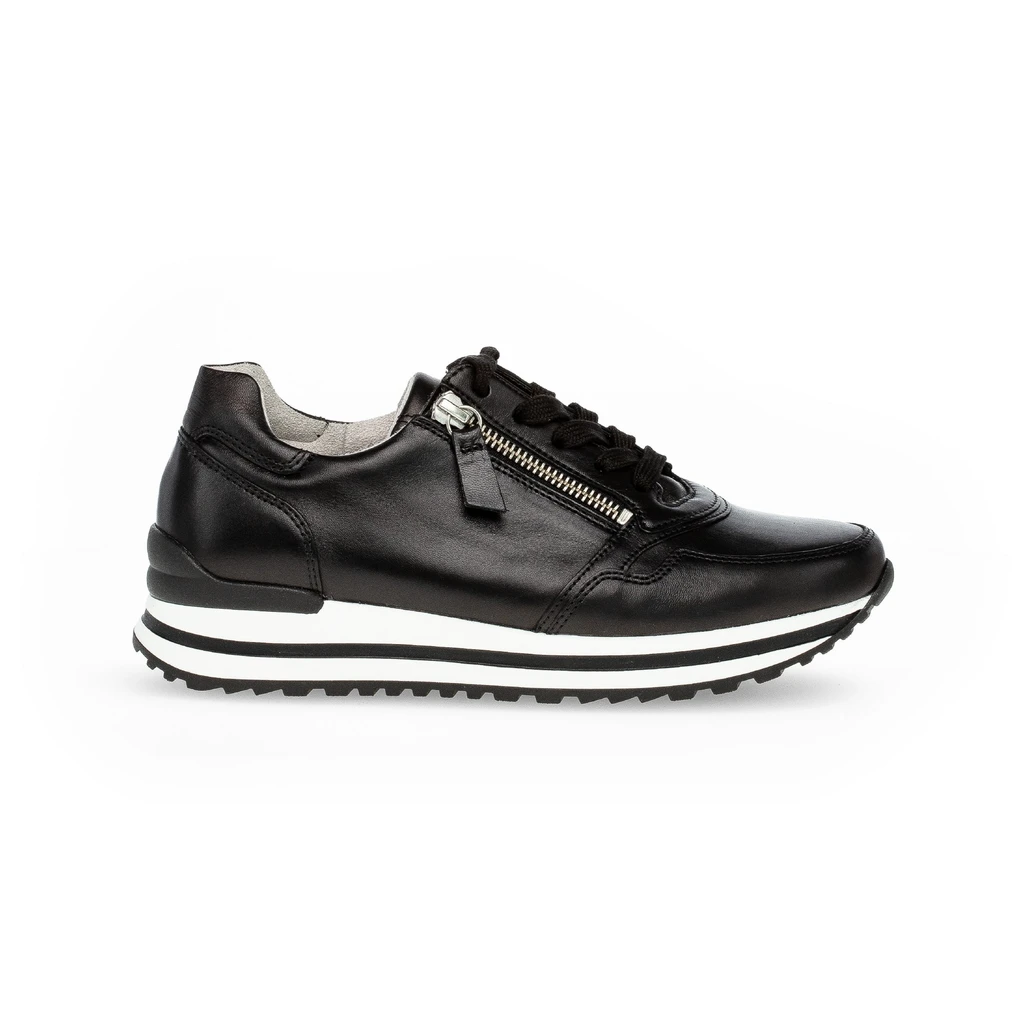
That switch moves the whole silhouette. The stitched panels — heel reinforcements, side panels, the stiffened heel — go from decoration to relief. On black, everything is played out in texture: smooth matt, a faint sheen, stitching a shade lighter. You end up with a shoe that looks as though it has a past, even straight out of the box. The sole, meanwhile, hasn't moved a millimetre: it's that contrast between a technical underside and a dressed upper that makes the whole thing work.
From the track to the restaurant, one sole apart
Let's be honest: running in them was never the plan. This leather is for anyone who treats a trainer as the full stop at the end of an outfit — wide jeans and a blazer on Monday, a wool dress and tights on Sunday. A leather running shoe is not a sports shoe, and that is exactly what makes it wearable from the office to a bistro table without anyone asking your 5k time.
On comfort, stay clear-eyed: leather doesn't breathe like mesh. By the end of the day it runs warm. So try a pair in the late afternoon, when your foot is a little wider, and with the socks you will actually wear — not the thin pair, on one of those Wednesdays when it rains like November. If you have a wide foot, it is worth trying before you buy: leather hasn't the give of mesh. If running is the plan, keep the mesh; if living is, leather does the job.
Versatility is the real argument. A pale mesh trainer dictates the hour of the day, the weather and the trousers that go with it. Smooth black forgives: Monday morning, late Thursday, a restrained Saturday. It also ages with style — and no sole can buy you that.
Budget
In the UK, expect somewhere between £70 and £220 for a new leather pair, depending on the brand, the quality of the leather and the finish. Second-hand, prices sit closer to £25–£80, varying with condition, size and model. Treat both as orders of magnitude rather than quoted prices. Compare across high-street shoe shops, concept stores, department stores and online, and check the composition of the upper and the lining.
What the patina tells you
Smooth black leather on a running silhouette is the compromise of our time: the look of something sporty without the full kit, a material that can be kept and repaired, a black that sits with the rest of the wardrobe without negotiation. Take the time to try a pair on and to pay accordingly, keeping in mind what you will actually use it for. Time does the rest: matt smooth leather patinas along the creases, picks up a sheen where it flexes, and the technical sole keeps reminding you of the running underneath. That contrast between a sports underside and a dressed upper is what signs the pair — and what tells you how it will age.
Comments
Your opinion matters: rate the article, react and reply to comments.
Comments are moderated; AI-assisted comments are flagged. Text emoticons (8-), :-), <3…) are automatically shown as images.