
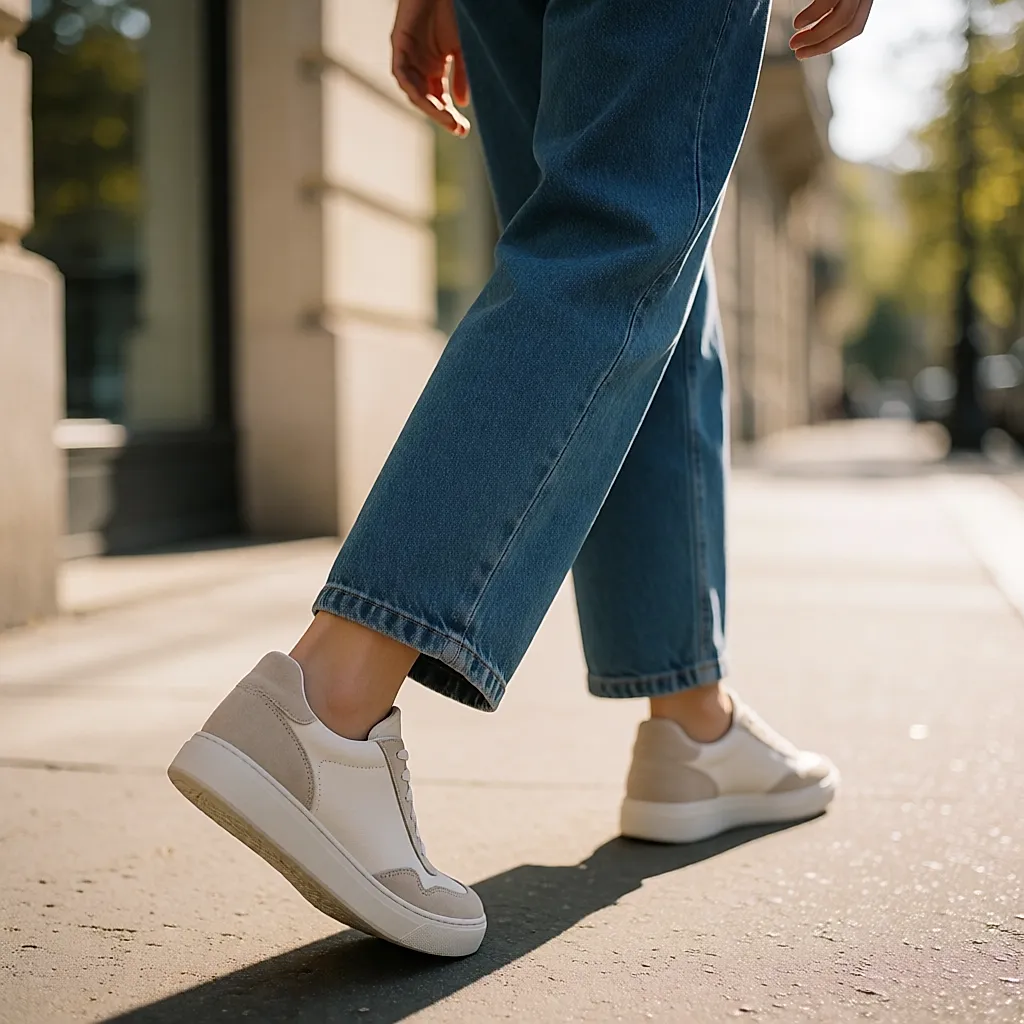
You've seen it a hundred times in holiday photos: low, treaded, a slightly chunky heel, half textile, half suede, as if it had walked straight out of a 1982 jogging club. You've tried it in town, loved it in the hallway mirror — then hated it at the third kilometre, when your calves went on strike. The retro wave trades on exactly that: vintage shape, modern engineering. The trick is knowing which of the two you're actually buying.
A city staple that hasn't lost its running roots
Over the past few seasons, these running-born models have crossed over: you'll find them in concept stores as often as sports shops, sitting next to raw denim and a wool jacket. That's no accident. The line is low and clean, with no frills; the upper often mixes suede and textile. The result is a pair that finishes an outfit without demanding the starring role — with fluid trousers or a pinafore dress, you could do a lot worse on the versatility front.

Some references never date: Nike Air Max 1, New Balance 574, Saucony Shadow 6000, Onitsuka Tiger Mexico 66, Adidas SL 72. They don't all play in the same league, more on that shortly. And if 'goes with everything' is the shop floor's most effective sales pitch, it's also the one that fills wardrobes with pairs that never get worn.
A reissue with period styling — or a shoe that still runs?
The word 'retro' tells you nothing about what's underfoot. Some reissues copy the original construction — charming, but not a sports shoe. Others keep the shape and get a current midsole: that's where the running lineage is real. You won't spot the difference in the window; you'll find it on the product page.
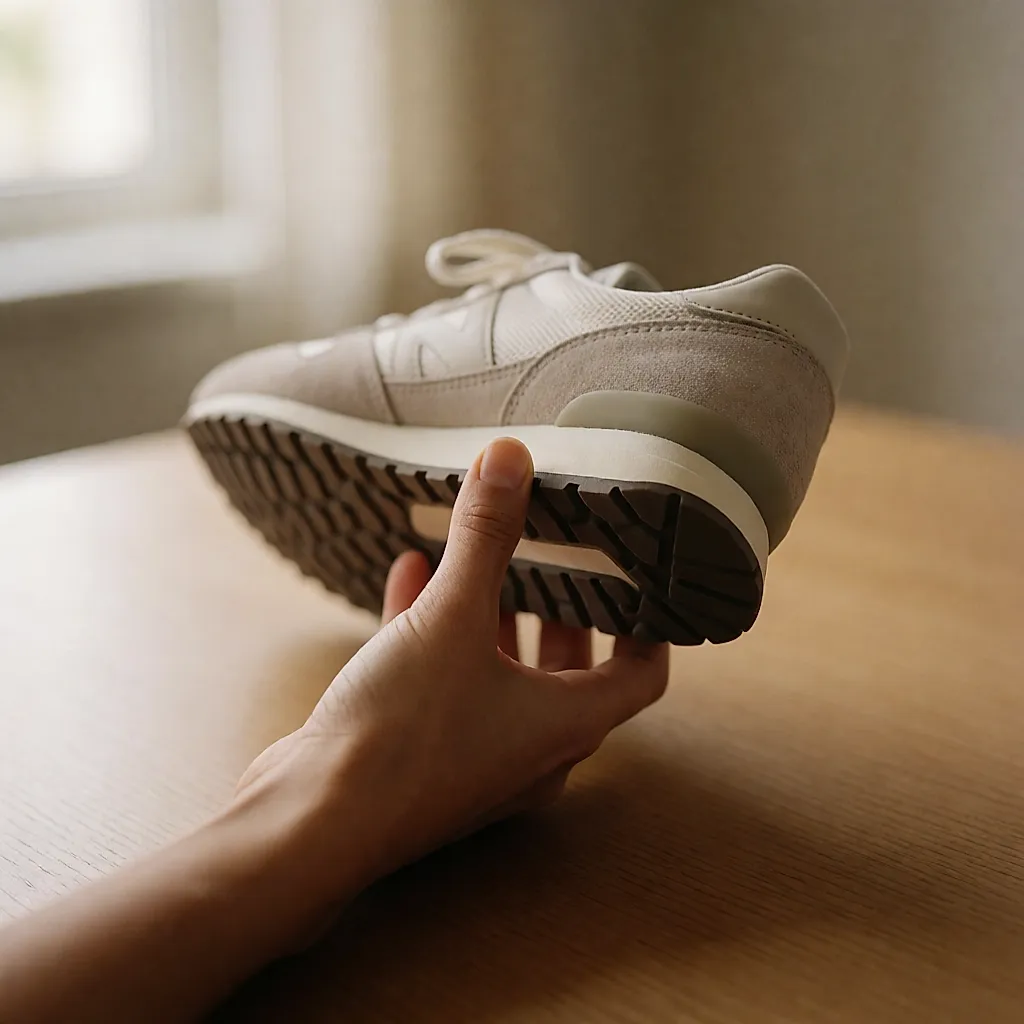
Two reliable clues, and both are free. First, the category: on the brand's official site, is the pair filed under 'running' or 'lifestyle'? That label gives away the brand's intention better than any slogan. Second, the foam description: when a brand reworks the sole of an old model, it says so — it's too valuable a selling point to keep quiet. If the copy talks about shape, colour and collaboration but never mentions the sole, you're buying a silhouette.
No one is doing anything wrong by choosing a reissue for walking around town. The problem starts the day you ask it to do three sessions a week on tarmac. For that, you're better off with a current shoe with clean lines — Brooks Ghost, Hoka Clifton, Asics Novablast — designed for exactly that.
Four things to check when you try them on
Start with the drop, the height difference between heel and forefoot. Many retro silhouettes are fairly flat, which feels nice in town but asks more of your calves and tendons if you're not used to it. No figure is right in every case; the only question that matters is: am I walking or running?
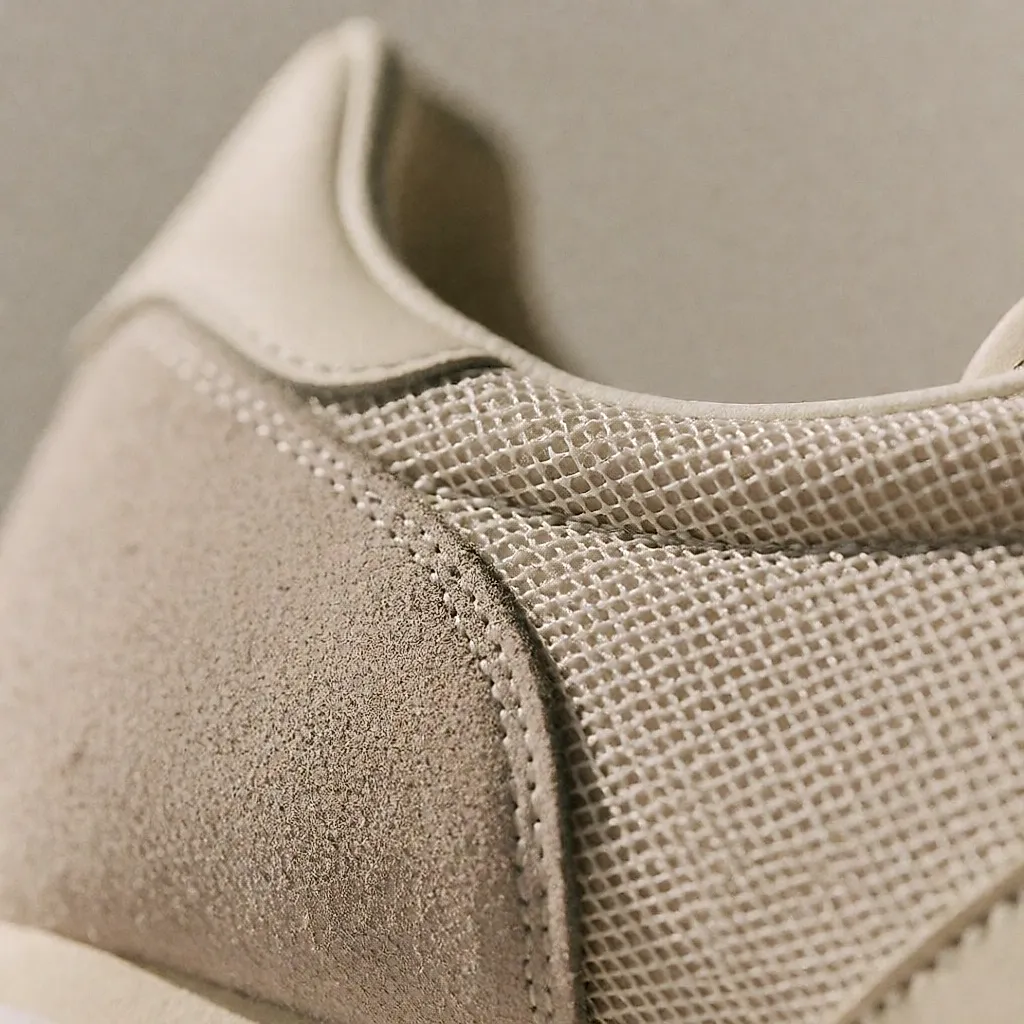
Next, weight. In practice, a current running shoe is often lighter, while some reissues are heavier. Nobody notices in the fitting room; everybody notices at the tenth kilometre. Then midsole thickness: in profile, it tells half the story — plenty of material for comfort on the road, less for ground feel. Finally, the upper: a fine textile breathes but marks easily, while suede ages more gracefully, which matters if you're buying for three years rather than one summer. Have a look at the synthetic fibre content too, and remember that the most understated pair is often the one you'll actually look after and keep.
Three questions before you reach for your card: 'Is this pair classed as running or lifestyle on your site?' — 'What's the drop, and the weight in a UK 6?' — 'Can I try it at the end of the day, when my feet are slightly swollen?' The first two protect you from a decorative purchase; the third from an optimistic size.
Budget
Expect roughly £70–£120 for a mainstream reissue from a sports retailer or online, and £140–£230 for a limited edition or collaboration in a concept store. A current running shoe with classic lines usually sits between £110 and £180, with good end-of-season bargains at £55–£90 once last season's colour no longer appeals.
Where you buy changes the advice as much as the price. In a specialist running shop, staff will talk about width fitting, sometimes offer a gait analysis, and discount the last remaining sizes; in a concept store, the edit is more curated and the editions rarer, but the price includes that rarity — and no one will ask whether you run. Second-hand completes the picture: plenty of reissues are worn twice before ending up on a shelf.
Ultimately, the real question isn't retro or not retro, but what you want to do with your feet. An elegant pair from Monday to Friday, a pair that runs on Sunday: you don't have to choose. If only one box can come home, take the pair you'll wear most — and look at the sole before the colour.

Comments
Your opinion matters: rate the article, react and reply to comments.
Comments are moderated; AI-assisted comments are flagged. Text emoticons (8-), :-), <3…) are automatically shown as images.