
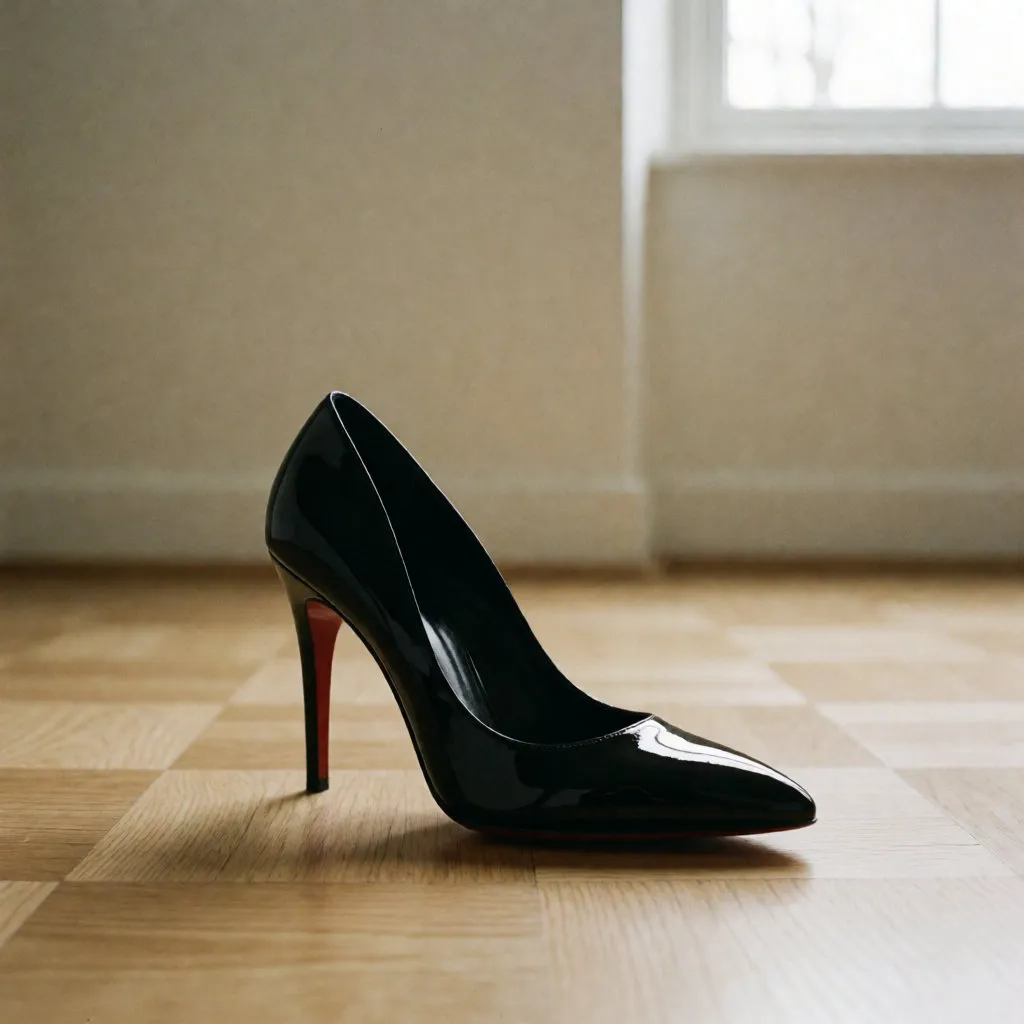
You've probably spotted that flash of carmine red under a heel at a wedding, in an office lift or on a red carpet. That sole has become one of the most instantly recognisable signatures in a woman's wardrobe. Behind it lies one man, a workshop and more than thirty years of the same obsession: the line of the leg.
A sole that became a signature
The story is repeated everywhere, and it's a good one. In the early 1990s, Christian Louboutin is said to have borrowed an assistant's red nail polish to colour the undersides of his prototypes. At first there was nothing marketing-led about it: he found his designs too dark, and the black sole flattened the shoe. Since then, the colour has been trademarked, and the house defends it as its most precious asset.
It isn't just a logo story. On a silhouette, a coloured sole shifts the gaze: it draws the eye to the arch, elongates the line of the heel and turns an all-black outfit into a statement piece. A tiny detail, but it changes how an entire outfit reads.

From cabaret to the Galerie Véro-Dodat
As a child, Louboutin was already doodling heels in the margins of his schoolbooks. As a teenager, he knocked on the doors of Paris cabarets to sell his sketches to dancers. The industry soon turned him down: without training, there was no way in.
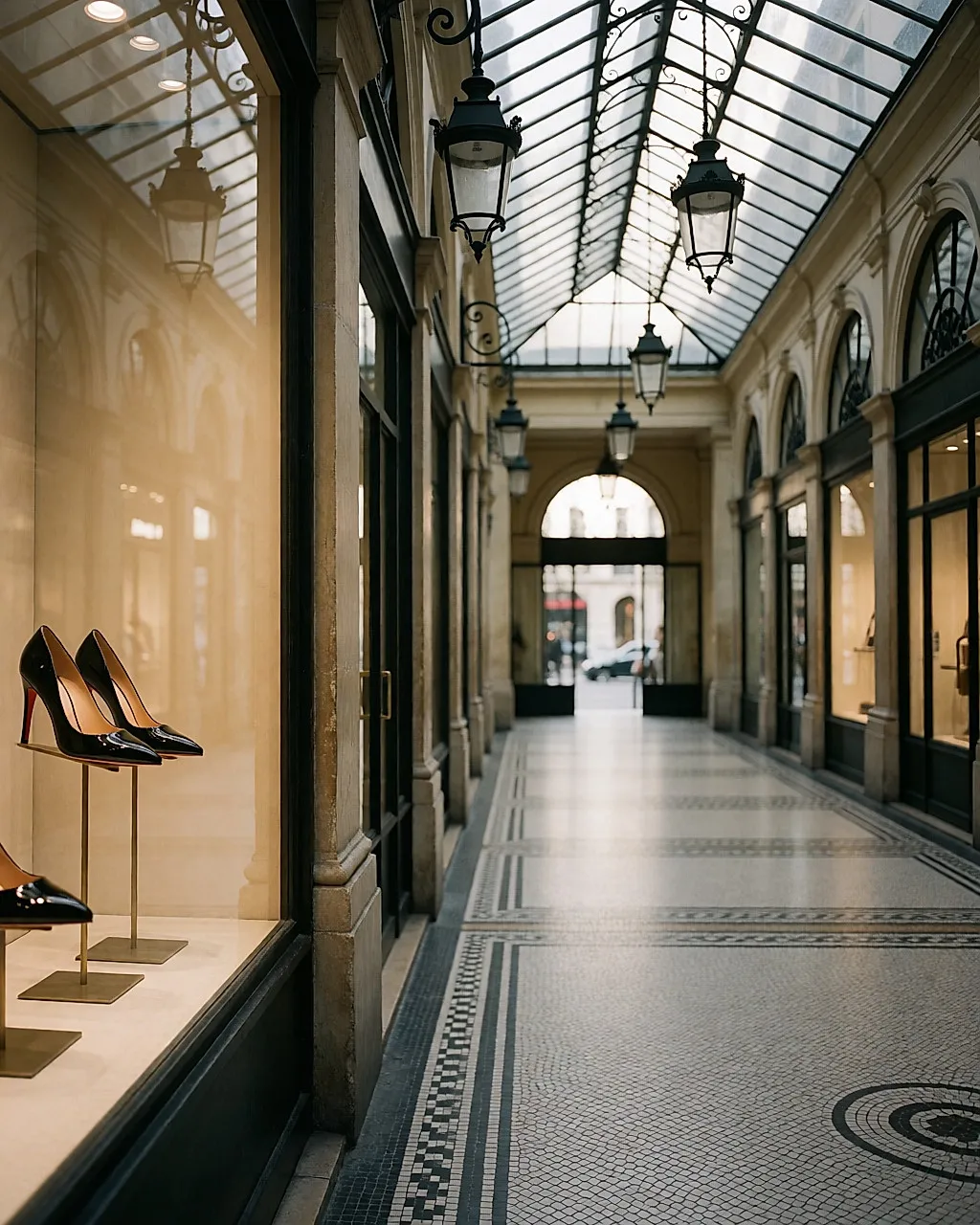
So he learned in the workshop. He apprenticed at Charles Jourdan to learn industrial techniques, then trained in the craft of shoemaking with Roger Vivier. He opened his first boutique in 1991 on rue Jean-Jacques Rousseau, in the Galerie Véro-Dodat in Paris. More addresses followed, in other cities and abroad.
Today the house has widened its offering — women's and men's shoes, bags and a beauty line launched in 2014 with Rouge Louboutin nail polish. A full-circle moment, in a way.
Spotting a real Louboutin. A solid red sole, often a sculpted heel, and an insole stamped with the logo and size. Counterfeits give themselves away in the finishing: uneven stitching, plastic-sounding materials, red that leans orange. If in doubt, buy from a boutique or the official website — that is the most reliable safeguard.
Materials, shapes, balance
What sets a Louboutin apart is proportion first. A 100 or 120 mm heel stands up because the arch is engineered: the foot is supported, and the line doesn't break. The 'So Kate' and the 'Pigalle' remain among the most cited styles.
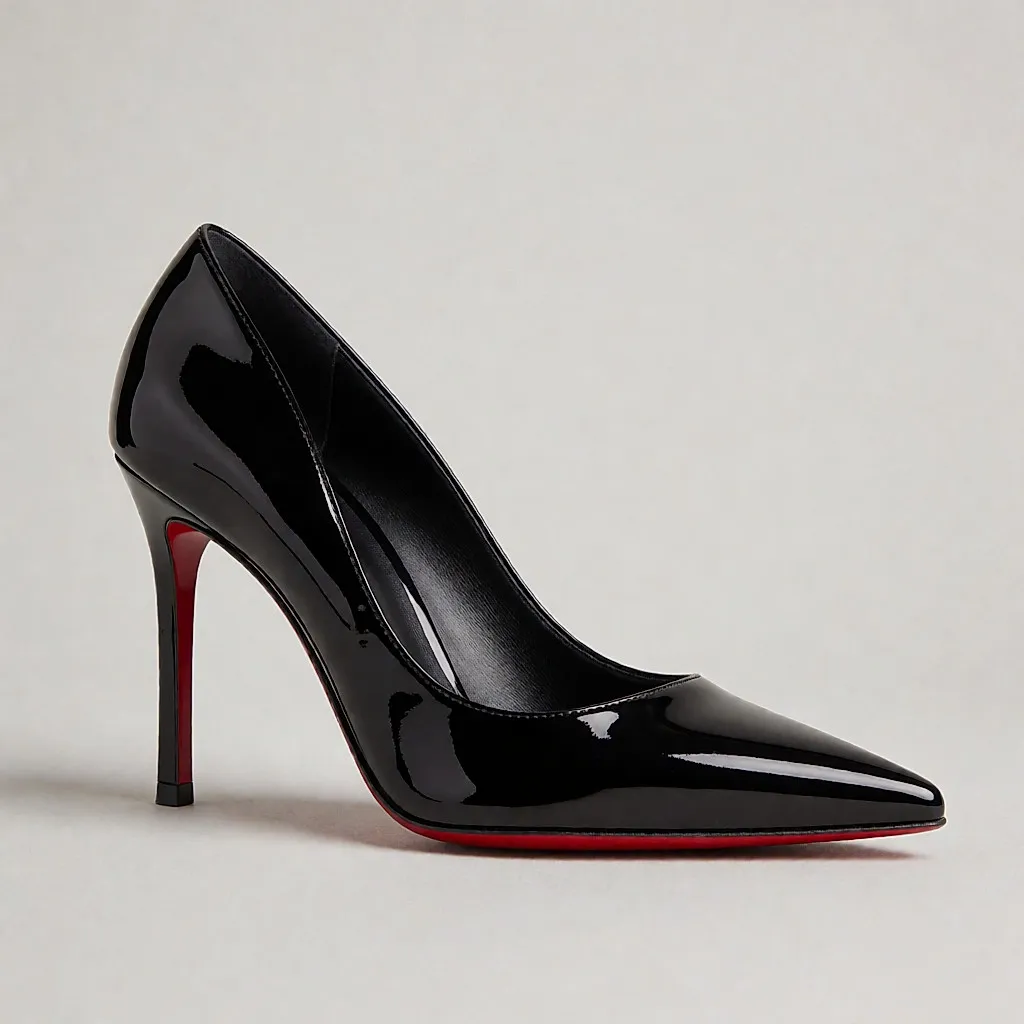

On materials, the house has moved from black patent leather to metallised leathers, embroidered satins and rarer textures. Some production is assembled in Italy, with certain details made in France. Leather remains dominant — worth bearing in mind if eco-responsibility matters to you.

How to wear it
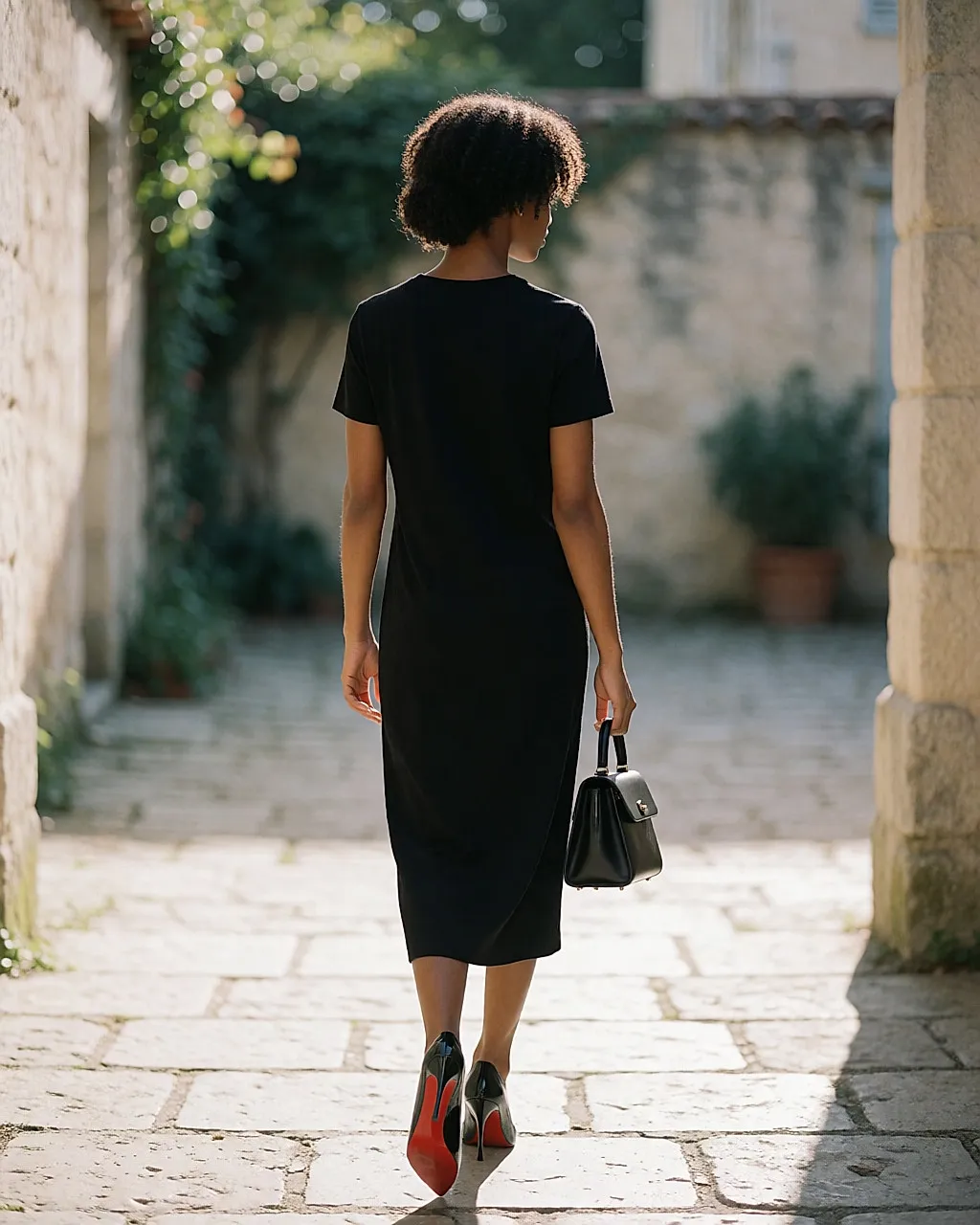
A red-soled pump makes a statement on its own. Let the rest of the outfit breathe: fluid wide-leg trousers, well-cut raw denim, a straight jersey dress. Want more colour? Match the sole to one accessory only — a bag, a slim belt — not two.
For maintenance, the one move that makes all the difference: have the heel tips replaced before they're beyond saving, at a cobbler. A well-looked-after pair can last several years.
And if you want a more responsible option? The best levers remain pre-owned, repair and resale. For new shoes without animal leather, check the exact composition (grape leather, recycled material), where they're made and how they can be disposed of or recycled: not all 'plant-based leathers' are equal.

Budget
- New, from official boutiques: expect roughly £600 to £1,200 depending on the style. Classic pumps often sit around £700 to £900.
- What changes the price: heel height, material, capsule collections, limited editions.
- Second-hand: around £150 to £500 on resale platforms. Check authenticity and the condition of the sole.
- Resoling at a cobbler: budget £40 to £100.
- Where to buy: Louboutin boutiques, department store concessions, the official website and resale platforms.
You'll have gathered: you buy a Louboutin less for the sole than for the line it creates down the leg.


Comments
Your opinion matters: rate the article, react and reply to comments.
Comments are moderated; AI-assisted comments are flagged. Text emoticons (8-), :-), <3…) are automatically shown as images.