
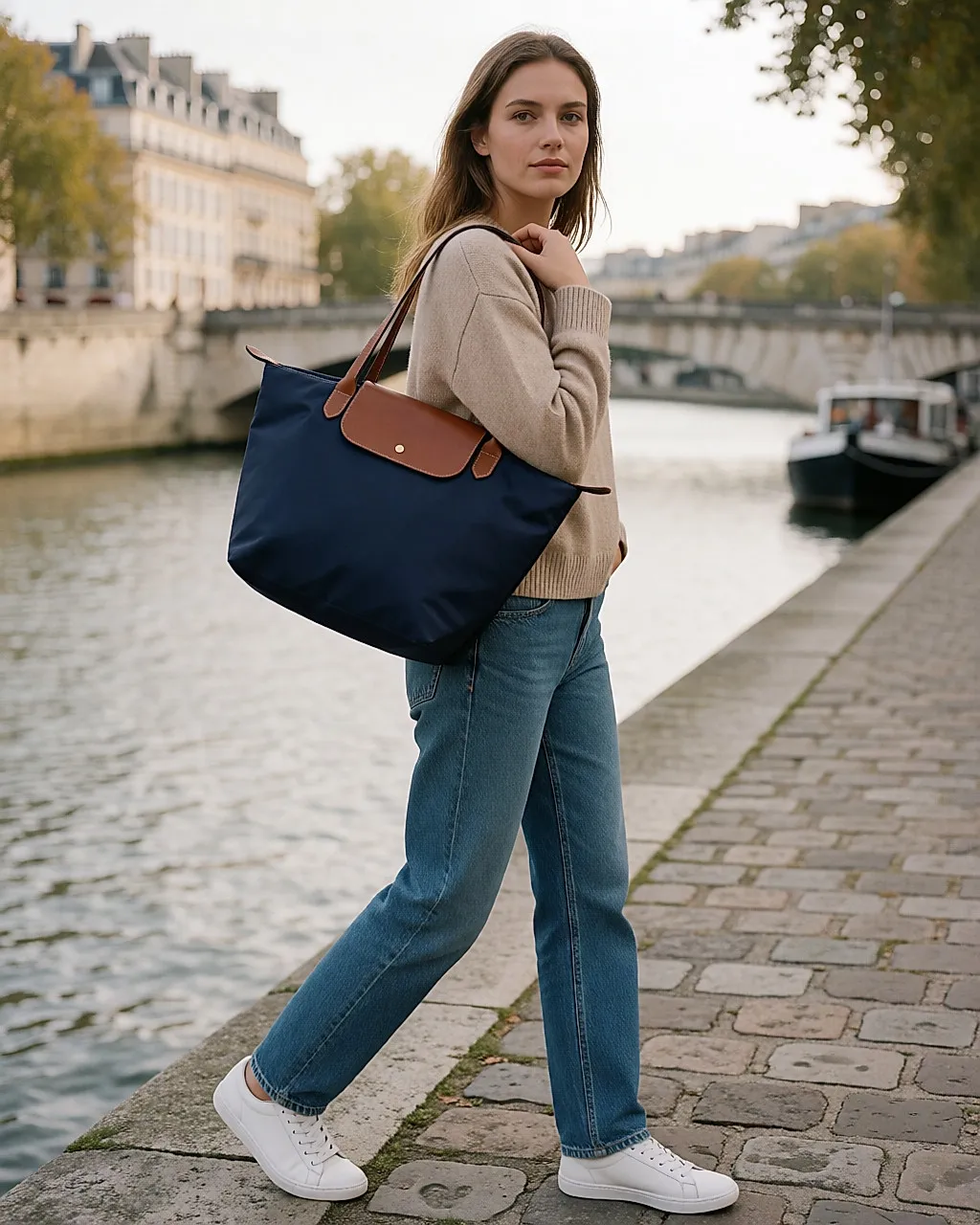
We all have a bag we'd spot in a crowd. Le Pliage by Longchamp is one of them — no need to squint at a label to know what it is. You'll have seen it on a stranger's shoulder on the Tube, or squashed into your carry-on on the way home from holiday. Behind that trapezoid silhouette lies a family story stretching back more than seven decades. And it doesn't begin in leather goods at all.
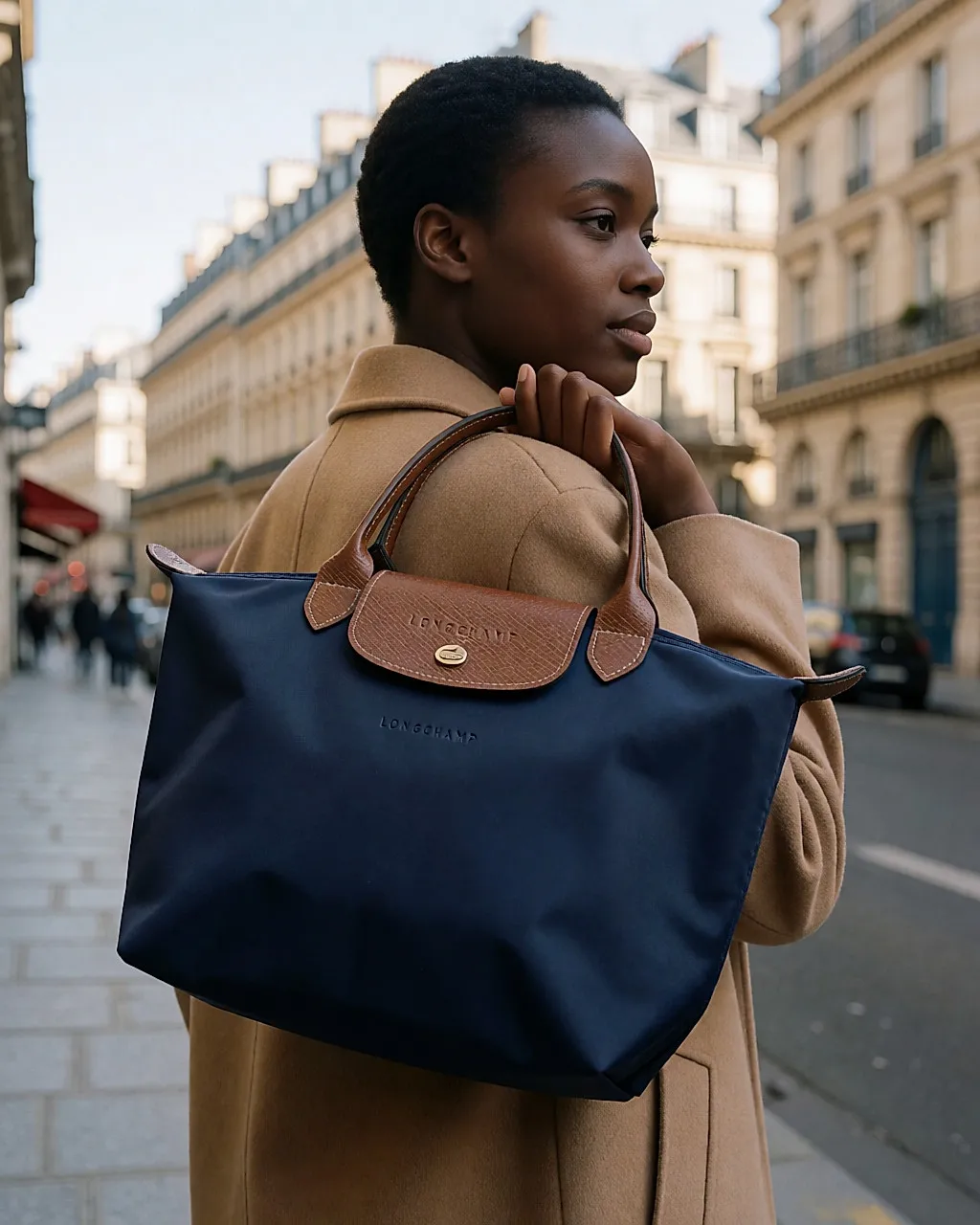
Back to 1948. Jean Cassegrain founds the house and picks a rather unexpected niche: leather-covered pipes. Nothing to do, on the face of it, with the bag you know today. For years that object keeps the business alive, before the range widens into smoking accessories and then small leather goods. Leather, meanwhile, is already the thread running through it all.
The 1960s mark a turning point: the house moves into leather luggage. Later come its own shops, including in international airports, where travellers in transit discover it. But the decisive moment lands in 1993, with Le Pliage.
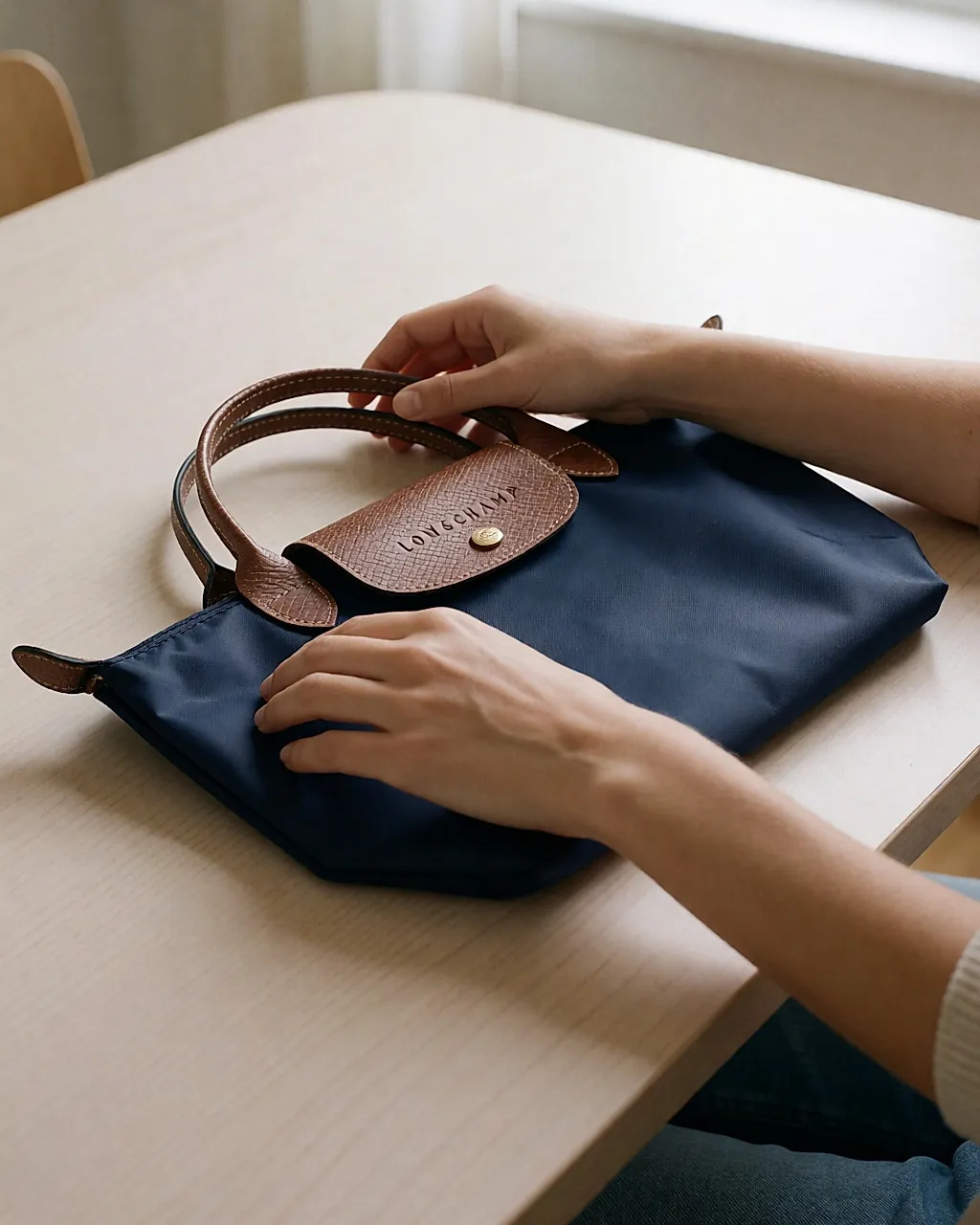
Let's clear up one myth: no, it isn't a bag from the 1970s. It was Philippe Cassegrain who designed it in 1993, with origami firmly in his sights. A square of lightweight nylon canvas, a leather flap, slim handles — and one move that changes everything: the bag folds in seconds, small enough to slip into hand luggage. Simple, hard-wearing, an almost instant bestseller.
Its charm, honestly, comes down to very little. A trapezoid shape, a soft drape, a material that doesn't fear the rain. That pared-back approach makes it a quiet statement piece, easy to style, from head-to-toe looks to jeans and trainers. The canvas, for its part, ages rather well — on one condition: don't overload it.
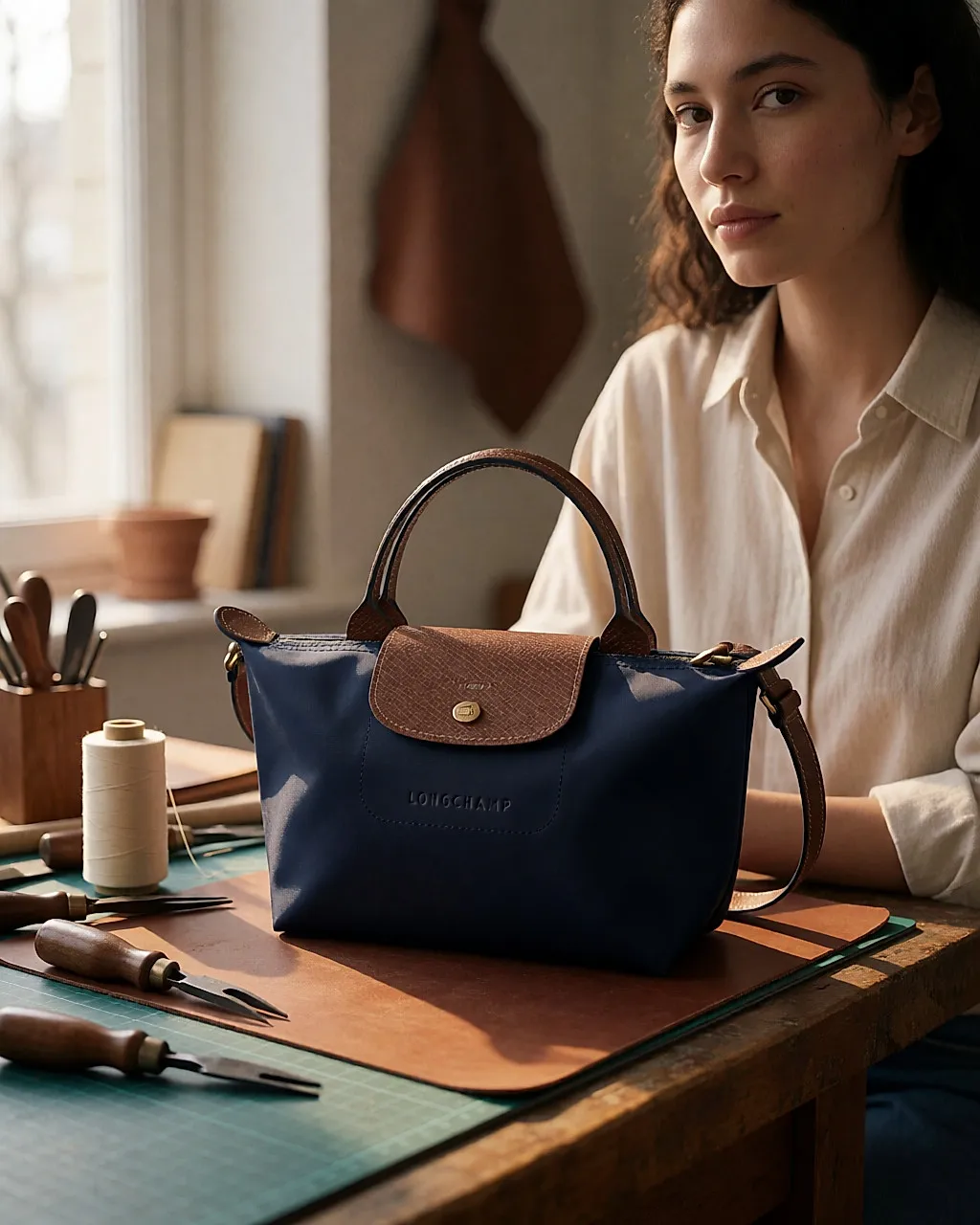
From the 2000s the range widens into ready-to-wear and accessories, then later into shoes. The house, still run by the Cassegrain family, cultivates its own take on French luxury, poised between restraint and a wink.
On materials, the Le Pliage Green line swaps virgin nylon for recycled polyamide; the flap stays leather, but its origin can vary from one line to another. Worth noting: that cuts the share of new material, but doesn't turn the bag into something compostable. Its end of life still depends on textile recycling schemes, which vary by area.
The trick that makes all the difference. To keep your Pliage from losing its shape, store it folded flat whenever you're not using it. The canvas holds its structure better, the leather flap creases less — and you'll find it ready to go.
Budget
A Pliage without blowing the budget? Good news: the range is wide enough to have a real entry point. The classic Le Pliage Original in nylon — the signature canvas with the leather flap — sits at the base of the range, with prices from roughly €90 to €120 depending on size. The recycled Le Pliage Green line lands in the same bracket. From there it climbs: the leather versions jump a clear step up, into the several-hundred-euro territory, and limited editions or collaborations go higher still.
Several things move the price: size, material, colour, and how rare the edition is (collaborations, capsule drops). Where to get one? The official Longchamp boutique or longchamp.com for authenticity, department stores, airport shops, or second-hand for an older model — checking the stitching and the state of the flap. For current prices, check longchamp.com or your nearest boutique.
Sources
- Maison Longchamp, official "Our history" page, longchamp.com
- Longchamp, Le Pliage Green line description, longchamp.com
Comments
Your opinion matters: rate the article, react and reply to comments.
Comments are moderated; AI-assisted comments are flagged. Text emoticons (8-), :-), <3…) are automatically shown as images.