
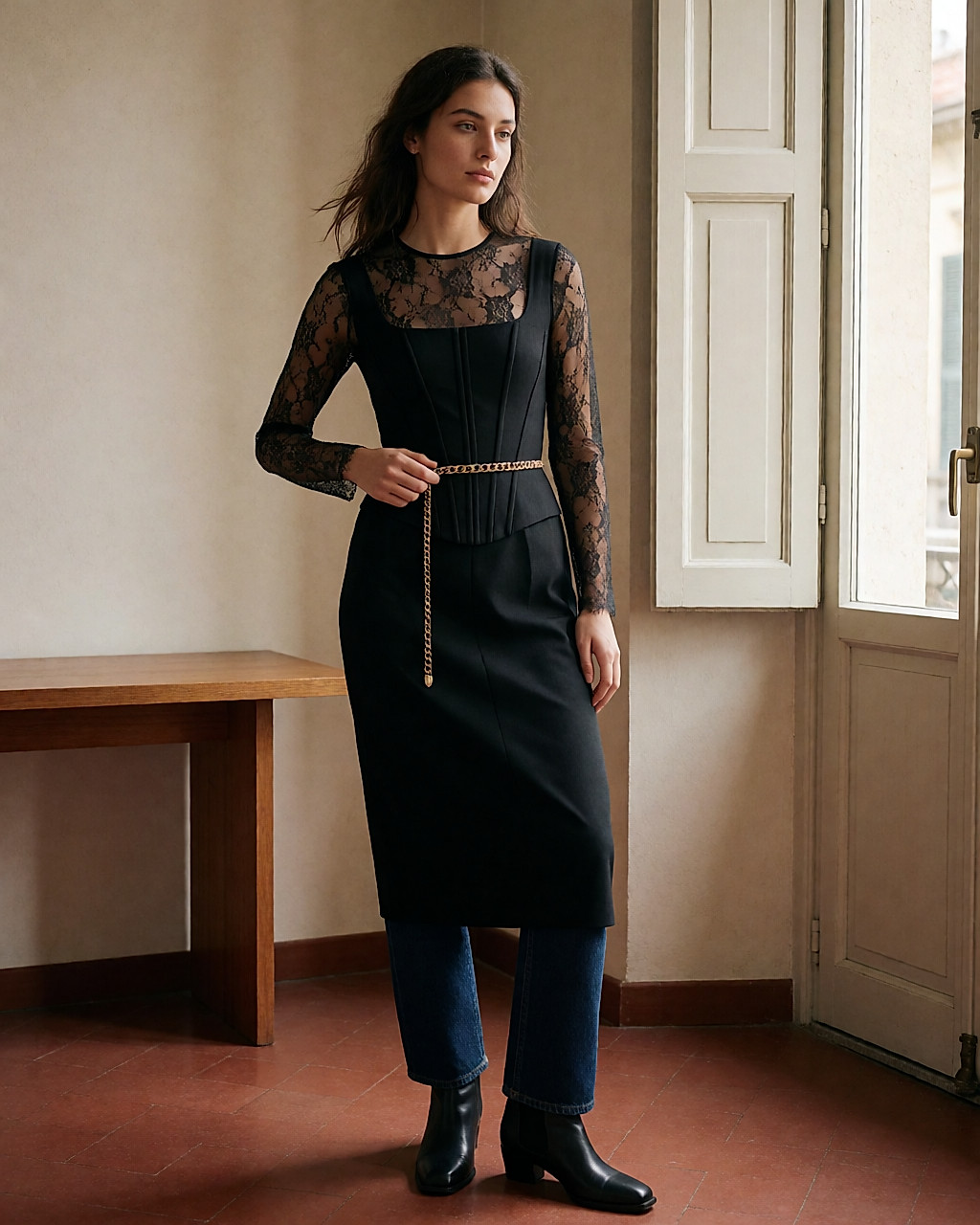
You've almost certainly clocked that logo somewhere. A gold belt around a pair of raw denim jeans on a street corner, a square bottle left on a bathroom shelf, a slit black dress walking a red carpet… Those images tell a story of an atelier, of a couple and of a wardrobe that became a signature. And it's worth knowing, because it changes the way you look at a silhouette.
Milan: two temperaments, one wardrobe
It all begins in Milan in 1985. Domenico Dolce and Stefano Gabbana launch their house: one comes from a family of Sicilian tailors, the other works in advertising graphics. They already know each other — they met a few years earlier — and at this point they're a couple, both in private life and in the studio. That double role explains a great deal of what follows.
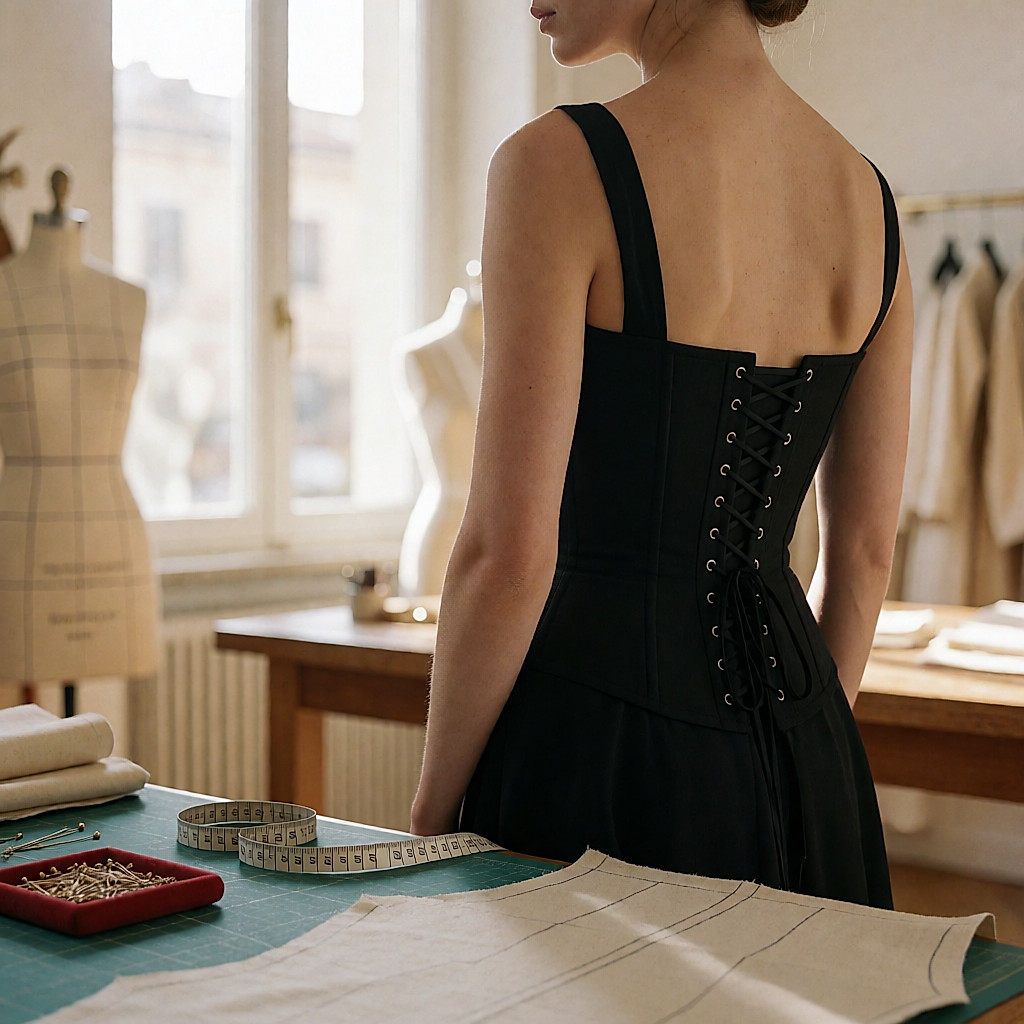
Domenico Dolce handles the cut, the drape, that precision inherited from the tailoring tradition. Stefano Gabbana handles the image, the staging, the irreverence. The hand and the eye, in tandem: that's the formula. Their early credo? Dressing "real women". Silhouettes that hug the body rather than compress it, a construction that follows its shape instead of correcting it. Deep black, lace, corset, animal prints, heavy embroidery: the vocabulary is in place from the very first seasons, and it has barely shifted since. Rare in a sector that rewrites its codes constantly.
The tour that turned the label into pop culture
The breakthrough came through the stage. In 1993, Madonna called on the house for around 1,500 costumes — an entire wardrobe designed for movement, quick changes and stage lighting. Clothes became a spectacle, and the brand settled for good into the collective imagination.

After that, red carpets and music videos did the rest. Singers, actresses, television names wear the house, and the wardrobe takes its place in popular culture without anyone needing to introduce it. That's what's meant by a look that speaks for itself.
On the business side, the diversification came fast. First menswear line in 1990, first women's fragrance in 1992, then eyewear, underwear, bags. In 1994 came the second line, D&G, more accessible; in 2001, childrenswear completed the picture. That D&G line widened the customer base before being folded into the main brand in 2012.
A wardrobe that still reads instantly
What holds a silhouette from this house together is less a particular piece than an overall attitude. A clean drape, worked materials — embroidery, lace, cashmere, jacquard — a play of prints and textures that's sometimes very baroque. The cut often stays close to the body, structured by a corset or a bone, sometimes softened by a jersey that follows the movement. Nothing loose, nothing floaty: it holds.

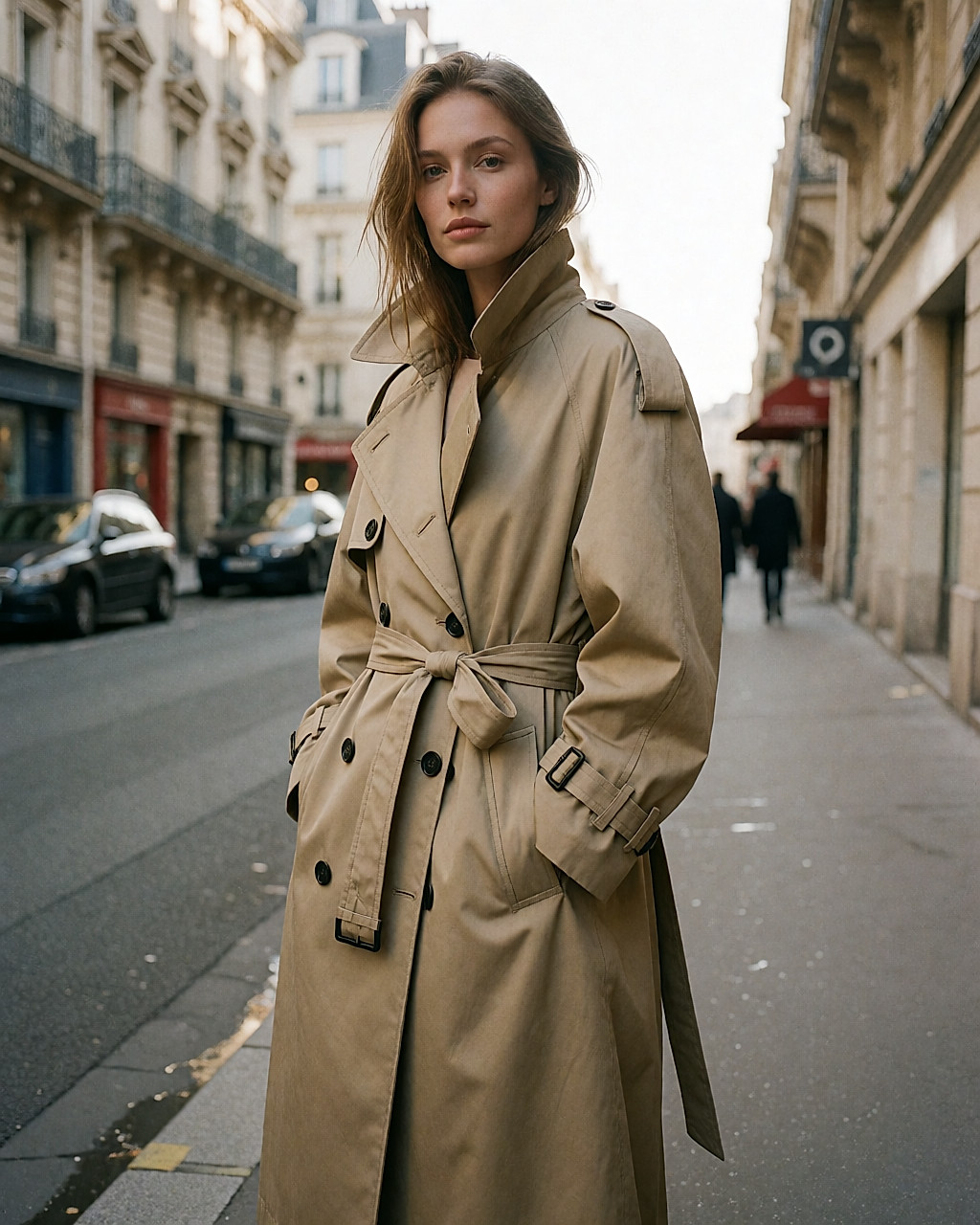
Worn well, it's better treated as a statement piece than a full look, unless you want to look like you've just walked off a runway. So how do you work it into real life? A well-judged bit of layering — a poplin shirt slipped under a lace dress, for instance — a gold accessory, a bag at the right scale, and you're done. The idea is to let the strong piece do the talking and keep the rest basic: raw denim, a trench, Derby shoes. A capsule wardrobe with a single assertive element works better than an accumulation of signals.
Today the house is no longer just ready-to-wear: it also covers haute couture (Alta Moda), fine jewellery and beauty, with stores all over the world. Domenico Dolce and Stefano Gabbana, who separated privately in the 2000s, remain partners at the head of the brand.
To pick up a piece without blowing your budget, second-hand remains the most sensible route. Let's be blunt: luxury clothing is rarely designed with the planet in mind, and there is rarely a credible "natural" alternative on this terrain. A piece lasts because you wear it for years, not because it's recyclable. A pre-owned belt, bag or pair of sunglasses, properly authenticated, will see you through decades: that's the genuinely responsible move, in the absence of anything better. Check the stitching, the interior finishing and the fastenings — that's where wear shows and, often, where a counterfeit gives itself away.
Budget
Prices climb quickly, so let's set some parameters.
- Beauty (fragrance, lipstick): expect around £25 to £130 depending on format and concentration.
- Eyewear, belts, small leather goods: expect around £170 to £390.
- Ready-to-wear (dress, blazer): from £430, often well over £1,300 for fine fabrics and embroidered pieces.
- Second-hand: expect roughly 30 to 70% less, depending on condition, season and how rare the model is.
What moves the price: the material (an embroidered silk is another world from a printed cotton), the complexity of the cut — some pieces need alterations, so budget for those on top — the end of a run, and the point of sale. In an official boutique or on the house's own website, you pay full price, with authenticity and service included. In a department store, beauty and eyewear concessions are common and easy to try. Online, stick to authorised stockists and specialist resale platforms, and don't overlook outlet villages such as Bicester Village, where past collections arrive at a markdown.
One last point on beauty: the house fragrances are conventional formulas, with alcohol and synthetic molecules. If you're looking for something natural, this isn't where to look — and there's no shame in saying so. A solid perfume, an organic eau de parfum or a glass refill will sit more comfortably with an eco-conscious approach, provided you check what the label on the front actually guarantees.

Comments
Your opinion matters: rate the article, react and reply to comments.
Comments are moderated; AI-assisted comments are flagged. Text emoticons (8-), :-), <3…) are automatically shown as images.