
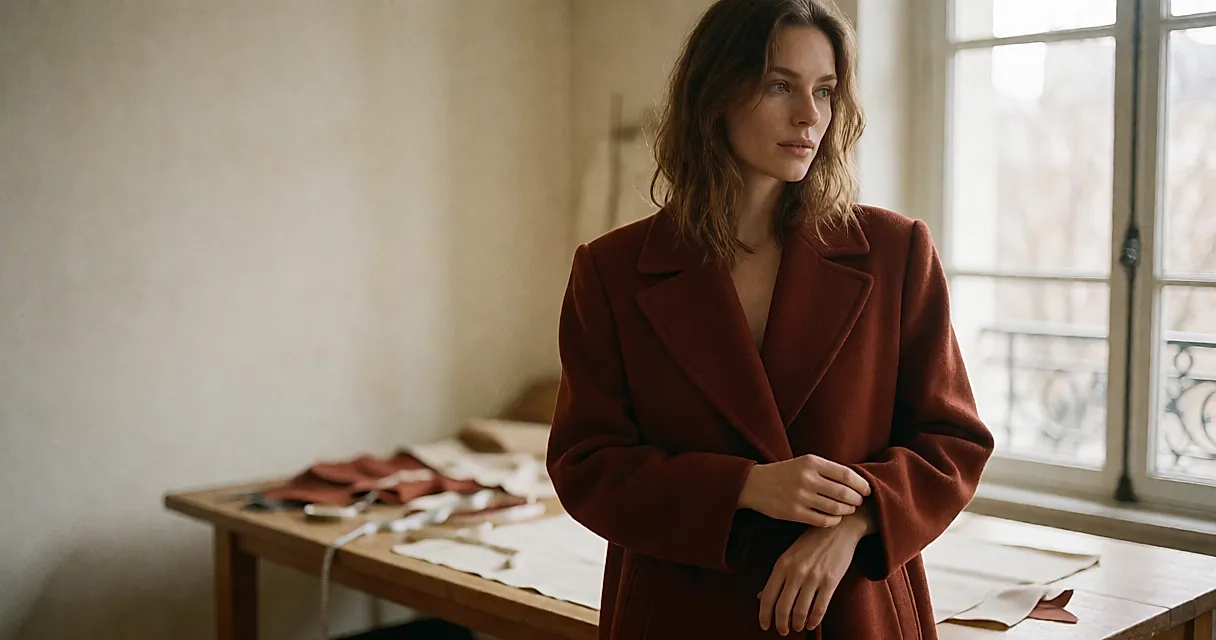
The coat caught my eye from the other side of the market: rust-coloured wool, sharp shoulders, a colour to brighten a November Sunday. One detail was off, though — it stopped three centimetres too high, as if someone had hesitated mid-cut. 'It's a one-off, cut from a 1970s vintage piece,' the seller smiled. A one-off: a phrase that can justify almost any price, and exactly the point at which to look harder.
The hand that cuts, and what it leaves of the original
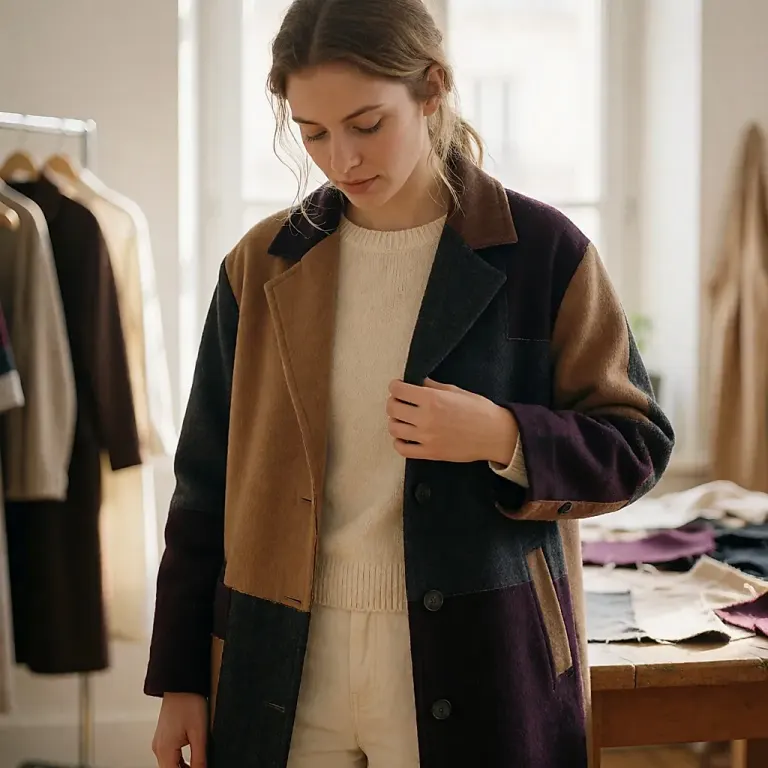
A reworked piece is not a new garment: it is an old one that has been reinterpreted. The price therefore tells two stories — that of the original piece, sourced and then sacrificed, and that of the cutting work. What you are paying for is who cut it, in which workshop, and what remains of the original garment. A trench shortened by a local alterations shop and the same trench reworked by a designer who puts her name to the collection are neither the same look nor the same price.
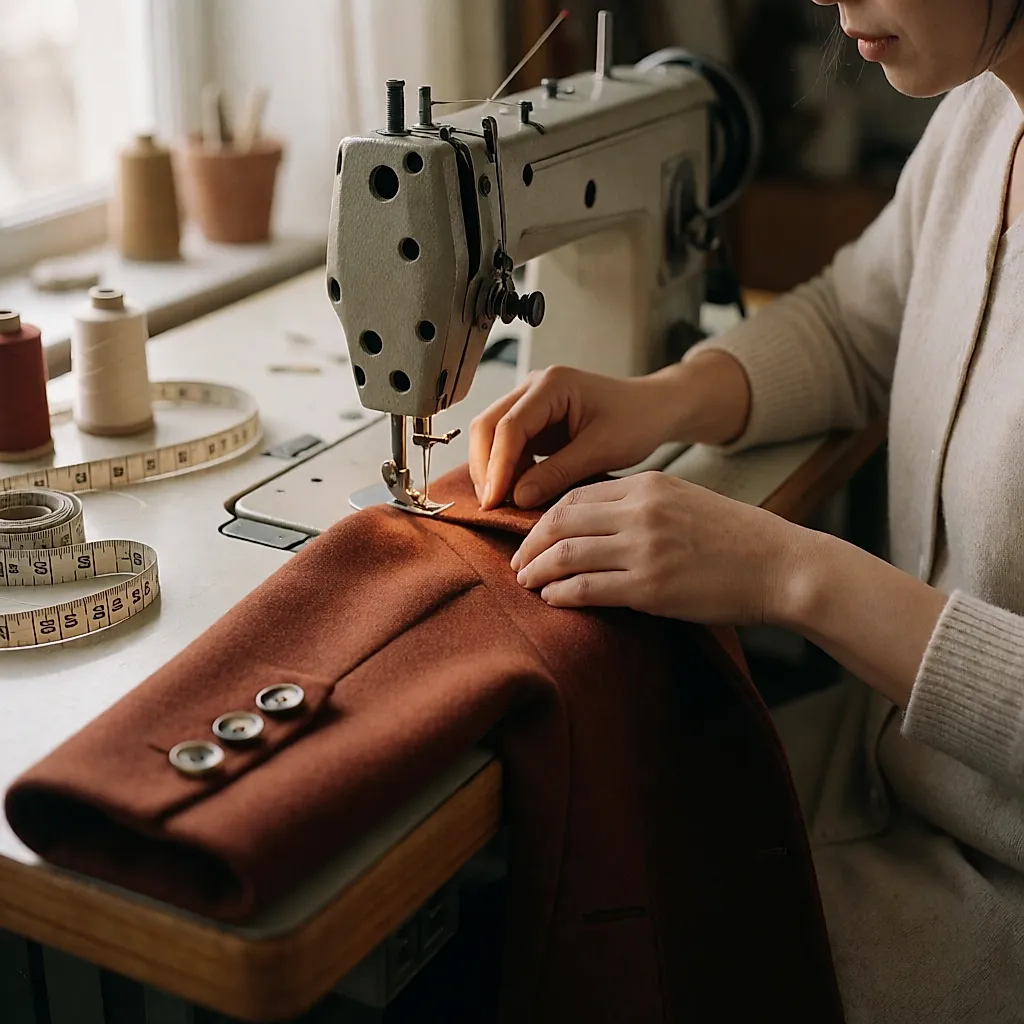
Look at the details that betray the hand: original buttons kept or replaced, a period lining that survives or disappears, a hem redone with thread that doesn't jar. On a successful piece, the old cut can still be sensed — a dart, an armhole, a removed label leaving a darker rectangle. It is this memory of the garment that separates a one-off from a rushed alteration.
What a photo will never tell you
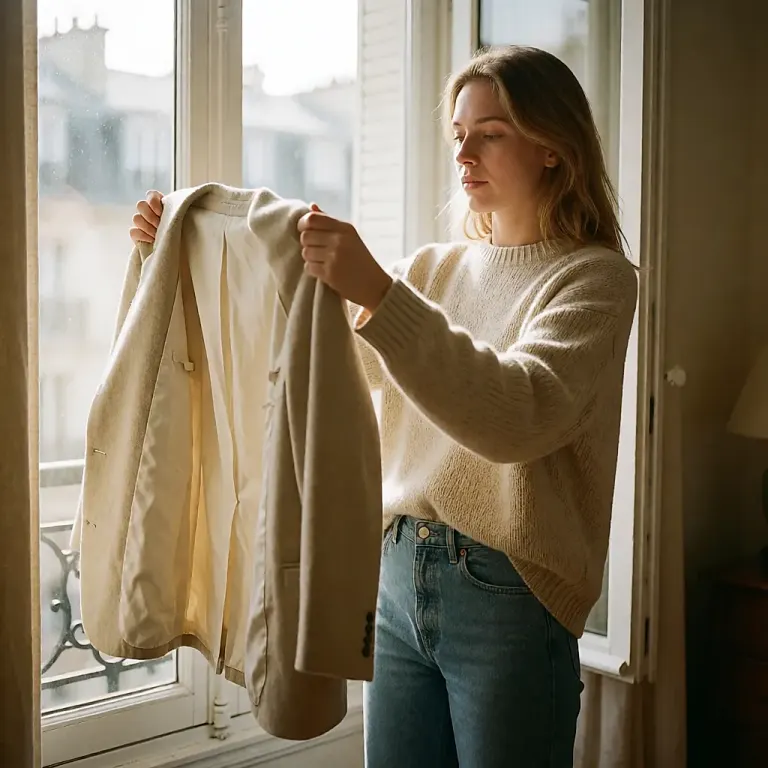
On a screen, everything looks smooth. The drape, the weight of the wool, the hand of the fabric: all impossible to judge. And the most revealing details are often hidden inside — clean seams, condition under the arms, the lining, a snag masked by the hem, a stain the cut narrowly avoided. An invisible repair can hide tired fabric, and the inside of the piece tells you more than its well-lit exterior.

Before you pay, ask precise questions — not just 'lovely, isn't it?' What was the original garment, and what era is it from? Where was it bought? What has been removed, and what has been kept? Does the workshop sign the piece, and how? A serious seller should answer straight; an embarrassed one may answer with the price. Bear in mind, too, that a reworked piece does not suit every body shape: a shortened shoulder or a taken-in waist forgives less than a new garment, where you can still choose your size.
The comparison that doesn't exist
Buying intact vintage means entering a known market: a classic trench, a pair of raw jeans, a 1980s leather jacket tend to have references, past sales and a roughly stable price range. You have a better idea of what to expect, and roughly what it might resell for. A one-off, by contrast, has no twin. Its price is set by the designer, the workshop, the place of sale — and by how much you want it at that moment.
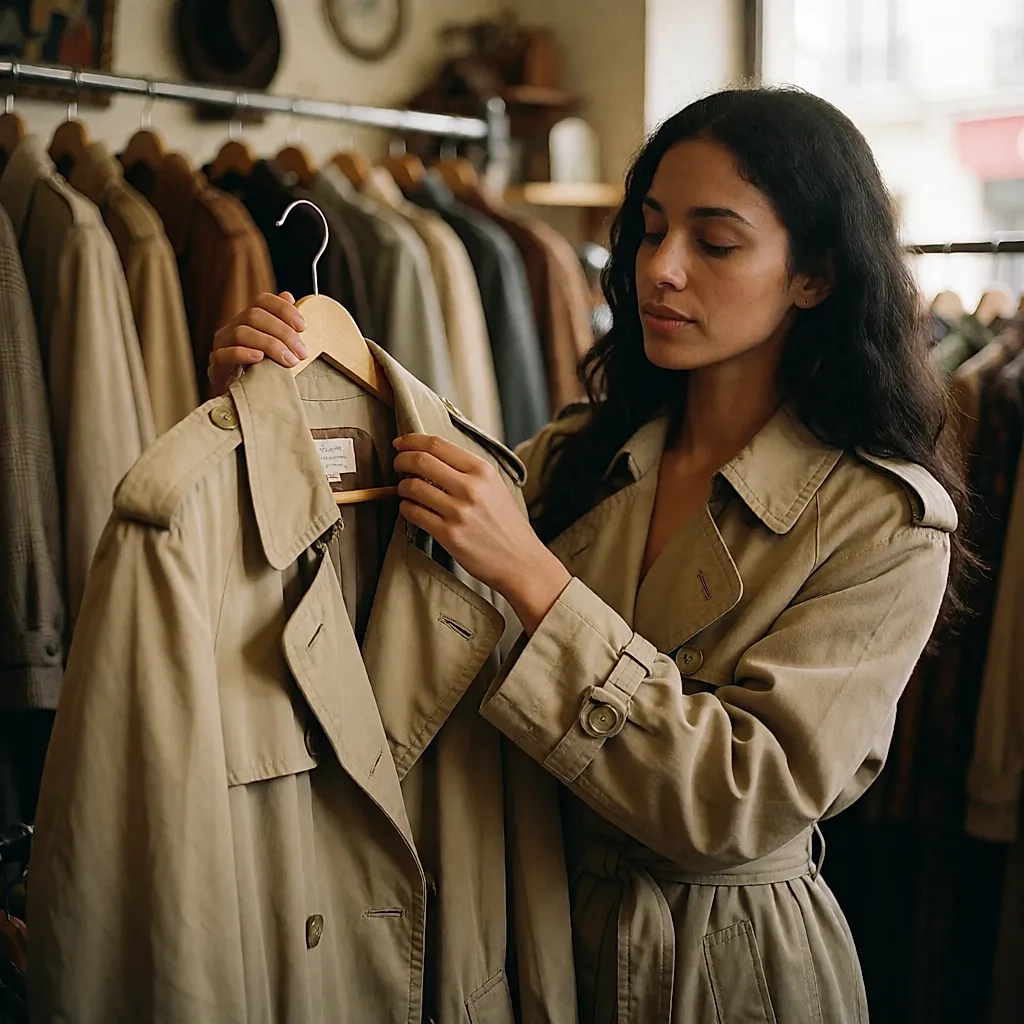
Resale follows the same logic, only narrower. A classic vintage piece can find a buyer because the model is recognisable; a reworked piece is more likely to find a buyer who specifically loves that cut, that detail, that workshop name. With nothing to compare it to, it is hard to predict how much of its price you will recoup. That is not a deal-breaker, but it does make the piece a heart-over-head buy rather than an investment — and if easy resale matters to you, stay with vintage left as it is.
Budget
Price depends on where the piece comes from and who alters it. Expect to pay roughly £15–£80 for the starting garment at a market or second-hand shop, then £25–£80 for alterations at a local tailor, depending on complexity (a simple hem, taking in a waist, sleeves). A piece already reworked and sold by an upcycling designer often sits between £80 and £250, and rises beyond £300 when the workshop signs it and the work is more involved. In a city, you may find the top of those ranges; online and outside major cities, more often the bottom.
Where to look: local alterations workshops, often good value and a chance to see the work up close; upcycling designers at markets and pop-ups; resale platforms for pieces that have already been reworked. Ask whether the alterations were done by hand or machine, and whether a return is possible if something is wrong — it is a useful safety net.
Three questions to ask before you pay: what was the original garment, and what era is it from? What has been removed, and what has been kept? Who did the alteration, and under what name? If any answer stays vague, the price should come down — or you should walk away.
Ultimately, a reworked piece is a very good buy if you choose it for what it is: a one-off with a history of fabric and scissors. Take it if you think you will wear it often, season after season, and if the workshop name means something to you; otherwise, intact vintage, easier to compare and resell, will remain the more sensible choice. And if the rust coat is still calling, ask to see the inside. That is where everything is decided.

Comments
Your opinion matters: rate the article, react and reply to comments.
Comments are moderated; AI-assisted comments are flagged. Text emoticons (8-), :-), <3…) are automatically shown as images.