
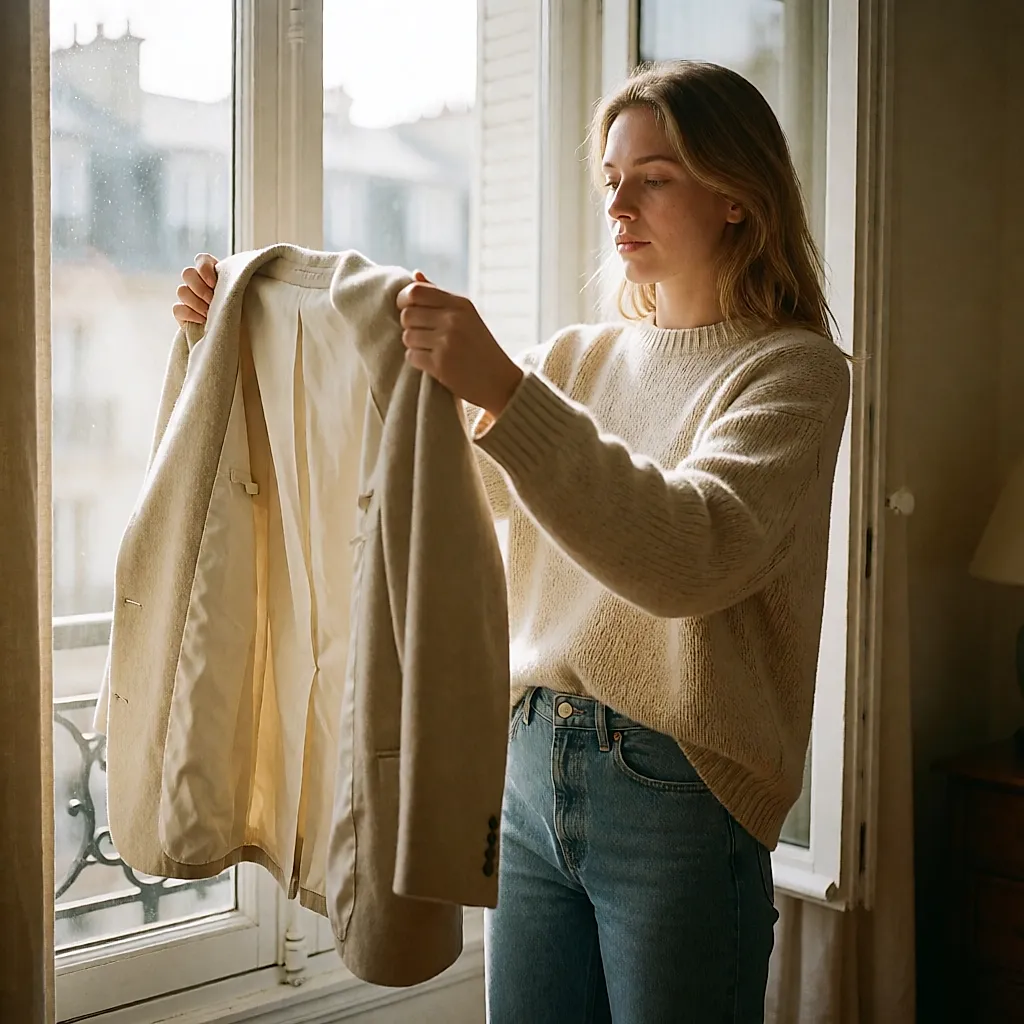
The changing room is cramped, the lighting is frankly terrible, and the mirror looks as though it was chosen by someone with a grudge against you. The real fitting, though, doesn't happen there. It happens when you turn the piece inside out and look at the back: that's where a garment reveals what it's still worth, and everything it will allow you to do to it.
The clues are subtler than a composition label, but they tell you far more. Why is no one taught to read them?
The inside is the label that matters
First thing to assess by eye: the width of the seam allowances, the extra fabric folded inside along the sides, shoulders and hems. That's the reserve a seamstress can draw on to adjust a garment. On many recent pieces it's barely a centimetre, sometimes less; on older, better-made pieces it can be two, three, even four centimetres. This isn't a minor workshop detail: it's the difference between a garment you can adjust to your shape and one you just watch go by.
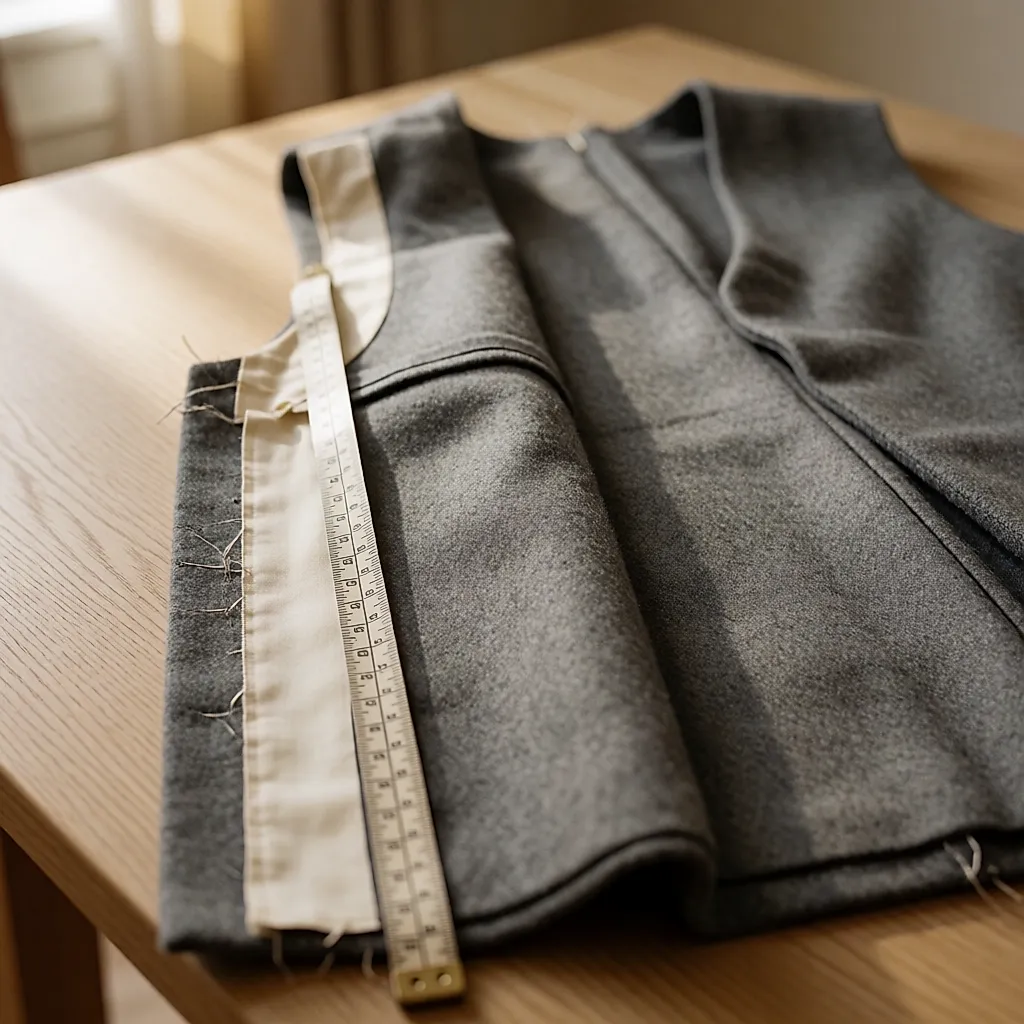
Next, look for needle marks, the little lines of holes that show fabric has already been taken in or let out. On wool, silk or satin, they show. A burst of steam often helps soften them, but it can't guarantee they'll disappear. And if the seam allowances have been trimmed close, someone has already been in there — and left nothing for you.
The lining: flatmate or prisoner
An independent lining, made separately from the outer fabric and often hand-stitched at the hem, changes everything: it has its own seam allowances, it moves separately, and a seamstress can alter the piece without taking it all apart. It's a sign of careful making, and a small insurance policy for later.
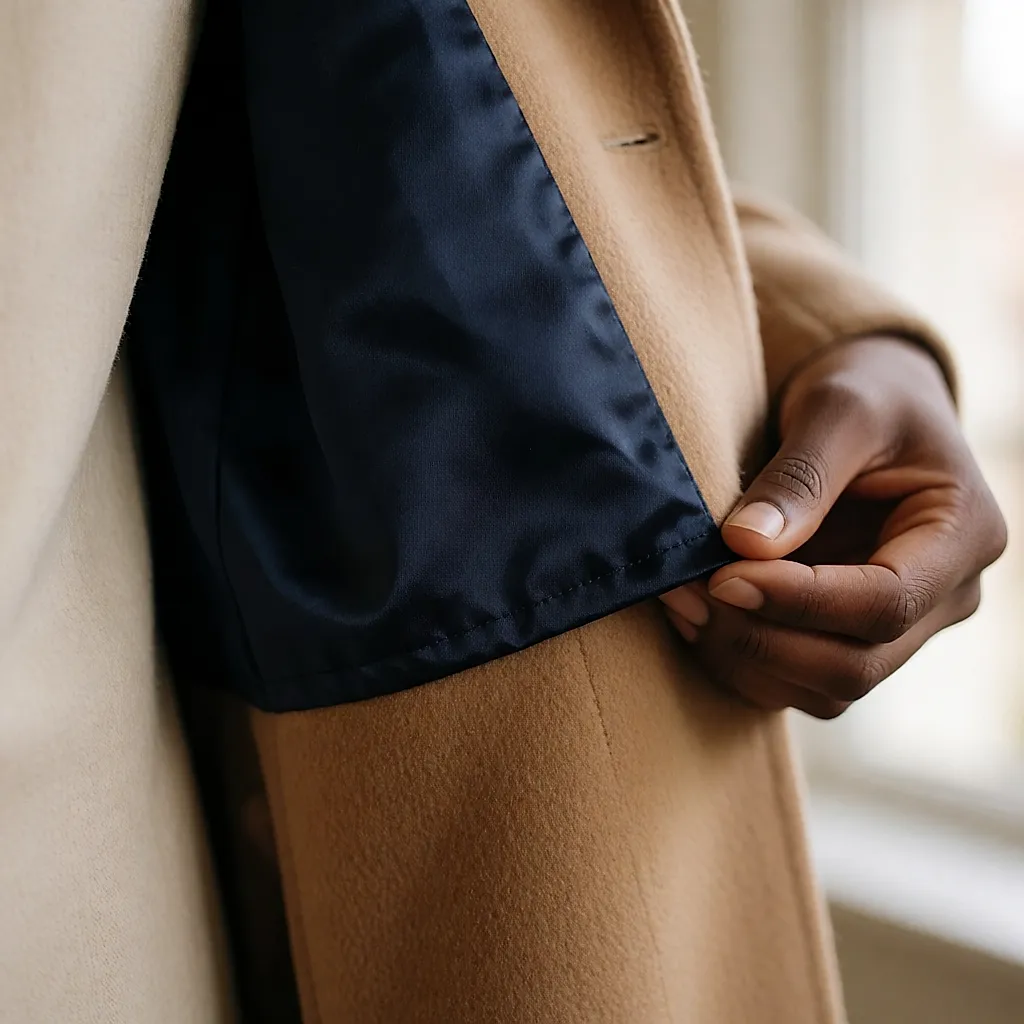
By contrast, a lining caught in the same seams as the garment makes every alteration heavier. Check its condition too: worn under the arms, coming undone at the hem, fragile behind the shoulders. In practice, reattaching a few centimetres takes minutes. Replacing a whole lining is a project — quote included.
The fabric has a say
Not all fabrics forgive in the same way. A dense wool, a heavy linen, a substantial silk, a sturdy cotton will take alterations: they can be pressed, regain a line, and their drape won't collapse at the first fitting. Linen tends to hold the memory of an old seam, while wool responds well to steam. These are the fabrics that let an alteration finish cleanly.
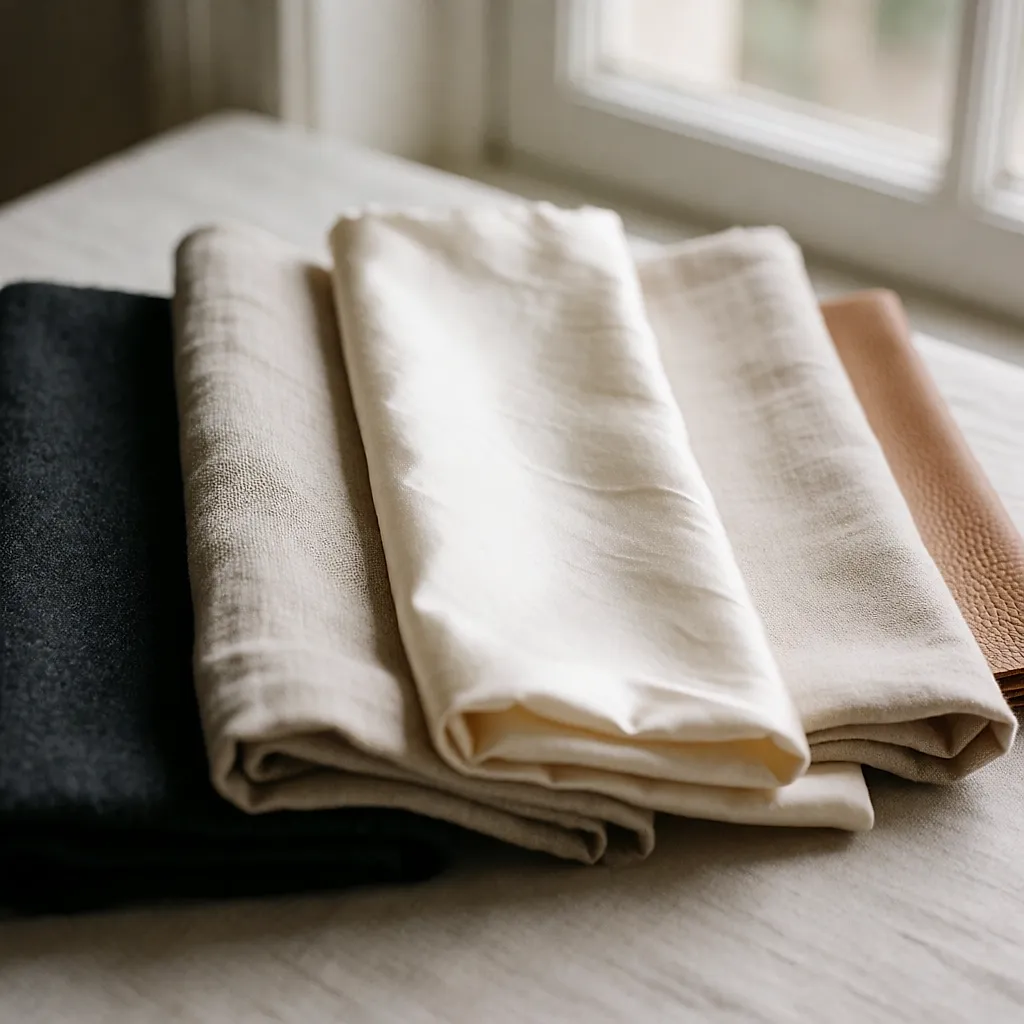
Leather is another story: re-stitching a seam leaves the old holes exposed, with no discreet way to cover them. Pattern matching also deserves a look — if stripes align perfectly from one side to the other, moving a seam by two centimetres ruins it. And if the label says a high proportion of synthetic fibres, an alteration often becomes a gamble.
When the bill outweighs the piece
Do the maths out loud, even roughly. A £25 charity-shop jacket, plus a shoulder alteration, plus a lining to replace: you're approaching the price of something new, and you still don't have the right fit. A little changing-room arithmetic saves a lot of regret at the till.
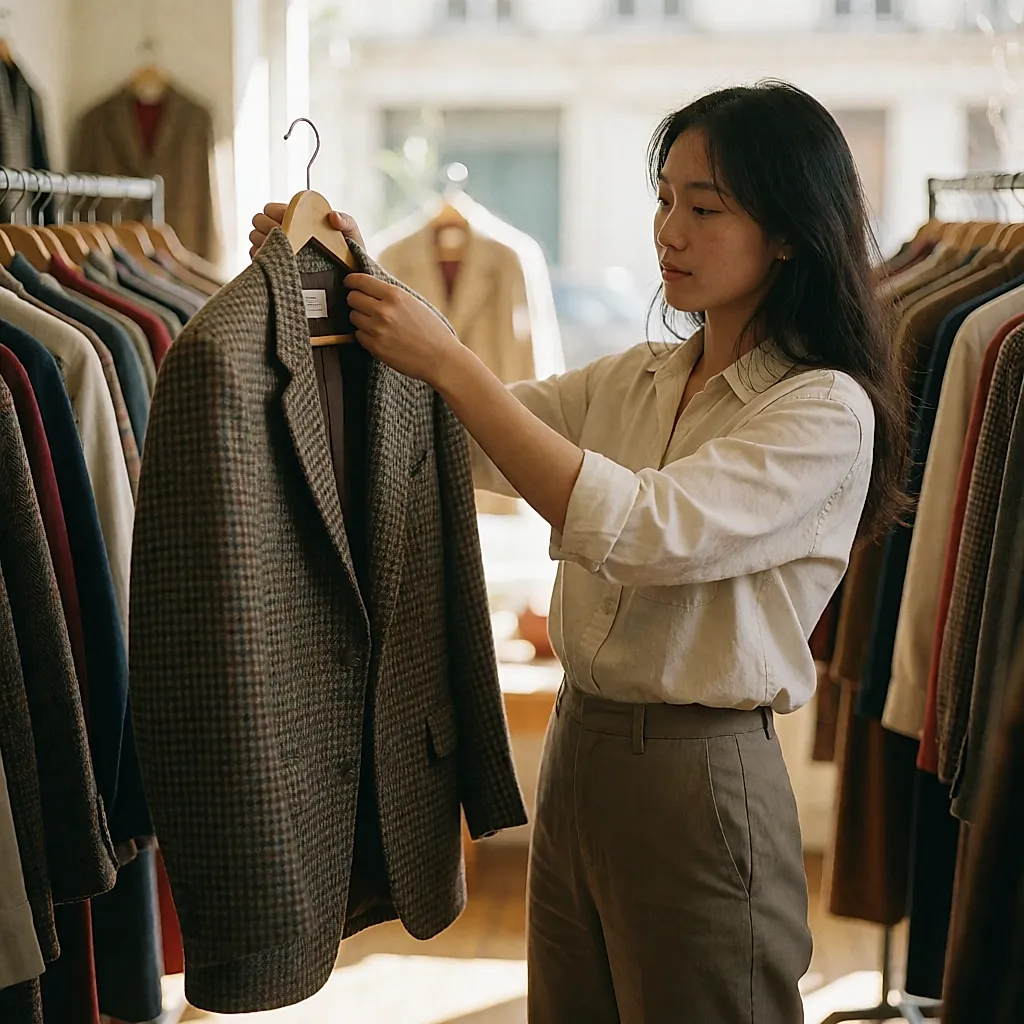
What alters well: a hem, a shortened sleeve, a slight taking-in at the waist, a lining to reattach. What's tricky: shoulders, collar, armholes, an invisible zip. In other words, anything that affects the garment's structure. If in doubt, photograph the inside and show the images to a seamstress before you buy: honest advice costs less than a botched alteration.
The changing-room checklist: turn the piece inside out · eyeball the width of the seam allowances · gently pull the seams to see if they hold · look for needle marks · check whether the lining is independent and in good condition · turn the sleeves and hem back · check pattern alignment · estimate the alteration, then compare it with the price tag.
What it costs
On cost, expect roughly £10–£25 for a hem on trousers or a skirt at a local alterations shop, £20–£40 to shorten sleeves, and £35–£70 to take in a jacket. The more structured the piece, the higher the labour: a shoulder alteration is often £50–£90, a full reline £40–£80, and a zip replacement £25–£50.
These ranges vary with the city, the complexity of the piece and who does the work: an independent alterations shop, a dry cleaner's, or a self-employed seamstress. Ask for a quote, and show them the inside of the garment. That's where the price is decided, far more than on the front.
A piece that has already had a life carries someone else's traces, and that's part of its charm. We can't save everything, and that's fine: we save the ones with room to move — literally. The rest go back on the rail with a silent little salute, and we walk away with a good find that will go the distance.

Comments
Your opinion matters: rate the article, react and reply to comments.
Comments are moderated; AI-assisted comments are flagged. Text emoticons (8-), :-), <3…) are automatically shown as images.