

The 3rd Vintage Fair: Fashion and Accessories
Ever spent an hour rummaging through a charity shop and found nothing, then fallen for a jacket hanging crooked at the back of the rail? That's vintage in a nutshell: patience, a bit of luck, and an eye that sharpens the more you look. In April 2009, the 3rd Vintage Fair set up its rails in the Cour du Marais, in Paris's 4th arrondissement, with around thirty exhibitors from around the world and a single theme: fashion and its accessories. An edition still talked about today, so generous was the haul.
Vintage: a definition that actually holds up
Three markers tend to be agreed on: a piece that has lived, a certain rarity — a label if possible — and faultless condition. The Dictionary of Fashion adds the dimension that really matters: vintage is also a style, a play of appearances that mixes old and new without apology.

The word itself comes from oenology. A vintage, then — except here, it's worn. That may explain its appeal: a vintage piece is one of a kind, it has a story, and no one else will be wearing the same one at the same party. All the more reason to choose it carefully rather than on impulse.
The 80s silhouette, back on the rail
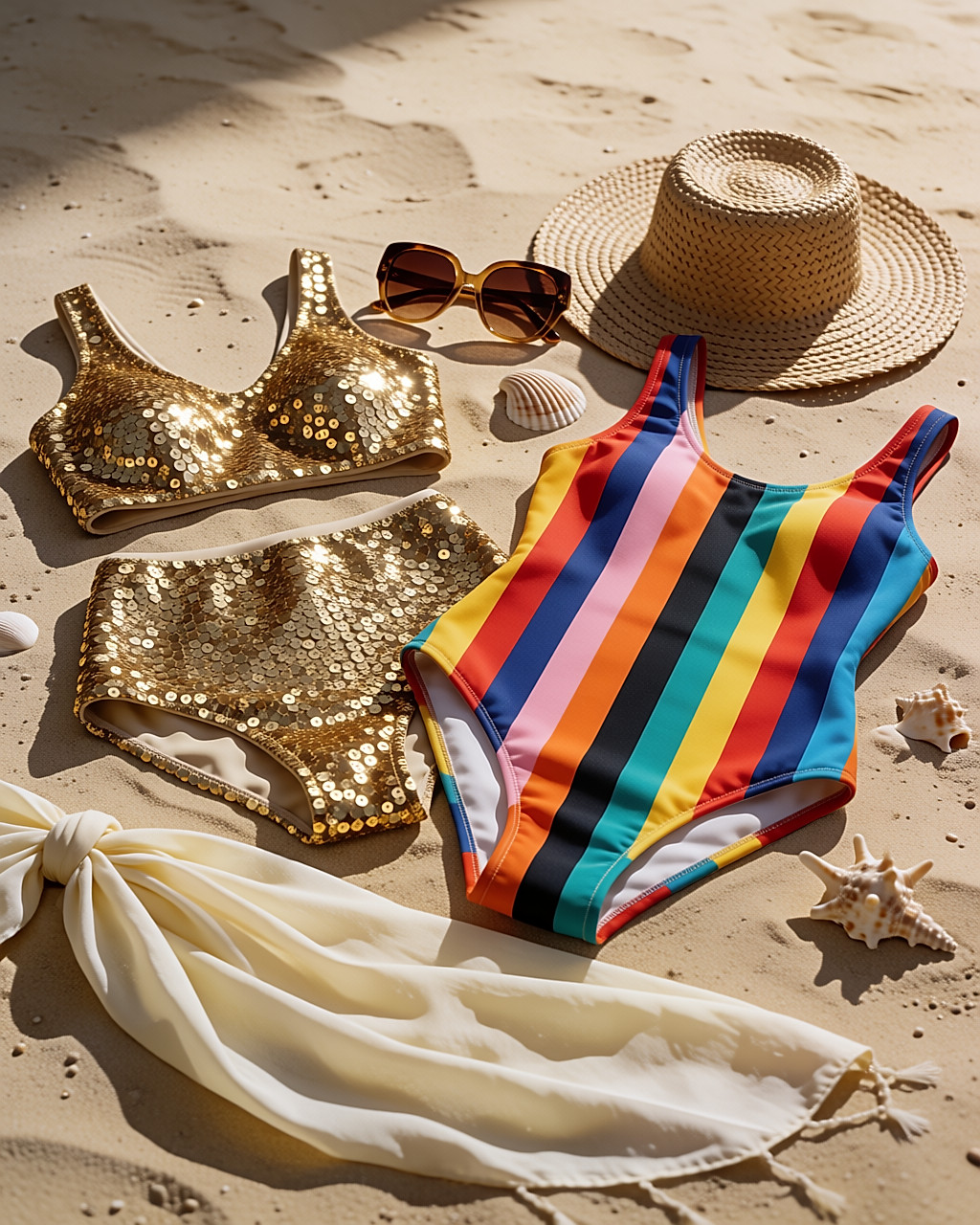
This Paris edition leaned into the 1980s, worn at the time by New Wave: rock and chic, black dominant, leather turned staple, denim worn, ripped, sometimes fringed. At the opposite end, pop and disco brought bright colours, polka dots, stripes, rhinestones and sequins. Anything went, as long as you owned it.
You'll spot these pieces today in the most considered wardrobes: structured shoulders, cinched waist, patinated leather, geometric print. The cut does the work, the texture does the rest. An oversized blazer over straight-leg jeans, a wide belt to finish it off, and layering replaces a too-safe total look.
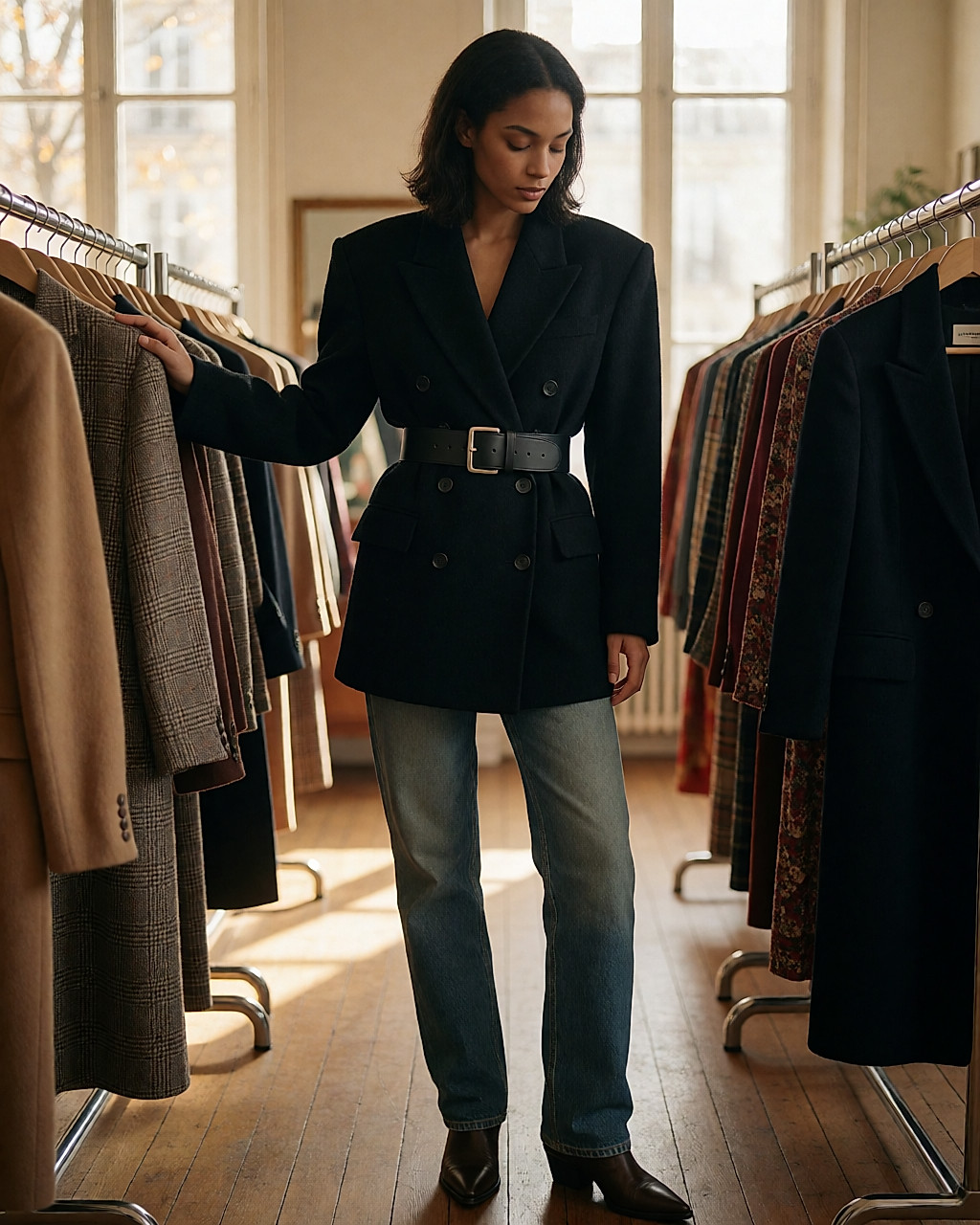
At fairs like these, you'd come across pieces by Jean Paul Gaultier, Thierry Mugler, Azzedine Alaïa or Claude Montana — labels that still send second-hand hunters running. A word of caution though: a heavily structured shoulder doesn't flatter every shape. If your shoulders are already broad, look for the same mood in a softer jacket, worn open over a simple top: the eighties spirit stays, without the armour effect.
Second-hand shopping in 2026: the habit that changes everything
In truth, vintage is everywhere: local charity shops, consignment stores, fairs, markets, reuse centres and online platforms. Before you pay, look at how a piece falls, not just the size on the label. A piece that hangs well can be worn as it is; one that pulls at the shoulders can't always be saved.
Check the seams, hems, lining, fastenings, wear under the arms, and the smell. A natural fibre — wool, linen, silk, leather — can be altered and repaired. A tired synthetic fibre, far less so. That's the first criterion to keep in mind if you're after something to wear for years.
On care, wash at low temperature with a detergent carrying the EU Ecolabel or Ecocert certification: these schemes set rules on biodegradability and limit problematic substances, which matters when you want an old textile to last. And have pieces altered rather than replaced: the most considered piece is the one already in your wardrobe.
Three questions before you get out your card: does the piece fit without alteration? Can it be repaired by a tailor or cobbler? Will you wear it at least thirty times? Three yeses, you buy. One no, you put it back.

Budget
Good news: vintage often remains the cheapest line in a fashion budget — provided you put the work in.
In a charity shop, car boot sale or reuse centre, expect anything from a few pounds to around £25. In a curated vintage shop or consignment store, the bill climbs quickly: roughly £25 to £130 for a standard piece. And if you're after a perfect-condition designer piece, budget from around £170 to over £850 — online platforms soar on sought-after signatures.
Entry to a Paris fair costs around £10, often reduced for students. What moves the needle? The label, the condition, the rarity of the size and the sales channel. For a new garment, go for a natural fibre and a verifiable label — GOTS for organic cotton, OEKO-TEX Standard 100 to limit unwanted substances: without certification, "natural" means nothing.
One question remains, and it's almost more important than price: will this jacket catch your eye next spring the way it does today? If yes, it was worth the detour. If not, leave it on its rail — another shopper will love it in your place.
Sources
- Dictionnaire international de la mode.
- Palais Galliera, musée de la Mode de la Ville de Paris — palaisgalliera.paris.fr
- ADEME, the French agency for the ecological transition — ademe.fr
- Refashion, the French eco-organisation for the fashion and textile sector — refashion.fr
- Salon du Vintage, organiser of the Paris edition mentioned — salonduvintage.com


Comments
Your opinion matters: rate the article, react and reply to comments.
Comments are moderated; AI-assisted comments are flagged. Text emoticons (8-), :-), <3…) are automatically shown as images.