

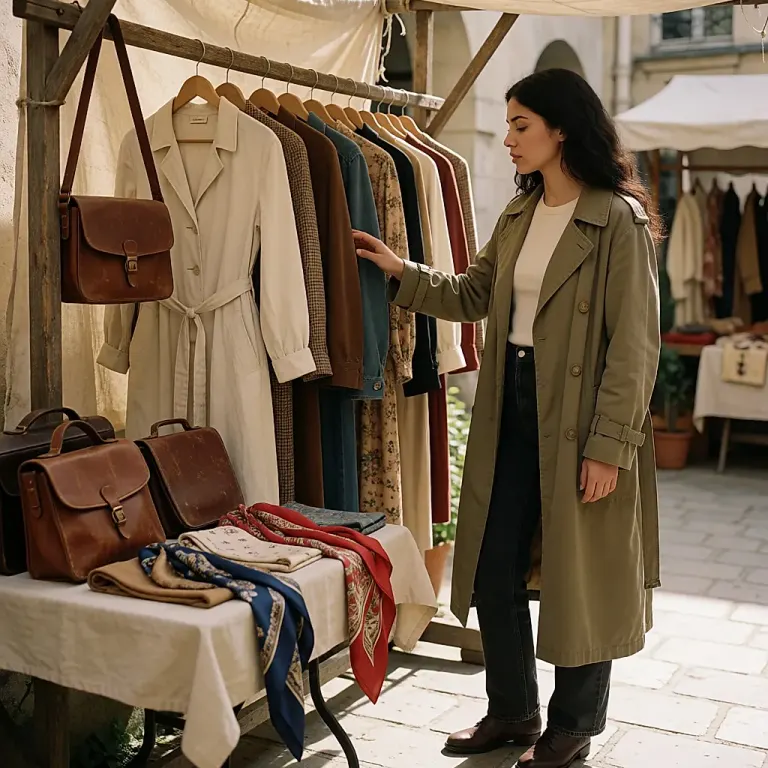
Outside the still-closed doors, a woman holds three hangers like a bouquet; behind her, someone is already haggling over a wool coat. You come for a look and leave with something else entirely — that is the rule at vintage sales in early November.
November, when the winter wardrobe gathers
The idea is simple: rather than sorting stock all year round, pop-up sales and some charity shops put out their heavy pieces all at once, at the start of the month. Coats, thick knitwear, boots, wool scarves — the winter wardrobe ends up concentrated on a few rails, in one room, for a weekend. It is very different from a permanent charity shop where you rummage at random: here you come with a clear idea, and you try things on.
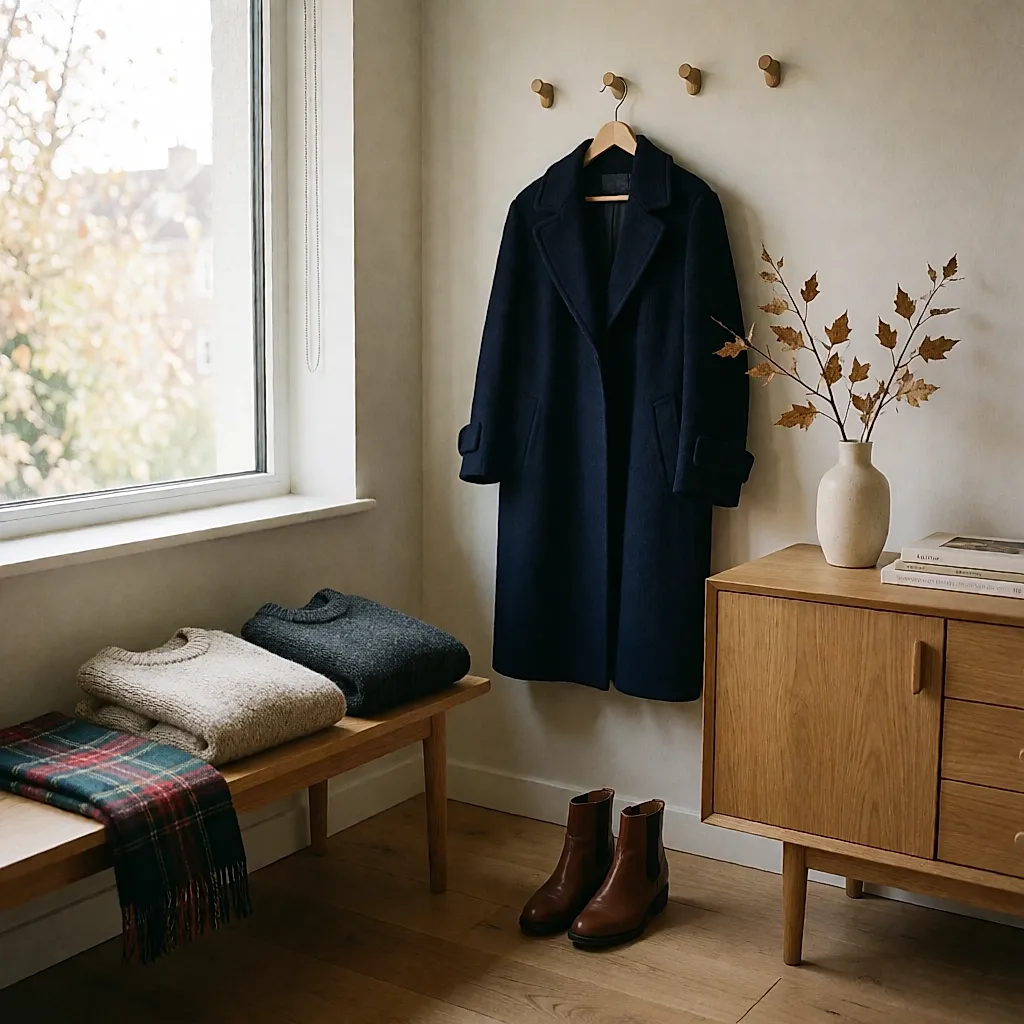
That is why the date matters. In early November, the rails have not yet been picked over by the December crowds, and there is often still choice in sizes. In practice, the best finds go on the first day, usually Saturday morning. Still hesitating? Ask yourself whether you would wear the piece on Monday morning, in the rain, with your usual shoes. If the answer is no, put it back without regret.
What you will find, and what you will not
For coats, look for pure new wool: it keeps you warm, hangs straight and ages better than blends. Loose 1980s and 1990s cuts come up often, and they are more forgiving than a slim fit. For knitwear, second-hand Shetland, lambswool or cashmere jumpers are worth a look — just check the label and the proportion of synthetic fibres, which soon pill and do not keep you as warm.

What you will not always find: small sizes, the most fashionable pieces from last season, and easy-to-wear colours. Vintage is a bit of a wardrobe lottery — you might find a pristine navy pea coat, then three blazers with shoulders that are far too wide. The question is whether you want to play the game.
Trying on is the moment of truth
First rule: try it on with the knitwear you will actually wear. A coat that just fits over a T-shirt may become a straitjacket by December. Raise your arms, sit down, clench your fists: sleeves should reach your wrist without pulling, and the shoulders should follow yours, not the other way round.

Then inspect it. Hem, lining, seams under the arms, buttons, zip, and that faint smell of mothballs that sometimes washes out… and sometimes does not. A small tear can be mended, a lining can be replaced; moth-eaten wool, far less easily. And if the piece is too big, ask yourself whether a belt or a tailor could save it — a hem often costs less than a new coat.
The fitting-room checklist: pure new wool or a high wool content on the label; shoulders in the right place; sleeves at the wrist; intact lining; secure buttons; no moth holes under the arms. And the deciding question: will you wear it three times a week, or just once for the photo?
Budget
Prices vary widely depending on city, condition and seller. Expect roughly £25–£85 for a wool coat in a charity shop or pop-up sale, £55–£130 in a more carefully curated vintage selection, and £8–£35 for knitwear. Leather boots often sit between £20 and £70, depending on size and the state of the soles.
On top of that come alterations: a sleeve hem generally costs between £10 and £25 at a tailor, and replacing a lining can cost more. And if money is tight? A well-chosen £12 knit is better than a £35 coat that itches. The real bargain is not the cheapest piece; it is the one that costs you least per winter worn.
In practical terms, arrive early, bring a large bag, thin socks for trying on boots and a list of what your wardrobe genuinely lacks. The rest is a bonus — and sometimes the bonus is a coat. You may leave empty-handed; at least you will know what you no longer want.

Comments
Your opinion matters: rate the article, react and reply to comments.
Comments are moderated; AI-assisted comments are flagged. Text emoticons (8-), :-), <3…) are automatically shown as images.