
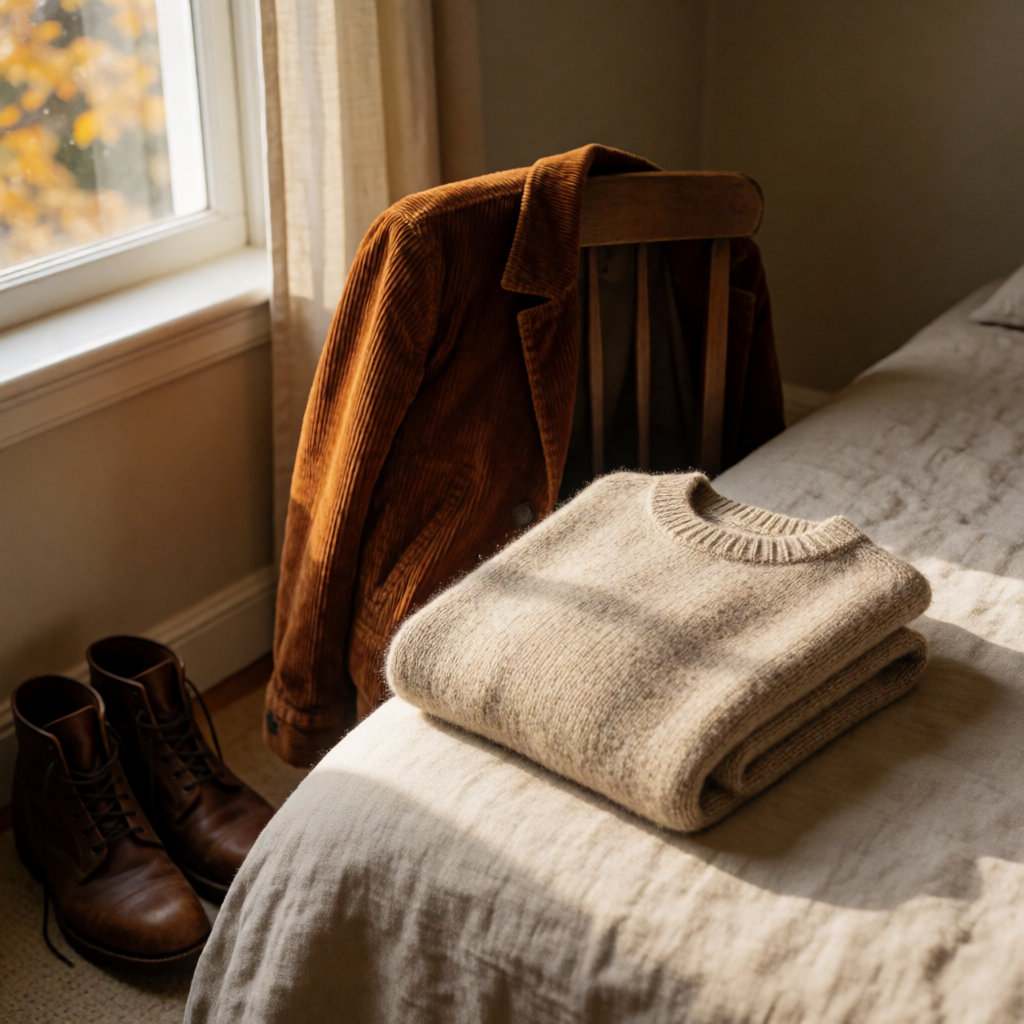
You pull on a light jumper one September morning, step outside, and regret it until evening. The next day you pile on three layers, feel swamped in your coat, and your shoulders are still cold. We all know this scenario — and yet the problem is almost never the number of layers. It's the fabric.
Autumn air is damp: it seeps in rather than bites. The good news? You don't need to dress more, just better. We're looking at it fabric by fabric, seeing what genuinely keeps you warm and what ages well.
A layer insulates first by the air it traps
A warm fabric isn't necessarily a thick one. It's one that traps air without making you sweat. And if you sweat, you get cold: moisture stays against your skin and cools you down. As simple as that.
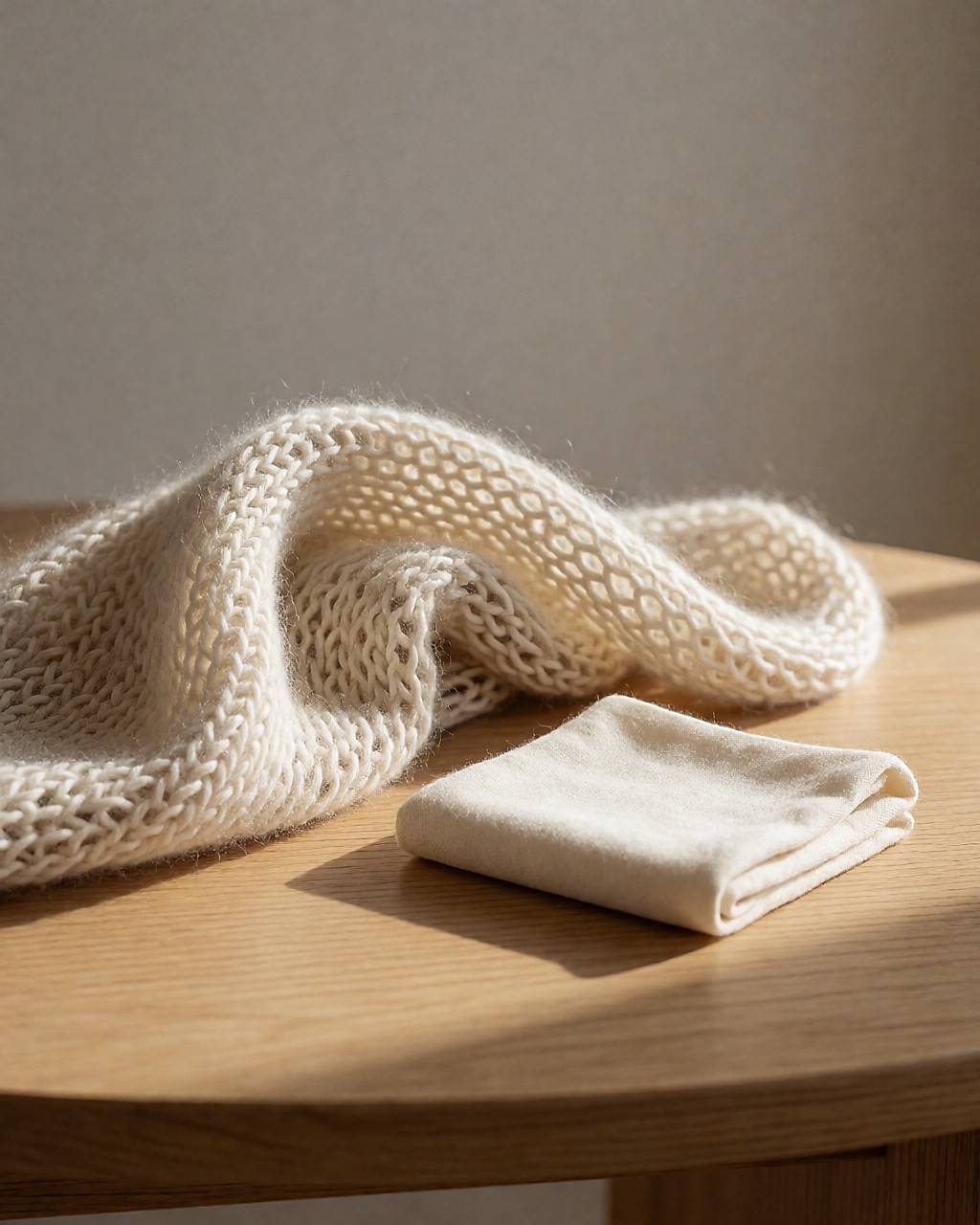
Wool traps air and manages moisture. Cotton, by contrast, drinks up sweat and holds it against your skin: perfect in summer, less clever in November. That shiver that hits you when you step out of the Tube? It's often that basic cotton layer at fault.
Wool: a reliable choice, if you choose the right one
Not all wools are equal. A fine merino can be worn close to the skin without itching, with a soft drape. A more rustic wool insulates beautifully but itches. Alpaca is soft and light; so is cashmere, but it's more delicate.

The trap is bobbling. When fibres are short, they work loose and form those little bobbles that make a piece look old after a few washes. A slightly tighter knit and longer fibres limit the damage.
The condition? Cold wash, inside out, dry flat. No shortcuts.
Velvet: soft to wear, demanding to live with
Corduroy or velvet, both warm you without adding bulk — invaluable for layering when you're still refusing to wear a coat. But the texture remembers everything: creases, elbows, the spot where you sat down.

Two habits are enough. Hang it up as soon as you get home, and wash it as little as possible. Corduroy and velvet bobble most where they rub: under the arms, under a bag strap, between the thighs.
Leather: a piece that gains a patina instead of wearing out
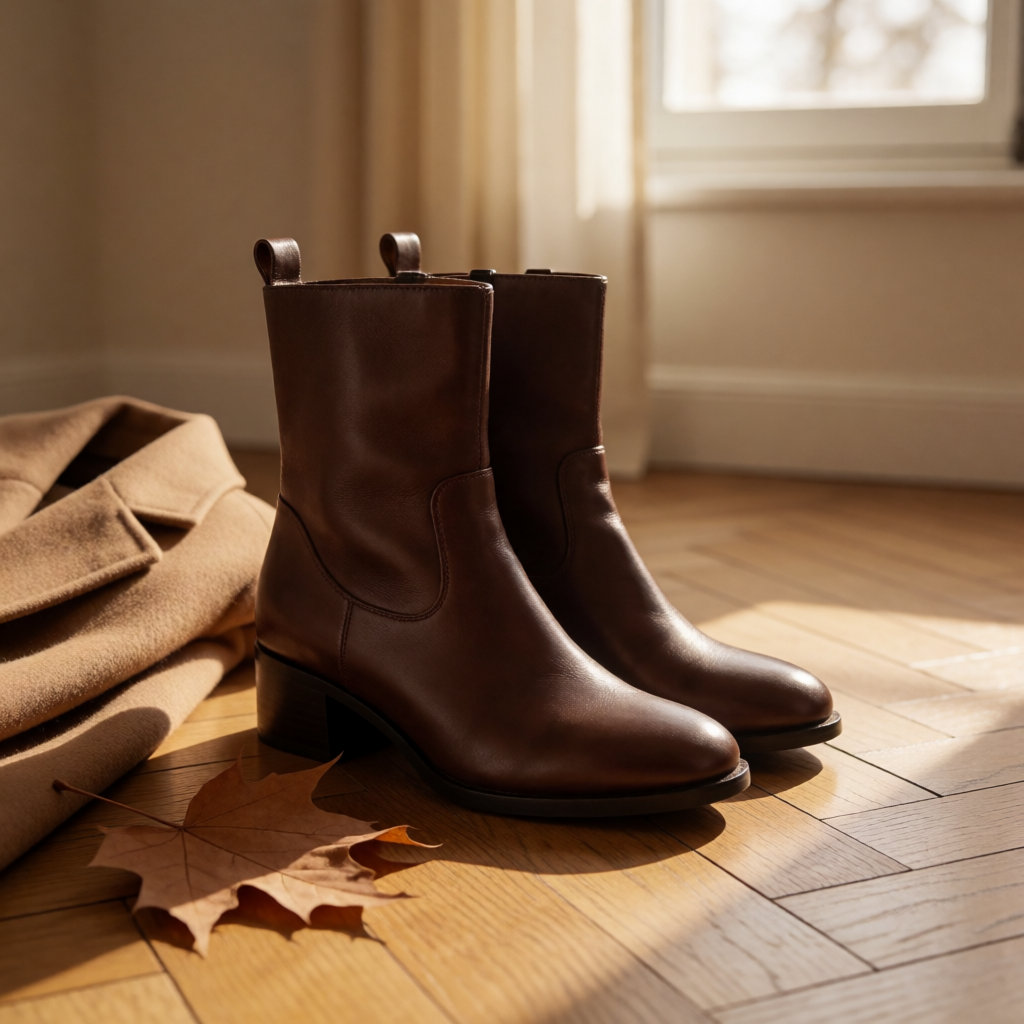
Real leather doesn't wear out like faux leather: it develops a patina. A well-cared-for jacket or boots will see you through winters while gaining character — the statement piece you keep for ten years, easy to accessorise. Faux leather, on the other hand, tends to flake. On the label, 'leather' and 'synthetic material' don't lead the same life.

Two steps, no more. Condition it once or twice a season, and wipe it down if it's been caught in the rain. Too much water or too much product, and leather stiffens. If the tanning is vegetable-based, it's sometimes stated on the label; if not, ask in store.
Layering without looking like one layer too many
The rule that works is layering with three roles:
- Close to the body, a fine, breathable base layer.
- In the middle, the insulating layer.
- On top, the wind-blocking layer.
Anti-bulk habits
- The bottom layer should be the finest of the three.
- Cold under the arms but warm in the chest? Your base layer isn't breathable enough.
- One thick layer is better than three tight ones.
- A thin cardigan under a light jacket is often warmer than a chunky jumper under a bomber jacket.
Care: the habits that keep bobbling at bay
Air before washing. A knit worn for a day isn't dirty, it's full of moisture: straight onto a hanger, near a window.
Then brushing. A quick going-over with a soft brush in the direction of the nap and the piece looks smarter again. A fabric shaver, yes, but sparingly: it cuts fibre too.
When you wash, do it cold, inside out, in a mesh bag. Gentle spin, dry flat. And no fabric conditioner: it clogs the fibres and makes them less insulating. A gentle detergent is enough.
Budget
Expect to pay around £40 to £120 for a merino wool jumper on the high street, and more like £100 to £300 for cashmere, depending on the fineness of the knit. Alpaca sits in a similar range to premium merino.
Corduroy and velvet remain the most accessible: £20 to £60 for a skirt, £25 to £80 for trousers, depending on the cut and cotton content.
Leather costs more: £150 to £500 for a jacket, £80 to £250 for boots. Second-hand — charity shops, resale platforms, car boot sales — a jacket often comes in between £15 and £70, provided you're happy to accept a few signs of wear.
These ranges vary with city, quality, where it was made and how much of the fabric is a premium fibre. Care costs count too: £5 to £15 for a specialist wool detergent, £8 to £20 for a clothes brush, £10 to £30 for a fabric shaver, and £30 to £70 at the cobbler for a resole. You'll find these products in supermarkets, hardware shops, haberdasheries or online; for leather, a cobbler or specialist brand is best.
The move that changes everything, tonight
Thirty seconds. You brush, you air, you hang. That's it. Your wool and velvet will age better, and come spring you'll realise you haven't bought anything new — or hardly anything.
Chloé's verdict: yes, invest in three fabrics and three layers, but on one condition — really look after them. A seasonal capsule wardrobe beats a wardrobe full of mediocre pieces.



Comments
Your opinion matters: rate the article, react and reply to comments.
Comments are moderated; AI-assisted comments are flagged. Text emoticons (8-), :-), <3…) are automatically shown as images.