

Tips for dealing with sweating
You dash out of the Tube, you walk into the meeting, and there it is: that small awkward feeling under your arms. Nothing abnormal, nothing unclean either, but let's be honest - it quietly derails your day. With sweating, there are two quite separate fronts you can work on: the smell on one side, the volume of sweat on the other. The catch is knowing which of the two actually bothers you. And that's where it gets complicated, because we often buy the product we didn't need.
Why sweat smells (and it's not what you think)
Sweating is your body regulating its own temperature. When it's hot, when you're moving, when you're stressed, your sweat glands switch on. There are two families of them: the eccrine glands, spread all over the body, which produce a very watery sweat, and the apocrine glands, concentrated in the armpits and the pubic area, whose secretion is richer in lipids and proteins. That's not a throwaway anatomical detail: it's exactly what explains why some areas smell more than others.
Because the key point is this - fresh sweat is almost odourless. What smells are the bacteria naturally living on your skin, breaking that sweat down and releasing volatile compounds. That's where most of the smell comes from. So it isn't simply a question of hygiene: it's also a question of skin chemistry - a nuance that changes everything about how you pick your products.
Then there's hyperhidrosis: excessive sweating, which can genuinely get in the way day to day. If you're changing your top several times a day, if your hands are dripping for no reason, speak to your GP. There are treatments and support out there, and you don't have to figure it out alone.

Deodorant or antiperspirant: the mix-up that makes you buy the wrong product
Deodorant doesn't reduce how much you sweat. It works on the smell, either by holding back the bacteria or by neutralising the molecules that whiff. Roll-on, spray, cream or stick: it's the format that changes how the product feels and how long it lasts, not what it's for. A roll-on glides over the skin, a cream needs a moment to dry, a spray feels lighter and more fleeting - see what fits your rushed mornings.
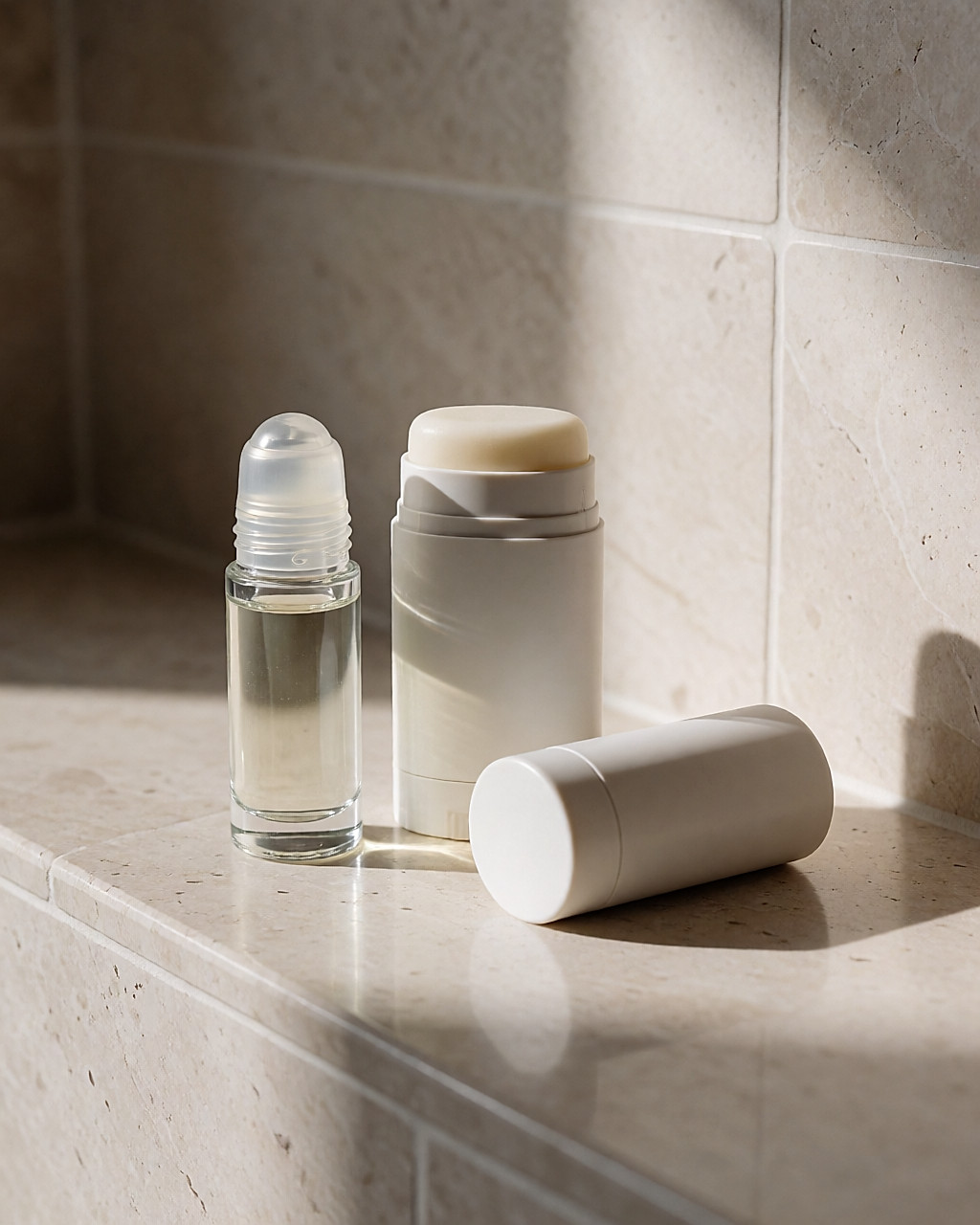
Antiperspirant, by contrast, works on the volume: it contains aluminium salts that temporarily reduce the flow from your sweat glands. Its little secret? It goes on perfectly dry skin, ideally at night, so the salts have the night to do their work. Lots of people slap it on in the morning in a hurry, on skin that's still damp, then wonder why it doesn't last.
Moderate sweating? A well-chosen deodorant is enough in most cases. Sweating that genuinely gets in your way? An antiperspirant can become the base of your routine, but it needs to be applied with a bit of method - otherwise it may as well stay in the cupboard.
The routine that changes everything
How you apply it matters as much as what you buy. A gentle wash, once or twice a day, without scrubbing hard: irritated skin can sweat more and smell stronger - a bit of a vicious circle, and one we all fall into when we go too hard on the soap. Dry yourself carefully, without leaving a damp patch under your arm: that's where everything is decided.

Then apply a thin layer, not three. Too much product can irritate, and irritated skin often smells stronger. On the fabric front, go for breathable fibres: cotton, linen, fine wool. And change your top after a long day, even if you can't see anything with the naked eye.
For touch-ups during the day, a gentle alcohol-free wipe or a travel-size format does the job nicely. No need to pile more on top of your morning deodorant - that's how you end up with the extra layer, the one that irritates and leaves you with a worse result overall.
Just had a wax or shaved? Wait a day or two for your skin to settle before applying an antiperspirant. On freshly hair-free skin, aluminium salts sting and can bring up redness. In the meantime, an alcohol- and bicarbonate-free deodorant will do the job.
Choosing a product without getting caught out
Read the ingredients before the packaging - that's usually where the truth is hiding. On the smell side, the neutralising actives - zinc ricinoleate, bicarbonate in small doses - can be effective, but they can also irritate sensitive skin. If your skin reacts quickly, patch-test a small area before you commit.
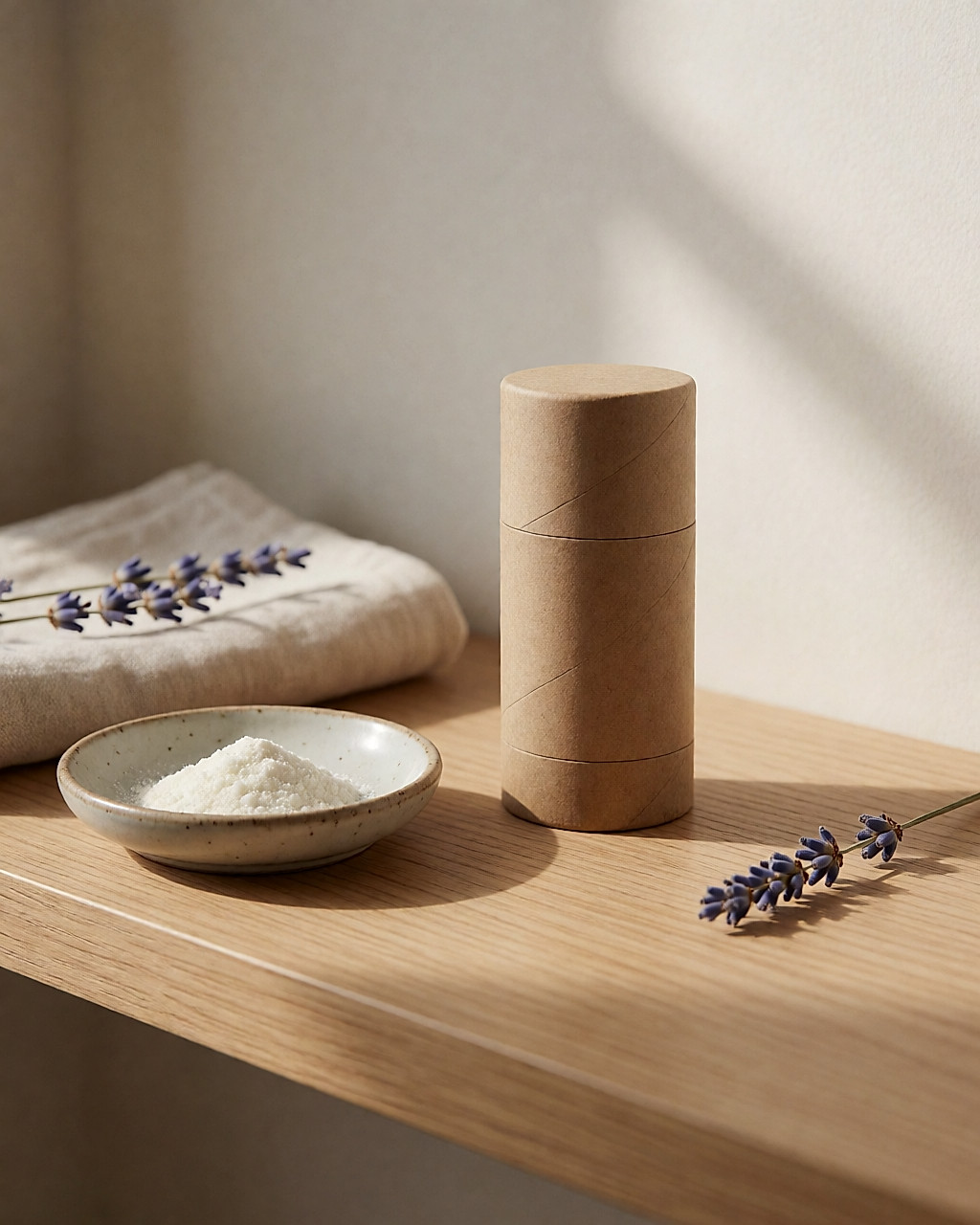
On the eco side, not everything is equal - nowhere near. A solid deodorant in a compostable cardboard tube, a refillable glass roll-on, or a formula certified Cosmos Organic - the European standard for organic cosmetics, audited by bodies such as Ecocert and, in the UK, the Soil Association - all cut down on plastic and synthetic ingredients. You still need to check the logo on the pack, though: a big "natural" on the front with no certification behind it guarantees nothing.
For an antiperspirant that actually works, however, aluminium salts remain hard to replace. That's the trade-off to own up to: performance versus formula - only you can decide where your line sits.
Budget
In the UK, expect to pay:
- standard deodorant at the supermarket: £2 to £6;
- solid or refillable deodorant: £5 to £14;
- certified organic formula (Cosmos Organic): £6 to £16;
- antiperspirant from a pharmacy: £5 to £13;
- high-strength antiperspirant, on advice: £10 to £20.
The price varies with the format, the concentration of actives, the certification, whether it's refillable, and whether you buy on the high street or online. You'll find all of this at the supermarket, in beauty halls and department stores, at the pharmacy and on specialist websites.
Sources
- NHS - public information on excessive sweating (hyperhidrosis).
- British Association of Dermatologists - patient information on hyperhidrosis.
- MHRA (Medicines and Healthcare products Regulatory Agency) - regulation of cosmetic products in the UK.
Deep down, sweating is neither a curse nor a failing. It's a regulation mechanism, with its grey areas and its small surprises. The right first move is to work out what your problem actually is: is it the smell that bothers you, or the volume? From there, everything gets simpler - and you can stop collecting bottles that do nothing for you. And if it's genuinely making life hard, do talk to a healthcare professional: it's a perfectly legitimate reason to book an appointment.



Comments
Your opinion matters: rate the article, react and reply to comments.
Comments are moderated; AI-assisted comments are flagged. Text emoticons (8-), :-), <3…) are automatically shown as images.