

A solid deodorant won't stop you sweating. It can help keep body odour in check, which is already an ambitious brief for a pebble about the size of a bar of soap. Packaging often blurs the distinction, yet it governs everything: what you can expect from the product, and the point at which you have to stop asking the impossible of it.
A solid deodorant does not block sweat. It helps neutralise, absorb or mask odour, depending on its ingredients. If your aim is to reduce sweating itself, you need an antiperspirant — the waterless stick, in the vast majority of cases, isn't designed for that. Once that misunderstanding is out of the way, you can judge the format on its merits: a practical product that is less likely to leak in a gym bag and is easier to pack for airport hand luggage.
What a waterless formula actually changes
A solid deodorant is often a formula in which water has been replaced by fats and waxes — shea butter, coconut oil, plant wax — that hold the active ingredients together. Hence the texture: it drags a little, melts on contact with the skin and leaves a film. Nothing like the fresh feel of a roll-on, let alone a spray that stings your nose as it goes on.

The lack of water has two very practical consequences. First, it can make the formula less hospitable to micro-organisms, which is why some brands leave preservatives out — they use this as a selling point, and the ingredient list is often shorter. Second, it can concentrate the actives: a spray may dilute them, while a waterless formula can change their concentration or how they are released. Dosage is less forgiving.
Apply to dry skin, and don't overdo it
Straight out of the shower, with skin still damp, the stick drags, leaves an uneven layer and becomes diluted by the water left on your skin. The step that makes the difference comes down to two words: dry skin. Towel-dried or left to air while you brush your teeth, it doesn't matter — just make sure it's dry.

As for quantity, the temptation is to put on a lot 'to be safe'. Bad move: apply lightly, without going over the same spot, because overdoing it can leave white marks on a black jumper and make your underarms feel tight by lunchtime. Let it dry before you dress. Have you ever noticed that white powder on a charcoal T-shirt? It isn't inevitable; it's over-enthusiasm.
Bicarbonate of soda, the star ingredient that needs handling with care
It's the ingredient you find everywhere, and the one often credited with most of the odour-fighting work: bicarbonate of soda is used to help neutralise smelly compounds rather than simply mask them. On paper, that's appealing — but bicarbonate isn't always well tolerated. Redness, tightness, itching: some bicarbonate-rich formulas can be poorly tolerated, and other ingredients may be to blame too.

Be wary of the 'more must be better' logic. A higher level doesn't guarantee better odour control, and may be less well tolerated, especially on freshly shaved or waxed skin. If your skin is sensitive, you're better off looking for a bicarbonate-free stick. Other actives — zinc ricinoleate, clays, arrowroot powder, magnesium — may be alternatives worth trying. And if it stings, it isn't a matter of getting used to it — ditch that stick, not the format.
Case, refills and stick size — what to check before you pay
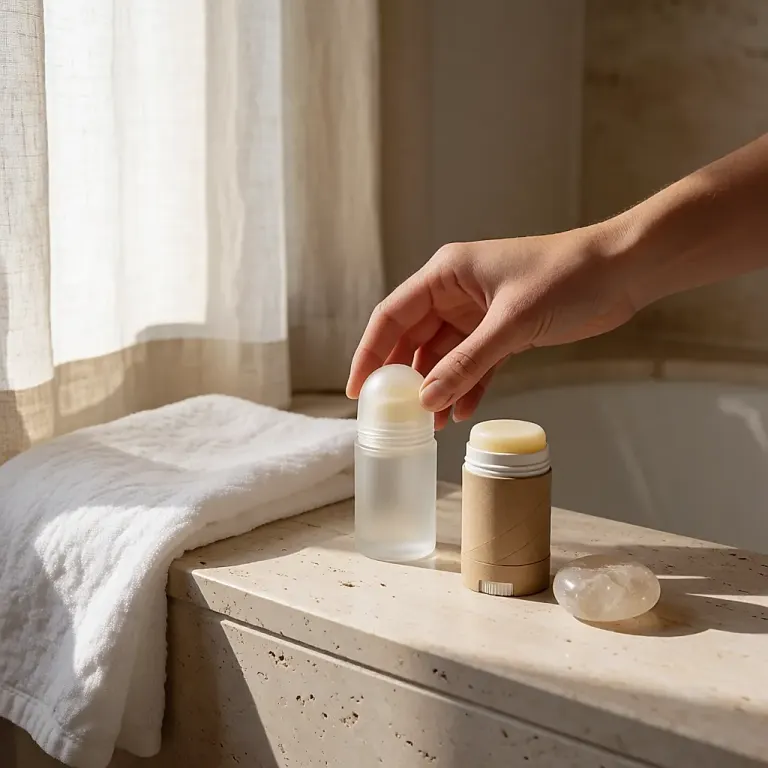
The push-up cardboard tube uses little plastic and is honest about its limits: in a damp bathroom it softens, the cardboard picks up grease around the edges, and the mechanism jams if you push up too much product at once. A refillable case can solve the container problem — you buy the shell once, then refills — provided you check that refills really exist and cost less than a complete stick. As for the classic plastic twist-up, it remains widespread and often the easiest to find.

Then there's stick size, a detail you only notice in use. Wide diameters cover a large area quickly but can break more easily if you press too hard; slim ones slip into the hollow of the underarm without smearing outside it. Texture matters just as much: too much wax drags on the skin; too much oil can soften the stick prematurely. A stick that has softened and then set again can turn grainy — store it upright, somewhere cool, and in summer a spell in the fridge can help bring back its firmness.
The key habit — Dry skin, a light application, and a moment to dry before you dress. If it feels tight or stings, change the stick, not the format.
Budget
Expect to pay roughly £5–10 in a supermarket or high-street chemist for an entry-level stick, and £10–18 for a natural-brand stick from a pharmacy, health-food shop or online. Refills usually sit at £5–10, and empty cases at £10–20 — a one-off investment, provided you keep it.
The maths isn't about the price on the label but about frequency: how long a stick lasts depends on use and size, so a case may pay for itself after a few refills. And if your priority is limiting sweat, bear in mind that the right product may be a different purchase elsewhere — not in the solid deodorant aisle.
A solid deodorant is a bit like cycling in town: practical, but it asks you to adjust a few habits. If you don't click with it first time, change the active, not the format. And when you find the right one, you'll have gained something very simple: a stick that fits in your bag, is unlikely to leak and does the job without promising the earth.


Comments
Your opinion matters: rate the article, react and reply to comments.
Comments are moderated; AI-assisted comments are flagged. Text emoticons (8-), :-), <3…) are automatically shown as images.