
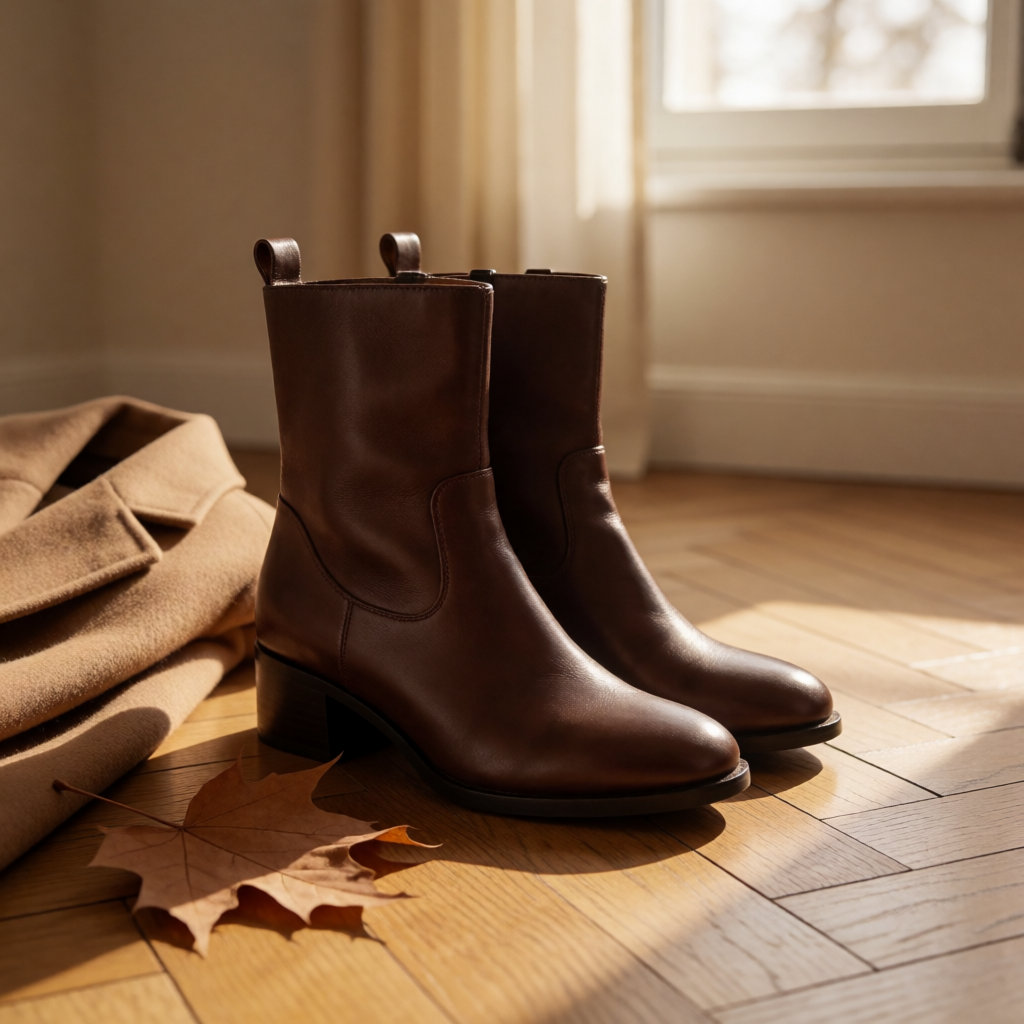
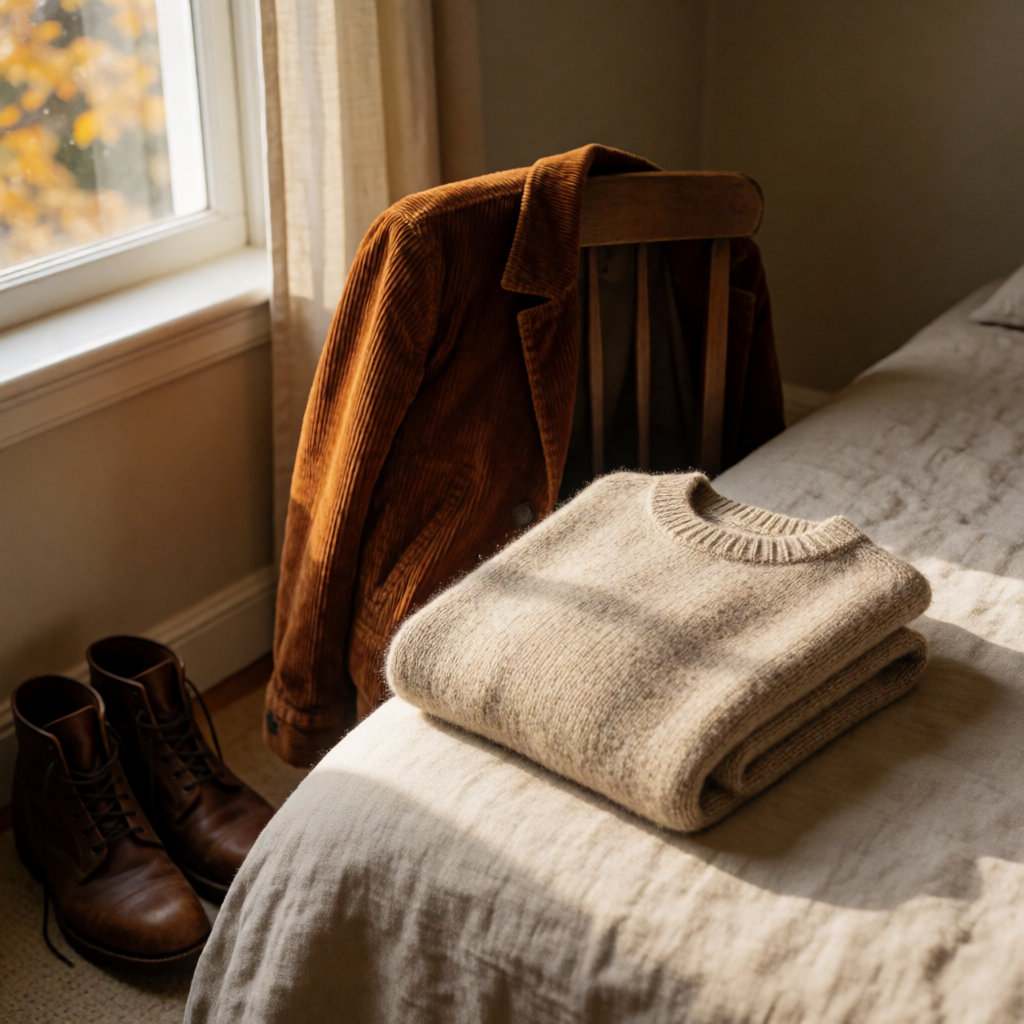
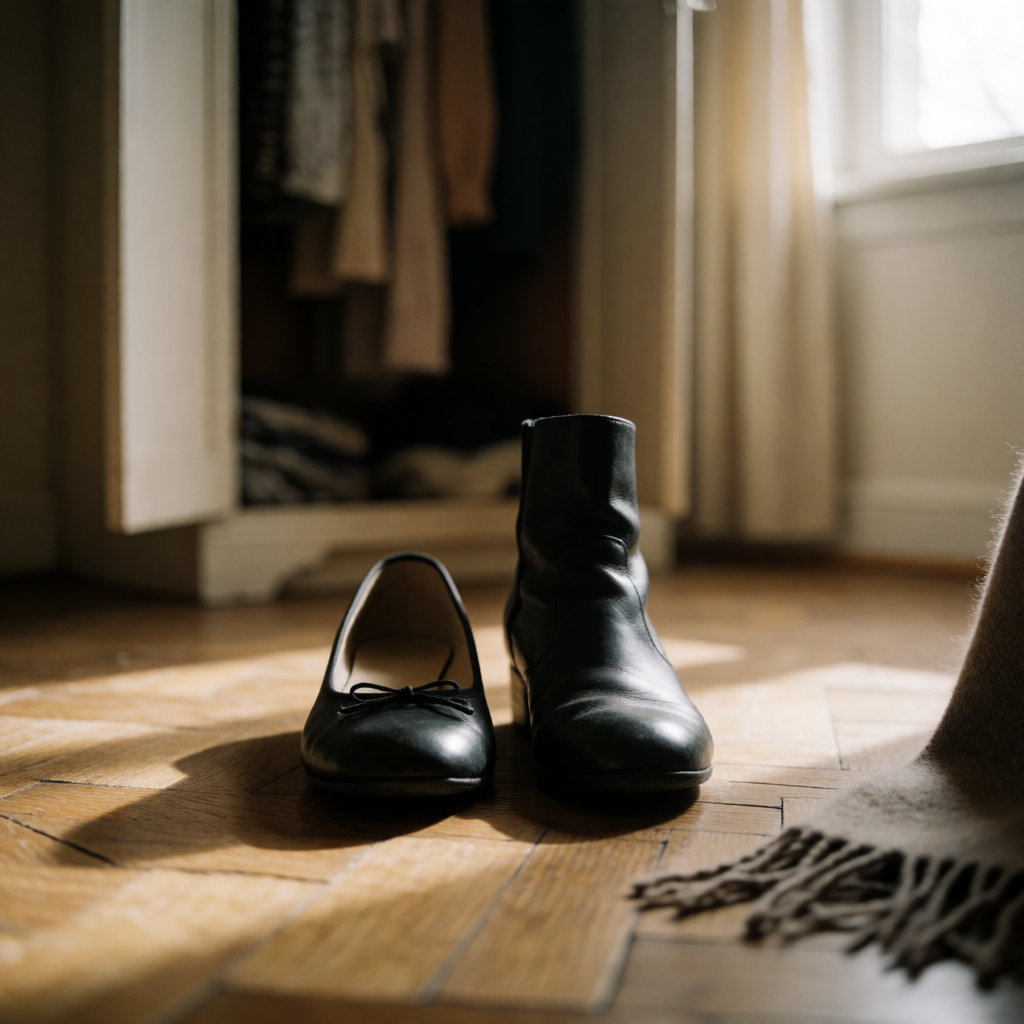
Each autumn, it's the same ritual. You get out last year's pair, put them on the floor and look at them with suspicion. The leather has kept its marks, the toe has slumped, the heel has developed a wobble. Another winter, really? And then comes the other question, the one that stings: do they still go with what you throw on in the morning?
An ankle boot is the piece that can transform an autumn silhouette. A pair of wide-leg jeans that had been languishing at the back of the wardrobe, a wool midi skirt you'd written off as too sensible, slightly serious tailored trousers: everything changes when the shoe follows. You don't need ten pairs — one good pair, worn until they need the cobbler, is worth more than a wardrobe of tired ankle boots.
Here's what really matters when you try them on.
The ankle fit
It's the first criterion, and the most overlooked. A shaft that sits well doesn't gape at the sides or cut into the calf. Take a few steps in the shop: if the leather concertinas above the ankle, the fit is too wide for your foot. If the edge presses just below the ankle bone, the shaft is too high.
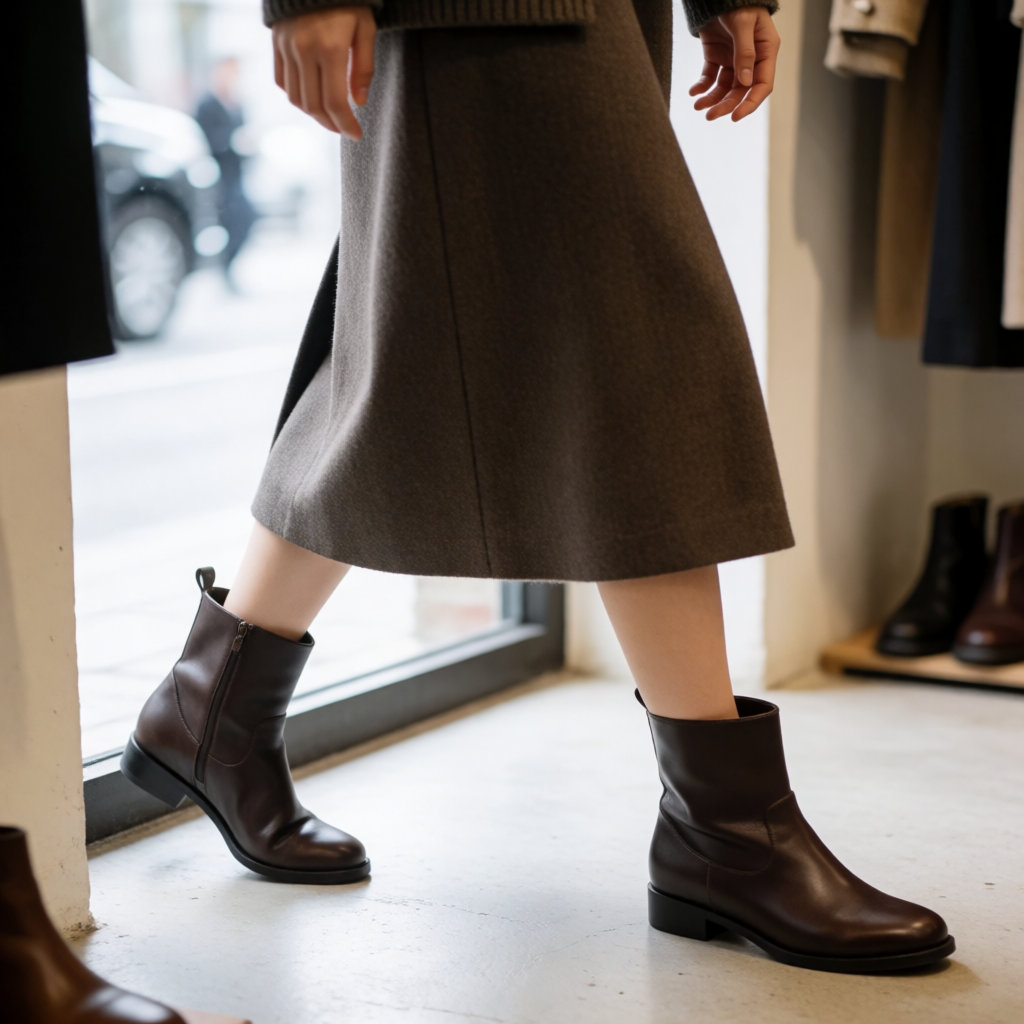
A good fit is easy to spot from across the room: the line stays clean, the foot looks neat, the leg looks longer. That's exactly what an ankle boot that structures a silhouette does.
The heel height that lasts all day
Three to six centimetres is often a comfortable zone; beyond that, it depends on your own tolerance and how long you'll be on your feet.

Look at the base of the heel, too. A stable heel widens towards the ground; it doesn't sit on a thin sole. That detail decides whether you'll wear them three times or for three winters.
The lugged sole
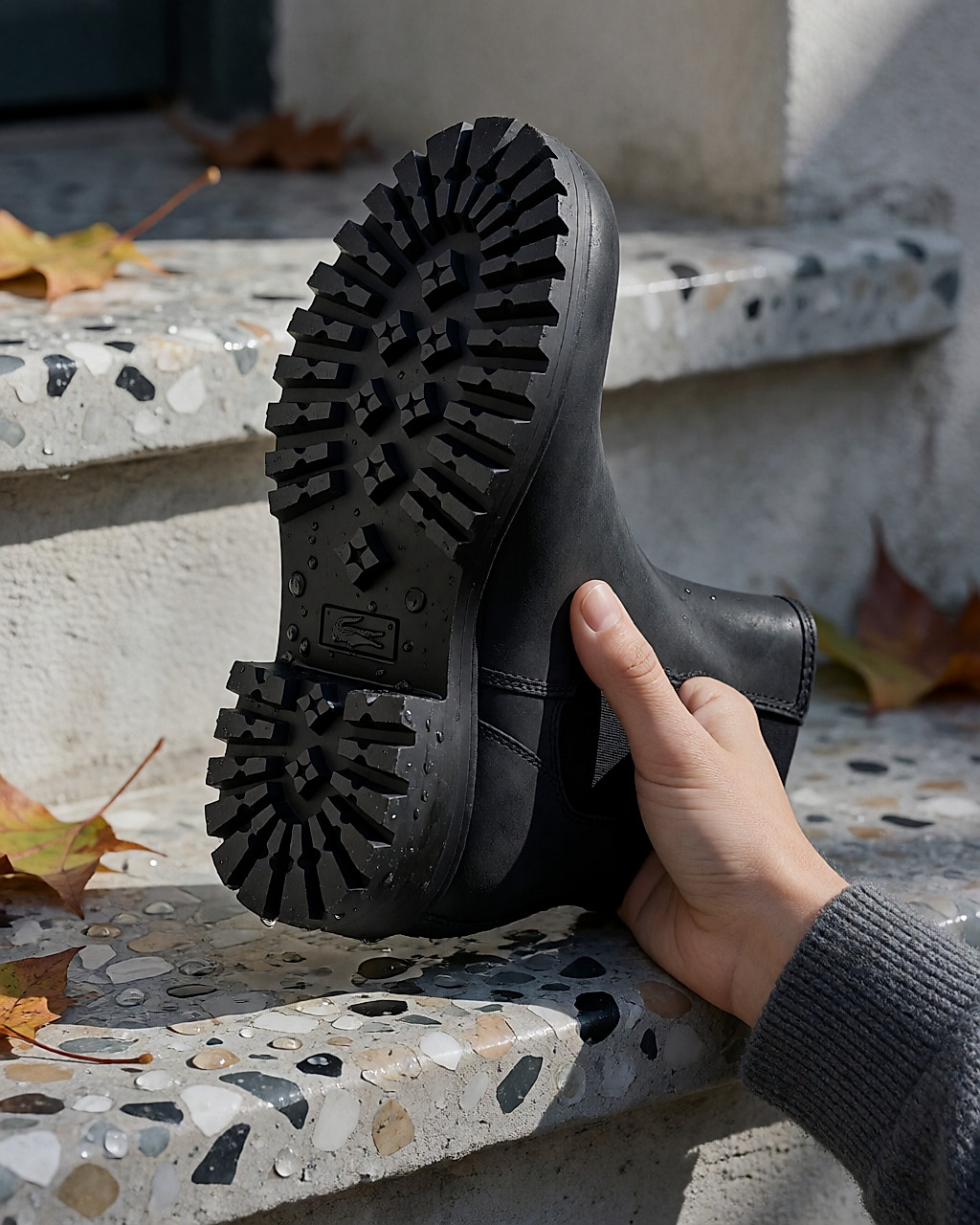
For rainy days, wet cobbles and fallen leaves, deep lugs change everything. But not all lugs are equal: a soft rubber wears quickly, a dense rubber lasts longer. Run your fingernail over it and you'll feel the difference.
Full-grain leather, nubuck, split: what you're paying for
- Full-grain leather: the top layer of the hide, the most hard-wearing. It develops a patina rather than cracking. This is the element that justifies the price.
- Nubuck: a velvety feel, very handsome, more delicate. Waterproof it from day one.
- Split leather or bonded leather: cheaper, but the crease across the forefoot eventually marks and splits open.
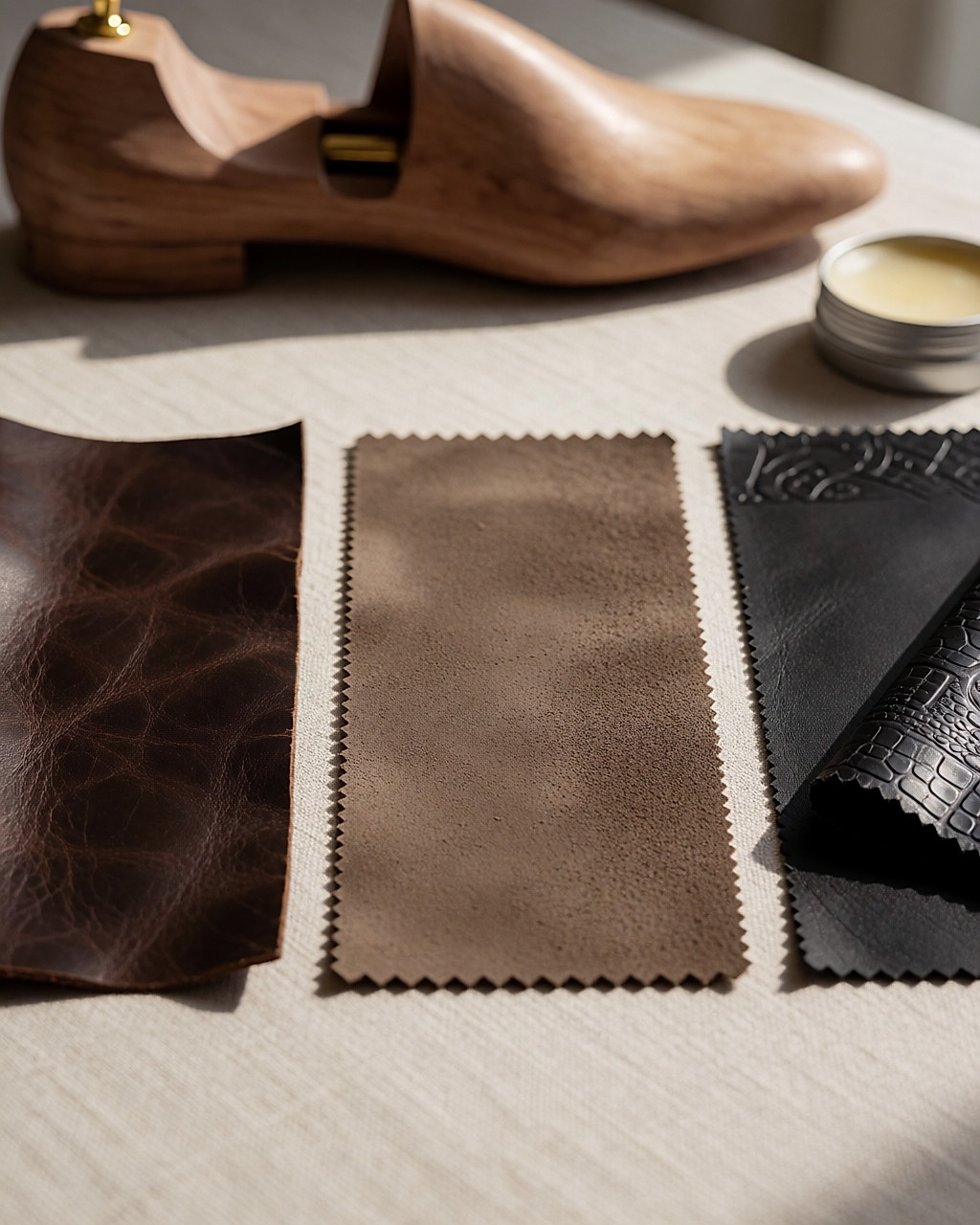
Trust the material label, not the sales patter.
The lining: warm, not stifling
If you overheat while trying them on in October, you'll overheat in January. A fine textile lining or suede lining is enough in most parts of the UK. Too much thick synthetic lining and your foot sweats: over time, the leather can break down from the inside, odours can take hold, and it becomes harder to put right.
What's new this season
On the trend front, two movements are emerging in the collections. First, squarer shapes, with a wide toe that structures the foot and ages better than a fine point. Then textured leathers: grained, mock-croc, slightly metallic. It's what gives an all-dark look some texture without breaking the line.
The three-minute test. Try them at the end of the day, when your feet are slightly swollen, with the socks you'd wear in mid-season. Walk, rise onto your toes, walk down a flight of stairs. Check that your heel doesn't lift as you walk — if your foot 'swims', going down half a size is often enough.
Budget
Expect to pay around £80 to £120 for ankle boots in nubuck or a decent split leather, in a multi-brand shop or online. For full-grain leather and traceable European manufacturing, the range rises to more like £120 to £175. From an independent designer, or in chrome-free tanned leather, you'll often go beyond £180.
Second-hand, £25 to £80 depending on condition: check wear at the toe, the inside of the heel and how supple the sole is. At a cobbler's, a full resole costs between £35 and £60, sole protectors between £20 and £35, and a heel repair between £15 and £25.
For care, budget £10 to £18 for a waterproofing spray, £13 to £25 for wooden shoe trees and £7 to £13 for polish or a nourishing cream. Prices vary by city, range and level of finish.
Looking after them so they last several winters
Waterproof them before the first wear, then twice a season. Let them dry in the air, never near a radiator, then brush them dry to remove salt or mud. Wooden shoe trees after every wear: they absorb moisture and hold the shape. A polish every ten wears to nourish the material. And the habit that changes everything: alternate your pairs — leather that rests for 24 hours between wears ages more slowly.
The verdict? One pair, two at most, chosen for fit and heel. The rest is marketing.
Sources
- Institut National de la Consommation (French consumer institute) — How to read leather and textile labels, accessed 2026.


Comments
Your opinion matters: rate the article, react and reply to comments.
Comments are moderated; AI-assisted comments are flagged. Text emoticons (8-), :-), <3…) are automatically shown as images.