
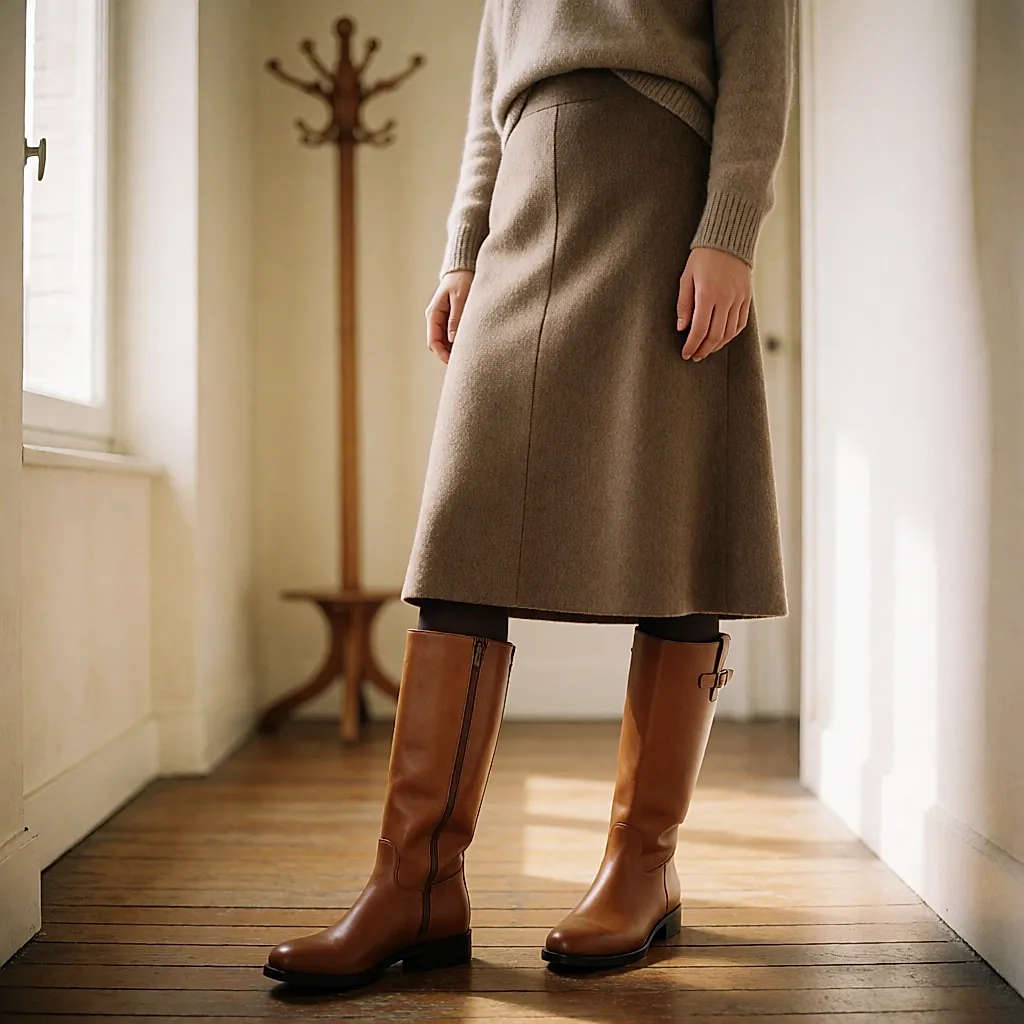
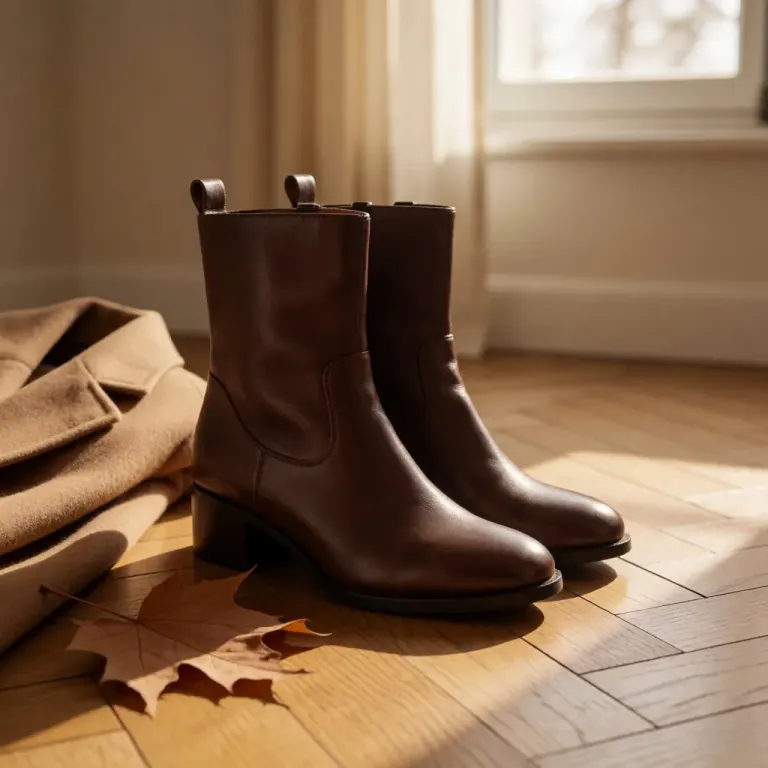
11pm, phone in hand, a pair of riding boots in your basket — and that little voice whispering that 'leather will give.' It will, eventually. Your calf, however, won't change its mind. The shaft is what tells you instantly whether a boot lengthens the leg or cuts it at the wrong point, and no product page will tell you more than three minutes walking in front of a mirror.
Shaft height: how it gets on with your skirts
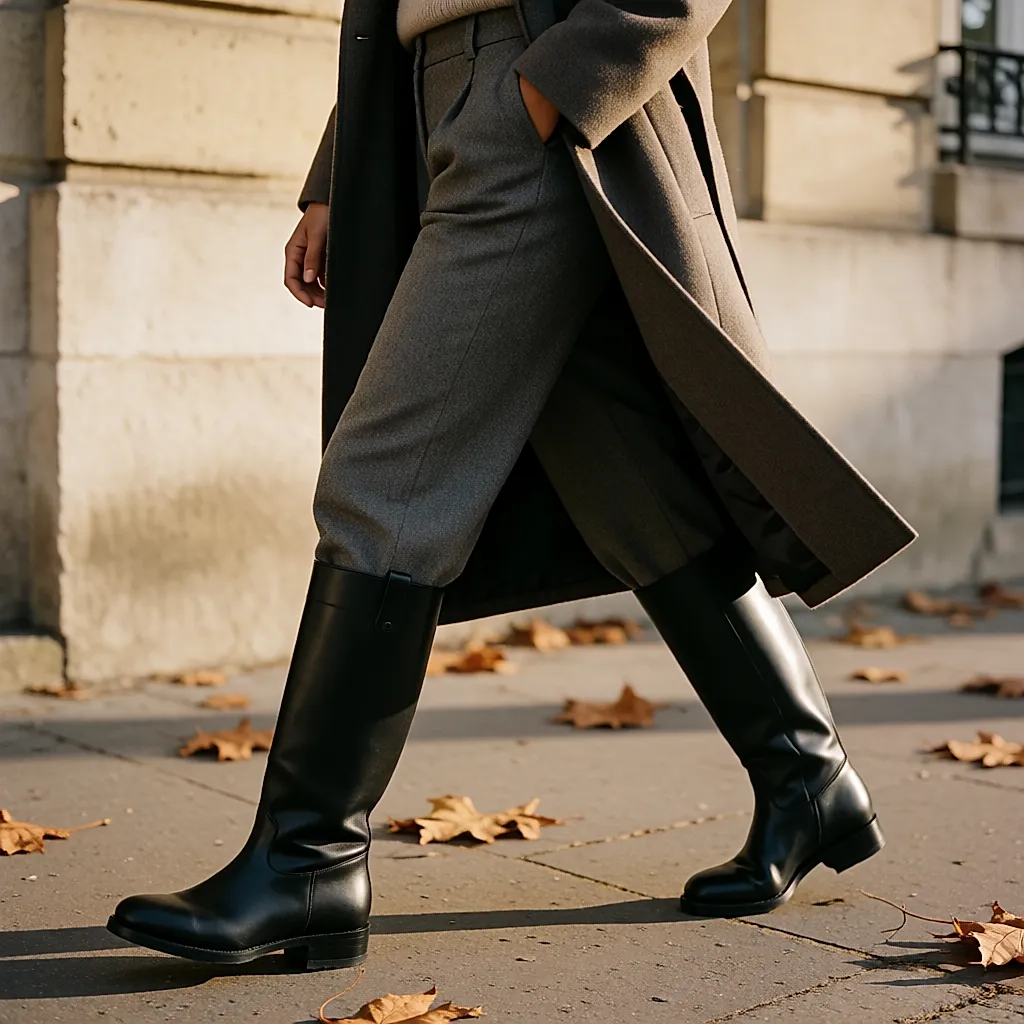
It all comes down to a few centimetres. A shaft that stops below the calf lets the leg breathe, works effortlessly with a knee-length skirt and takes a straight-leg trouser over the top. A knee-high shaft, by contrast, needs some give: it's the one that decides whether trousers are tucked in or fall over the leather. The rule is one line: tuck in or let them fall, never halfway — that's the detail that separates a polished look from one that looks like the end of a long day.

The riding boot is back on the autumn/winter runways, but it never needed fashion's permission to earn its place in a wardrobe. Before you commit to a pair, take stock of what you already wear: a midi skirt and straight-leg jeans call for different shaft heights. A below-calf shaft is more forgiving and can be worn almost year-round; a knee-high boot has more presence, and more demands.
How the leather falls, and what a photo won't show
A boot that collapses at the first step is a purchase you'll regret on every pavement. Full-grain leather is supple, it lives, it develops a patina where your foot flexes: that's exactly what you want from it. Nubuck, matt and velvety, shows marks a little less and ages differently — a matter of taste. What no photo shows, however, is the heel counter: it supports the heel; how well the shaft holds its shape depends on the material and the structure of the boot.
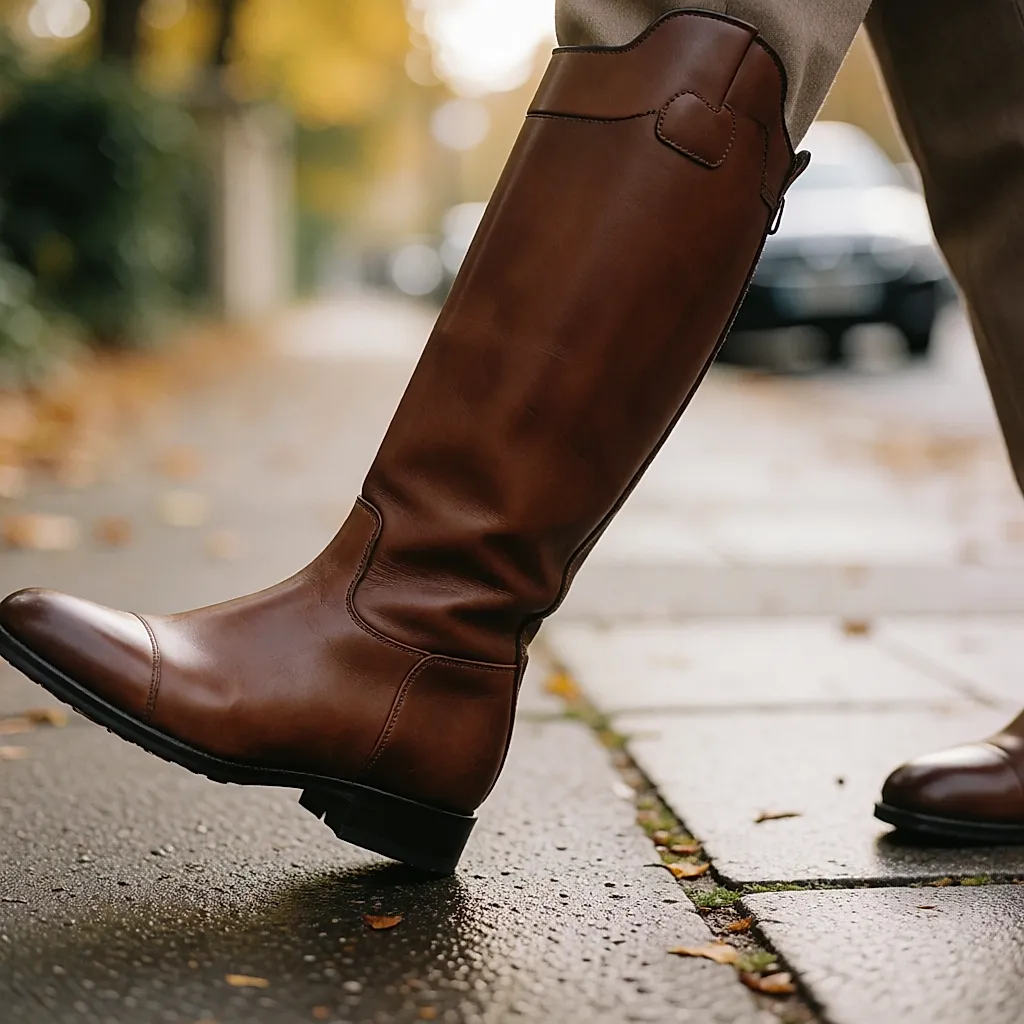
A quick word on budget styles while we're here: check how much of the shaft is synthetic. It's not a crime, it's information — and it often explains why one boot lasts three months while another sees you through three winters.
Heel, sole and fastening: three details that change how they feel
A flat heel or a low block heel is the easiest to live with from Monday to Sunday: it lengthens the leg without making you pay for it on the walk home. Underneath, a lugged sole makes all the difference when November rain hits smooth pavements — that's not marketing, it's pavement physics. For fastening, an inside zip disappears once the boot is on, while a side elastic panel forgives calves that won't squeeze into a rigid tube.
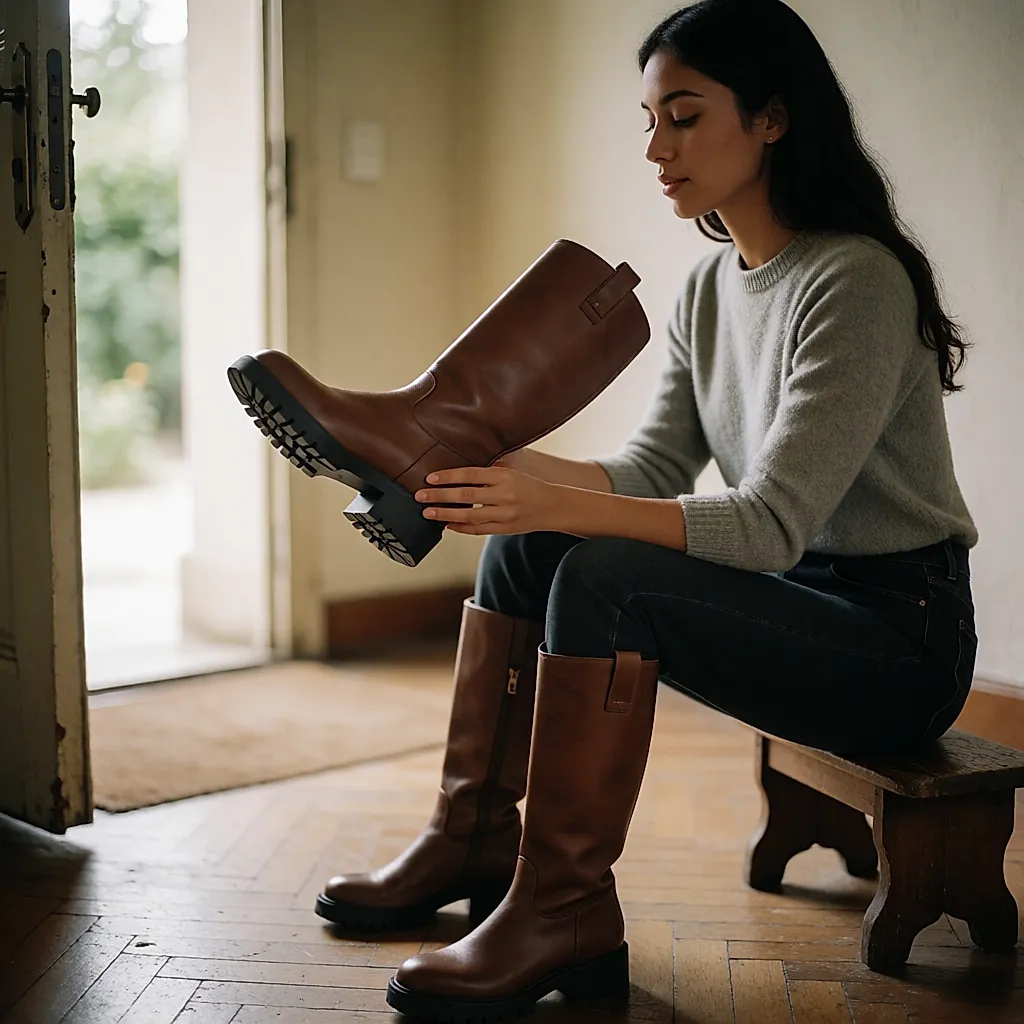
Together, these three details decide how the foot sits. A boot can look beautiful and become torture within an hour: that's usually a sign one of the three has been sacrificed.
The best time to try them on? The end of the day
It's the least glamorous and most useful piece of advice: feet swell slightly over the day, and a boot tried on at 10am can become an enemy by 7pm. Take the socks you'll actually wear — fine ones for skirts, thicker ones if you'll be wearing thick tights or leggings underneath. In the fitting room: walk, climb a step, flex your foot.

The three-minute test: the boot supports the leg without pinching the calf, the heel stays stable when you walk, and the instep feels no pressure. If it pinches in the fitting room, it won't magically stretch at home — whatever the world's most optimistic sales assistant tells you.

Budget: what a pair that lasts actually costs
In practice, in the UK, an entry-level pair in corrected-grain leather often sits between £75 and £140; corrected-grain leather marks quickly and will usually need resoling fairly early. Expect to pay about £160 to £300 for a full-grain boot from a classic shoe brand, and more like £300 to £550 from a cobbler or a maker working with traditionally tanned leather, with sole and heel repairs possible. Second-hand can be a good find: £25 to £90 for a pair that already has a patina and has proved itself without being worn out.
A resole usually costs between £35 and £70 depending on the sole, and a heel £20–£40. It feels expensive at the time, but less than a new pair every six months. As for made-to-measure, it's worth it if nothing off-the-peg fits your shape — otherwise it's a luxury, not a necessity.
Care: a regular routine
As a rule, regular care is recommended, especially after wet weather: a quick brush removes surface dirt and stops stains from settling in. Then a thin layer of dubbin or colourless cream, applied by hand and left to sink in — thin is the point: too much product clogs the leather instead of nourishing it. To keep the shaft's shape between wears, cedar boot trees do the work: they absorb residual moisture and help hold the instep.
Finally, let them air-dry, away from a radiator. Harsh heat will crack leather more reliably than a downpour.
Below the calf or knee-high: your call
There's no universal right answer, only a pair that works with your skirts, your trousers and your commute. If you're still torn, start with the length you wear most often, not the one you dream about in photos.
Try them at the end of the day, with your real socks, and give yourself permission to put back the pair that pinches. A successful riding boot is one you forget you're wearing — which is often the best compliment you can pay it.


Comments
Your opinion matters: rate the article, react and reply to comments.
Comments are moderated; AI-assisted comments are flagged. Text emoticons (8-), :-), <3…) are automatically shown as images.