
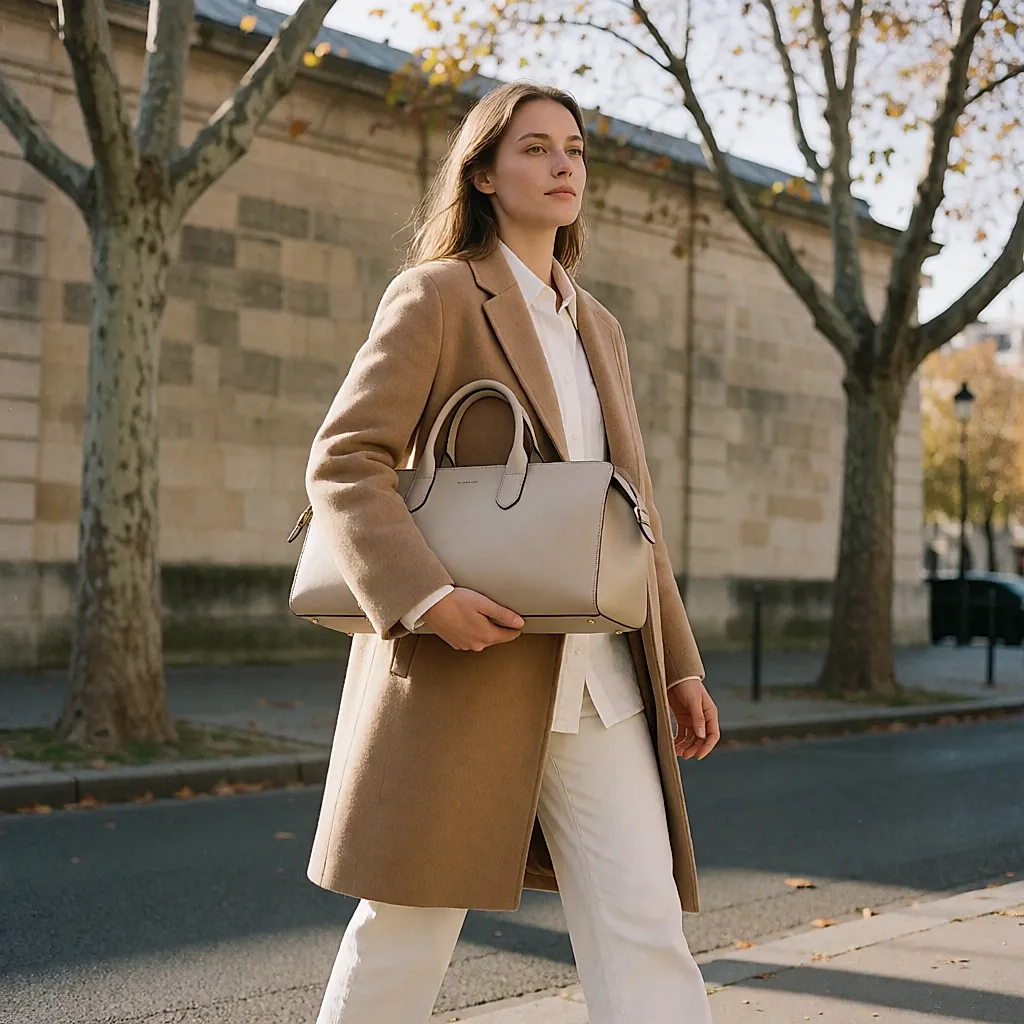
There are bags that tell your day before you do: the overflowing tote, the mini that holds nothing. The east-west bag plays a different tune. Longer than it is tall, almost horizontal, it tucks under the arm with the nonchalance of a novel you are never going to read—and it lifts the bust line instead of squashing it.
The shape that lies low to get noticed
In practice, an east-west bag is noticeably wider than it is tall, with a top opening and short handles—sometimes an adjustable strap, long enough to go from shoulder to hand in a second. The lineage is not new: Fendi's Baguette, designed by Silvia Venturini Fendi in 1997, was already worn tucked between elbow and ribs—a gesture once imagined as dinner-only that eventually made it onto the street. At Prada, elongated silhouettes with curved handles brought the under-arm carry back into fashion; at Jacquemus, compact formats—the Bambino above all—won over younger wardrobes.
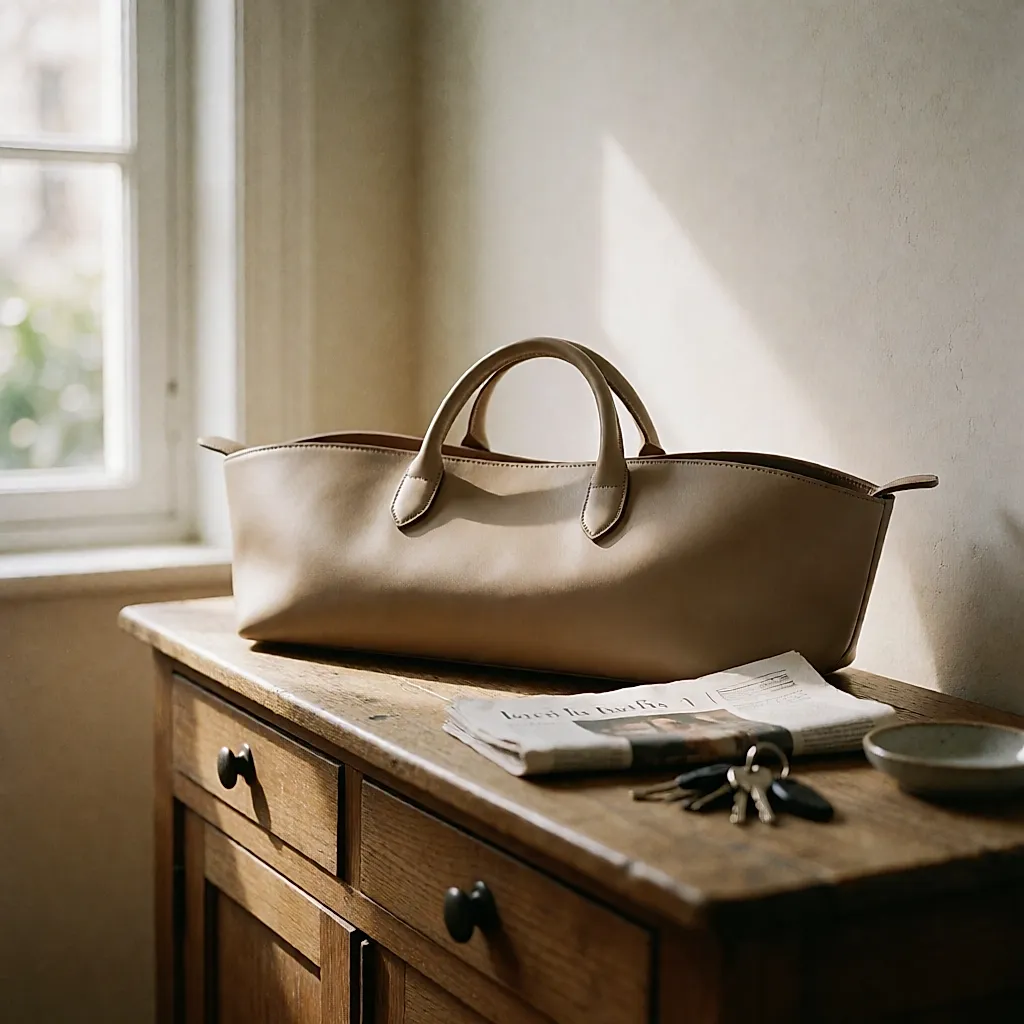
Why does it work? Because a bag, before it is an accessory, is a line placed on a silhouette. A vertical shape pulls the eye down; a horizontal one creates breathing room across the body. Our practical rule of thumb: worn high, under the arm or on the shoulder, it clears the leg and lifts the eye; worn low on a long strap, it cuts across the hip. Neither is a crime, but the effect is not the same—and that is often where the difference lies between a look that flows and one that stops short.
Shoulder or short strap: two moods
On the shoulder over a long coat, an east-west bag looks composed, almost grown-up—the kind of bag that suggests you have things to do and the time to do them. On a short strap, tucked under the arm, it becomes more playful: the weekend version, the one that goes with jeans and a shirt without taking itself too seriously.
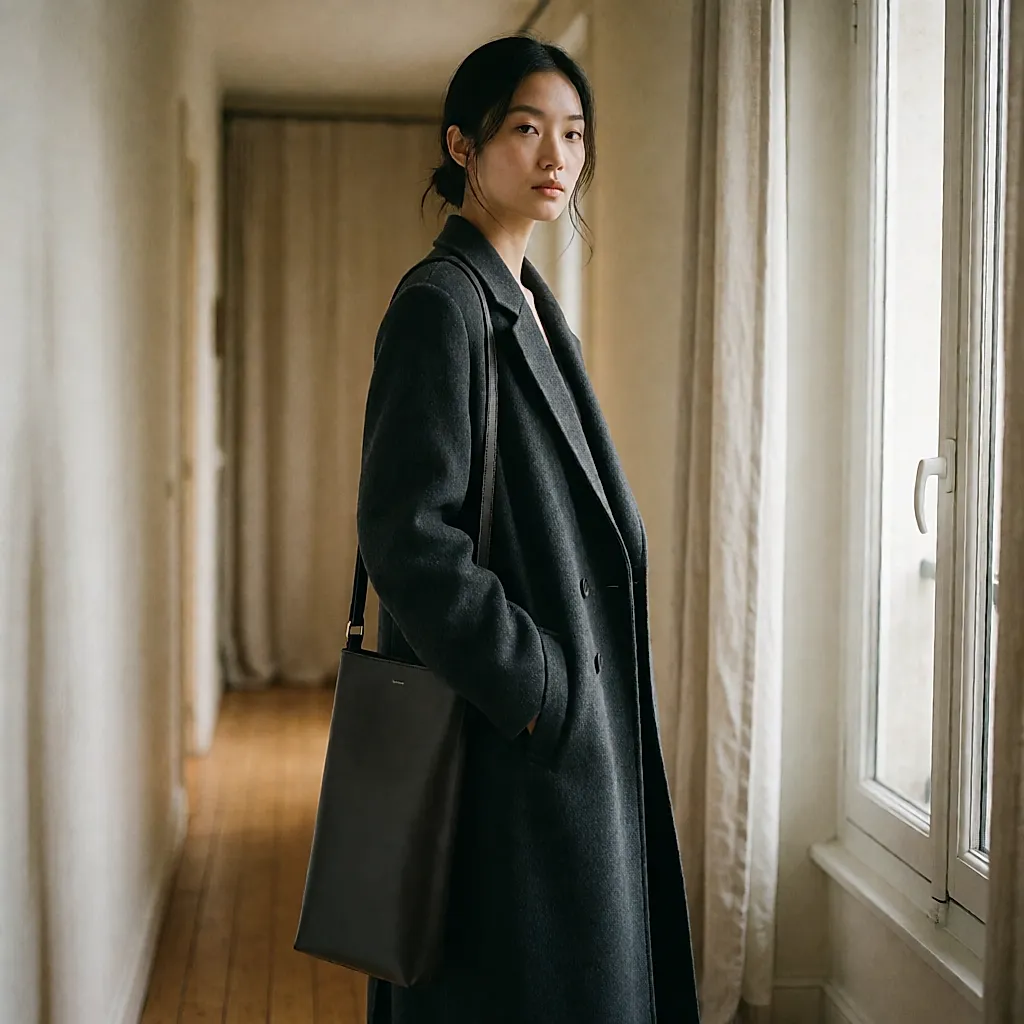
Mind the drape, though. A wide format is less forgiving of stiff leather: if the material lacks suppleness, the bag starts to gape, sag into a banana shape under the arm and hold nothing. Pick it up, see whether it hangs straight or folds, lift it empty. A thick-leather east-west bag soon gets heavy, and after a full day on the shoulder, you will feel it.
Where it shines, where it falls short
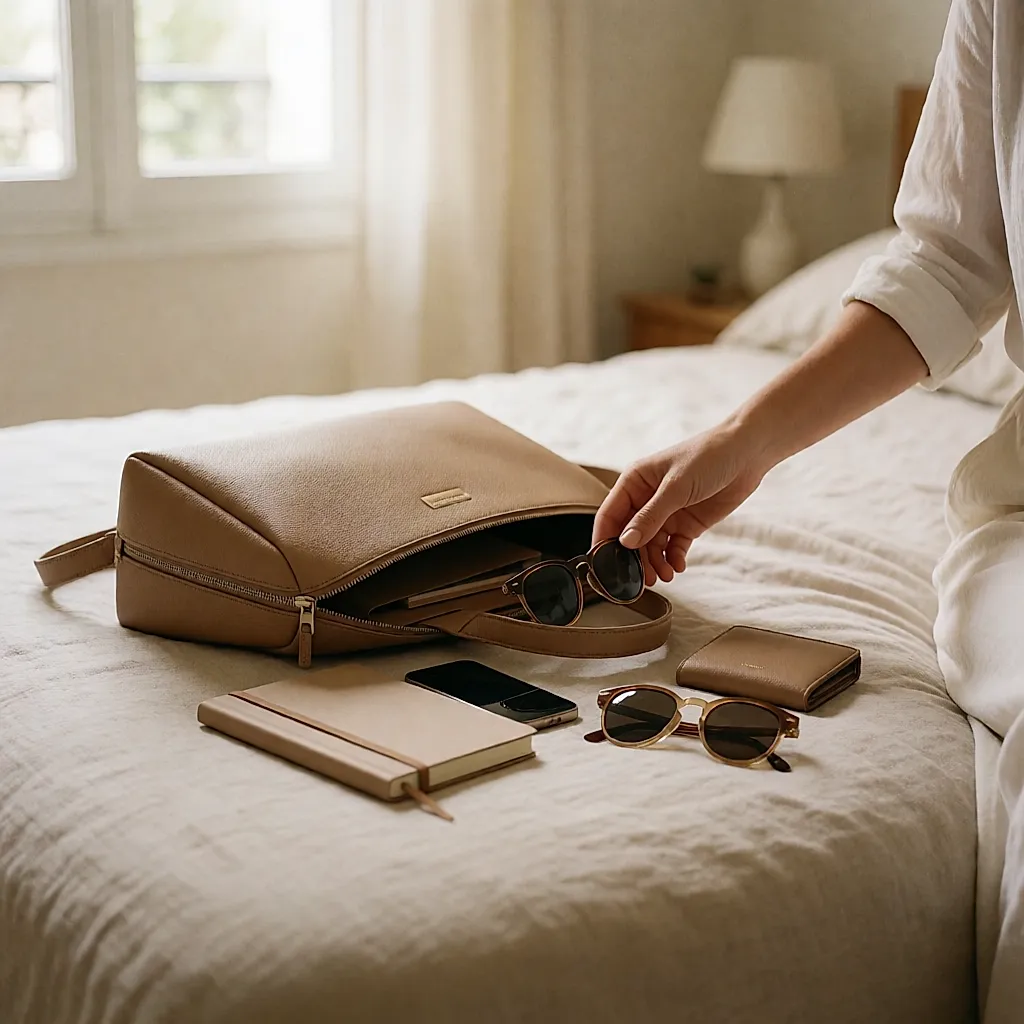
It is an excellent bag for a light day: purse, phone, notebook, glasses, and a little room for the unexpected. It excels with a well-cut tailored look, knitwear layered under a jacket, or to accessorise a basic without overthinking it. But forget it for a laptop, water bottle and the report due Monday morning: a 13-inch laptop will not always fit widthways, and A4 paper will poke well out of the sleeve.
On body shape, let us be honest—it is not a bag that suits everyone in the same way. The short format worn high highlights the waist, which some love and others hate. Worn low, it visually widens the area it crosses. Nothing dramatic, but test it in front of a mirror, in the outfit you plan to wear it with. Not in pyjamas on a Sunday night, then.
What ages well
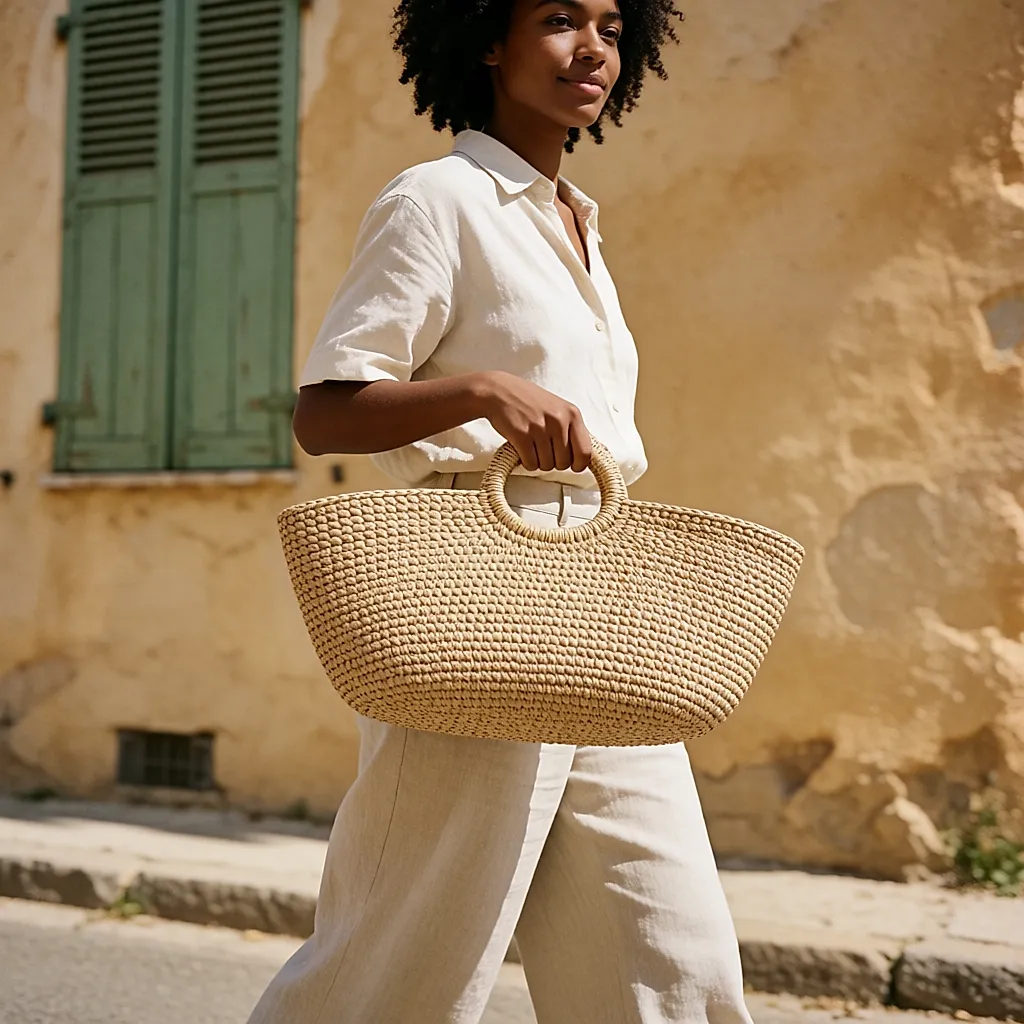
An east-west bag spends a lot of time in the hand, under the arm, against a coat. Material matters more than shape. Vegetable-tanned full-grain leather develops a patina and takes on a deeper colour; the suppler it is, the better the shape falls. Woven raffia and heavy cotton canvas make good summer bags, provided you accept that they will mark a little. Always check the synthetic fibre content in the lining and coating: that is often the first place to fail, and a peeling lining ruins a beautiful exterior.
The zero-cost reflex: raid your own wardrobe before reaching for your bank card. A slightly dated family bag, or a Baguette found in a charity shop, can be brought back up to date with a shortened handle at a cobbler—and that is a result.
Before you buy, do the five-item test: purse, phone, keys, glasses, lipstick. If the bag closes around them without losing its shape and you can still slip in a scarf, you have found your format. An east-west bag that gapes open is one that will eventually let you down.
Budget
Expect to pay around £25–£80 for decent second-hand leather in a charity shop or on a resale site: it is ideal hunting ground, with plenty of 2000s baguette bags still lying dormant. Between £100 and £300, you are into independent leather-goods brands and mid-range labels, with full-grain leather and serious finishing. Beyond £700, you are in major fashion-house territory, where iconic pieces can often exceed £1,300—a considered purchase, not a Sunday-night impulse buy.
For care, budget £8–£18 for a nourishing leather balm—in practice, it is often advised once or twice a year—and £18–£35 at a cobbler to shorten a strap or repair a seam. That is little when set against a bag you keep for ten years. And really, that may be the best buy of all: a shape that suits you, a material that lasts, and the desire to reach for it every morning without thinking.
Sources
- Fendi — The Baguette, designed by Silvia Venturini Fendi in 1997, accessed October 2026.
- Prada — Prada bags, accessed October 2026.
- Jacquemus — The Bambino and compact formats, accessed October 2026.

Comments
Your opinion matters: rate the article, react and reply to comments.
Comments are moderated; AI-assisted comments are flagged. Text emoticons (8-), :-), <3…) are automatically shown as images.