
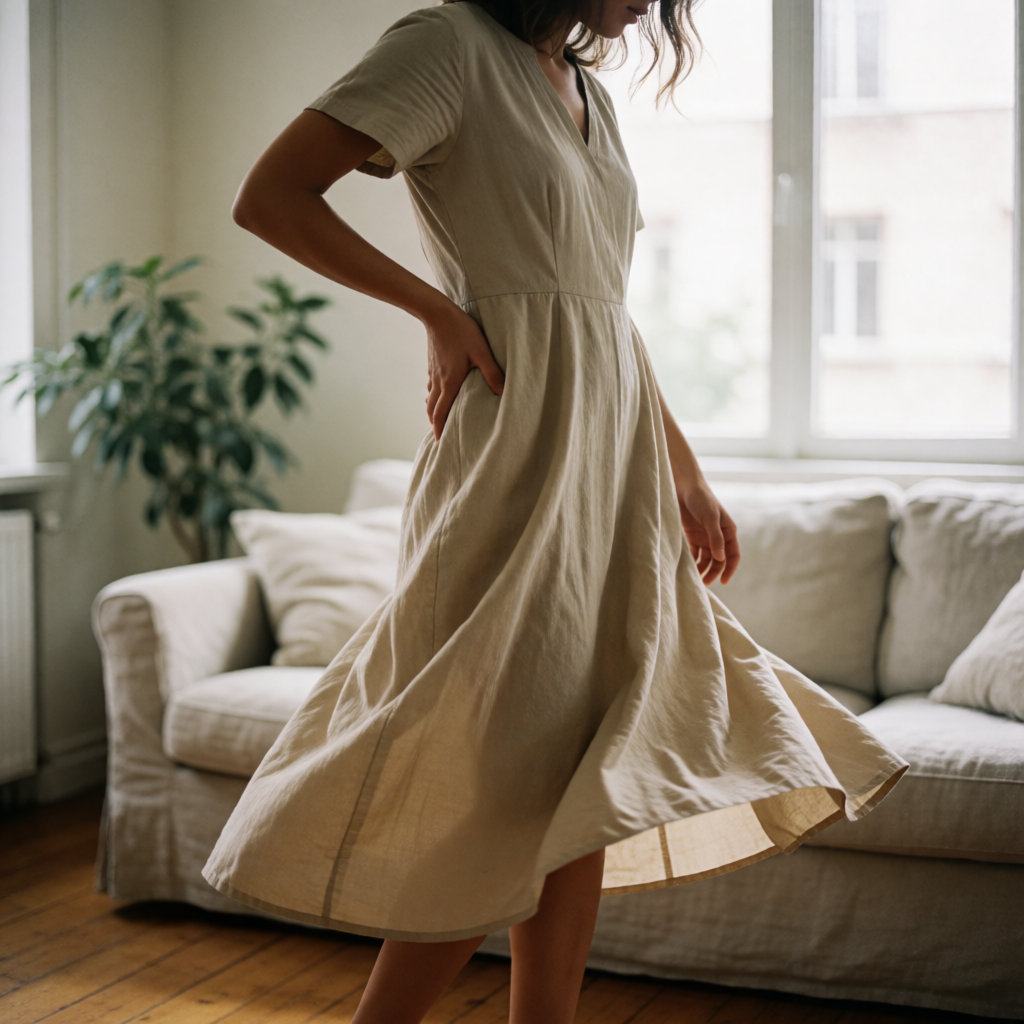
The V shape
You carry more volume on your top half than your bottom half. In other words, you have broad shoulders, possibly a fuller bust, a small belly (or not) but fairly narrow hips and slim legs. Here, too, we follow the rule of 'show off your slim parts and soften the rounder areas'. For you, then, choose a top that's fairly loose with short sleeves rather than thin straps — the latter draw the eye to the shoulders. Instead, define your waist or hips with a belt to structure your silhouette and break up any straight line. Choose dresses and skirts that are on the short side, ideally above the knee, to show off your slim legs. If you're petite, opt for heels or wedges to elongate your legs even more. Finally, think about ruffles, which add a little volume at the hips and thighs and balance out the silhouette.
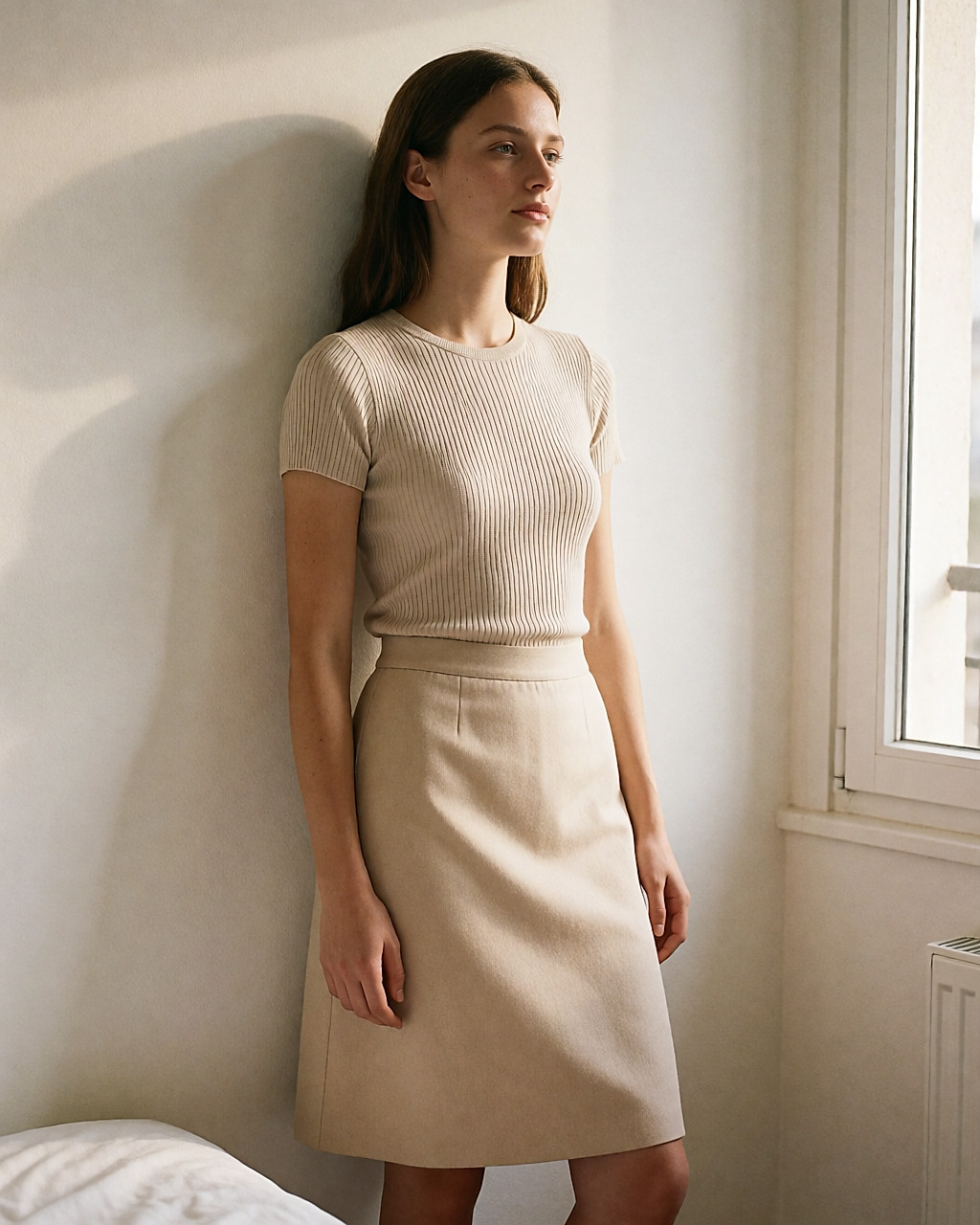
The round shape
If you have voluptuous curves, choose a dress that is neither too loose nor too tight. Avoid very loose cotton dresses, which tend to create extra volume; a dress that's too tight freezes the silhouette. In short, avoid super clingy, but also avoid overly baggy: find the right balance that doesn't swamp your shape. I tried a good number of fluid cuts in the fitting room for you, and the sweet spot sits between the two, with a soft drape that follows your curves without pressing against them. So go for fluid fabrics, which create a lovely loose effect without hiding your shape.
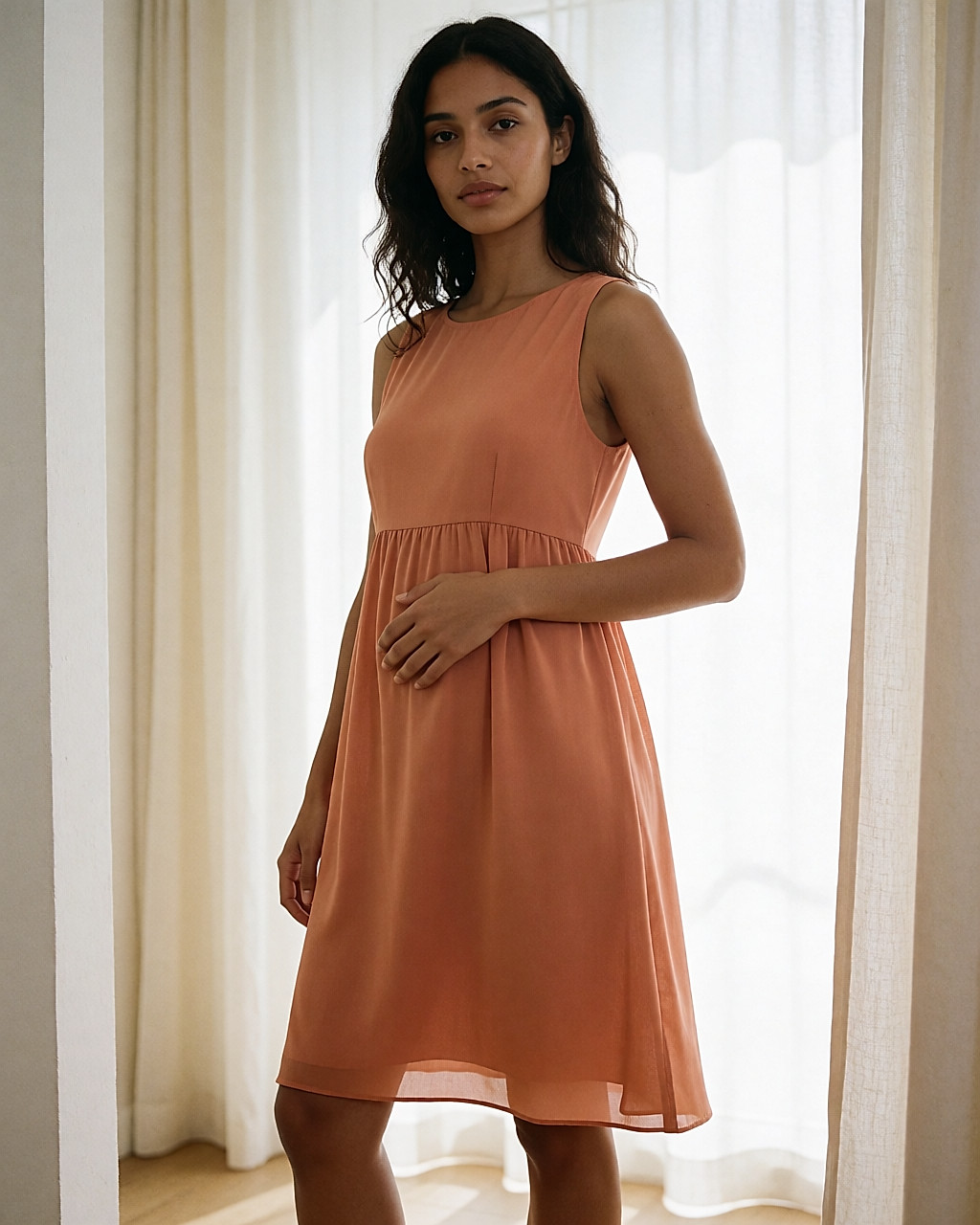
Dress or skirt, the length that suits you best is on the knee. Don't fall into the trap of going too long — nothing weighs down a silhouette more. Try empire lines that highlight the neckline and skim the stomach and hips without clinging.
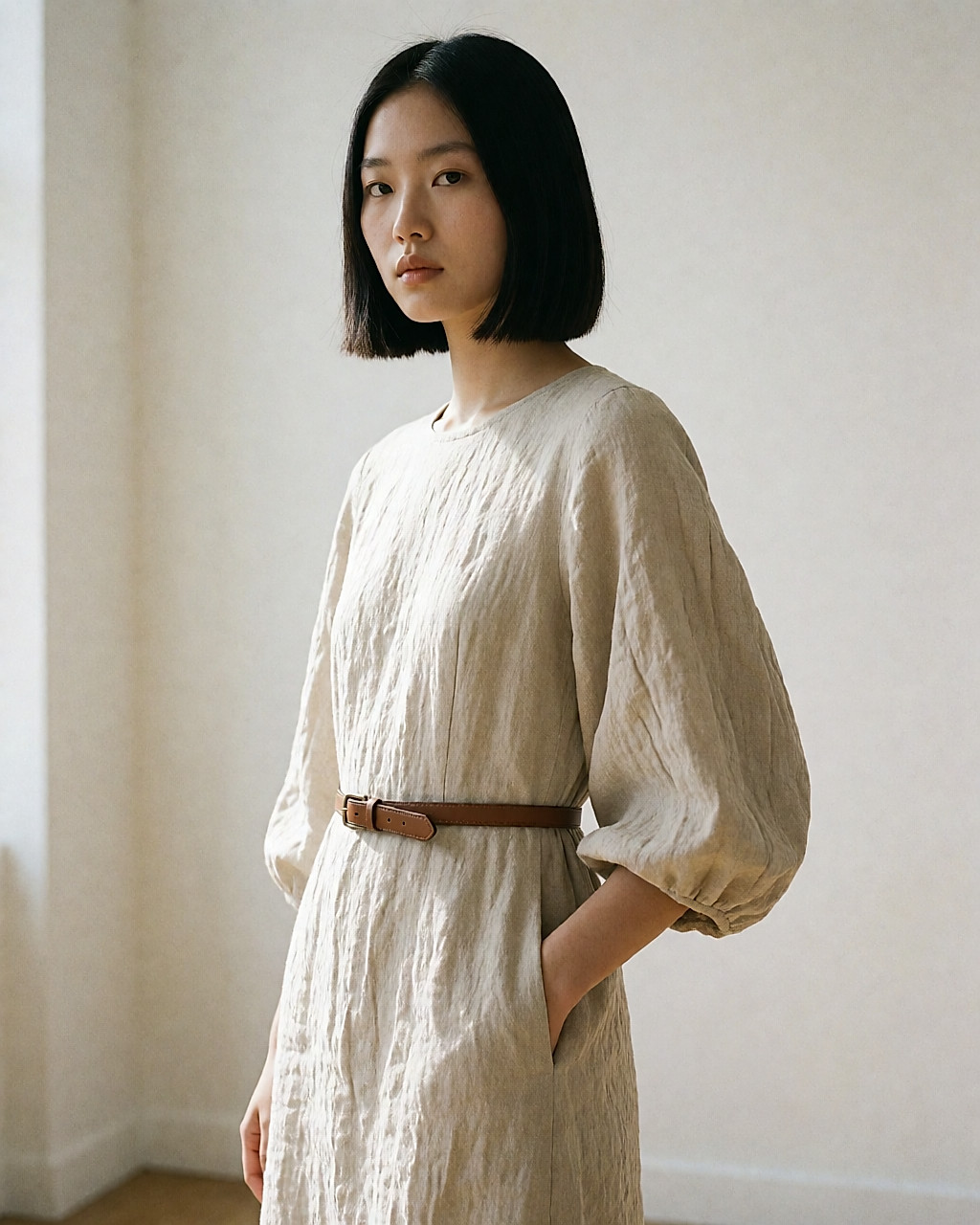
Finally, on colour, it's up to you: it's true that dark colours are often said to be slimming, but the ideal is still a colour that flatters your complexion, your eyes and your skin tone.
The A shape
Narrow bust and wide hips: you want to draw the eye upwards. Choose a dress that's fitted on top and flares towards the hem to soften your hips. Curvy hips are lovely! It's not about hiding them, but balancing them. Be bold with fine straps that show off your lovely shoulders, and embrace necklines.
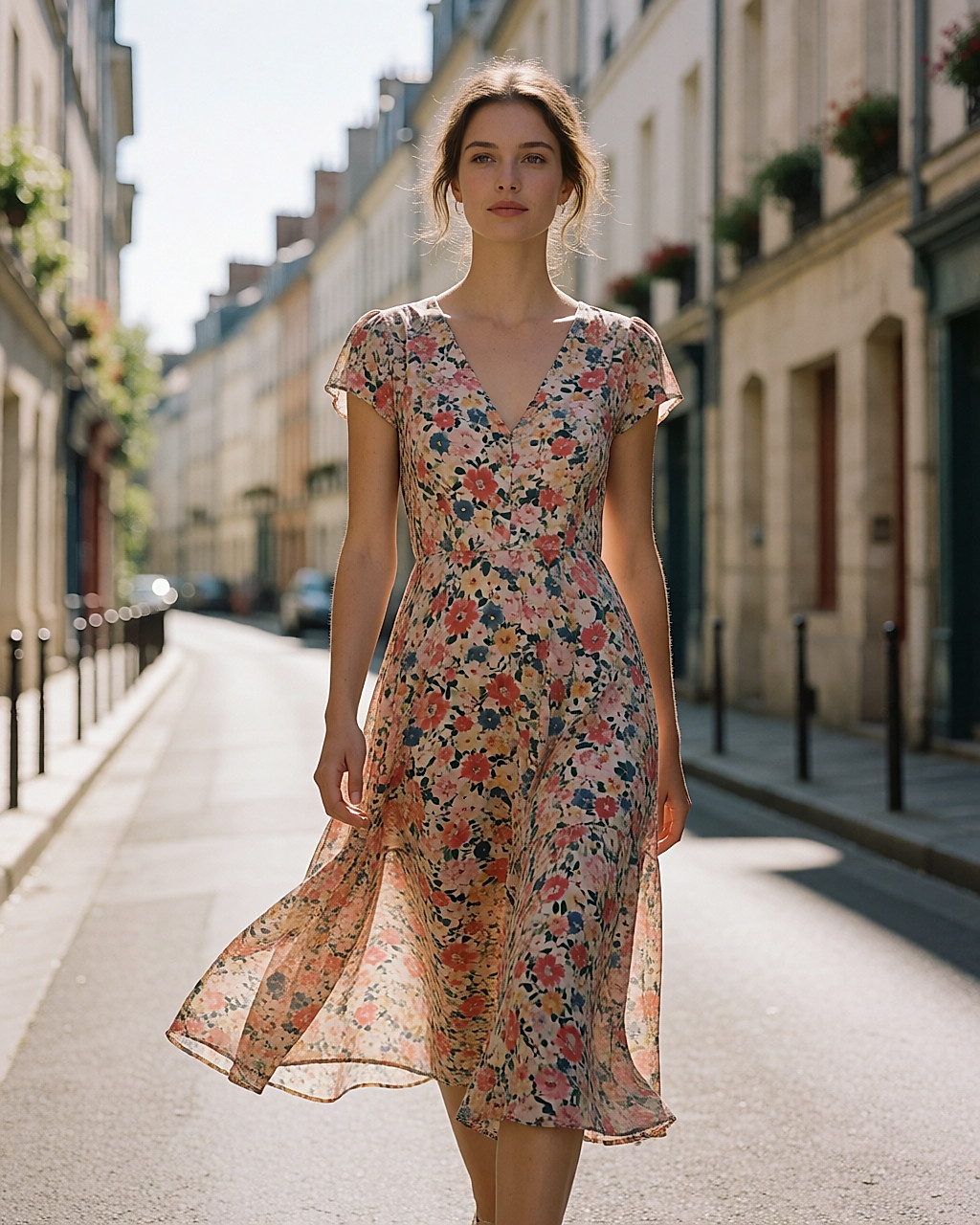
Go for fluid fabrics whose drape softens the curve of the hips without erasing them completely, because yes, lovely pronounced hips are sexy! With skirts, don't choose one that's too long, to avoid weighing down the silhouette: a high, well-defined waist that flares out lengthens the legs, especially with a bit of heel height. Again, a fluid fabric rather than a stiff one.
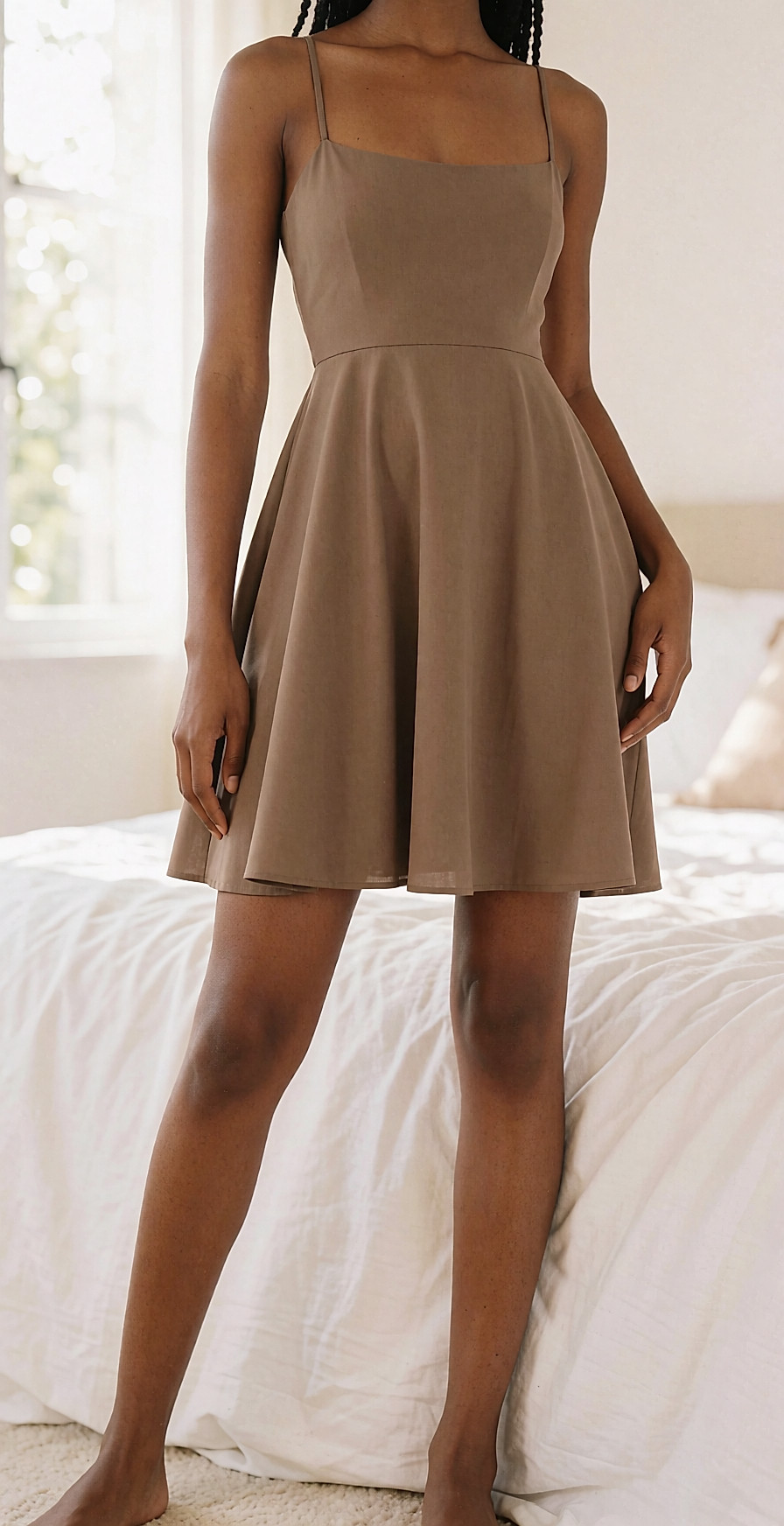
The hourglass shape
Shoulders and hips defined but balanced, with a clearly drawn waist: your shape is easy to flatter. The advice comes down to one word: highlight. A dress nipped in at the waist, a neckline, a belt — anything that makes the most of this natural balance works. Don't be afraid to emphasise your waist as much as possible.
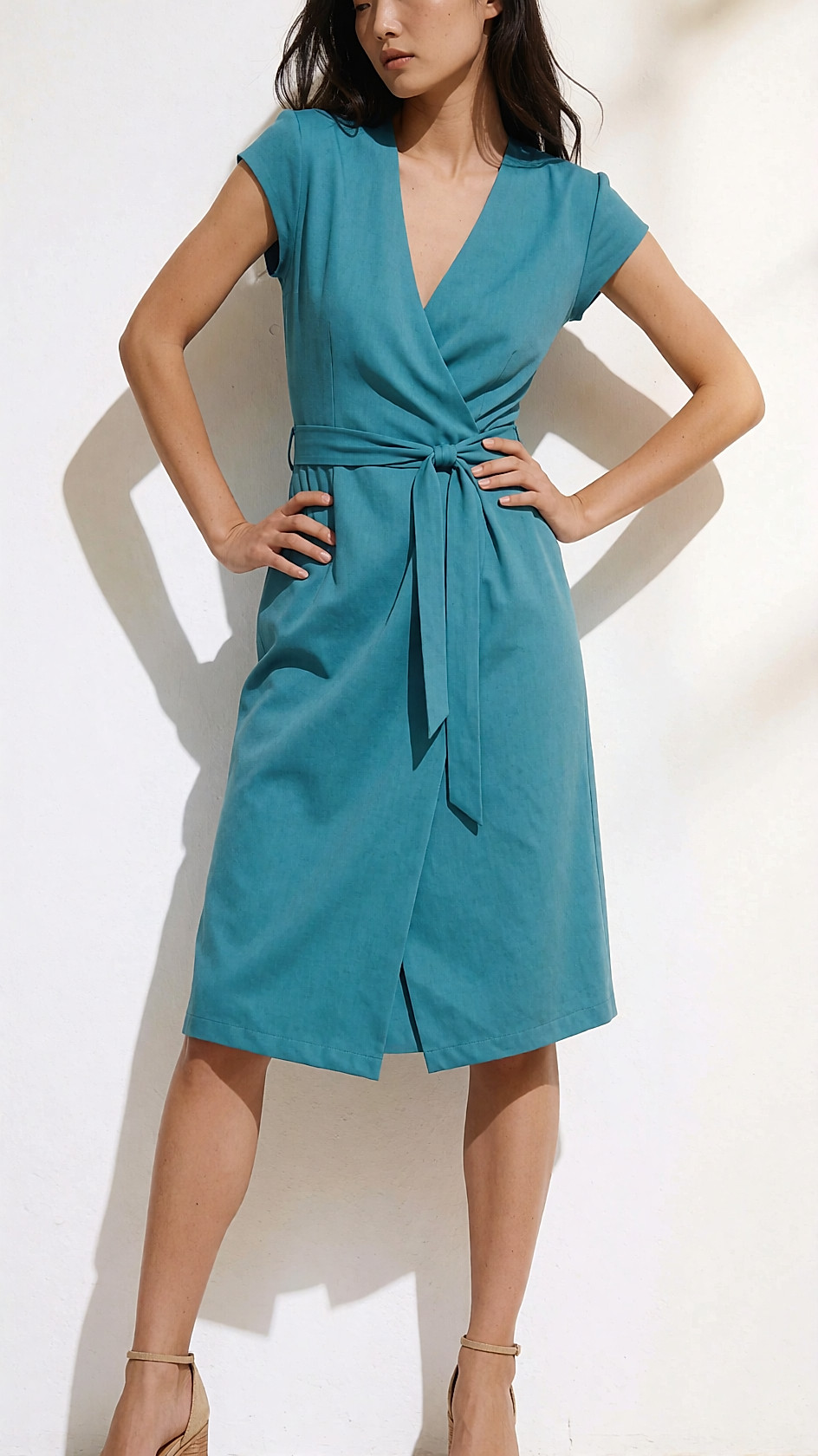
A short skirt will look wonderful on you if you have slim legs (though if you're wearing a short skirt or a neckline, it's better to choose one, unless it all stays fairly restrained). If not, choose knee-length and, in that case, go for a slightly clingy fabric that defines the waist without crushing the hips. One word of caution: if you combine a very short skirt with a deep neckline, keep one of the two in check.
The rectangle shape
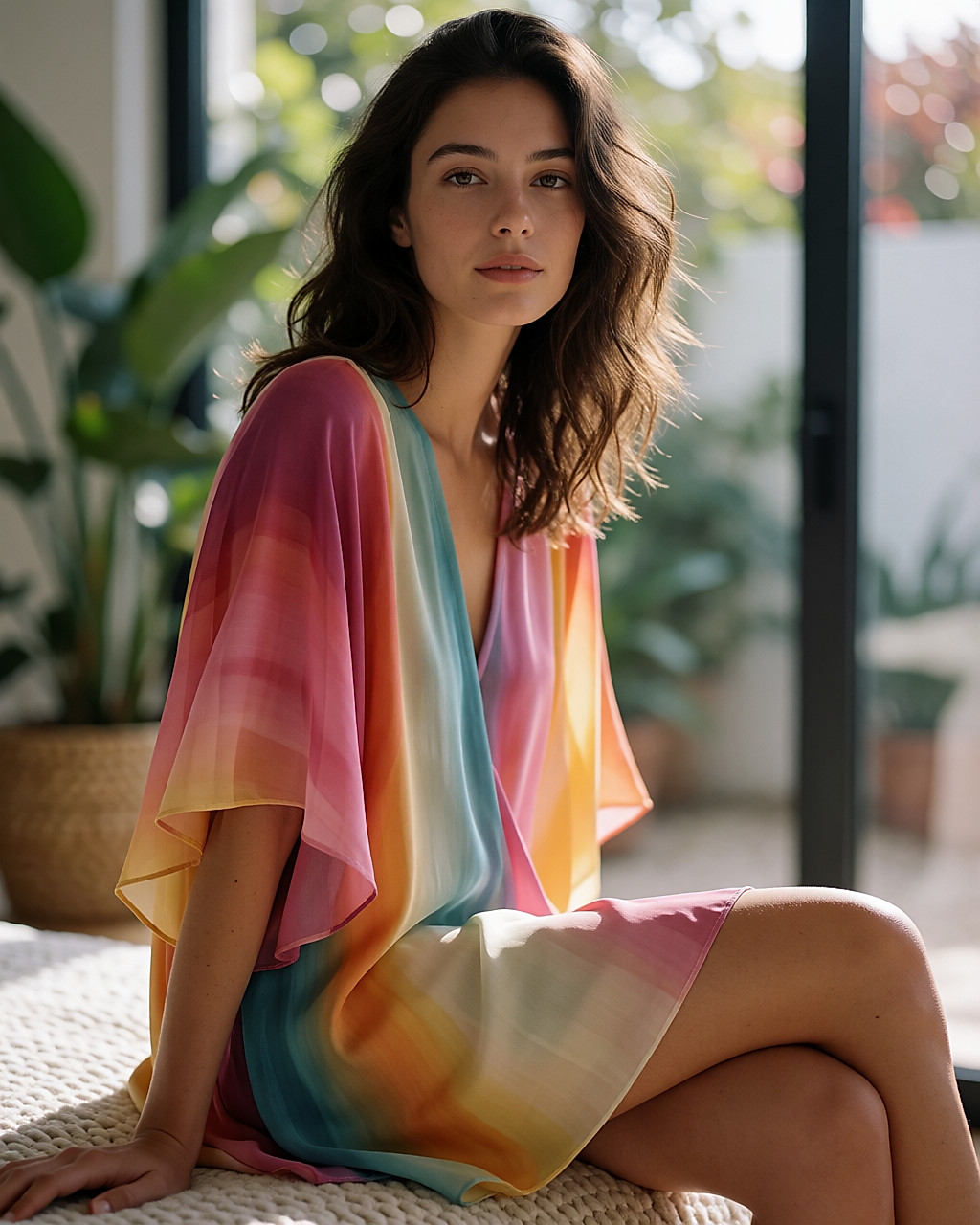
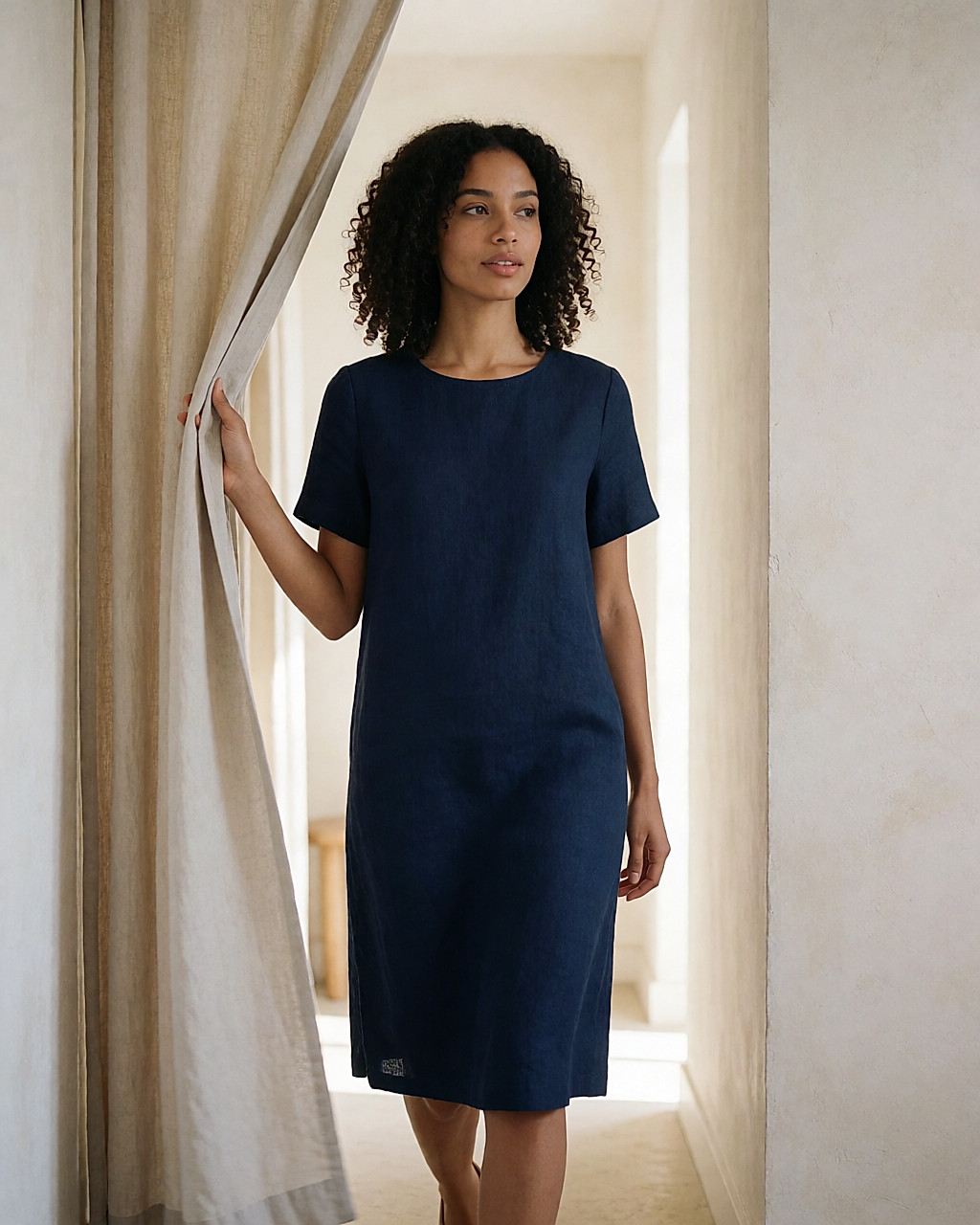
A waist that isn't very defined, a small bust, shoulders the same width as your hips: you have relatively few curves. The challenge here is to highlight your femininity and accentuate your subtle curves. A belt over a straight dress, voluminous sleeves, pleats, draping: textured fabrics — crumpled linen, light tweed, structured knitwear — give the line more substance.
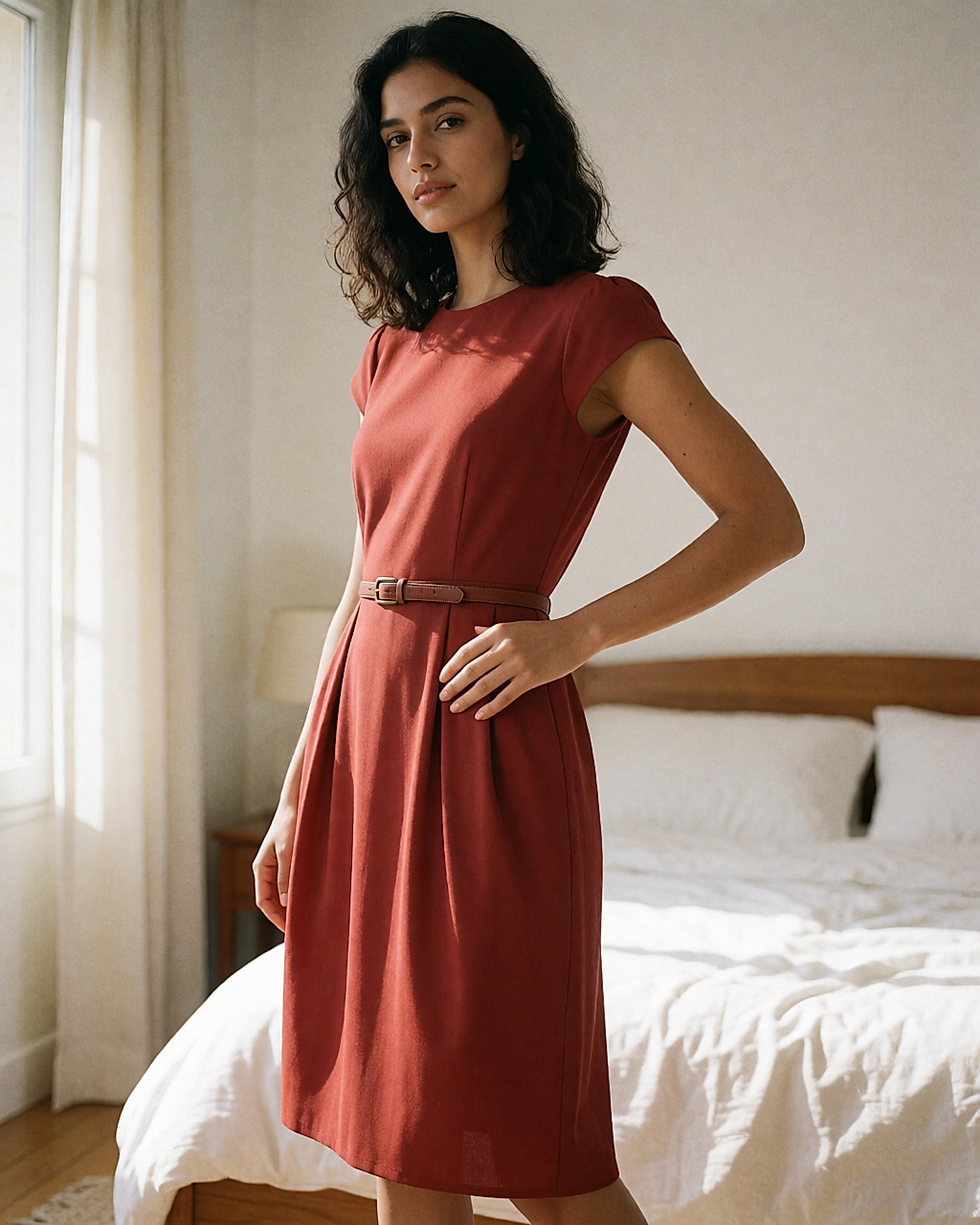
A fitted top with a V or round neckline will flatter your bust, and consider a push-up bra for a fuller bust. With cuts, look for styles that create a waist: a wrap, a built-in belt, a play of panels. Avoid very straight drapes that make you look flat, and don't be afraid of volume: well placed, it suits you very well. Also think about 'girly' details: a pretty integrated belt, lace inserts, gathers, draping… And to feminise your silhouette, invest in jewellery — necklaces, drop earrings, bracelets — without overdoing it, of course.
As we head out shopping, everything is clear in our heads: we can already see ourselves strutting around in our dream dress, with a craving for a particular cut, fabric and colour, and sometimes even a pretty good idea of what we'll wear it with. But once we're in front of the fitting-room mirror, no matter how much we examine ourselves from every angle, the result doesn't live up to our plans. The fact is, we sometimes start with a few preconceptions about our shape and what flatters it or, on the contrary, works against it. So before you head to the till, learn how to choose a dress for your shape — it's the simplest of good ideas.
Budget
On budget, expect around £25 to £70 for an everyday dress in cotton or fluid viscose, and £50 to £130 for a piece in linen, structured knitwear or with a more detailed cut (wrap, draping, panel effects). Prices vary depending on the fabric — linen and silk cost more than polyester — the finish (lining, integrated belt) and where you buy: second-hand and end-of-season collections can cut the bill in half. One tip: prioritise a cut you'll actually wear, even if it costs a little more, rather than buying an impulse piece that will stay in the wardrobe.
Sources
- How to choose a dress for your body shape, Marie Claire.
- Body shape guide: which cut for which silhouette?, ELLE.
- Fashion and fabrics: the guide to materials, La Fabrique de Couture.
Comments
Your opinion matters: rate the article, react and reply to comments.
Comments are moderated; AI-assisted comments are flagged. Text emoticons (8-), :-), <3…) are automatically shown as images.