
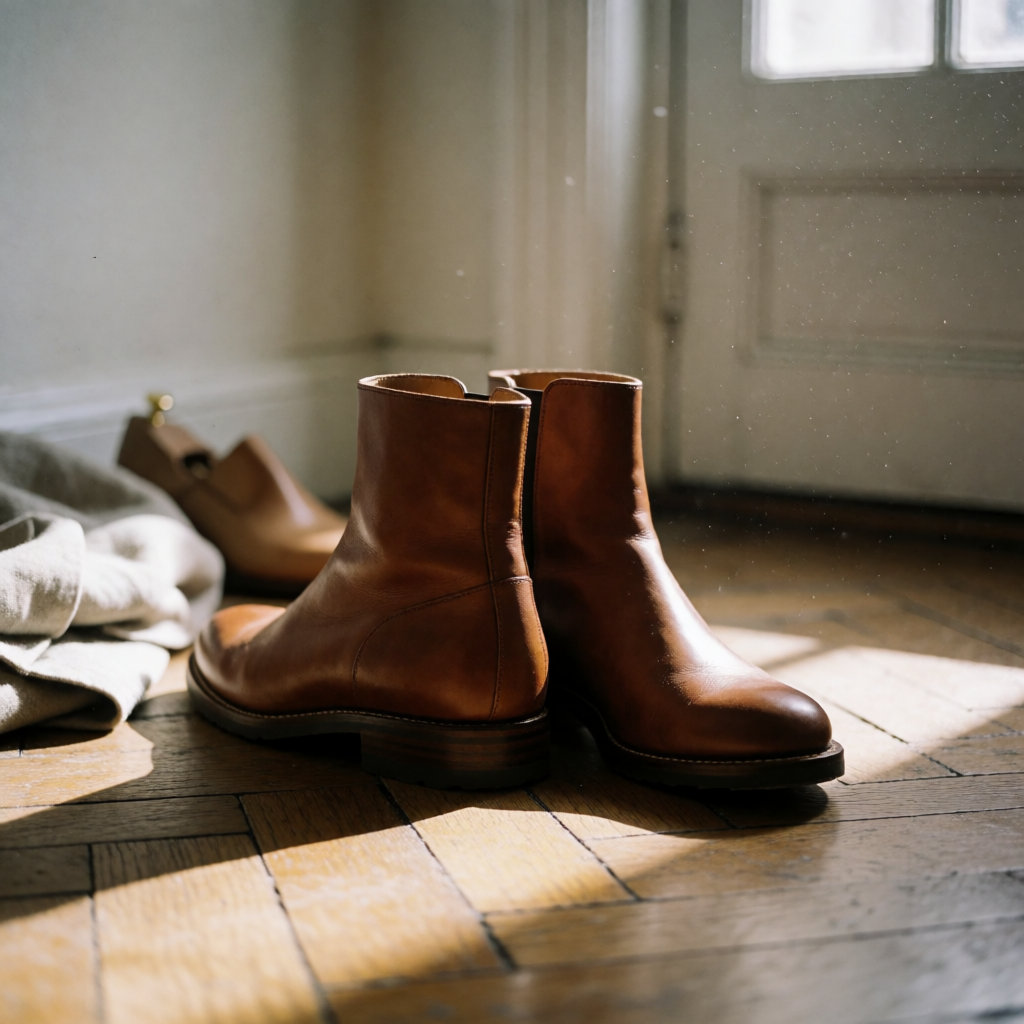
You spotted them in a shop window back in September — the perfect ankle boots, smooth leather, a shaft that rises just so, a line that instantly makes your legs look longer. Three months later? They crack at the flex point and let water in through the sole. The truth is, most failed pairs don't fail through wear: they fail at the point of purchase.
So before you reach for your card, let's look at what really lasts one season, then two, then five.
Material: the first criterion
Full-grain leather is the top layer of the hide, the part that keeps all its fibres intact. It develops a patina, it lives, and it takes on winters without losing its shape. Nubuck — buffed leather with a velvety texture — and suede give a beautiful matte finish, but they don't take kindly to rain. As for synthetic coated onto textile, it cracks quickly at flex points and can't really be repaired by a cobbler.
The same logic applies inside: a leather lining regulates moisture, whereas a cheap textile lining loses its shape and traps sweat. This is exactly what decides whether your pair stays with you for three seasons or needs replacing after one winter.
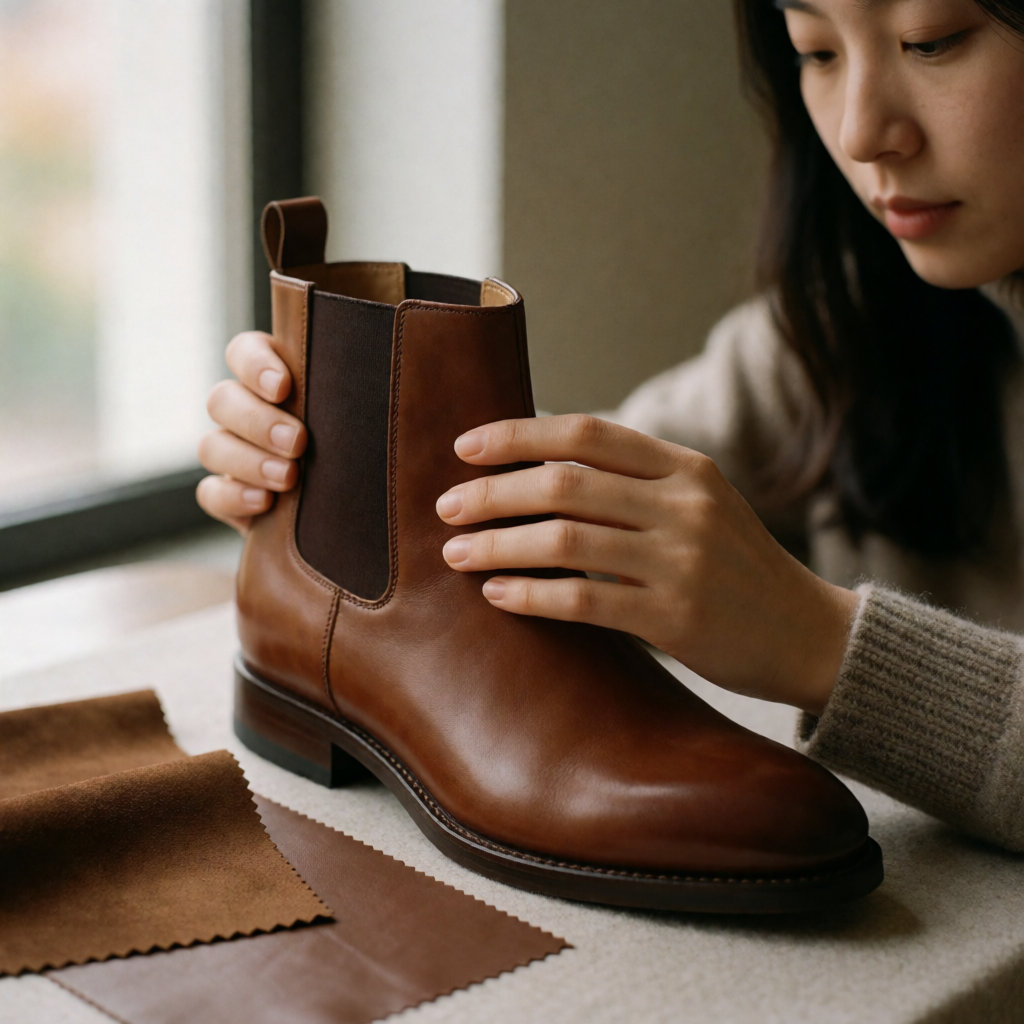
Cut, line and silhouette
Shaft height is decisive. A low shaft, below the ankle, makes the foot look slimmer but lets in cold and water. A mid-height shaft, between 7 and 12 cm, remains the best compromise: it supports the ankle, works as well with raw denim as with a midi skirt, and effortlessly finishes a full autumn look.

On the toe: rounded or slightly square for a versatile wardrobe, more tapered if you're after a dressier look. Think about toe room — a toe box that's too tight ruins the way you walk, even on a £300 pair.
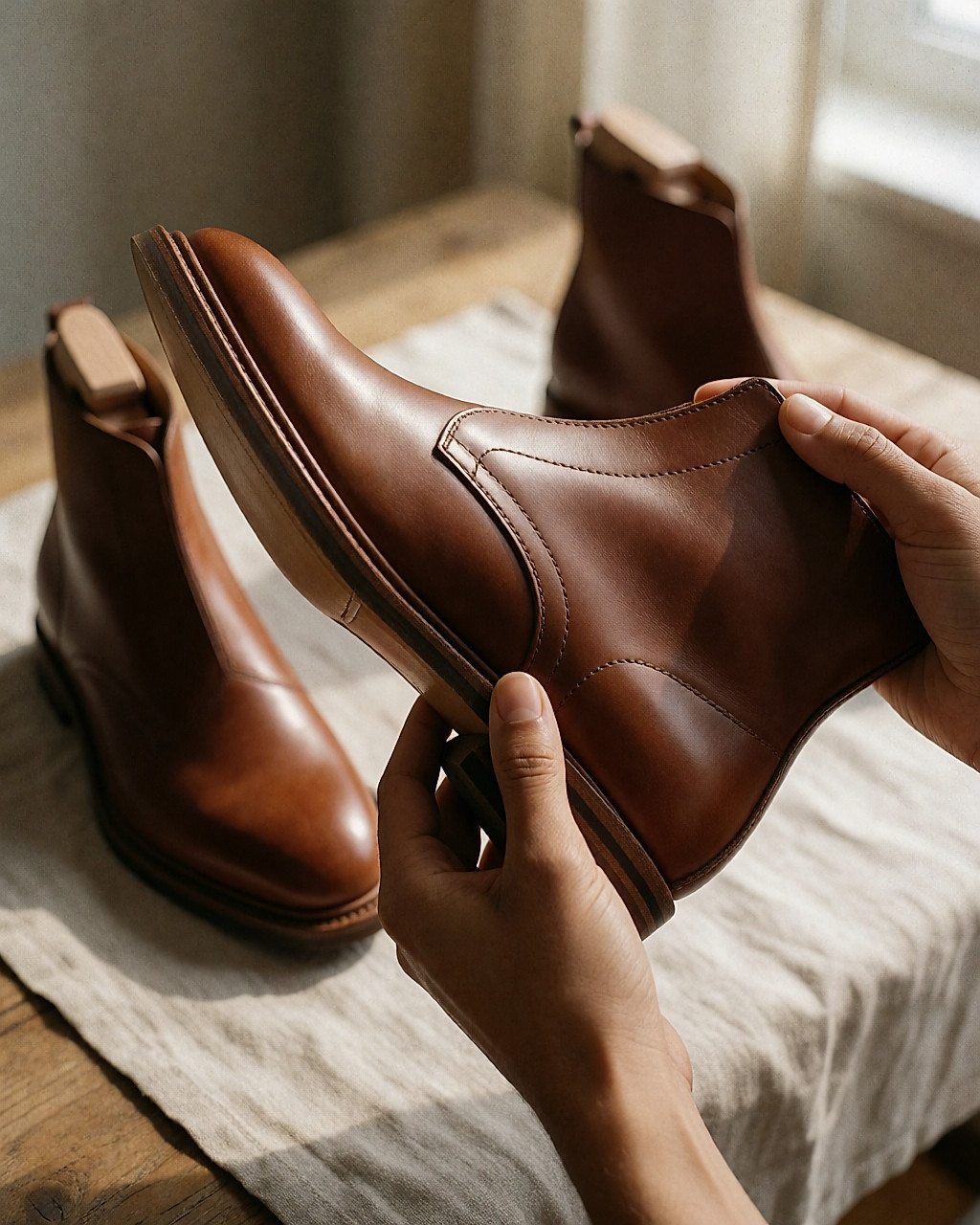
Finally, the sole. Lugged for rainy city use, thinner for a discreet finish. The detail that matters: a stitched sole, with visible stitching along the welt, can be resoled. A glued sole, far less so.
Care: the step that changes everything
The real secret isn't the brand. It's the care.
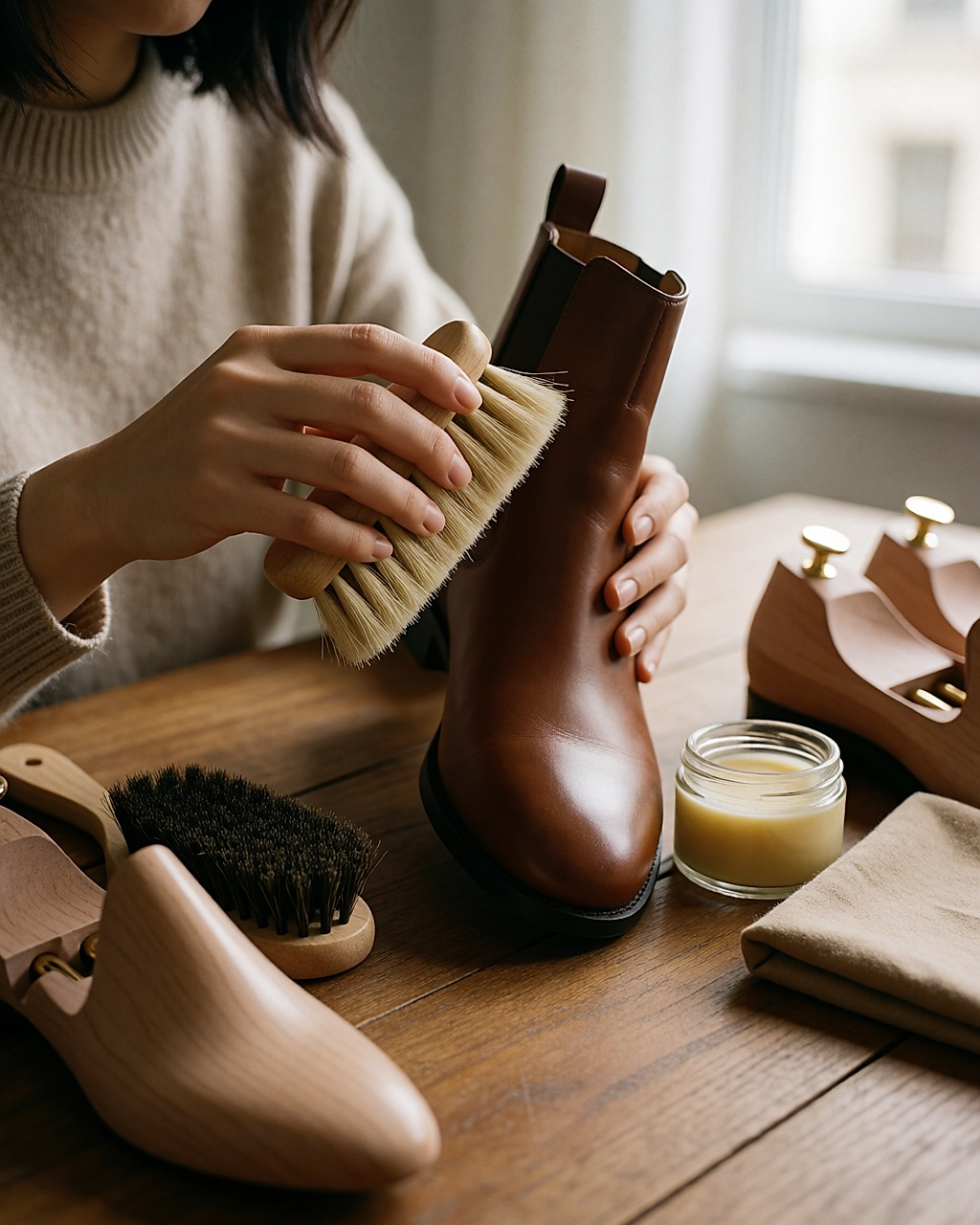
Before the first outing: waterproof them. A protective spray for leather or nubuck creates a barrier against water and salt marks, to be reapplied once or twice a season. Choose one without harsh solvents, made with natural waxes: your pair will age more beautifully, and so will your skin.
Every fortnight: a quick dry brush to remove dust and residue, then a nourishing cream. On nubuck, use a dedicated brush and never a greasy cream.
Every evening: shoe trees. These wooden forms absorb moisture, keep the shaft straight and limit deep creasing. They're the best-value accessory in your wardrobe!
Store your ankle boots upright, never lying one on top of the other, and let them dry in the open air, away from a radiator. Direct heat hardens leather and makes it crack.
Budget
When it comes to budget, it mostly comes down to three bands. Under £100, decent leather exists from affordable brands, especially at the end of the season or online: expect around £60 to £100, and check the lining and stitching carefully, often the weak point. Between £150 and £300, you enter the most reliable range for full-grain leather, a leather lining and a stitched sole — independent brands, European workshops, careful craftsmanship. This is the classic considered purchase, the kind you keep for years.
Over £300, you're paying for premium leathers and stitched construction that can be resoled over time. A sensible choice if you wear the pair several times a week, less so if they stay in the wardrobe. And don't forget second-hand: between £15 and £80 for a pair that can be rescued. A cobbler can resole them and repair the lining — expect £40 to £90 depending on the repair. The result: a one-off pair, brought back to life, for far less than new.
The mini-test before you commit
Is the material full-grain leather or nubuck, not synthetic? Is the lining leather? Is the sole stitched, and therefore resoleable? These are questions to ask before you reach the till, and they're often worth more than the name on the box.
Then there's the toe box, which needs to leave room for your toes, and the shaft, which should support your ankle without pinching. One last check, the most revealing: can you see them working with at least three outfits already in your wardrobe?
Six yeses? They're for you. Three or four? Take your time: there are others out there, and your purse will thank you.




Comments
Your opinion matters: rate the article, react and reply to comments.
Comments are moderated; AI-assisted comments are flagged. Text emoticons (8-), :-), <3…) are automatically shown as images.