
There are mornings when the wardrobe is overflowing and yet nothing feels right. You open both doors, take in the pile of pieces that don't talk to one another, and the same thought returns: "I've got nothing to wear." A capsule wardrobe promises the exact opposite: a tight edit where every piece goes with all the others. The good news is that it comes together far faster than you'd think.
Ten pieces, not ten commandments
Let's start with one essential point: ten pieces is not a full wardrobe. It's a backbone. Coats, underwear, winter shoes and sportswear stay out of the count — no one is asking you to live in a vacuum. The idea is a base you can assemble with your eyes closed, and then build on depending on your day-to-day life.

Second point, and it matters just as much as the first: no two people share the same foundation. If you never wear dresses, a dress is pointless. The list below is a starting point, not an exam to pass. The one that suits you will always beat the one that ticks every box.
The starting base
We begin with the foundations — the pieces that work every day without you having to think about them.
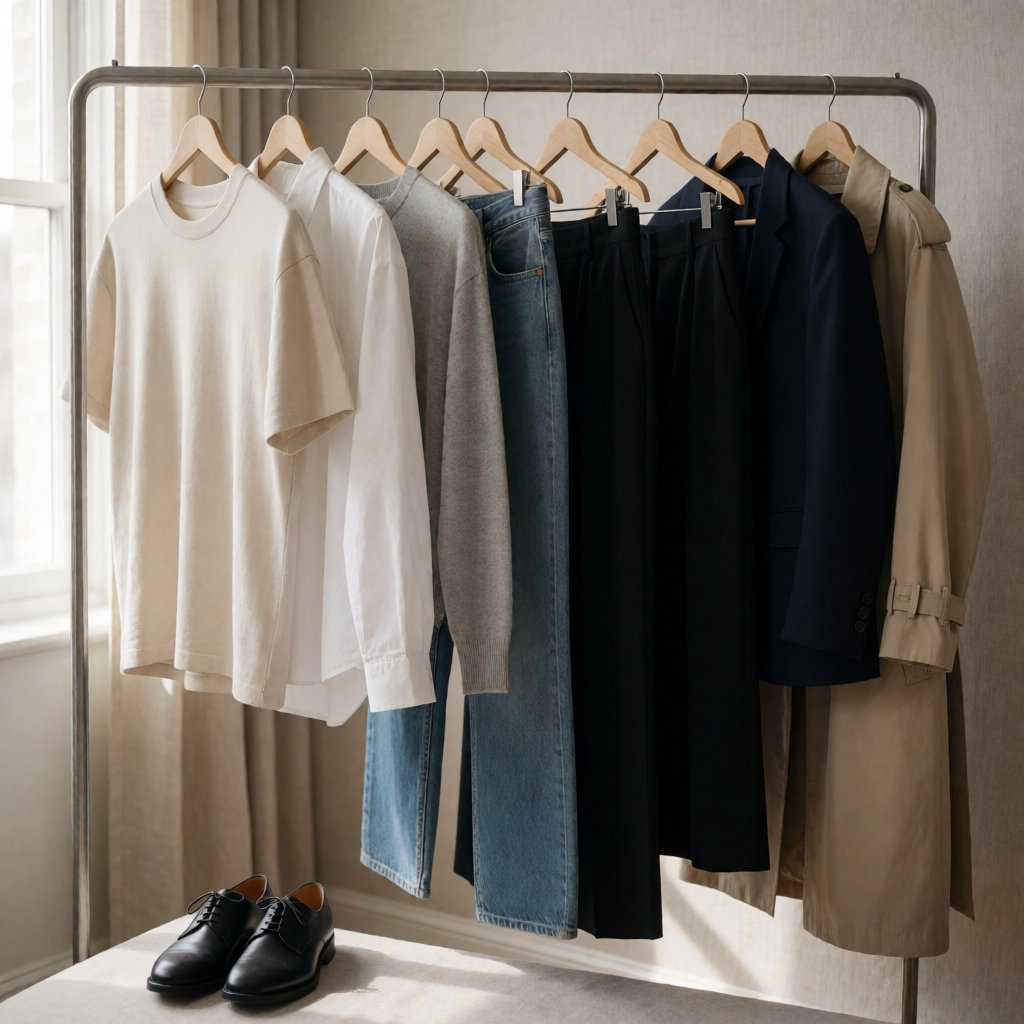
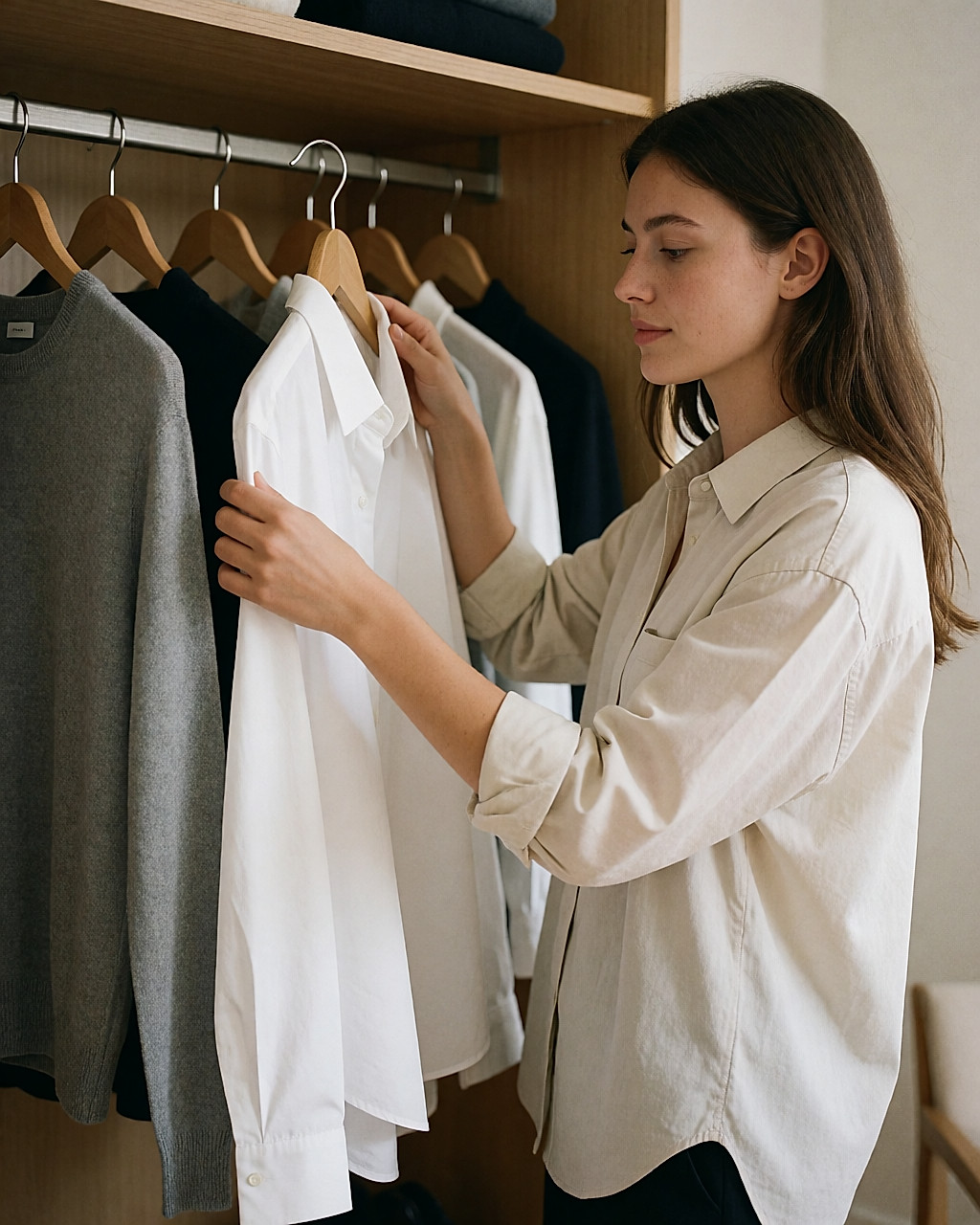
The thick cotton T-shirt, in ecru or white, comes first. Thick, because a thin jersey loses its shape in the wash and instantly looks tired: check the fabric weight and the drape before the colour. Right behind it, the poplin shirt, white or finely striped — the piece that rescues an outfit in thirty seconds, and that works just as well open over a T-shirt as buttoned under a jumper. Add a fine-knit jumper in grey, navy or camel, thin enough to slip under a blazer without adding bulk at the shoulders.
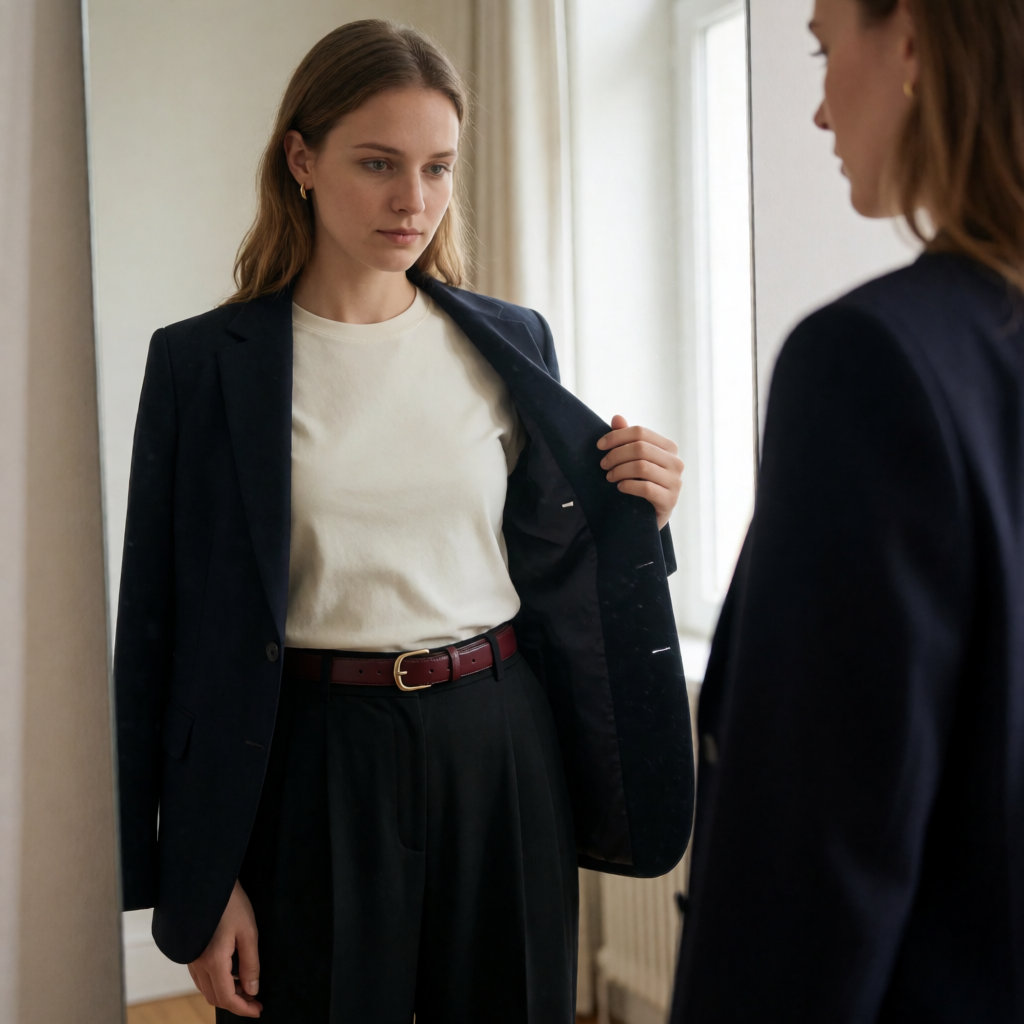
For the bottom half, two options cover almost everything: straight-leg jeans, raw or black (one cut, not three), and a pair of fluid high-waisted black trousers — the famous trousers that look dressed up while feeling comfortable. Then a straight dress or a midi skirt, whichever you actually wear, and a structured blazer in black or navy: this is the piece that redraws your silhouette.
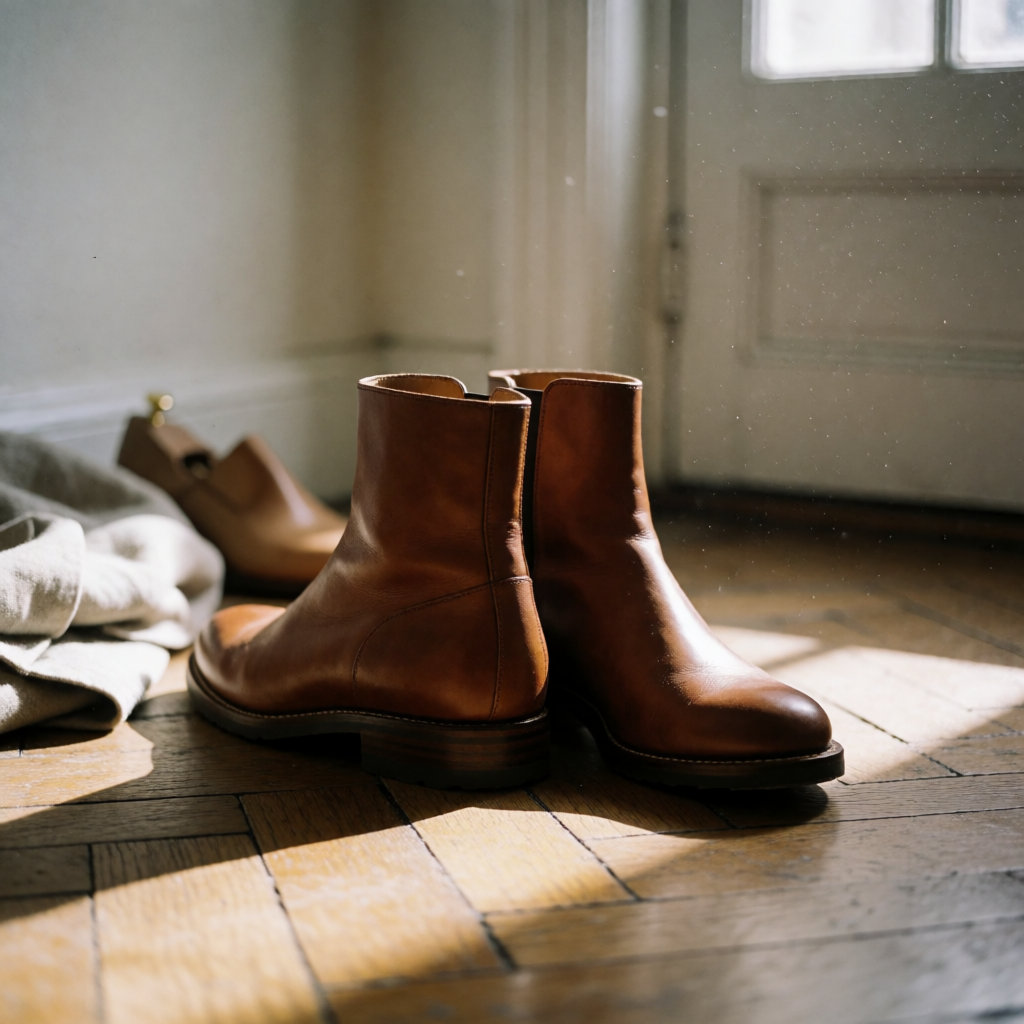
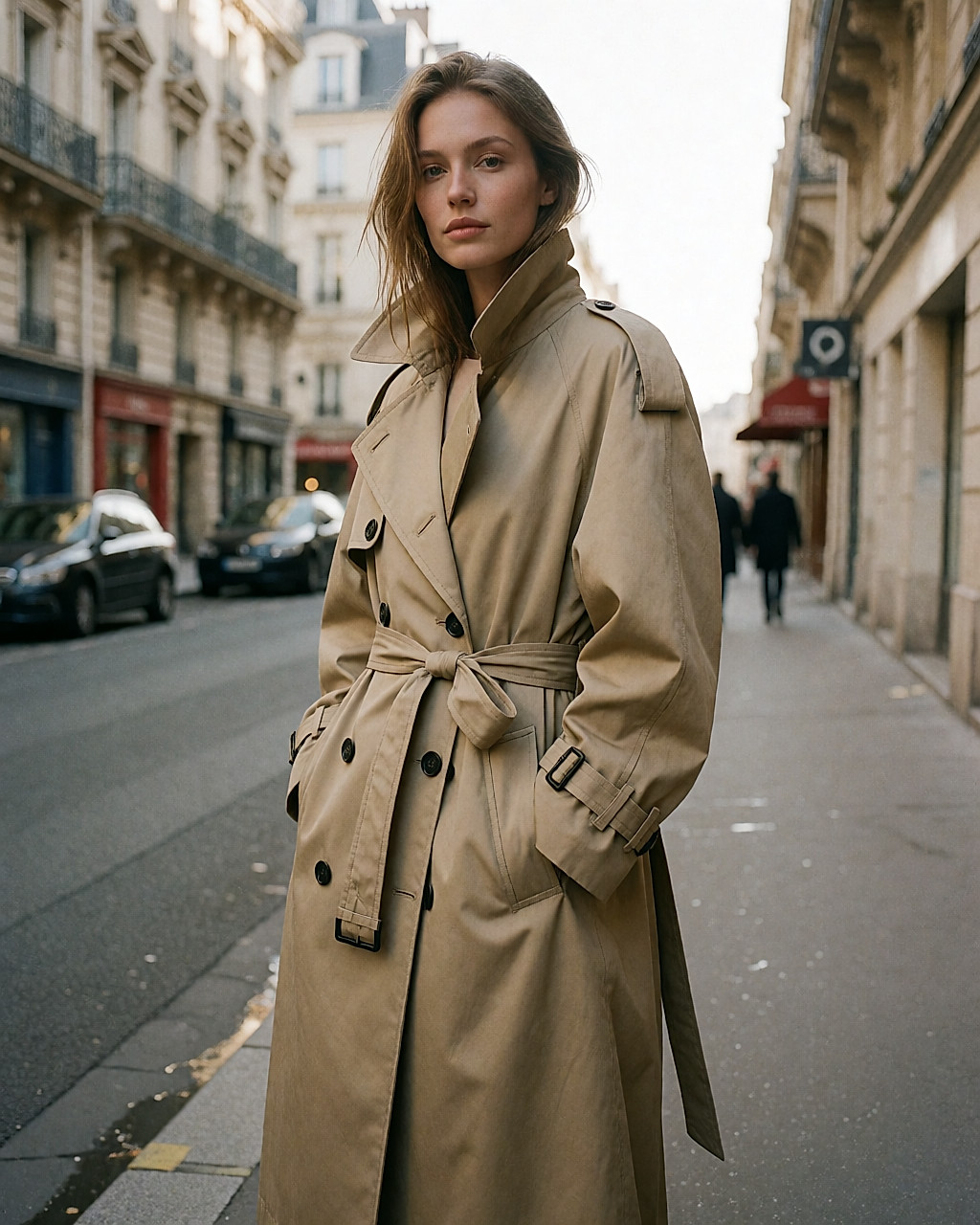
All that's left is the outer layer (a trench, a denim jacket or an overshirt, depending on your climate), your statement piece — a colour you love, a print, a bit of leather, the thing that makes it not just a wardrobe but yours — and one pair of versatile shoes. Derbies, loafers or minimalist trainers: the pair that works with jeans and with a dress alike.

The three rules that hold it together
One loose piece at a time. If the trousers are roomy, keep the top close to the body. Otherwise you drown in your own clothes — and that's never the garment's fault.
Two neutrals, one accent. Your T-shirt, your trousers, your statement piece. If a fourth colour creeps in, it needs to belong to the accent's family, not invent a third one. This is the rule that saves rushed mornings.
The third element. A belt, a pair of earrings, visible socks: one single detail is enough to finish the whole look. It's the gesture that changes everything, and it's exactly the one we forget.
What goes with what
| Key piece | Pairs with | Strongest season |
|---|---|---|
| Thick T-shirt | jeans, fluid trousers, blazer, midi skirt | spring-summer, layered in winter |
| Poplin shirt | jumper, dress, jeans, blazer | all year round |
| Fine-knit jumper | shirt, jeans, fluid trousers | autumn-winter, on its own in mid-season |
| Straight-leg jeans | everything except the dress | all year round |
| Fluid black trousers | T-shirt, shirt, jumper, blazer | all year round |
| Straight dress | jumper over the top, blazer, trainers | spring-autumn |
| Structured blazer | T-shirt, shirt, jeans, dress | all year round |
| Versatile shoes | the entire list | all year round |
Look at the middle column: the pieces that come up most often are the ones that deserve your budget. The ones that appear just once, you can buy more cheaply without anyone noticing.
How to mix by season
In summer, the base stays put: you simply peel off the layers — T-shirt, dress or skirt, light shoes. In autumn, you slip the shirt under the jumper and bring the blazer back out. In winter, you add a T-shirt under the jumper for warmth, tights under the skirt, and the outer layer. In spring, you reverse the whole thing — without buying anything new.
Layering isn't a trend to follow; it's the reason a capsule works for twelve months. What changes is the order you pile things on, not the contents of your wardrobe.
Second-hand: hunting smartly
Charity shops and resale platforms are made for this kind of wardrobe — on one condition: arrive with a list. Without a list, you leave with three prints you'll never wear, and we all know that little scenario.
Look at the fabric before the label. Wool, thick cotton or linen are recognisable by touch and by the composition label. Check the seams at the shoulders and under the arms, any signs of pilling, zips that catch. For a blazer or a trench, an alteration at the tailor's often costs less than buying new — but budget for it, because it's the sort of detail we forget and that quietly pushes the total up.
Budget
On the budget side, prices shift a lot depending on the fabric, the manufacturing, the care and the city where you're shopping. For a thick cotton T-shirt, expect around £12 to £35 on the high street or from a basics brand, and more like £35 to £70 if you're after certified organic cotton and European manufacturing. A poplin shirt sits between £25 and £80; a fine wool jumper between £45 and £130, depending on whether it's virgin wool or a blend. For straight-leg jeans, budget £45 to £120, and £35 to £100 for fluid high-waisted trousers. The structured blazer is where the gap explodes: from £70 in accessible ready-to-wear to over £300 from a tailor. Add £90 to £280 for a decent trench, and £55 to £160 for a pair of versatile leather shoes.
Where to find them? The basics are everywhere: the high street, online, specialist brands. For structured pieces, it's better to choose a label that genuinely takes its cutting seriously. Second-hand, those same pieces often come down to between £5 and £35, provided you're patient. And don't overlook alterations: taking in a blazer or shortening a pair of trousers costs a very variable amount depending on the tailor, the city and the nature of the alteration. A whole capsule built in one go comes in at more like £350 to £750, but spread over several seasons and fed by second-hand finds, the total quickly becomes far more reasonable.
The three-outfits test: before you buy, ask yourself what you'll wear it with at least three times, and whether you can name the pieces. If you draw a blank, put it back. It works online too.
One last thing: your capsule will move. A piece you wore on repeat a year ago may not speak to you today. That's not a failure — it just means your wardrobe is following your life. You adjust, you resell, you start again — and that's exactly as it should be.
Sources
- ADEME, the French agency for the ecological transition — Publications on the environmental impact of textiles, 2026.
- Refashion, the eco-organisation for the French textile sector — Recycling and second-hand, 2026.


Comments
Your opinion matters: rate the article, react and reply to comments.
Comments are moderated; AI-assisted comments are flagged. Text emoticons (8-), :-), <3…) are automatically shown as images.