

The box turned up on a wet Tuesday, and the jacket came out looking the way good pieces always do in the photos: full of promise. Two minutes later, in the hall mirror, the sleeves had swallowed my hands and the shoulder just floated. How did the model make it look like she'd thrown it on and walked out the door? The answer often comes down to one line in the catalogue: the catwalk sells the dream, the wearable line decides what you actually wear.
The collaboration has moved downstairs
For a few seasons now, the capsules between Seoul designers, Tokyo ateliers and tailoring houses have stopped playing out only on the runway. They've come down a floor: blazer, straight-leg trouser, shirt, trench, fine knit. That's where you read the cut, where you feel the cloth and where you find the entry prices — in other words, everything that stands a chance of ending up in your wardrobe rather than in a shop window.
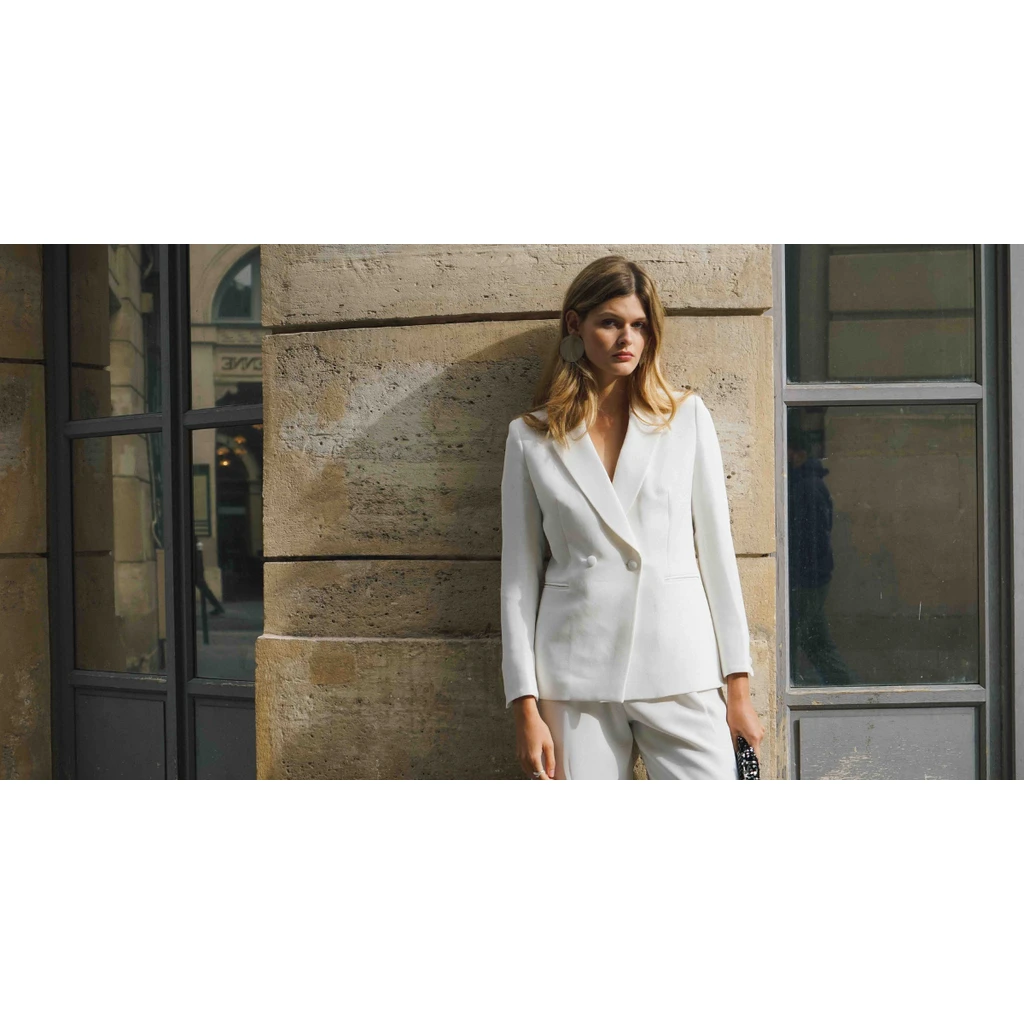
And the houses know it. A catwalk piece gets talked about for a season; a well-cut jacket sold at an entry price brings people into the brand and comes back to the shop the following season. The wearable version of the Seoul–Tokyo capsule is the front door to tailoring: the same atelier rigour, without the made-to-measure budget. The three pieces to shop first, if you're only going to look at three? The blazer, the straight-leg trouser, the thick shirt.
Two schools of cut in the same wardrobe
On the Seoul side, the mood leans towards volume: slightly dropped shoulders, lengths that cover, a carefully studied nonchalance. On the Tokyo side, precision takes over — a clean armhole, drape measured to the millimetre, sober cloth and quietly textured fabrics. Put together in one capsule, these two approaches give a hybrid silhouette: structured at the shoulder, soft everywhere else. Perfect for layering.
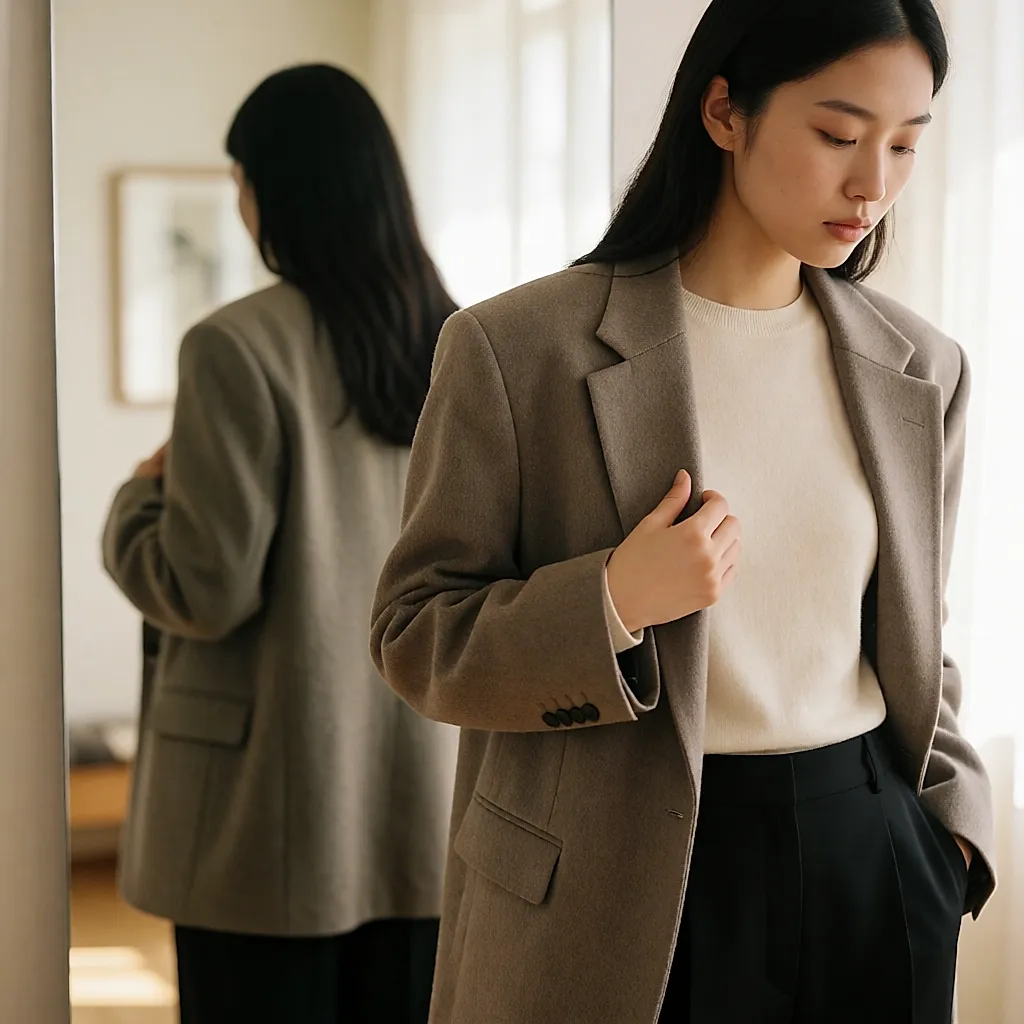
That mix has a very concrete advantage: it forgives. A roomy jacket over a straight-leg trouser, a thick cotton shirt under a wool cardigan, and you've got a full look without piling on three more layers. The question is who it doesn't suit. If you're petite and fine-boned, a dropped shoulder that sits too low can swallow you — go for the defined-shoulder version, even if it means having the length taken up.
Three things to check in the fitting room
First reflex: the shoulder. Does the seam land exactly where your arm begins? Not before, not after. Second: the armhole. Lift your arms, sit down, picture your Monday morning commute. Third: the composition label — merino wool, organic cotton, linen and silk all have a handle you can feel straight away; check the synthetic percentage before you get too excited about a low price.
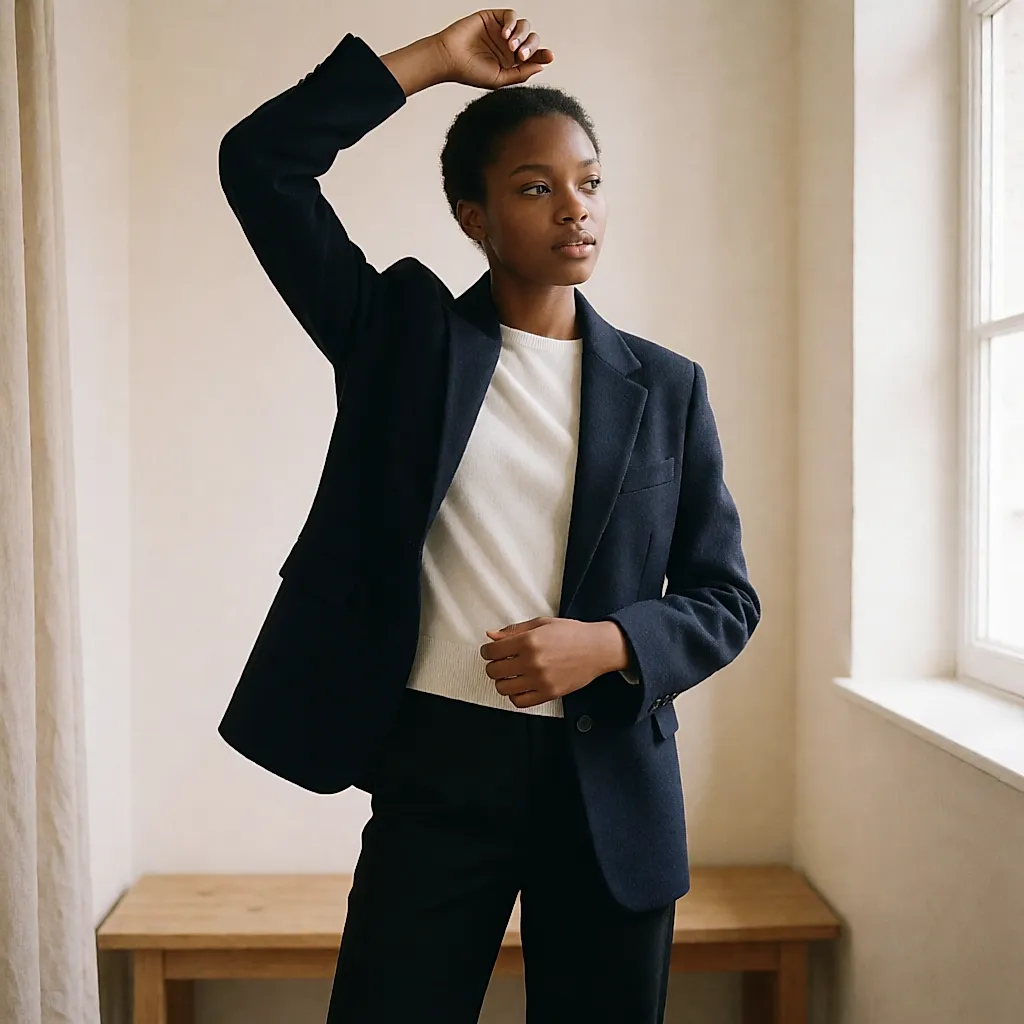
The finishing deserves a look too: buttons stitched through all four holes, a lining that doesn't pull, pockets that don't gape. And don't forget to budget for alterations: hem, sleeves, waistband, expect to pay somewhere around £30 to £60 at a good tailor. A £200 jacket altered for £45 is still a good buy; the same jacket that still floats will stay on the rail, reliably there and no use to you at all.
Budget
On the British high street, a jacket from a wearable tailoring line in a wool blend usually sits somewhere between £180 and £350, a straight-leg trouser between £80 and £160, a cotton shirt between £50 and £110. What drives the price: the share of real wool, the city (London, Manchester and the coast don't price alike), alterations, and where you are in the season — prices shift at the end of a collection.
The smart alternative is second-hand: in consignment shops and specialist resale boutiques you'll come across tailoring jackets at £40 to £80 that a dry-clean and two hems are enough to save. And if the budget is really tight, one well-cut piece worn all winter beats a whole wardrobe that scratches at the shoulders.
Three moves in the fitting room: look at your back in the mirror, raise your arms above your head, then step outside into daylight for two minutes — indoor yellow light is a great flatterer. Take a three-quarter rear photo: that's where you see whether the shoulder keeps its promise.
There's no mystery to it, and that's almost a relief: a good Seoul–Tokyo capsule doesn't turn you into a model, it gives you a jacket that falls right. The rest comes down to one very simple question, the one you ask yourself between two coats on a Sunday evening in November: do you feel like yourself in it — and is it really worth the money?

Comments
Your opinion matters: rate the article, react and reply to comments.
Comments are moderated; AI-assisted comments are flagged. Text emoticons (8-), :-), <3…) are automatically shown as images.