
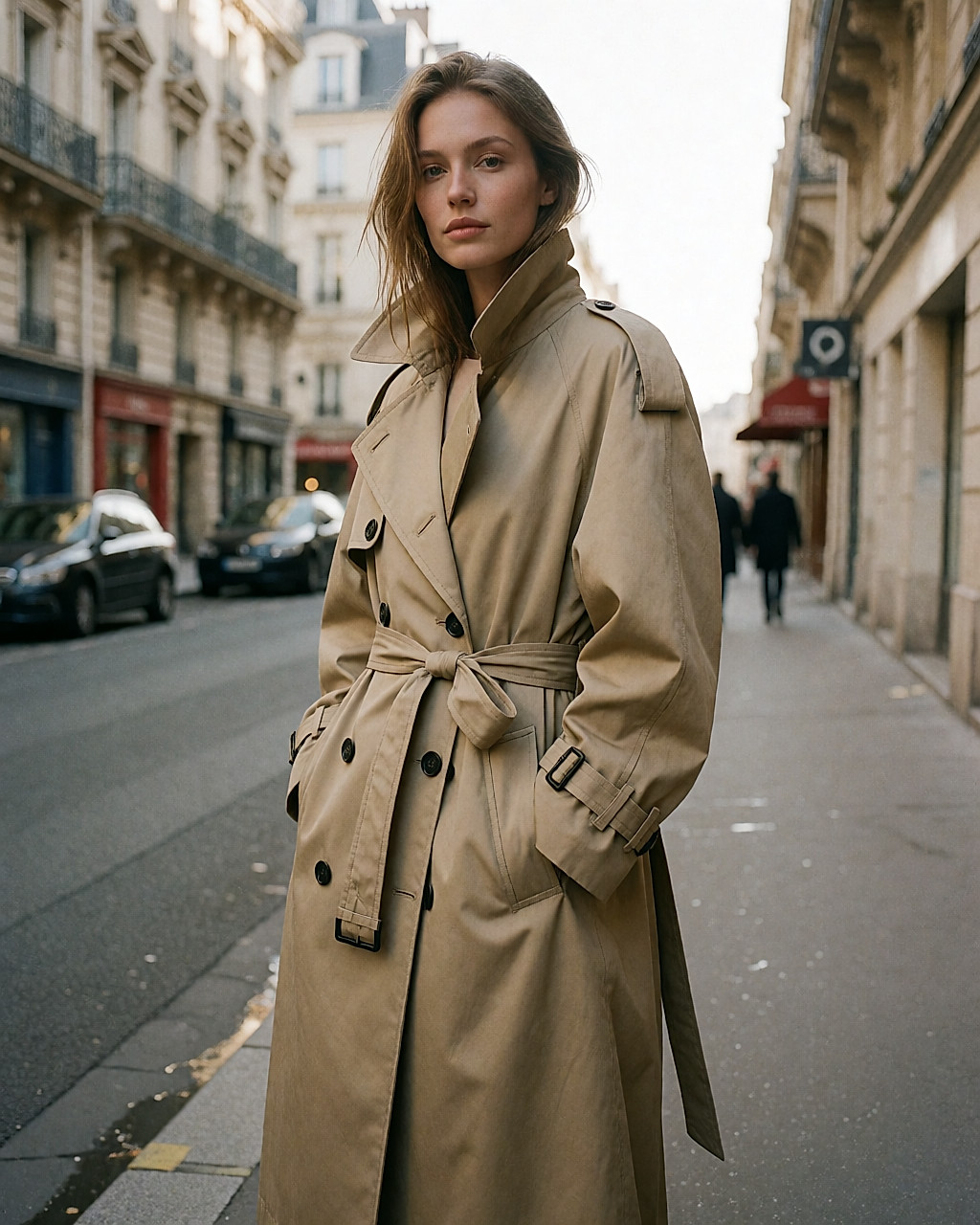
The trench coat, a jacket that never dates
Last Saturday, a friend caught me between errands: 'Is it still worth investing in a trench coat?' She's been circling the idea for two years, convinced the piece feels 'too overexposed'. And let's be honest, she's not completely wrong: you see them everywhere — beige, black, oversized. Except a trench coat isn't a trend; it's a silhouette.
It returns every season in a slightly different form, and it works just as well with jeans as with office wear. It's all in what you choose. A small confession: I haven't tested the styles I mention here; I'm relying on fabric specifications and what I've seen in fitting rooms — and I've been in plenty of fitting rooms.
A history born in the trenches
It all starts with a fabric. Gabardine, a tightly woven cotton developed in the 1870s and later patented in Britain, is dense enough to stop wind and fine rain, yet supple enough to let you move. When the First World War broke out, British officers needed a long coat that protected them from mud without restricting movement.
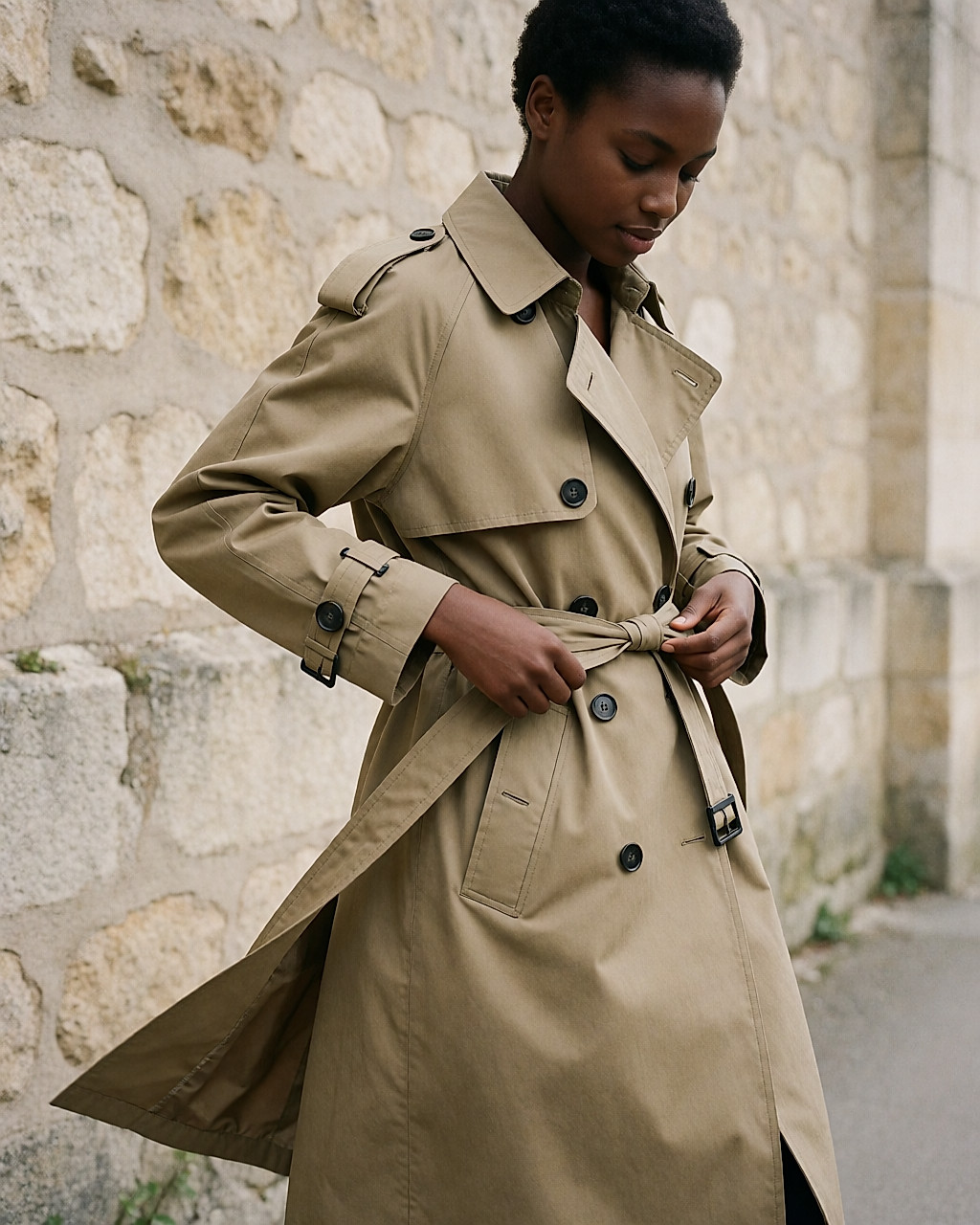
The trench coat then settled into the form we still know today: double-breasted, shoulder tabs, belt, deep pockets. Its name comes simply from the trenches. Another British house also claims to have created it — fashion loves that kind of priority dispute, and it takes nothing away from the garment.
Why it lasts decade after decade
Cinema has a lot to do with it. A detective in a raincoat in a 1940s film noir, a heroine in an evening dress slipping on a trench coat to go home, a taciturn hitman in a 1960s French crime film: these images have established an archetype, the garment that gives you style without effort.
One piece, endless looks — no wonder it never goes out of style. Since then, punk, grunge and minimalist movements have each taken it on in their own way, right through to the full-look approach. What changes? The cut, the length, the fabric. What remains? The structure. That's exactly what we ask of a wardrobe staple: to work with layering without losing its line.

Choosing: fabric, drape, cut
The fabric. A tightly woven cotton gabardine holds its shape and ages well. Bear in mind that the water-repellent finish weakens with washing; a delicate cycle at 30°C, without fabric conditioner, often helps it last longer. GOTS-certified organic cottons ensure organic farming and a controlled processing chain, while GRS-certified recycled cottons trace the proportion of recycled material in the fabric.
If water repellence matters to you, look for 'PFC-free': the criteria of textile certifications such as OEKO-TEX regulate these chemicals. As for waxed cotton, it protects very well, but its texture needs regular re-waxing.

The drape. The shoulder seam should stop right at the edge of your shoulder. Too wide and you disappear inside it; too narrow and you'll never fit a jumper underneath.
The cut. Double-breasted for a classic look, single-breasted for a cleaner line, oversized for easy layering — as long as you watch the length.
The three fitting-room checks. Shoulders: the seam sits at the edge of the shoulder, not beyond. Belt: tied, it defines the waist without pulling the fabric. Length: knee-length for the classic, mid-thigh for a more casual version. If in doubt, knee-length will be the one you wear for longest.
How to wear it without overthinking
Closed and belted, it draws a clean silhouette in seconds — it's the move that changes everything. Open, with the belt tied at the back, it lengthens the line. For layering, a fine jumper is enough; with a thick roll-neck, go one size up, otherwise the sleeve pulls.
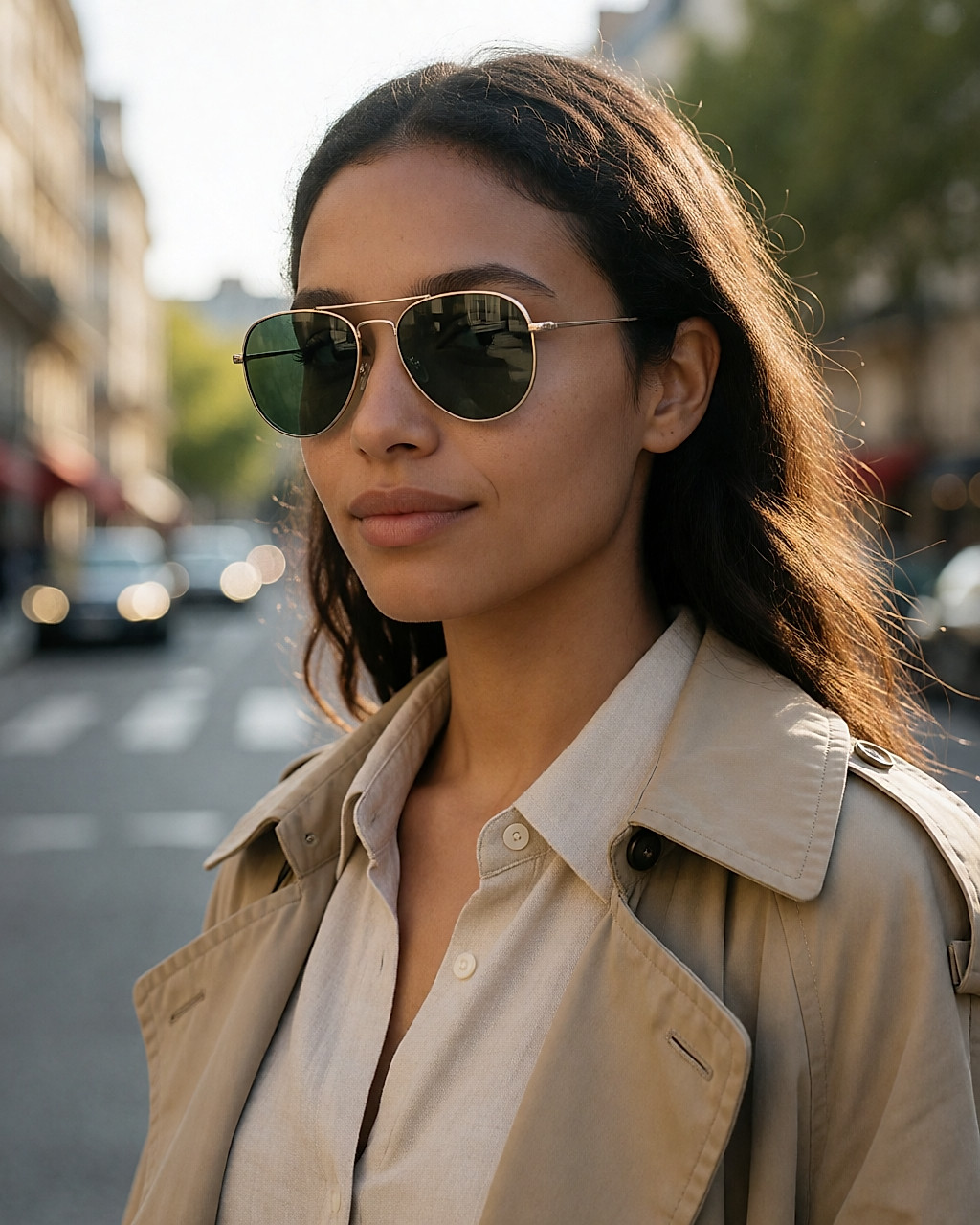
Colour-wise, sand beige is still the easiest to accessorise, black sharpens the outfit, khaki embraces the utility feel. Shoes-wise, there are no rules: boots, loafers or trainers change the look depending on what you're after. If you want a statement piece, choose one longer or more structured than usual — contrast is what makes the look.

Budget
Charity shops, vintage shops and online resale: expect around £20 to £80 for vintage, sometimes with denser cotton than new. This is often where you get the best value for money.
High-street retailers: £60 to £150. Check the cotton content and whether it has a lining.
Mid-range and premium, European-made: £200 to £600. You're paying for the fabric, the cut, the water-repellent finish, and sometimes in-store alterations.
Luxury: from £1,500 upwards. A long-term purchase, where the cut matters most.
What affects the price: the fabric (organic cotton, recycled cotton, blends), where it's made, the lining, the water-repellent treatment, the brand. A hem or sleeve adjustment often costs £15 to £40 at an alterations tailor. If you're torn between two styles, choose the one whose shoulders fit properly: everything else can be altered.
Sources
- Media — Musée de l'Armée: collections and resources on uniforms during the First World War, accessed 2026.
- Media — ADEME: publications on the environmental impact of textiles and extending the life of clothes, accessed 2026.
- Media — Global Organic Textile Standard: organic cotton certification standard, accessed 2026.
- Media — Textile Exchange: Global Recycled Standard for recycled material, accessed 2026.
- Media — OEKO-TEX: limits and restrictions on substances, including perfluorinated compounds, accessed 2026.

Comments
Your opinion matters: rate the article, react and reply to comments.
Comments are moderated; AI-assisted comments are flagged. Text emoticons (8-), :-), <3…) are automatically shown as images.