
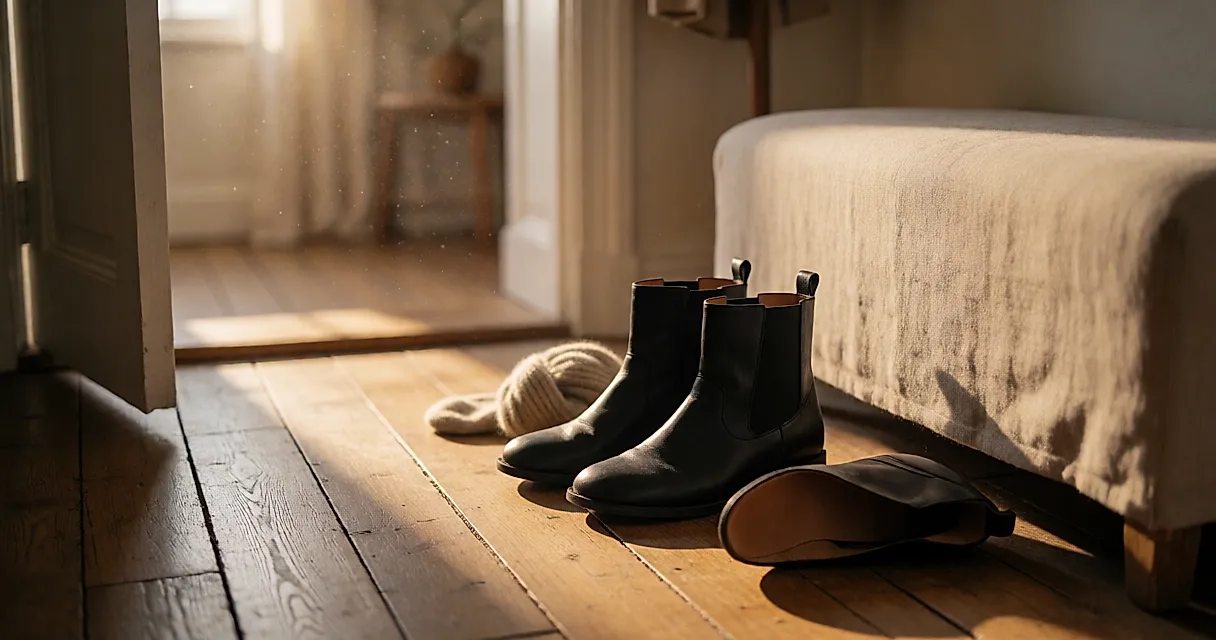
Sunday night, 10.40pm. You take off the ankle boots you've worn since Monday, and the inside feels warm, almost soft—not remotely glamorous. They still look the part: polished leather, a clean sole, no suspicious marks. And that's exactly where it all happens: inside, where no one looks.
The culprit works in the shadows
A foot spends the day shut inside leather, between a lining and a layer of foam. It sweats—that's its job, and we can hardly blame it—and that moisture has nowhere to go. It settles into the lining, the insole, the seams. Then the shoe sets off again the next morning, still warm inside, and the cycle starts over. Who actually thinks to air the inside of a boot?
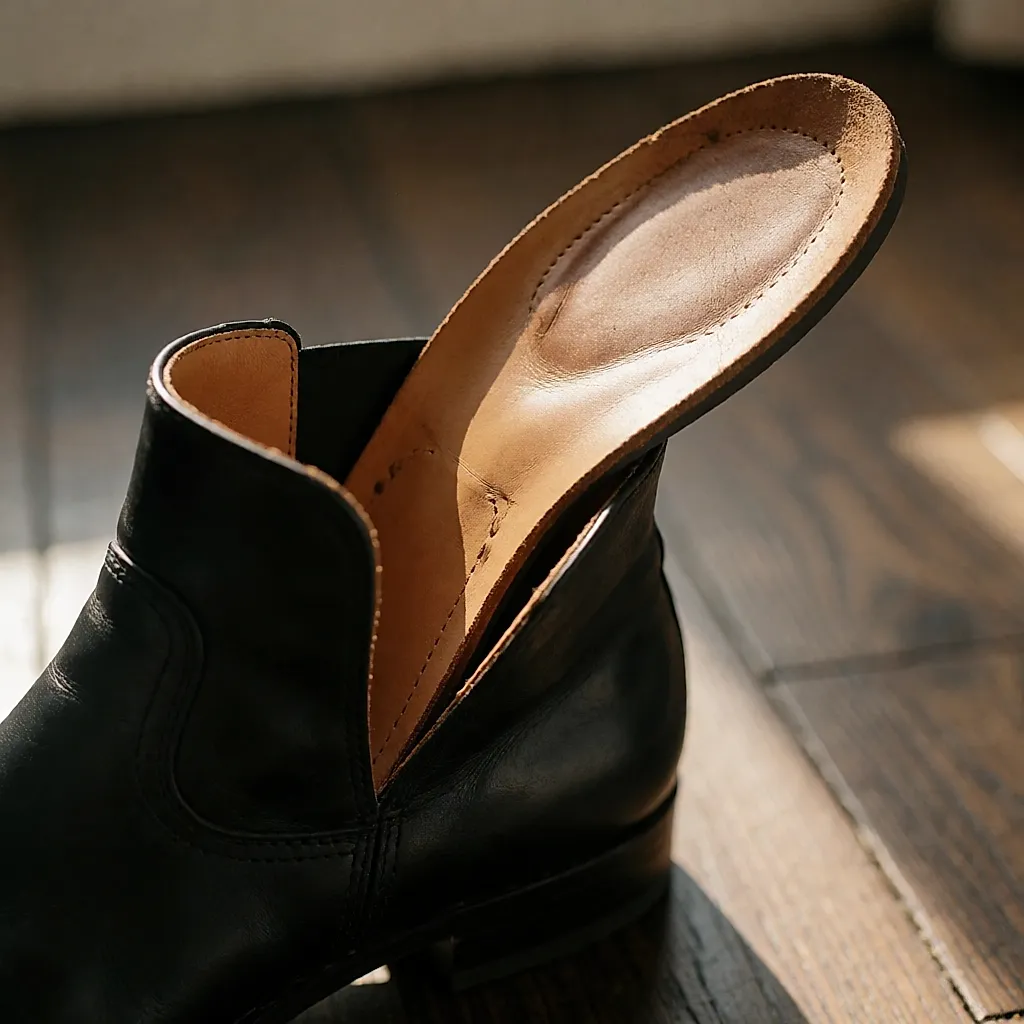
The outside, meanwhile, lies with remarkable confidence. A quick wipe, a little wax, and the leather looks itself again. Meanwhile, the foam keeps the shape of your foot, the seams are under strain and the support quietly loosens—none of it visible. By the time you feel that 'they just don't hold me any more', it has been weeks since they did. A bit like the family sofa: the cover is immaculate, but the cushions have moulded to everyone.
A jumper, a shoe, the same logic
You wouldn't wear the same wool jumper three days running, would you? It loosens at the elbows, you let it rest for a day, and it springs back. A shoe works in exactly the same way: leather, lining and foam need 24 hours between wears to shed moisture and regain their shape. In practice, a day off is often enough—and two pairs in rotation will cover almost any schedule.

How many do you need, then? Two to start with, three for an easy mind, especially if you walk a lot or your feet sweat freely. Each pair clocks up fewer hours, so it wears more slowly and dries between outings. It isn't magic, just arithmetic.
Shoe trees, fresh air, and absolutely not the radiator
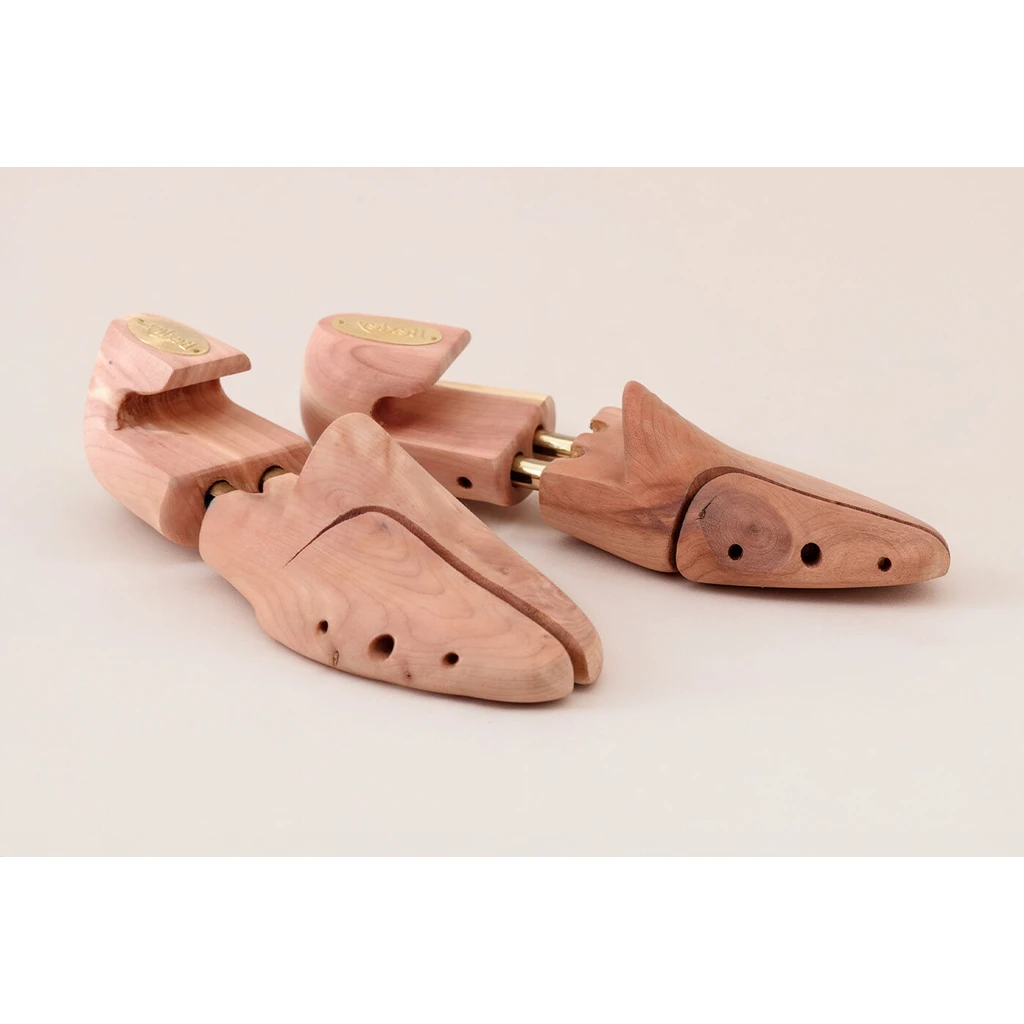
When you get home, loosen the laces, take out the insoles if they're removable, and let the pair breathe in the open air rather than in a closed cupboard. Then slide in cedar shoe trees: the wood absorbs moisture and the shape holds the upper. Cedar is a natural material, with no added synthetic fragrance, and one set of shoe trees can serve several pairs—a good buy that lasts.
Caught in a November downpour? Crumpled newspaper inside, and patience. Avoid the radiator, though: leather dries out and glues don't like heat. A radiator is not a shoe dryer, and neither is a cupboard.
What rotation can't fix
Let's be honest: alternating pairs won't resurrect a sole worn as smooth as a mirror, or leather that has split. It slows interior wear; it doesn't cancel wear altogether. A much-worn pair will end up at the shoe repairer one day, and quite right too.
And if your shoe budget only stretches to one pair, rotation will have to wait: better one pair properly aired every evening than three pairs heaped up while still damp. In that case, drying becomes the priority—not building a collection.
The three purchases that count
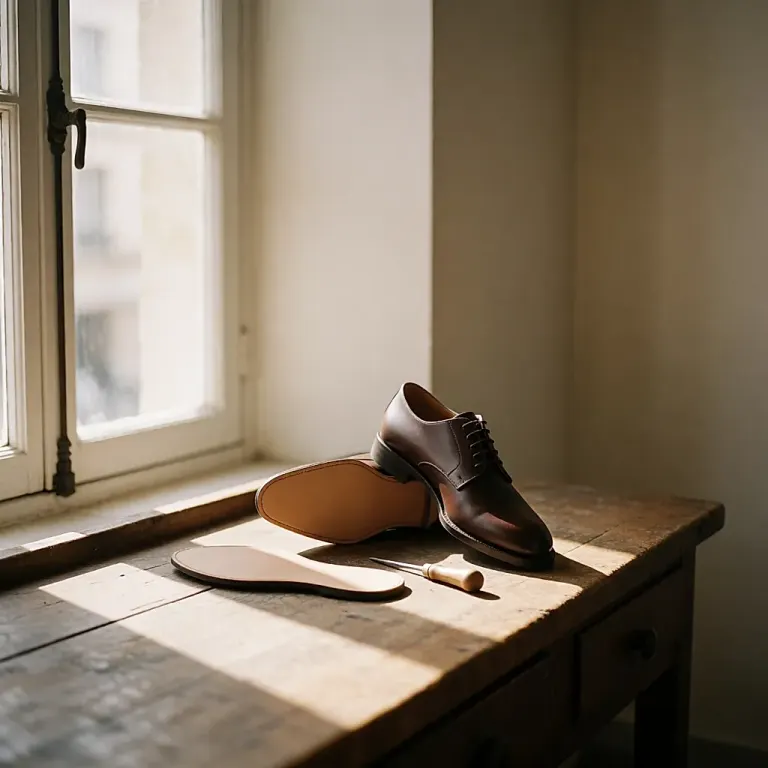
Cedar shoe trees cost £15 to £40 a pair depending on the finish, from a shoe repairer, hardware shop or online. A nourishing cream with beeswax or plant oils, plus its brush, costs £10 to £25 and lasts for months. Expect to pay £40 to £90 for resoling, depending on the city and the type of sole—often less than a new pair of decent boots.
Three purchases, two habits. Two pairs drying in turn are worth more than a cupboard full of tired ones.
The evening ritual, in three steps: loosen the laces, take out the insoles, slide in the shoe trees. Two minutes flat, and the pair is ready for tomorrow—or the day after, which is even better.
A shoe doesn't die from having been walked in: it dies from sweating in the cupboard. So alternate, the way you alternate stitches in knitting—a day's rest, and the stitch recovers its place. Your favourite pair will repay you in seasons, not weeks.


Comments
Your opinion matters: rate the article, react and reply to comments.
Comments are moderated; AI-assisted comments are flagged. Text emoticons (8-), :-), <3…) are automatically shown as images.