
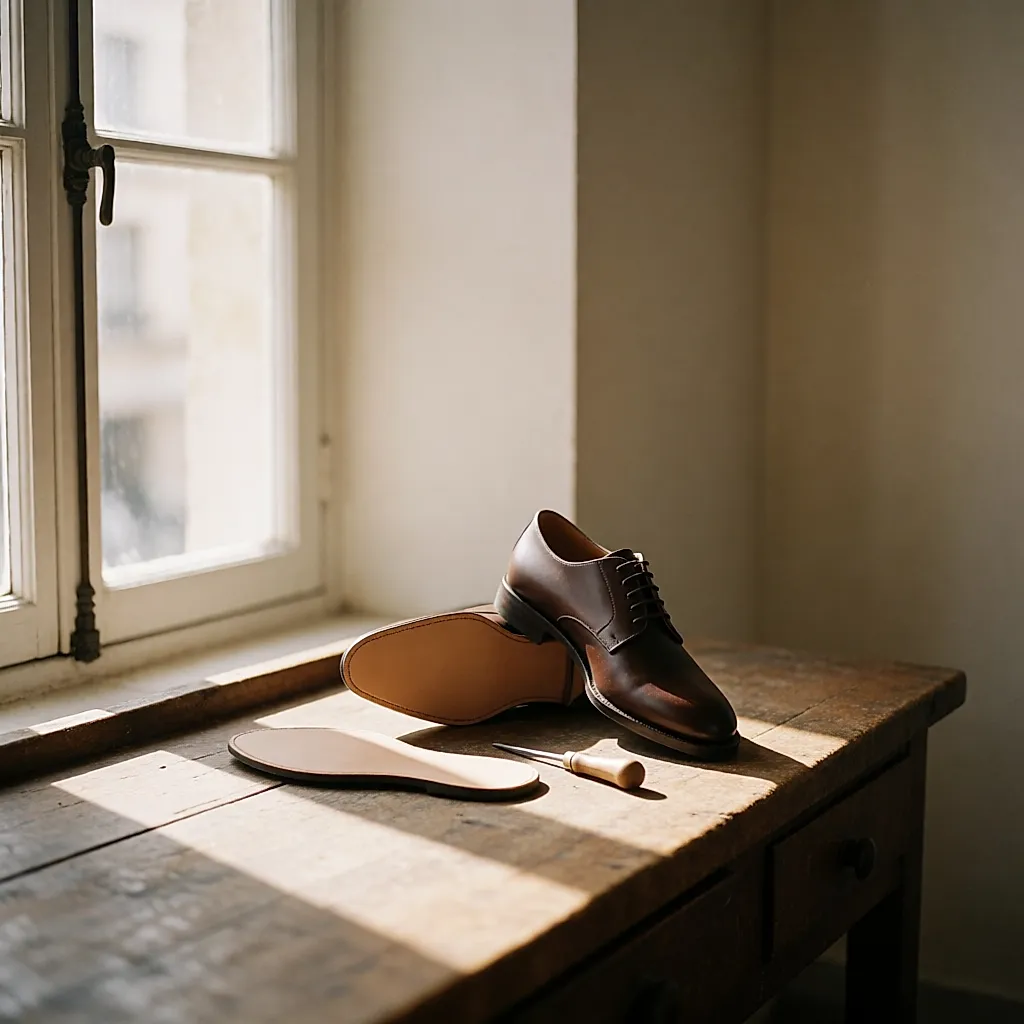
There is a moment when you just know. You get home, sit down, take off your shoe and turn it over. Along the edge of the sole, the material has worn as thin as paper — no hole yet, just that worrying translucence that tells you what is coming. What if the best time to repair is precisely then, while nothing is actually broken?
Before the hole, not after
The instinct is often to wait. You tell yourself there is still material left, that you will see how it goes, that shoes are made to be worn. But between "worn" and "worn through" there are only a few millimetres — and once water gets in through a crack, the lining soaks it up, then the leather, then the structure. What would have been a simple resole becomes a rebuild. In other words: the bill gets bigger, and the pair is not always saved.

In practice, you act when the sole is thinning in the pressure areas — heel, forefoot — and a stitch starts to feel raised under your fingertip. Put another way: as soon as you can feel the material is about to give, not when you can see it give. Resoling early gives a pair a proper second life; resoling late is trying to rescue a shoe that has already soaked up November rain.
What a new pair can never have
This is the real argument, and there is nothing sentimental about it. The leather of a worn pair has softened around your gait, your arch, the exact shape of your toes. It has taken your mark — that broken-in feel cobblers know well, a suppleness that belongs only to you. A new pair, even the identical model in the window, starts from zero: heels that blister and bleed for the first few outings, an upper still stiff, a sole that slips.
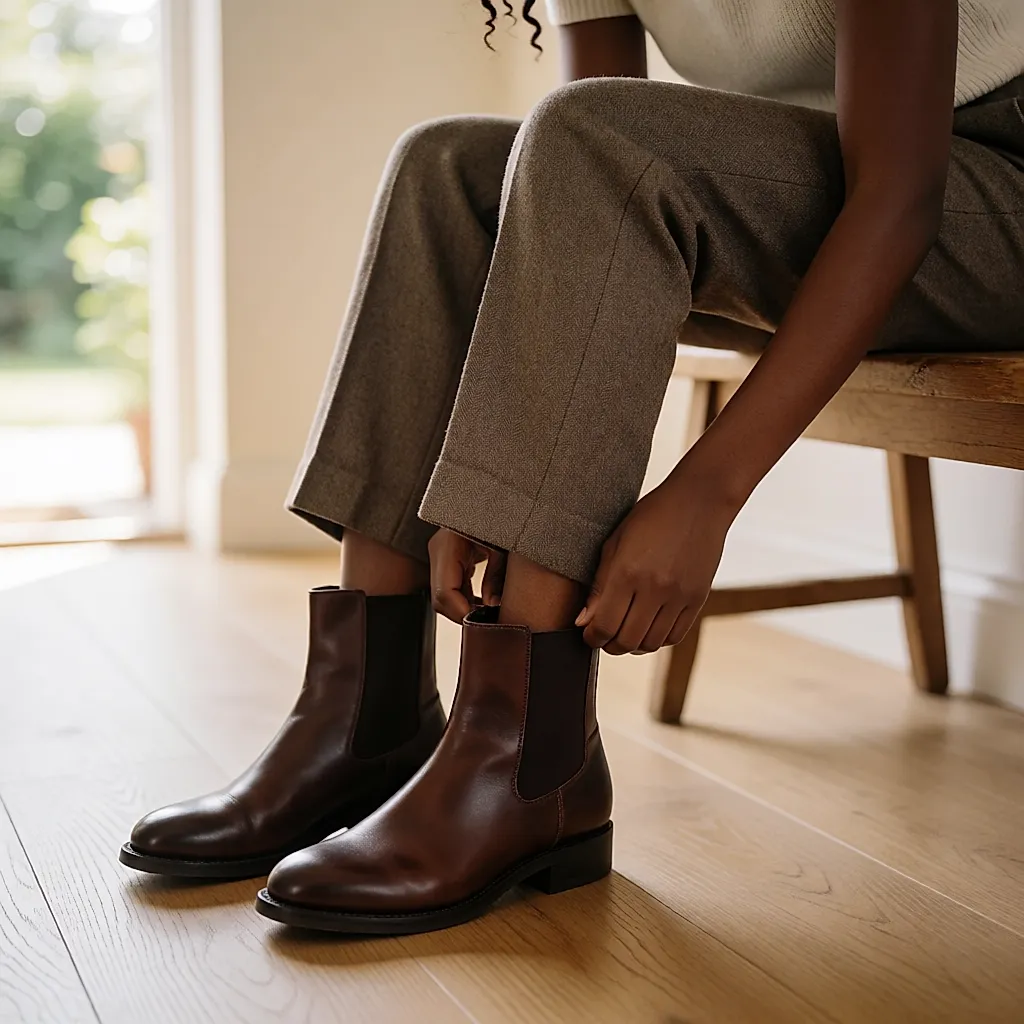
Resoling, by contrast, keeps the upper, lining and insole — everything that has moulded to the foot. You keep the silhouette of a pair you know, the look of leather that has lived without being tired, and none of the breaking-in. No pair straight out of the box can do that. The typical candidate? An upper still in good shape, a sole near the end of its life. That is exactly where repair is most cost-effective — and most discreet.
At the cobbler's, in practice
You take the pair in and explain what you want — a sole protector, a full resole, a heel repair. The cobbler looks first at the construction: stitched or glued. Not everything can be resoled in the same way, and some pairs cannot be resoled at all. A cheap glued sole will sometimes take a sole protector, but not a new stitched sole.
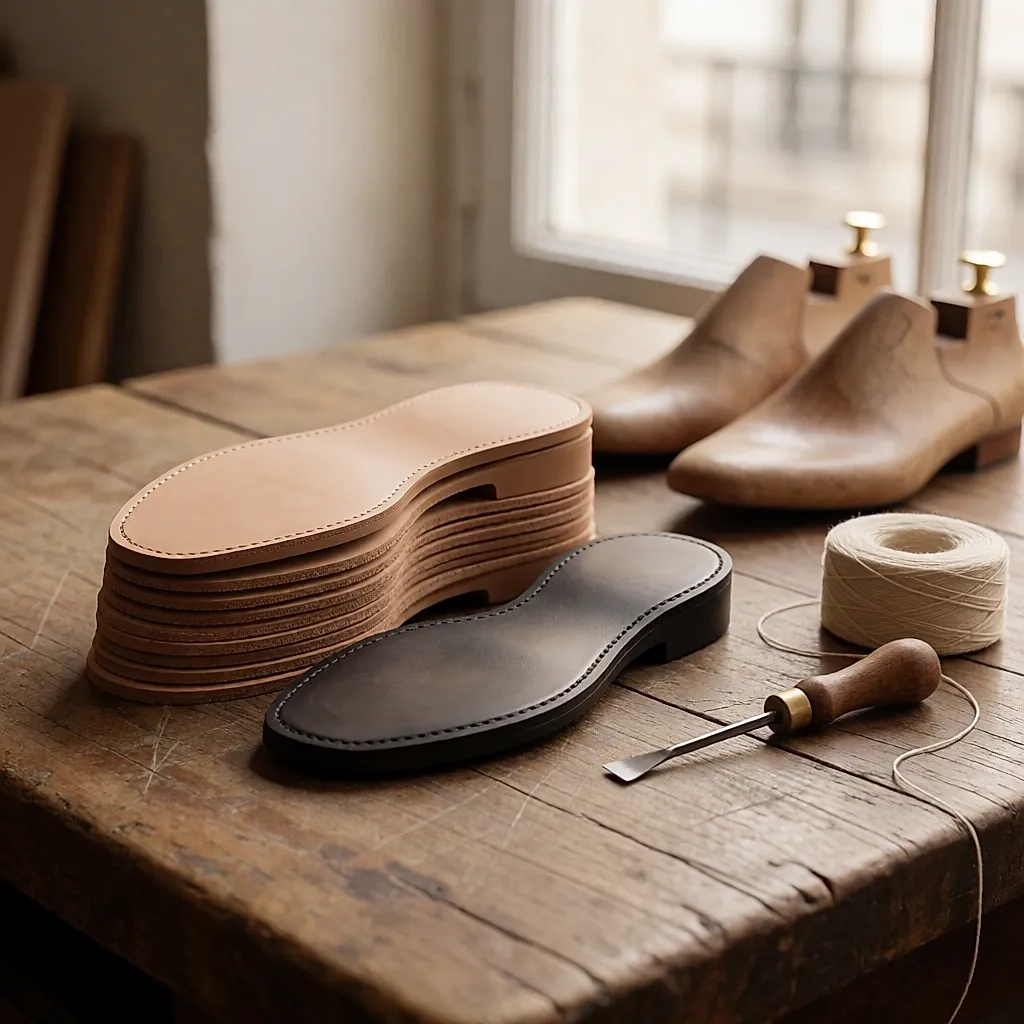
On a stitched pair, the work is more straightforward: the sole is removed, a new one is fitted, then stitched back on. Turnaround often runs from a few days to two weeks, depending on the workshop and the complexity. Will a sole protector be enough, or does the whole sole need replacing? The answer depends on the construction, and the cobbler can see it in 30 seconds. Then ask which sole will be fitted: natural leather, ideally vegetable-tanned, remains the most elegant but slips in the rain; rubber grips better on wet ground, though it wears a little faster on asphalt.
The backlight test: hold the sole between two fingers, up to the light. If a sliver of light starts to show under the heel or forefoot, there is still time. When that sliver becomes a window, you are no longer repairing but rescuing.
What it costs
As a rough guide, a standard resole at a local cobbler generally comes in at around £40–£70. A full resole with stitching is more like £70–£120, sometimes more for high-end stitched construction. Smaller jobs — sole protectors, toe plates, heel repairs — often sit between £15 and £40. In cities, prices are usually higher than at a workshop in a smaller town, and the range depends heavily on the construction.
Set against shoes that cost £150 or more, the maths is quick. With a £60 pair, the question is fair: the repair can come close to the price of new. At that point you are not resoling to save money, but to keep a leather you love, a colour that goes with everything, a shape that flatters the ankle. It is a choice, not a calculation.
Resoling is, at heart, the most understated move in the wardrobe — invisible, unspectacular, terribly effective. A cobbler, a new sole, and a few more years in a pair that has already taken your shape: that is the quietest smart buy in the wardrobe. Some call it circular fashion; you could also call it common sense, well shod.



Comments
Your opinion matters: rate the article, react and reply to comments.
Comments are moderated; AI-assisted comments are flagged. Text emoticons (8-), :-), <3…) are automatically shown as images.