

You walk past a shop window, a lilac jumper catches your eye, and the reflex kicks in straight away: 'lovely, but what would I wear it with?' It's the question we all ask the first time, and it deserves a proper answer. Good news: lilac is one of the easiest shades to bring into a wardrobe, as long as you work out its undertone before you get your card out.
What exactly is lilac?
Lilac is a very pale purple, made from blue and red, lightened with white. What changes everything is not the shade itself but its undertone: cool, it leans grey; warm, it leans towards powder pink. To work it out, there's one reliable test: look at the piece in daylight, never under fitting-room strip lights. We've all made the mistake: a lovely purple in the shop that turns dull once you get home.
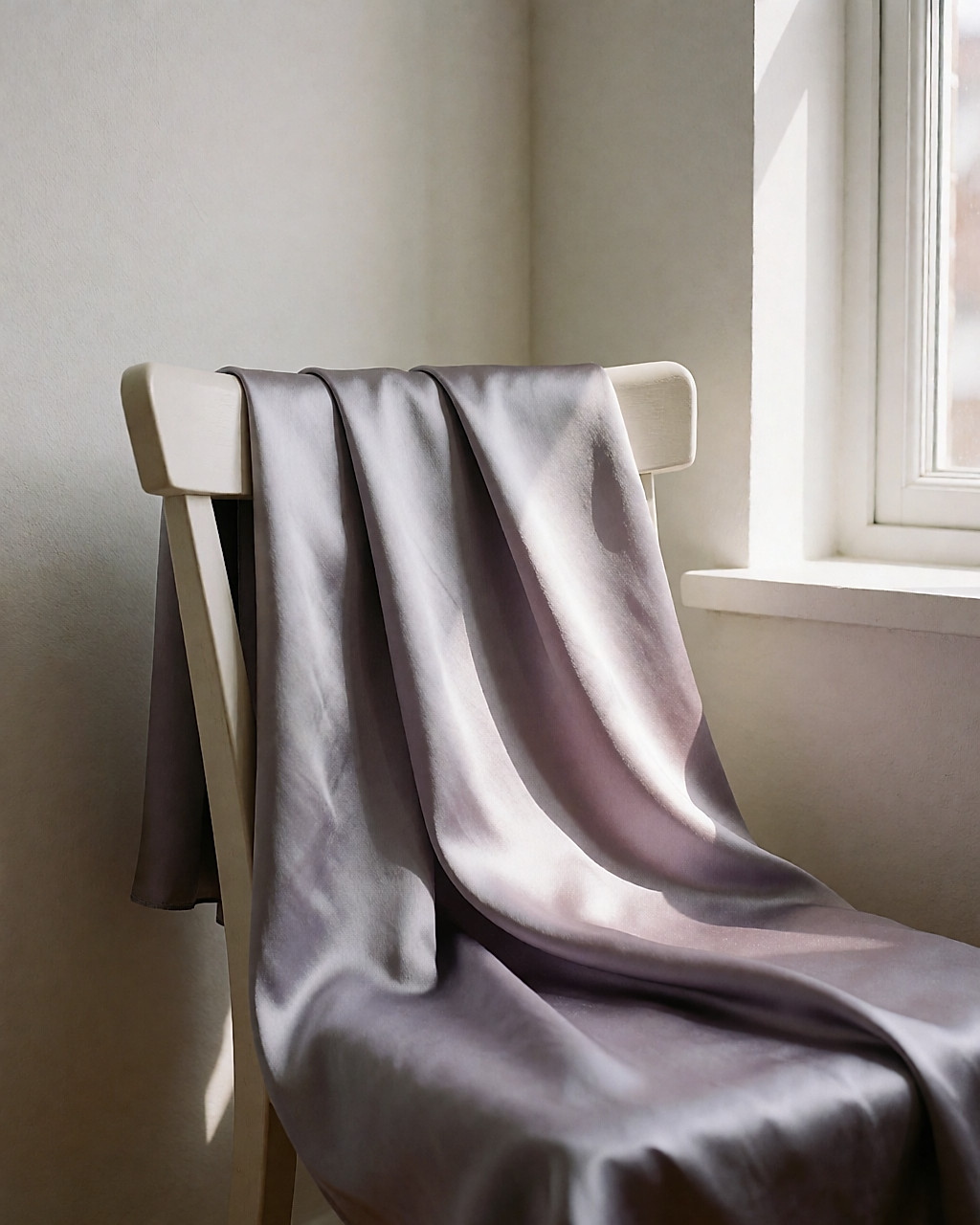
The drape of the fabric matters too, and it's probably the point we forget most often. On satin or crêpe, the colour gains presence and starts to shine; on bouclé wool or matte jersey, it fades and turns almost into a muted grey. Same dye, radically different effect. So the fabric matters as much as the shade.
How to slip it into your wardrobe
Lilac works at two speeds: as a statement piece, or as a subtle touch. When you're starting out, begin small — a scarf, a bag, a pair of trainers — to test your tolerance for the colour without committing. Still nervous? A simple accessory is enough for the test. Only then move on to layering: a lilac jumper over a white shirt, a beige blazer on top. The rule that saves almost every outfit: one strong lilac piece per look, with the rest of the wardrobe in neutrals, to let the colour breathe.

And what about an all-lilac look? Possible, yes — but avoid a flat block of colour from collar to hem. Instead, use two shades, a lighter top and a deeper bottom, and create some relief so you don't end up looking costumed. A lilac print on a cream background works well too: the colour becomes texture rather than a block. That's often when all-lilac works best, when you stop piling on the same shade.
Pairings that work — and those that don't
White, beige, black, brown: with those four, you can't go wrong. White brightens, beige softens, black gives structure, brown warms. We particularly like lilac with brown, which looks smarter without trying too hard.
Two classic pitfalls, though. Lavender first: too close to lilac, it creates a soft blur with no contrast. Orange next: it clashes directly with the violet undertone. Lilac and lavender can work, but only if you play with texture, a fluffy knit against a crisp cotton, otherwise the whole thing looks washed out.
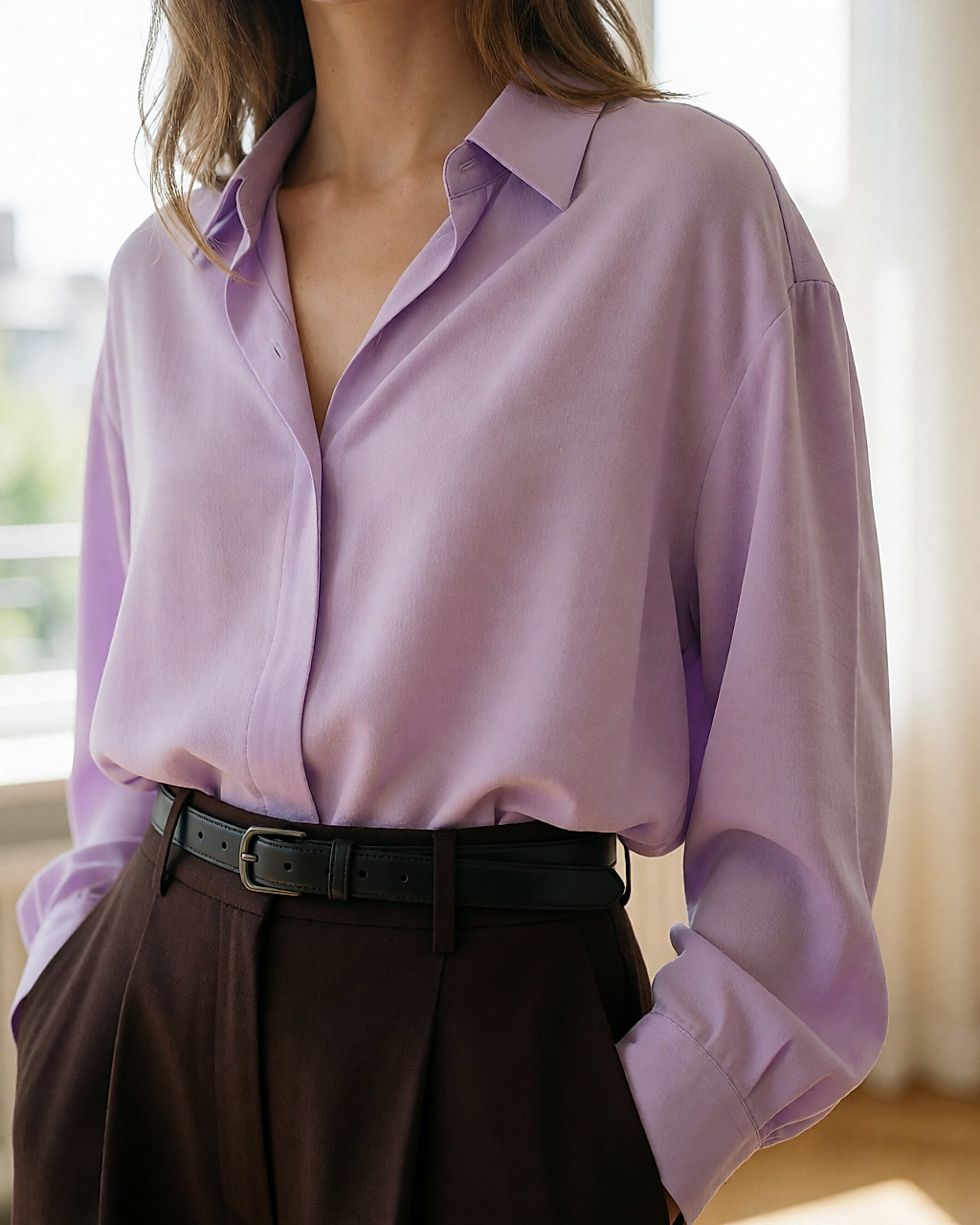
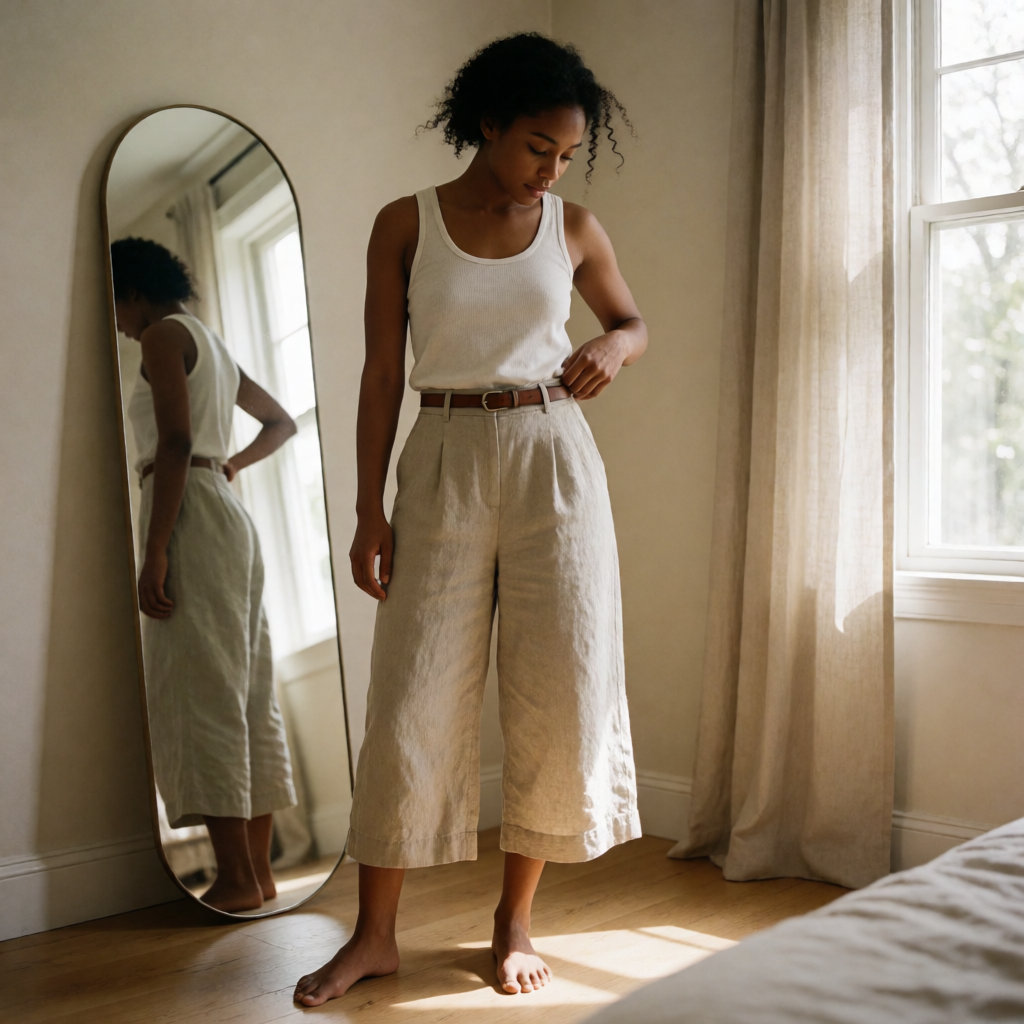
The move that changes everything: before you commit to a lilac piece, photograph it next to three bottoms you already wear — raw denim jeans, black trousers, a beige skirt. If you like two of the three pairings, buy it. If not, walk away without regret.
Lingerie and statement pieces
In lingerie, lilac has a real advantage: it softens a lace set without tipping into bubblegum pink. Look for soft fabrics, a bra with fine underwiring, matching knickers — and choose certified fibres rather than a synthetic satin that shines too much.
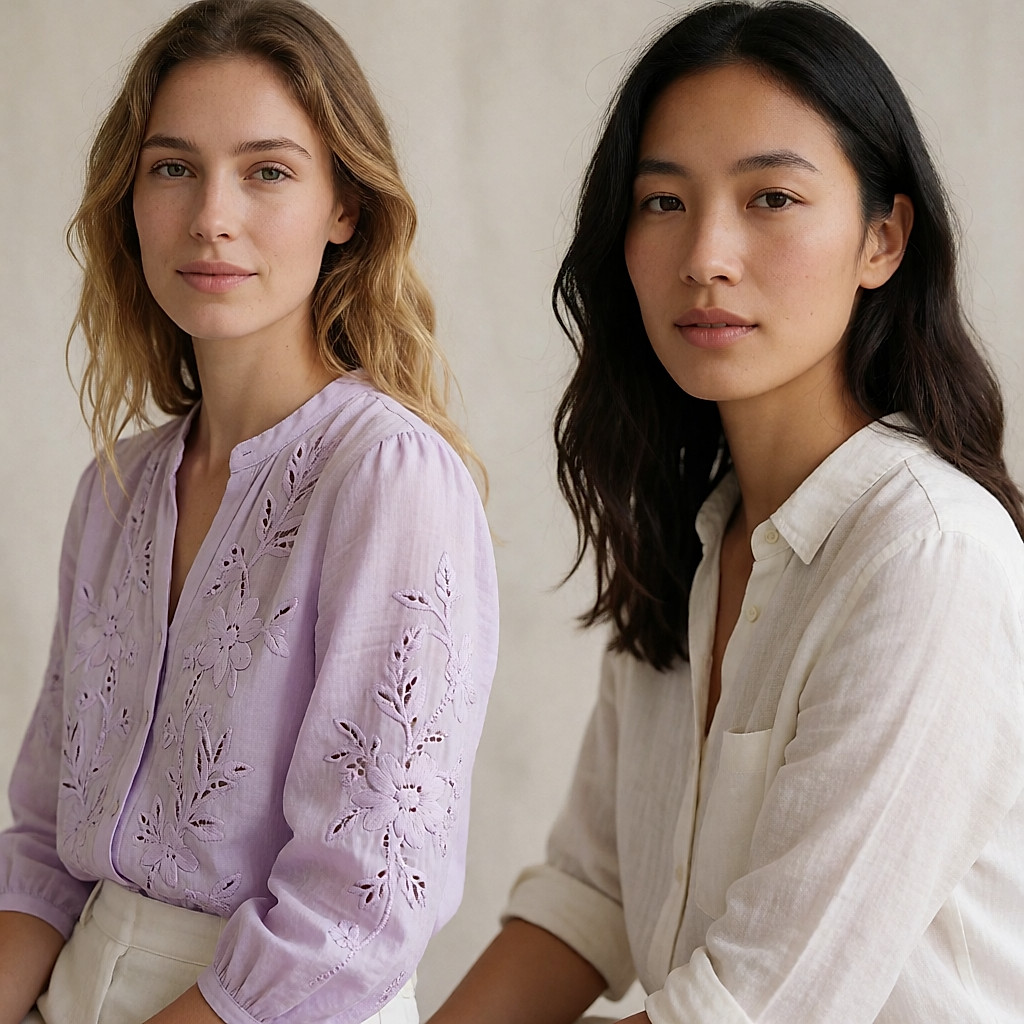

For standout pieces, lilac works well on an embroidered blouse, ideal in summer, on a funnel-neck zip-up jacket with a contrast zip for cooler evenings, or on a lace-strap top slipped under a tailored jacket. And in menswear, a short-sleeved lilac printed shirt works very well in a minimal sportswear style.
Budget
Expect to pay around £20 to £50 for a T-shirt or basic knit top on the high street, and more like £50 to £130 from mid-range brands. An embroidered blouse sits in the £35 to £100 range, a lightweight jacket from £70 to £210, and a lingerie set from £25 to £75. Versions in certified organic cotton or recycled fibres often cost a little more — that's the price of traceability you can check. On the budget front, second-hand remains the best value for this kind of colour: often barely worn, so barely used.
For sustainability, look at three concrete criteria: a fabric with certification (GOTS organic cotton, European linen), dye without heavy metals, and a considered end of life — replaceable buttons, a simple cut that can be repaired. Bear in mind, though: a 'natural' claim with no certification proves nothing.
So, are you tempted? If lilac still feels intimidating, try it first on an accessory, and give yourself a season to see whether it finds a place in your everyday wardrobe.

Comments
Your opinion matters: rate the article, react and reply to comments.
Comments are moderated; AI-assisted comments are flagged. Text emoticons (8-), :-), <3…) are automatically shown as images.