

At the same diameter, a hollow hoop weighs less than a solid ring. And it is almost always the hollow one you forget about until bedtime. Not because it looks better — because it does not tug, does not pinch, and never taps you on the shoulder mid-afternoon.
The weight figure nobody prints on the label
A hollow hoop is a tube: the metal runs round the outside and the middle stays empty. A solid hoop is a bar of metal from the solder to the clasp. Side by side on a display stand, the two can look like twins. On the lobe, though, the difference registers fast — and by the fifth hour it is usually unmistakable.
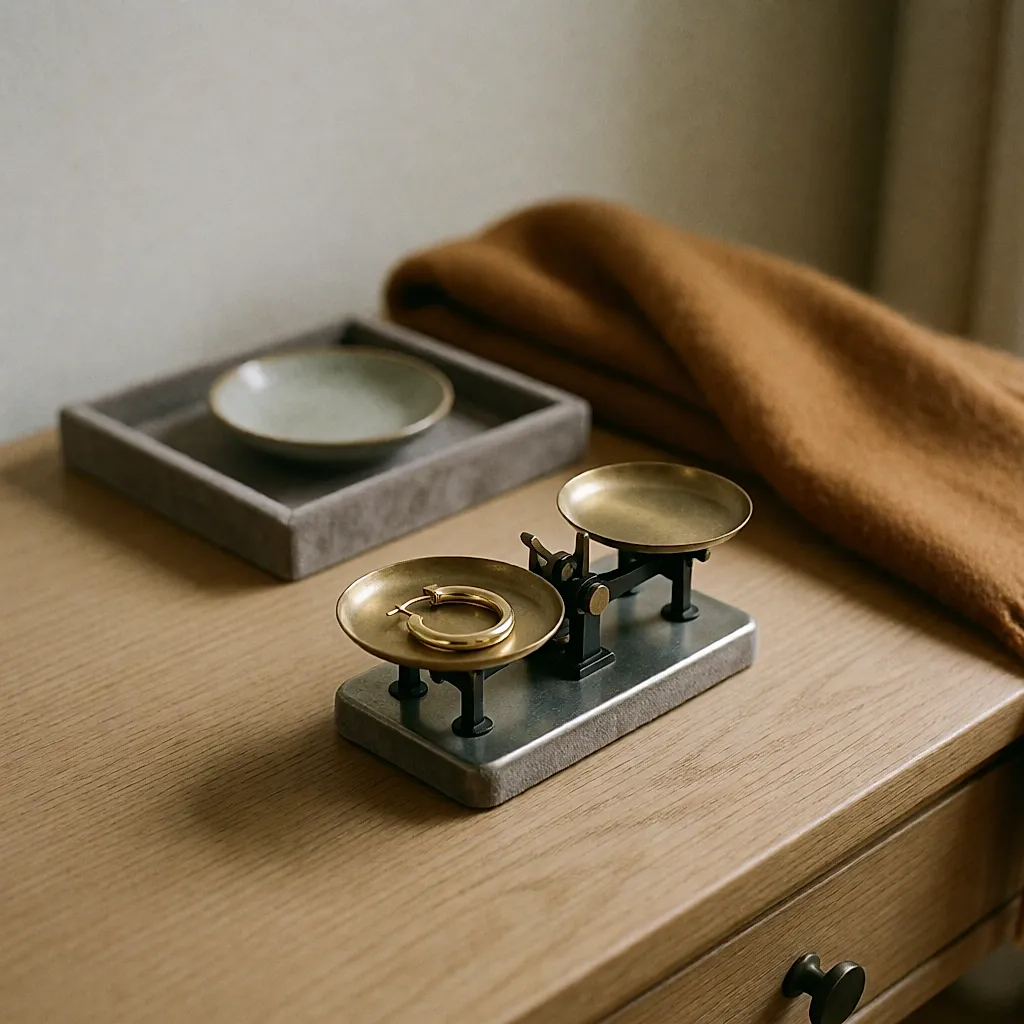
Weight does not simply pull downwards. It decides how the earring sits when you move, when you are on the phone, when you pull a jumper over your head. If your lobe is on the thin side, a slightly heavy hoop will slip lower and tend to tip forward. How many times have you taken an earring out with a sigh, without ever working out why it was bothering you?
The clasp, the little mechanism that makes or breaks the day
There is the hinged clasp, the one that clicks shut and closes itself. The screw fitting, more secure but needing two fingers and a certain amount of patience. The lever-back, which opens and closes with a press. And the classic hook, perfect for drop earrings but less reassuring on a heavier hoop.
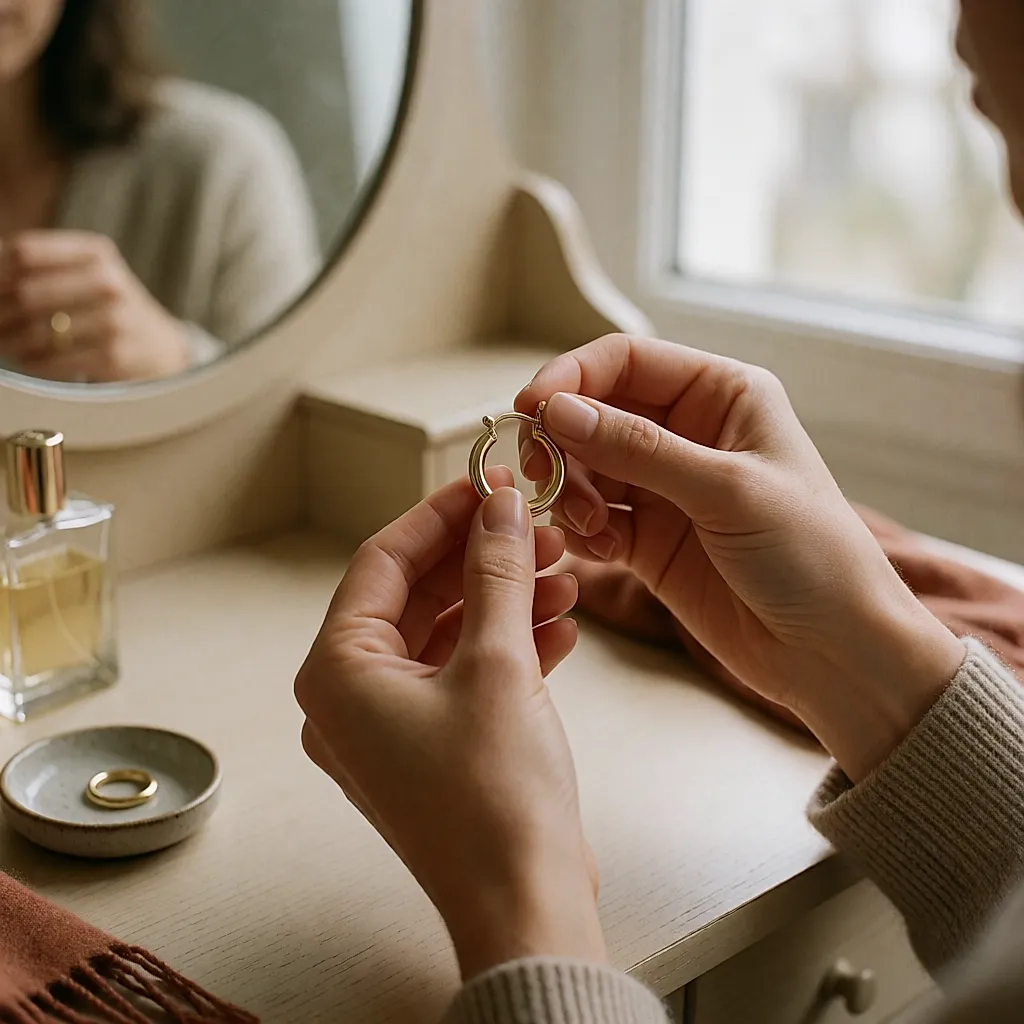
The right clasp is the one that goes on one-handed, with no mirror and no contortions. Too loose, and your hoop leaves with your scarf; too tight, and it pinches until you take the earring out before lunch. Do you think about the clasp at the till? Yet it is the thing that decides whether you keep the pair or they end up in the drawer of regrets.
In real life, jewellery should be forgettable
Everyday hoops have to survive your day, not just your reflection in a shop window. The phone wedged against your ear, headphones on, a polo neck pulled over your head, hair pushed back, the pillow at night: all small moments that test an earring without warning. A hoop that catches in your hair or clatters against a headphone band will not make it through the week.

This is where the hollow hoop comes into its own: light, forgettable, its clasp doing its job without you noticing. A very fine solid hoop, by contrast, can be perfect for dinner and much less so for a whole day — not for want of style, but because weight is paid for in hours. The right piece is not the one that shines brightest at first glance; it is the one that costs you nothing to wear.
What you'll pay, from £15 to several hundred
Prices span a wide range. Expect roughly £15 to £35 for stainless steel or gold-plated costume jewellery; £45 to £120 for 925 silver or gold vermeil; and £180 to £550 for 18ct gold hollow hoops. Past £700 you are into heavier gold and jeweller's pieces, where weight stops being a drawback and becomes a signature.
What moves the price: the metal, obviously, but also how fine the tube is, the type of clasp and the finish. Gold plating wears over time, especially around the mechanism; 925 silver tarnishes and comes up clean with a polishing cloth. If your lobes are sensitive, check the composition before you check the price. You will find these hoops at high-street jewellers, from online designers, on markets and second-hand — and that is often where the weight-to-price ratio is best.
The three-move test. Before you pay: shake your head gently, pull a jumper over the top, then fasten the earring one-handed. If any of the three fails, the hoop will spend more time in the box than on your ear.
One obvious thing that is easy to forget in front of a shop window: the hoop you keep in all day is neither the biggest nor the most expensive. It is the lightest to wear and the simplest to fasten. At around £30, a well-chosen stainless steel hollow pair does the job nicely; at £90, 925 silver brings a different presence; at £300, gold becomes something to hand down. Either way, your ear has the final say — and it does not read the label.


Comments
Your opinion matters: rate the article, react and reply to comments.
Comments are moderated; AI-assisted comments are flagged. Text emoticons (8-), :-), <3…) are automatically shown as images.