

One rectangular bar, a cardboard sleeve and the promise of a tidier bathroom: on the shelf, solid soap looks like the model pupil. Except that under the word 'soap' sit two families with very little in common. And on the face, the difference can sometimes be felt from the very first rinse – for better and for worse. This is a follow-up to our article 'Inside a solid soap bar'.
Behind the bar, two chemistries
True soap, the traditional kind, is born from a reaction between fats and a base: saponification. The result is fatty acid salts, with a rather alkaline pH. That isn't a flaw in itself – just something to know if your skin dislikes cleansers that strip it.
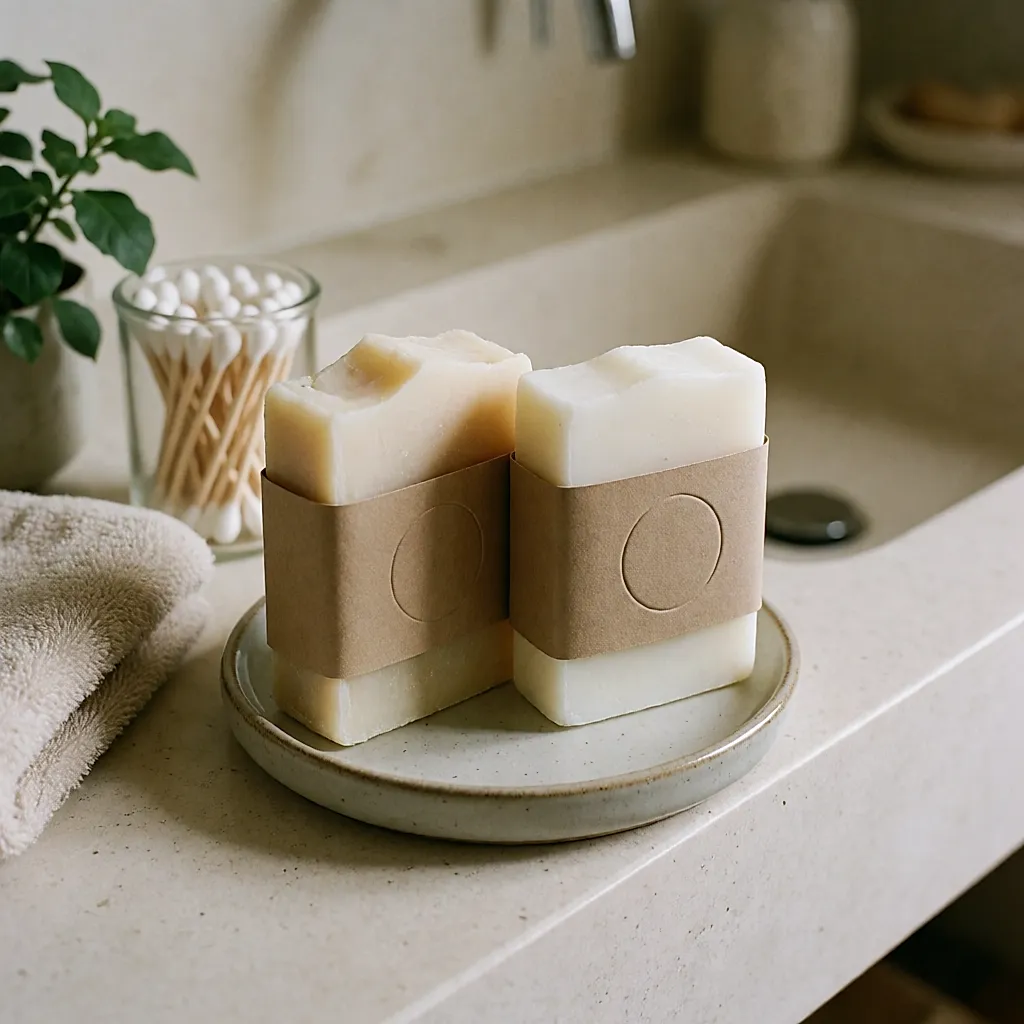
By contrast, a syndet is a cleansing bar made with synthetic surfactants. Why does the word scare people so much? Because it's associated with synthetic chemistry, even though a syndet can be very mild, soap-free and formulated at a pH closer to that of skin. Conversely, a perfumed handmade soap can irritate. Chemistry doesn't tell the whole story; the full formula does.
What that means for the face
On the face, true soap can leave skin feeling tight, especially if it's dry, fine or reactive. It cleans vigorously – sometimes too vigorously: sebum is removed, but the skin barrier may also feel knocked about. That's not a disaster for every skin type, and some people get on perfectly well with a gentle soap. It's just that your face isn't your back: it deserves a little more gentleness.

A well-formulated solid syndet can give a more comfortable cleanse, with a creamy texture or a low foam depending on the formulation. But it can also contain fragrances, essential oils or surfactants that don't suit you. Technique matters as much as the bar: wet hands, a brief lather, a lukewarm rinse, then pat dry – without scrubbing as if you were scouring a roasting tin.
The most useful check: read the INCI list before the word 'soap' on the packaging. If names ending in '-ate' after 'sodium' (sodium cocoate, sodium palmate and so on) appear near the top of the list, it's probably a saponified soap. Surfactants such as sodium cocoyl isethionate point more towards a syndet. And if skin feels tight, stings or turns red, stop using it: a healthcare professional, such as a pharmacist or GP, can help you work out what's going on.
Is the solid format a good compromise?
Waterless solid bars have real advantages: less packaging, often cardboard, no plastic bottle and hardly any space taken up in a washbag. On the sustainability front, it's worth staying cautious: a cleansing bar doesn't erase the impact of its ingredients, manufacturing or transport. Cardboard is a bonus, not a badge of honour.
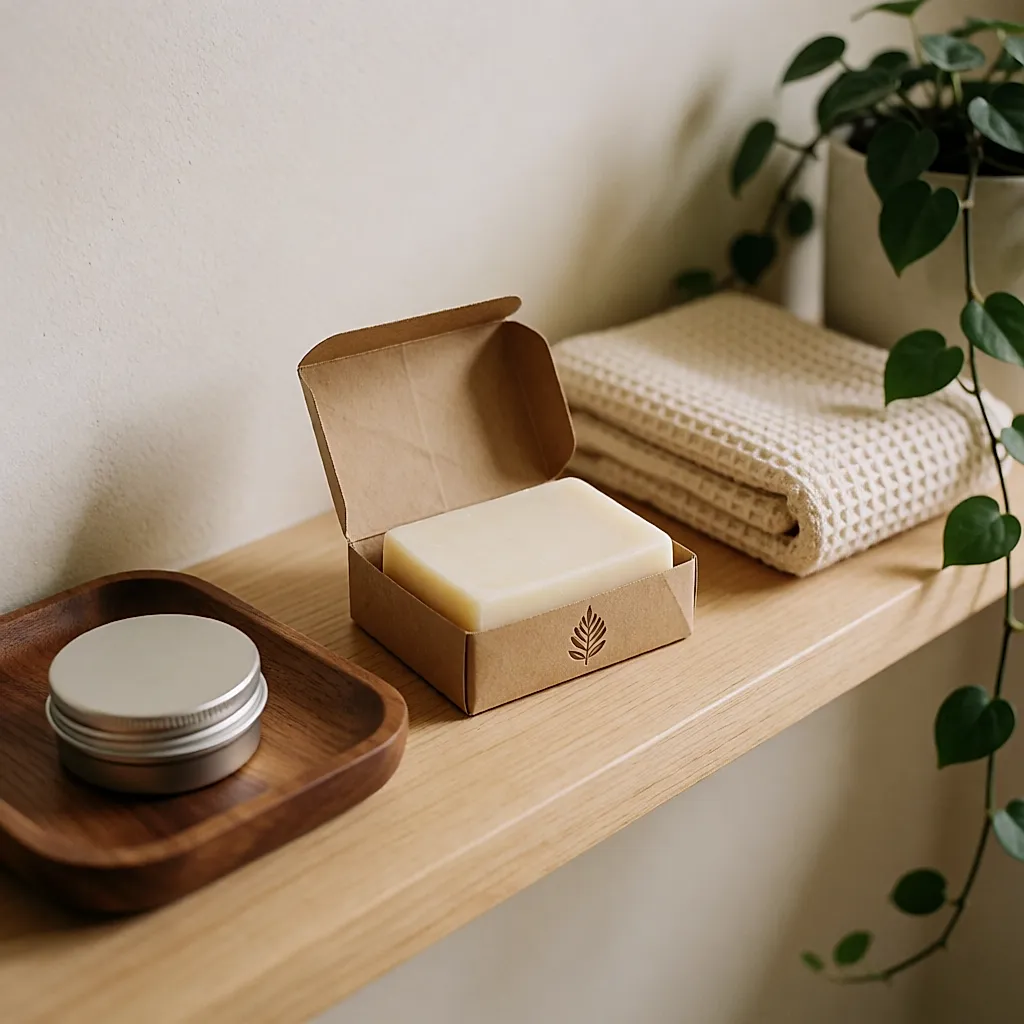
So the question isn't 'solid or liquid?' but 'which chemistry, for which skin, in which routine?'. For the face, a gentle solid syndet can be a good compromise if you like the format and your skin tolerates it. For the body, a simple saponified soap may do the job perfectly well. And if your skin prefers a fragrance-free liquid cleanser, no amount of cardboard should force you to switch.

Budget
In the UK, as a rough guide, a simple saponified soap tends to cost around £3–£8 from a supermarket or a specialist soap maker, and a solid face syndet around £8–£20 from a beauty retailer, pharmacy or health-food shop. Certified natural or organic formulas often sit at the top of that range; travel minis cost proportionally more. Prices also vary by city and retailer: a small local soap maker doesn't have the same overheads as a chain. A recognised certification such as COSMOS can help you identify a formula certified as natural or organic, but it doesn't guarantee the bar will suit your skin. It's a guide, not a prescription.
Choose for your skin, not the label
So should you throw out every saponified soap? No. On the body, a simple soap can be perfect; on the face, it all depends on your tolerance, the formula and the season. Skin that feels tight in November won't react in the same way as comfortable skin in July. The best choice is the one your skin accepts, not the one with the prettiest story on the label.
The truth is, no one can predict how your skin will react to a particular bar. Take it step by step: one new product at a time, a lukewarm rinse, a few days of observation, then adjust. If you like solid bars for their format and packaging, keep using them – but choose the chemistry that suits you. The practical criteria? The INCI list to identify which family the bar belongs to, and your skin's tolerance to judge whether the trial has worked.


Comments
Your opinion matters: rate the article, react and reply to comments.
Comments are moderated; AI-assisted comments are flagged. Text emoticons (8-), :-), <3…) are automatically shown as images.