

You get home late, the house is quiet, and the only thing you really care about is your pillow. We know the feeling. Except your skin doesn't clock off: overnight is when it regenerates most actively. Ten minutes of steps in the right order does more than a pile of serums slapped on in a hurry. Here's the sequence, from the first cotton pad to the last cream.
Remove your make-up, even on no-make-up days
Make-up, pollution, sebum, sunscreen: over a day, it all builds up on your face. In the evening, you take it off. Not because skin 'breathes' — it doesn't — but because nothing sits properly on a film of residue.
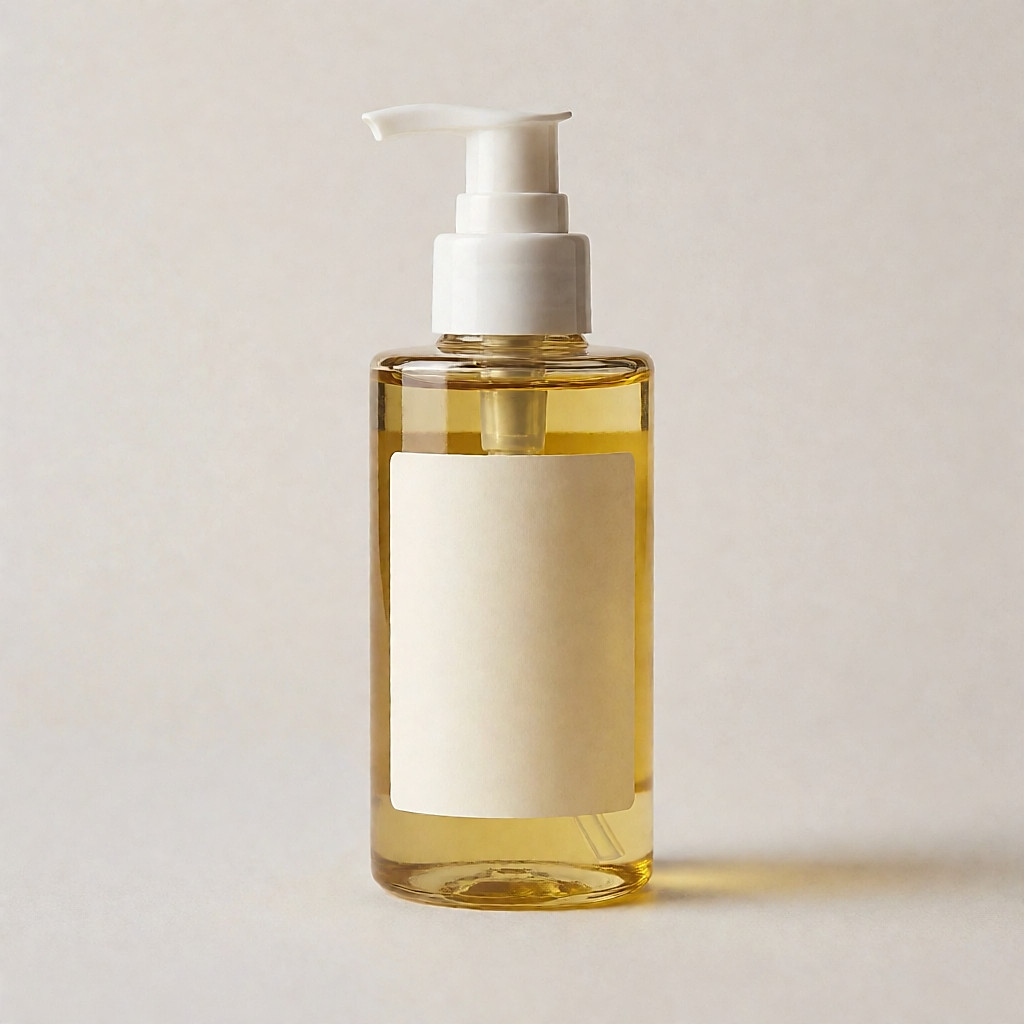
The formula matters more than the brand. An oil or cleansing balm, an anhydrous formula, dissolves oils and long-wear make-up: perfect for dry to combination skin. A milk, more emulsified, will suit those worried about rubbing. Micellar water removes make-up quickly thanks to mild surfactants, but it's better to rinse it off afterwards: left on its own, it often leaves a film.
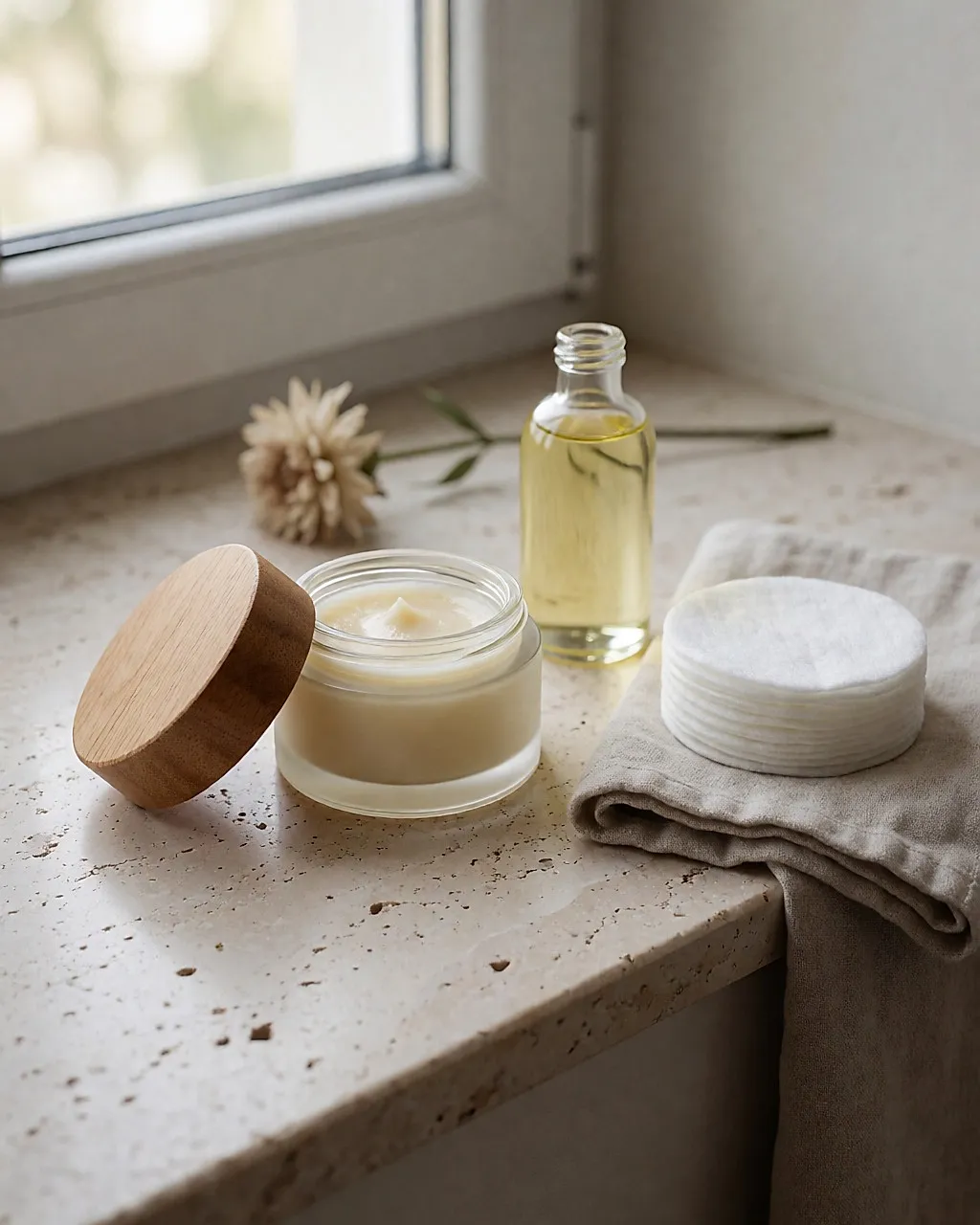
Always start with the eyes. Otherwise you smear mascara over already clean cheeks, and the step loses all point. Place the soaked cotton pad on for a few seconds, let the product work, then wipe gently downwards, never upwards.
Cleanse: the step we skip too often
A make-up remover removes make-up, not the remover itself. Hence the pass with a gentle cleanser, at a pH close to skin's, around 5.5, then a rinse with lukewarm water: hot water damages the skin barrier.
A soap-free gel for combination skin, a cream cleanser for dry skin. If your skin reddens or stings, correctly used micellar water may be enough in the evening, without rinsing. Dry by patting, never rubbing — this is the kind of detail that costs nothing and changes how your skin feels when you wake up.

The mist: optional, useful in the city
Hard tap water sometimes leaves skin feeling tight. A spritz of thermal water or hydrolat rebalances skin and preps it for skincare. On the choice front: lavender for skin that reddens, rose for a dull complexion, rose geranium for combination skin.
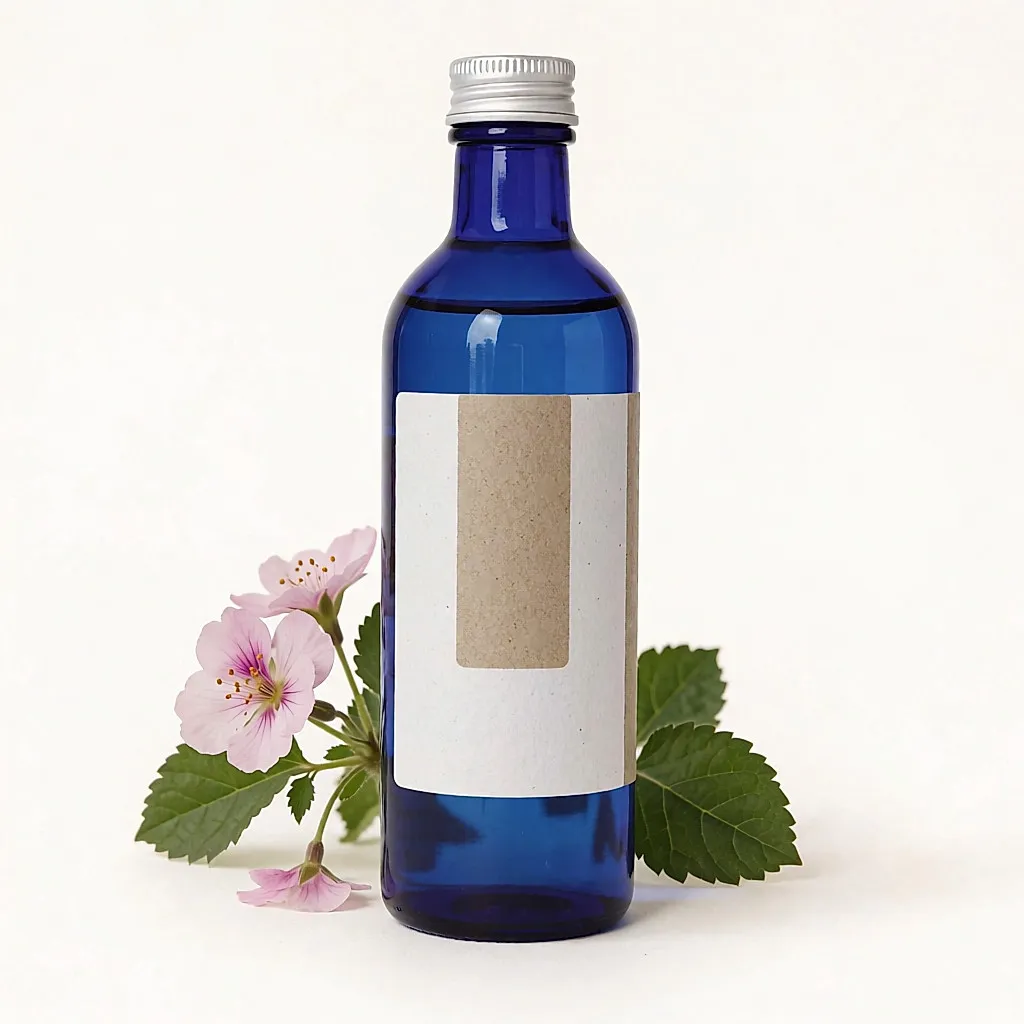
A practical point that's often forgotten: an organic hydrolat without preservative keeps poorly. Keep it for a few months in the fridge after opening, in an opaque bottle. After that, throw it away without regret.
The order of night skincare
From the lightest to the richest. Eye cream first if you use one, then serum, then night cream. Why a cream specifically for night? Because a day cream is formulated to sit under make-up: lighter, sometimes with SPF filters. At night, you don't have that constraint.
Apply from the centre outwards, not forgetting the neck. Two fingers are enough; there's no need to press hard.
If your skin feels tight when you wake up, your night cream is probably too rich. The test is simple: twenty minutes after application, if the product sits on the surface and you look shiny, go lighter. The right night cream is the one you forget about.
The real timer remains your best indicator: if your routine takes longer than ten minutes, you're doing too much.
What I look for on the label
I won't name brands: I haven't tested the current formulas, so criteria are better than a name.
A verifiable label first. COSMOS Organic requires at least 95% ingredients of natural origin, plus a proportion of organic ingredients that varies by product category. Cosmébio is the French equivalent, with its own standards. What these labels guarantee is a framework for composition and processing, not efficacy.
The packaging next: a glass bottle, a cardboard tube, a refill option or a solid format, which needs no water and often no plastic. And a short INCI list, with no fragrance at the top if your skin reacts.
Budget
Prices vary with the actives, the packaging and the retail channel, not with efficacy.
- Make-up remover: expect around £5 to £25 in supermarkets or pharmacies, up to around £35 in beauty halls.
- Hydrolat or thermal water: £5 to £18 for 200 ml.
- Gentle cleanser: £7 to £22.
- Night cream: £18 to £55.
- Eye cream: £13 to £40.
Where to buy: supermarkets and pharmacies for price, specialist brands and websites for organic, salon or clinic if you want a skin analysis before choosing. Refills lower the cost per use, and a solid formula often lasts longer than an equivalent bottle. In London or big cities, beauty hall prices climb quickly; online, packaging often makes the difference.
Sources
- Regulation (EC) No 1223/2009 on cosmetic products — EUR-Lex.
- COSMOS standard, European organic and natural cosmetics label — cosmos-standard.org.
- Cosmébio, French organic cosmetics label — cosmebio.org.
- Société Française de Dermatologie (French Society of Dermatology) — sfdermato.org.



Comments
Your opinion matters: rate the article, react and reply to comments.
Comments are moderated; AI-assisted comments are flagged. Text emoticons (8-), :-), <3…) are automatically shown as images.