

A blonde reader wrote to me last week: why does her skin turn pink as soon as she tries a new serum? The answer often comes down to skin tone. The fairer your skin, the faster it reacts — to active ingredients, but also to heat, friction and too much scrubbing. I went back through my routine from start to finish, compared notes with two friends with the same profile, and kept only what really holds up.
Fair skin, not fragile skin
Fair skin is not weak skin. It simply has less melanin, which lowers its natural defence against UV. In practice: it reddens quickly, marks quickly, and holds the trace of an old spot for longer. None of that is dramatic, but it changes how you look after it.
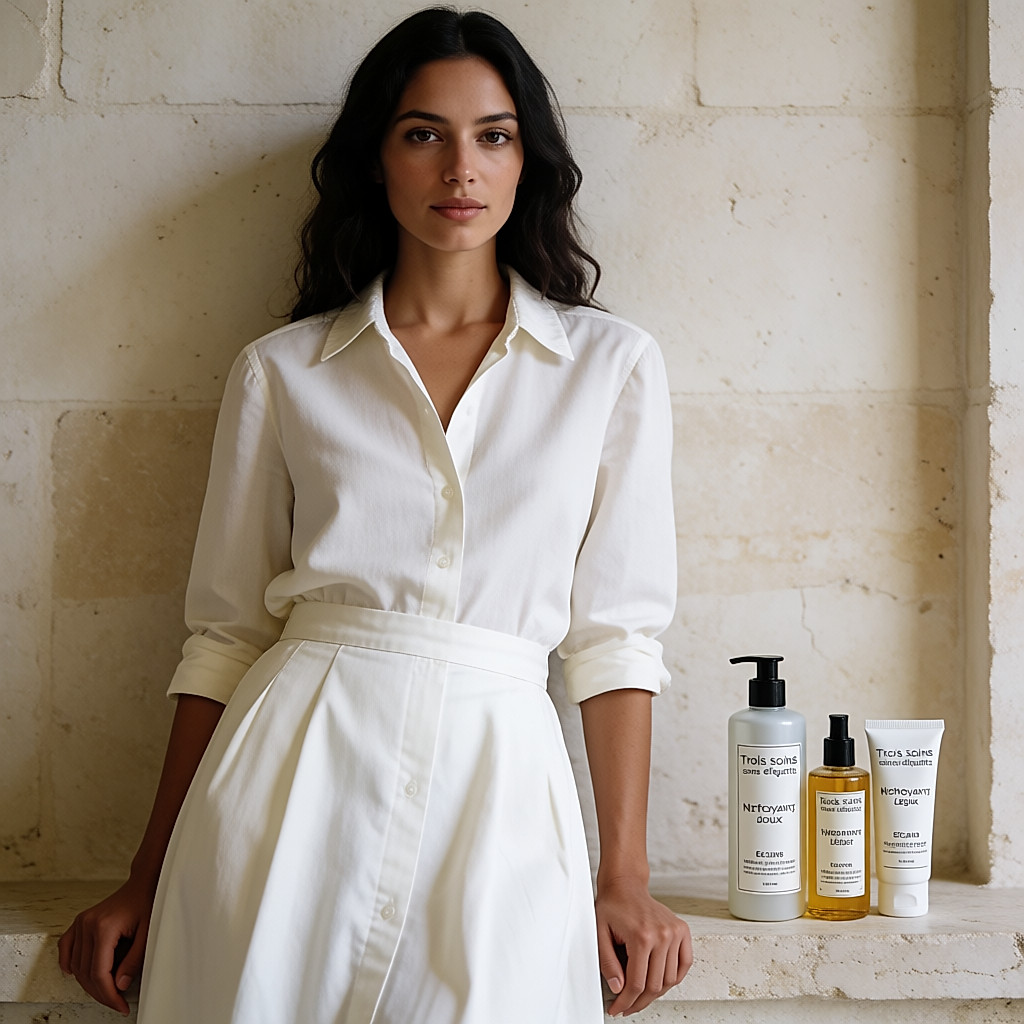
The routine that makes the difference has three steps, not ten. In the morning, a gentle cleanse with lukewarm water, then a light moisturiser. In the evening, careful make-up removal followed by the same moisturiser. And over the top, every day, an SPF 50 sunscreen, even when the sky is hazy.
You don't need to pile on products: a simple formula, fluid or richer depending on your skin, is enough. What matters is consistency, not the length of your shelf. And stick to short ingredient lists — the fewer layers you add, the lower your chance of a reaction.
Start with light, then add colour
A fair complexion doesn't need to be corrected; it needs to be evened out. A tinted moisturiser or a light mineral powder may be all you need. If you want a proper foundation, match your exact skin tone — never go darker, or your complexion turns grey.
On shadowy areas, dark circles or the sides of the nose, a touch of highlighter one shade up, then a sweep of neutral powder to set, only if your skin is shiny.
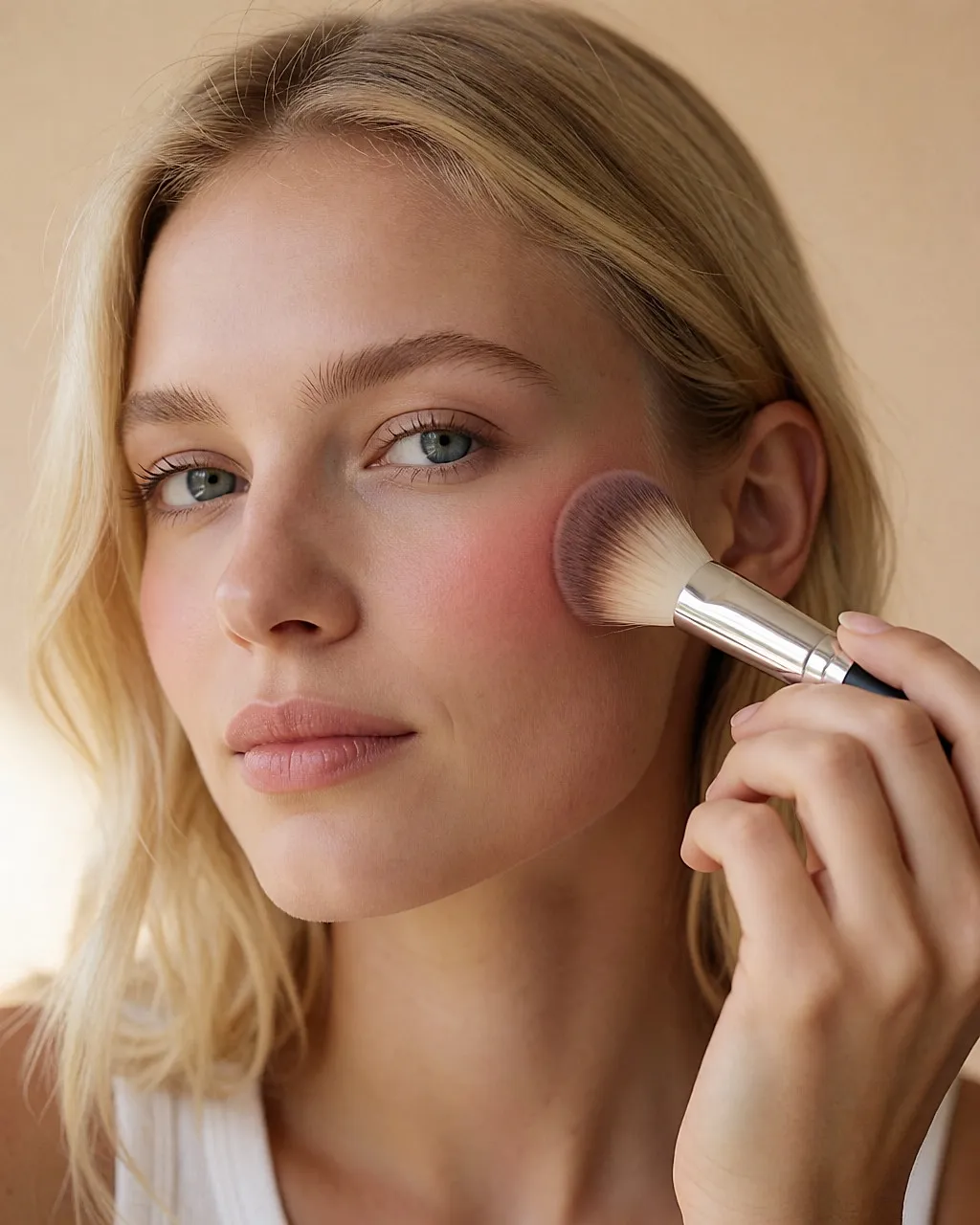
For colour, a pink or nude blush, applied with a light hand: delicate skin can't take excess, and two thin layers are better than one heavy one. How long make-up lasts depends mostly on prep — well-hydrated skin holds better than skin overloaded with product.
Eyes
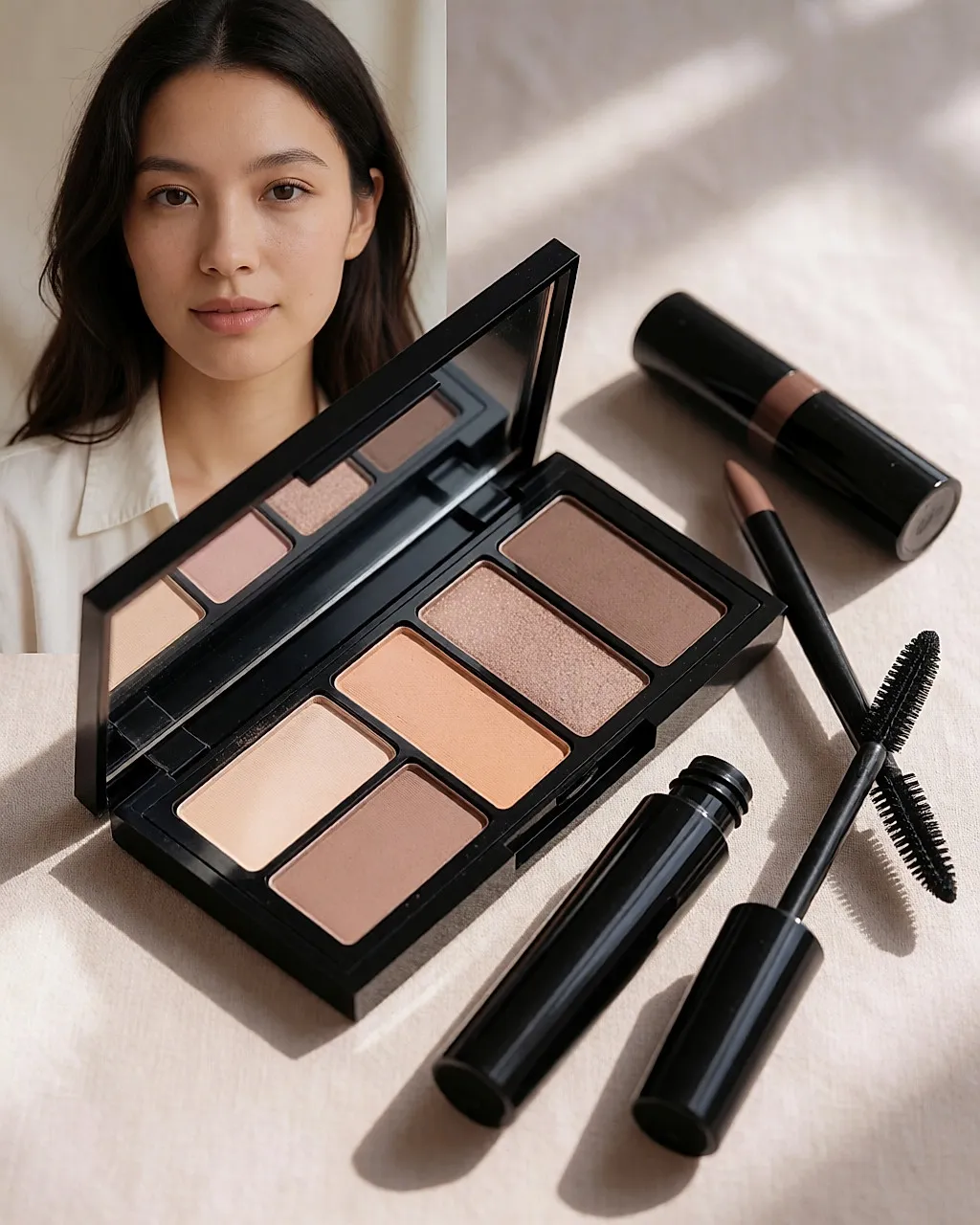
For daytime, stick to neutral tones: beige, pale pink, light apricot, taupe. A soft texture works better than a saturated shadow, which can quickly dull fair eyes.
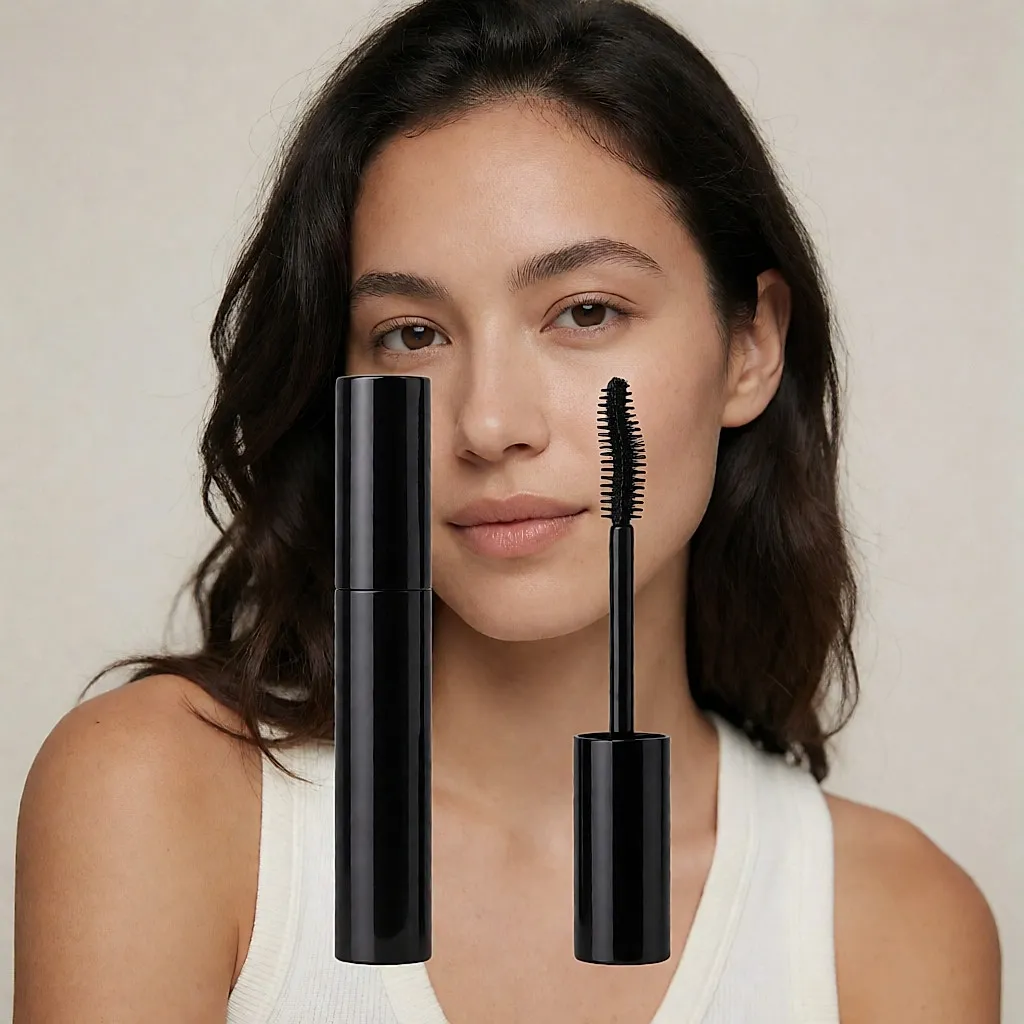
The exception is mascara. With blonde lashes, black opens up the eye. If you use a pencil, choose brown or grey, never charcoal black, and match it to your shadow.
For evening, a smoky eye remains the best ally for a fair face. But sort out your complexion first, otherwise the contrast looks washed-out: your base makes the difference, not the intensity of the shadow.
Brighten blonde hair without stripping it
Your blonde will dull quickly, especially in summer. Day to day, a gentle, slightly pigmented shampoo revives the shade without attacking the fibre. A solid bar does the job too, with far less plastic at the end of it — that one I've tested; the pigmented one I've only included on the strength of hairdresser recommendations.
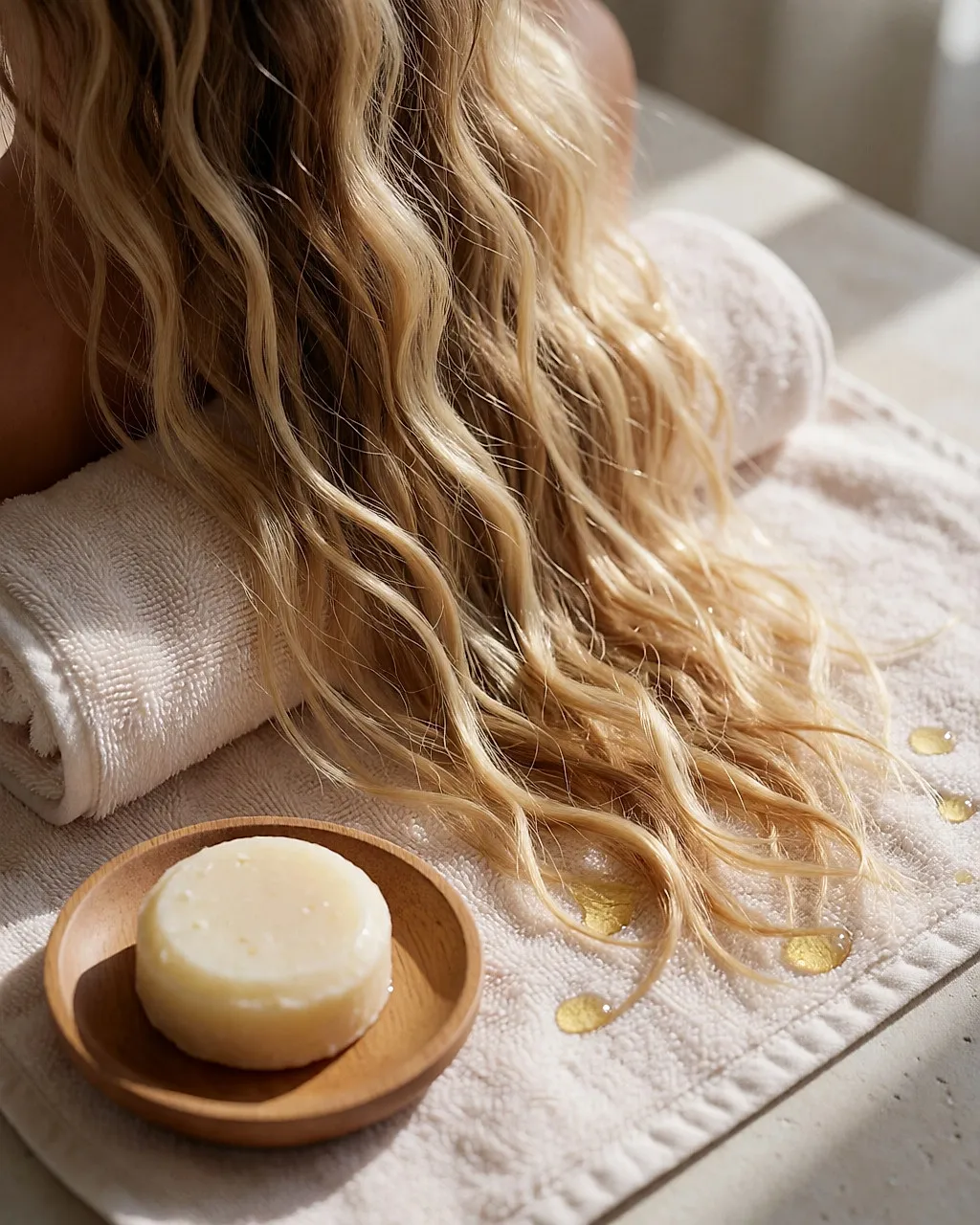
You can ask your hairdresser for a few lighter highlights for a lit-from-within effect: in-salon, that's a light balayage, not full bleach. Be careful, though: highlights done too close together end up drying out the mid-lengths and ends.
In summer, your hair takes a hit from UV. A protective oil before the beach, a rich conditioner left to sit, a gentle shampoo: that's the essentials. For your scalp, a tied scarf is enough to avoid sunburn.
The at-home hair spa: once a week, apply your conditioner to towel-dried hair, leave it for fifteen minutes under a warm towel, then rinse with cool water. Free, and very gentle on blonde ends.
Do old-school remedies still hold up?
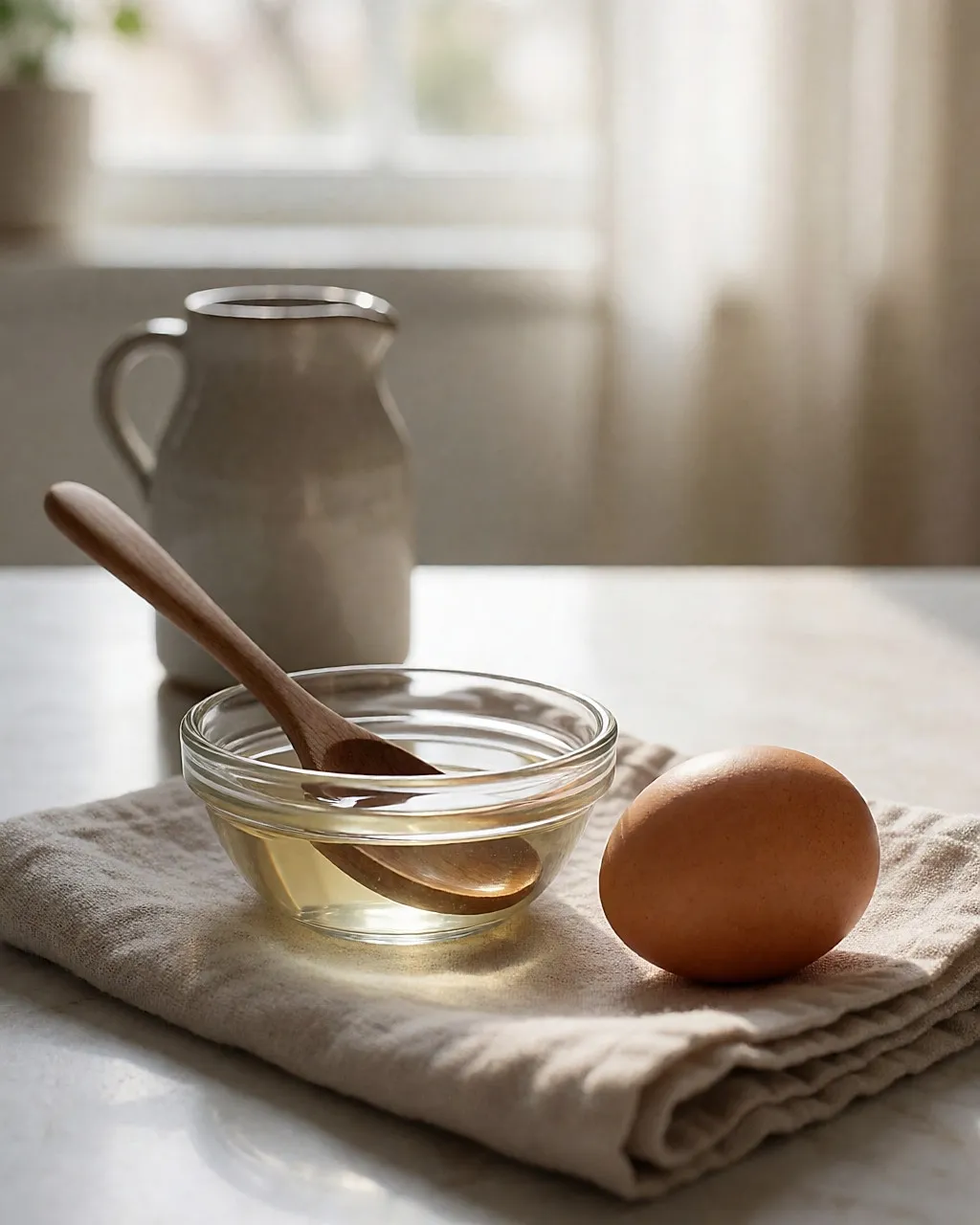
Egg shampoo and vinegar rinses are still doing the rounds. The real story? Diluted vinegar can help smooth the cuticle and add shine, as long as you never use it neat. Egg adds protein but rinses out badly and leaves a stubborn smell. Try it once, not every week.
What it costs
Prices vary by retailer and region. As a rough guide, expect:
- Gentle cleanser: £6 to £18 in a pharmacy or chemist, £4 to £10 in supermarkets.
- SPF 50 face sunscreen: £10 to £22 in a pharmacy, £7 to £14 in supermarkets.
- Tinted moisturiser or light foundation: £12 to £35 at beauty retailers, £8 to £18 in a pharmacy.
- Black mascara: £5 to £12 in supermarkets, £12 to £28 at beauty retailers.
- Solid or pigmented shampoo: £6 to £16, from health stores, beauty retailers or online.
- Salon balayage: £70 to £180 depending on length and density.
What moves the price: retailer, location, size and how the formula is positioned. A refillable or glass container often costs a little more up front, then less over time. On the label, a standard such as COSMOS Organic (Soil Association) guarantees a minimum percentage of natural and organic ingredients — it tells you about composition, not efficacy.
Sources
- NHS — sun safety and sunscreen advice, nhs.uk
- Office for Product Safety and Standards — cosmetic product safety, gov.uk
- UK Cosmetics Regulation — Regulation (EC) No 1223/2009 as retained in UK law, legislation.gov.uk
- Soil Association — COSMOS Organic standard, soilassociation.org


Comments
Your opinion matters: rate the article, react and reply to comments.
Comments are moderated; AI-assisted comments are flagged. Text emoticons (8-), :-), <3…) are automatically shown as images.