

You know that little Sunday-evening shiver when you come back from the beach with tight skin and hair that squeaks? That day, you promise yourself you'll do better next time. Then next time comes, and you make exactly the same mistakes. The sunscreen left at the bottom of your bag, the after-sun applied too late, the lip balm you haven't reapplied since morning... What if we sorted it once and for all?
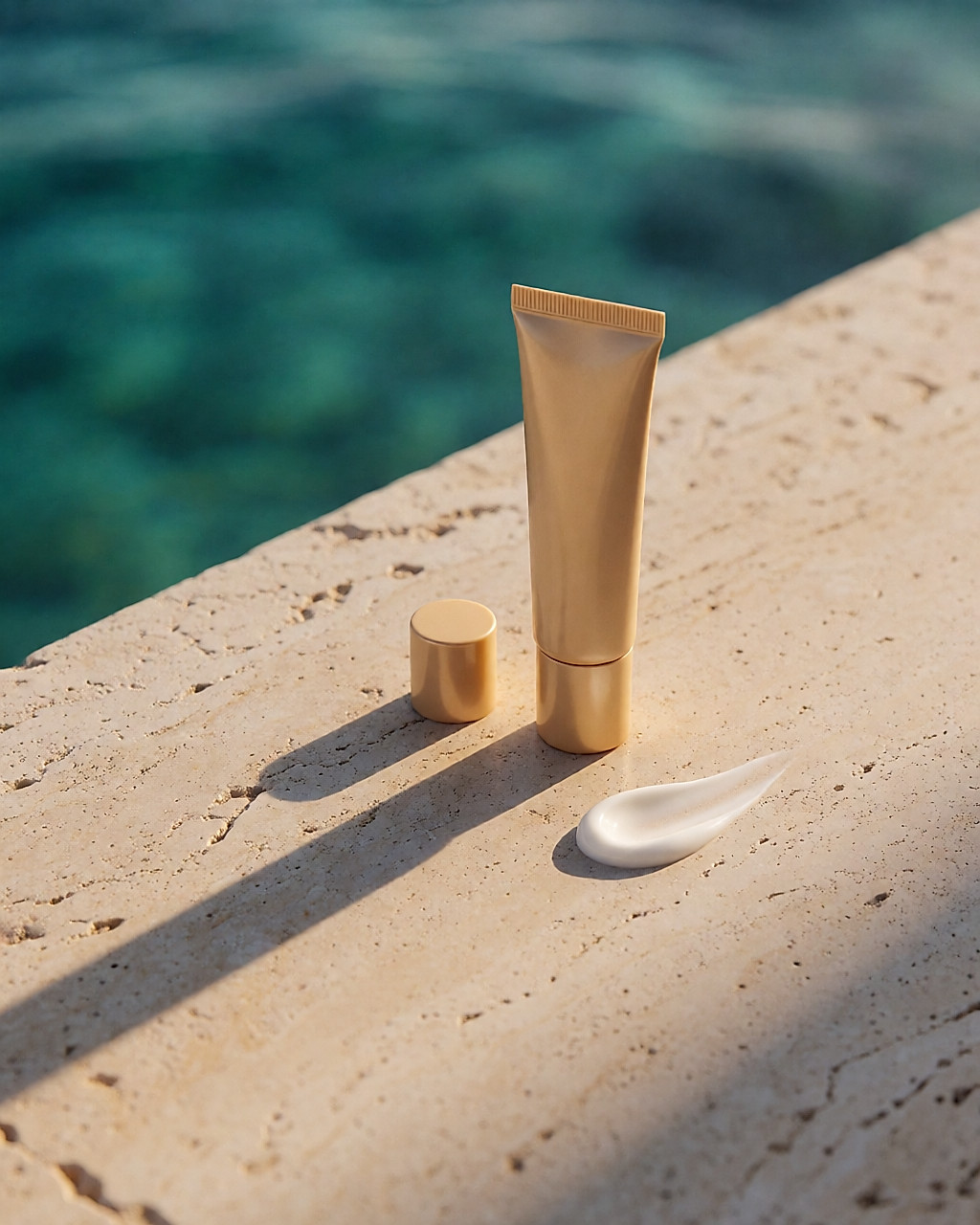
Sun protection: the non-negotiable step
There's one thing to understand before you even talk about brand or SPF number: the amount matters as much as the number on the bottle. In a lab, to achieve the SPF on the tube, 2 mg of product is applied per cm² of skin. Believe me, that's much more than a hazelnut-sized amount for face and neck. In practice, we often use less, and that's where it all plays out. An SPF 50 applied at half the dose doesn't quietly turn into SPF 25: protection falls disproportionately compared with what you've actually spread on. In other words, better a correctly applied SPF 30 than an SPF 50 applied sparingly!
Concretely, apply a generous layer before going out, let it settle for a moment, then reapply every two hours, and also after every swim — even if the formula is labelled water-resistant. You've got it: the beach is one of those places where you apply it generously without holding back. And with good reason! Sand and water bounce rays in all directions, clouds filter some but not all, and between midday and 4pm, shade remains your face's best friend.
To choose, look first at the SPF and the UVA circle: this European marking ensures UVA protection of at least one third of the SPF. It's a simple, reliable guide, far more telling than some marketing claims.
And above all, don't be taken in by the word 'natural': it says nothing about real protection. The label that really counts is a certified one. A cosmetic certified COSMOS Organic must contain a minimum proportion of ingredients of natural origin and organic ingredients, verified by an independent body — that's what to look for, not a pretty leaf drawing on the tube. At end of life, favour a refillable format or a card container rather than a brand-new bottle to buy every summer. And keep this trade-off in mind: no sunscreen formula is completely neutral for the environment, mineral filters included — manufacturing and rinsing also weigh in the balance.
After-sun: the evening ritual
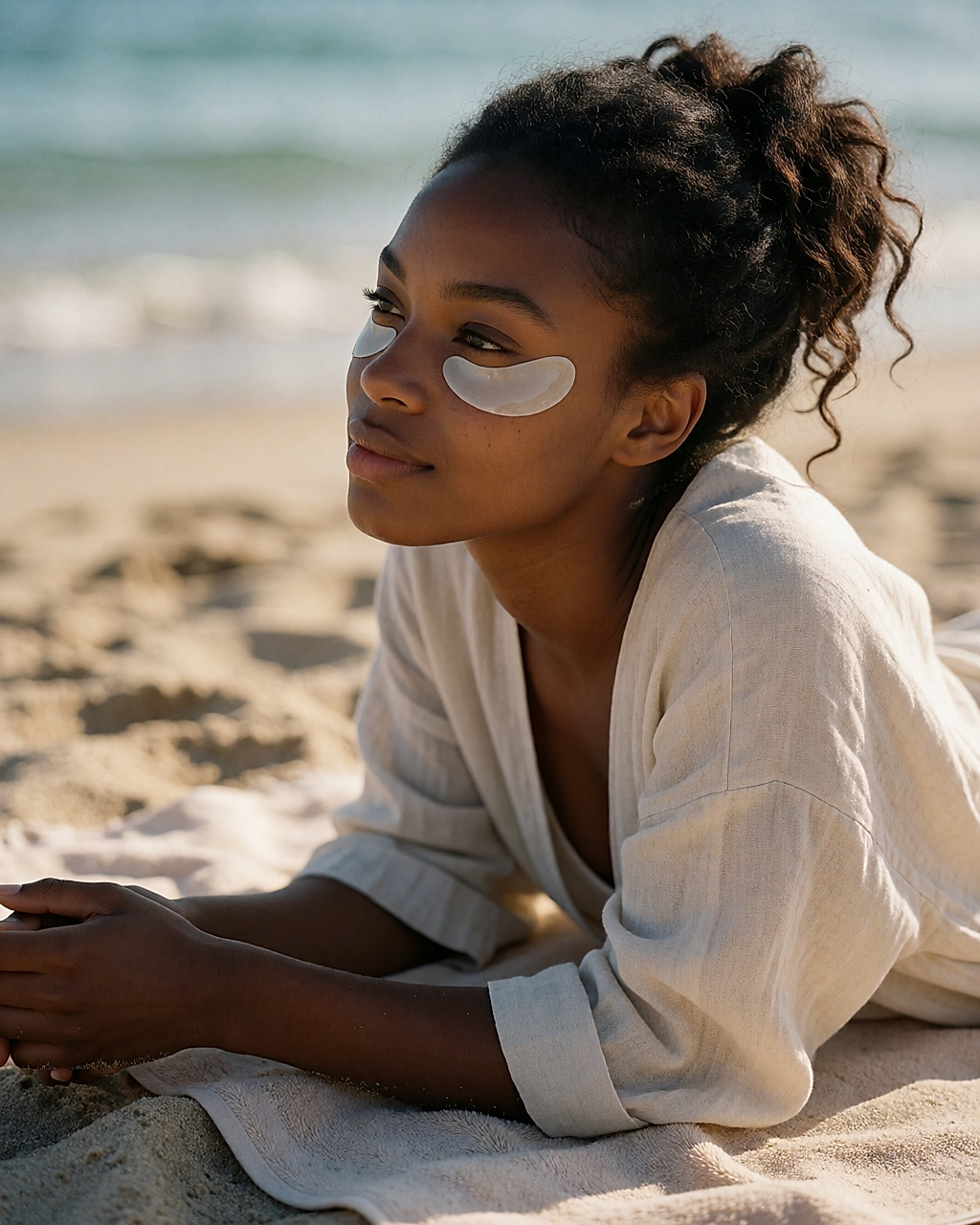
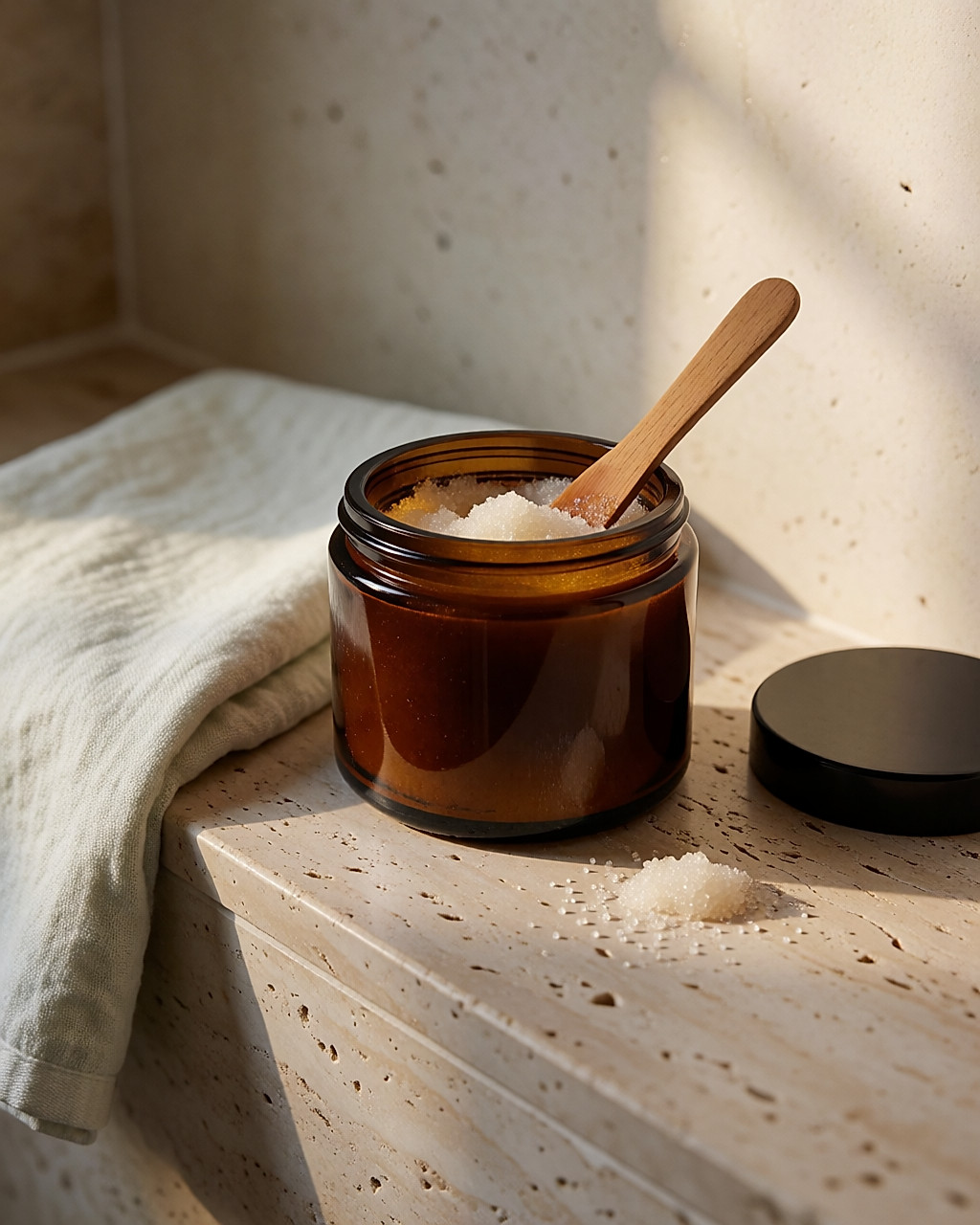
In the evening, your skin is hot, tight, thirsty. The step that changes everything comes in two parts. First, a gentle exfoliation, once or twice a week, no more — and never on sunburnt skin, agreed. Then a moisturising treatment after a lukewarm shower, never hot, because water that's too hot finishes off an already stressed epidermis. Look for aloe vera, panthenol, glycerin or ceramides, and leave alcohol and fragrance aside while skin is heated: they have no place on skin that's still cooking.
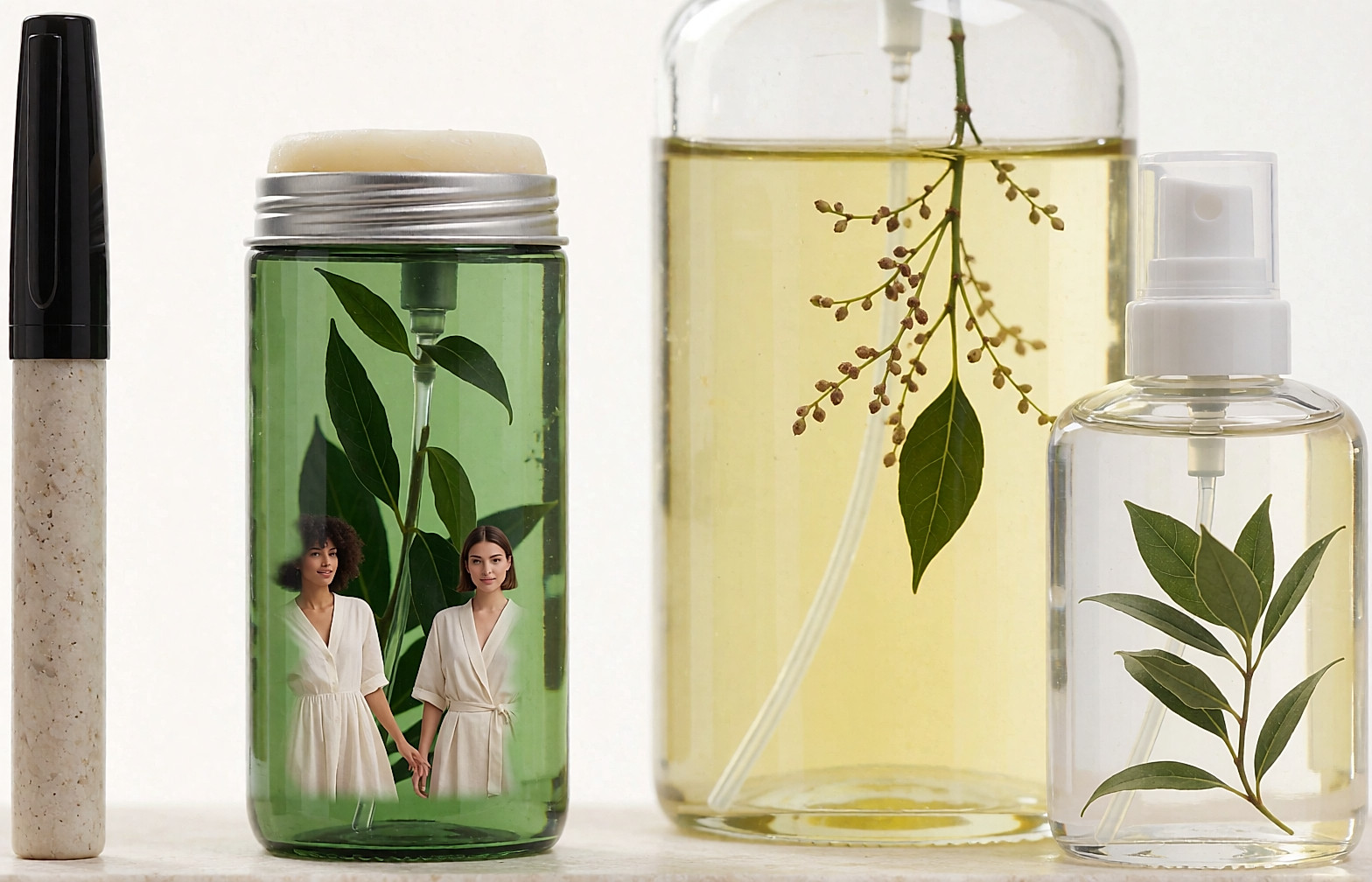
Small detail we always forget: pure aloe gel is a humectant. It attracts water but doesn't hold it on its own. If you apply it alone to very dry skin, the effect quickly fades. Pair it with an oil phase — a plant oil, a slightly richer lotion — so the hydration lasts.
In organic ranges, you'll find gels certified by Ecocert or COSMOS, in glass bottles or refills. Good news: glass is recycled, pumps much less so. And if you come home with blisters, a fever or feeling unwell, it's no longer a cosmetic issue: it's medical advice, and quickly.
Hair: salt, chlorine and rays
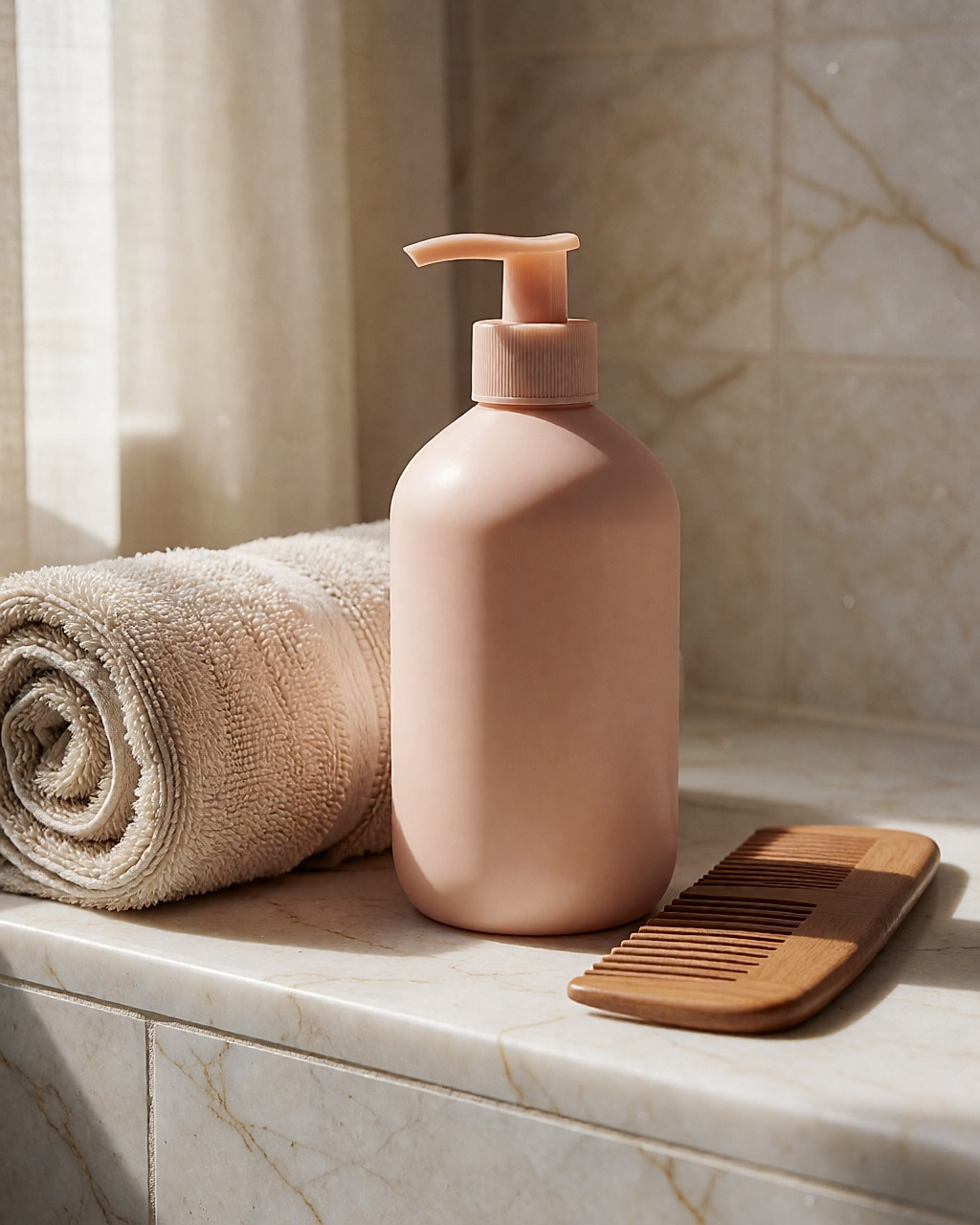
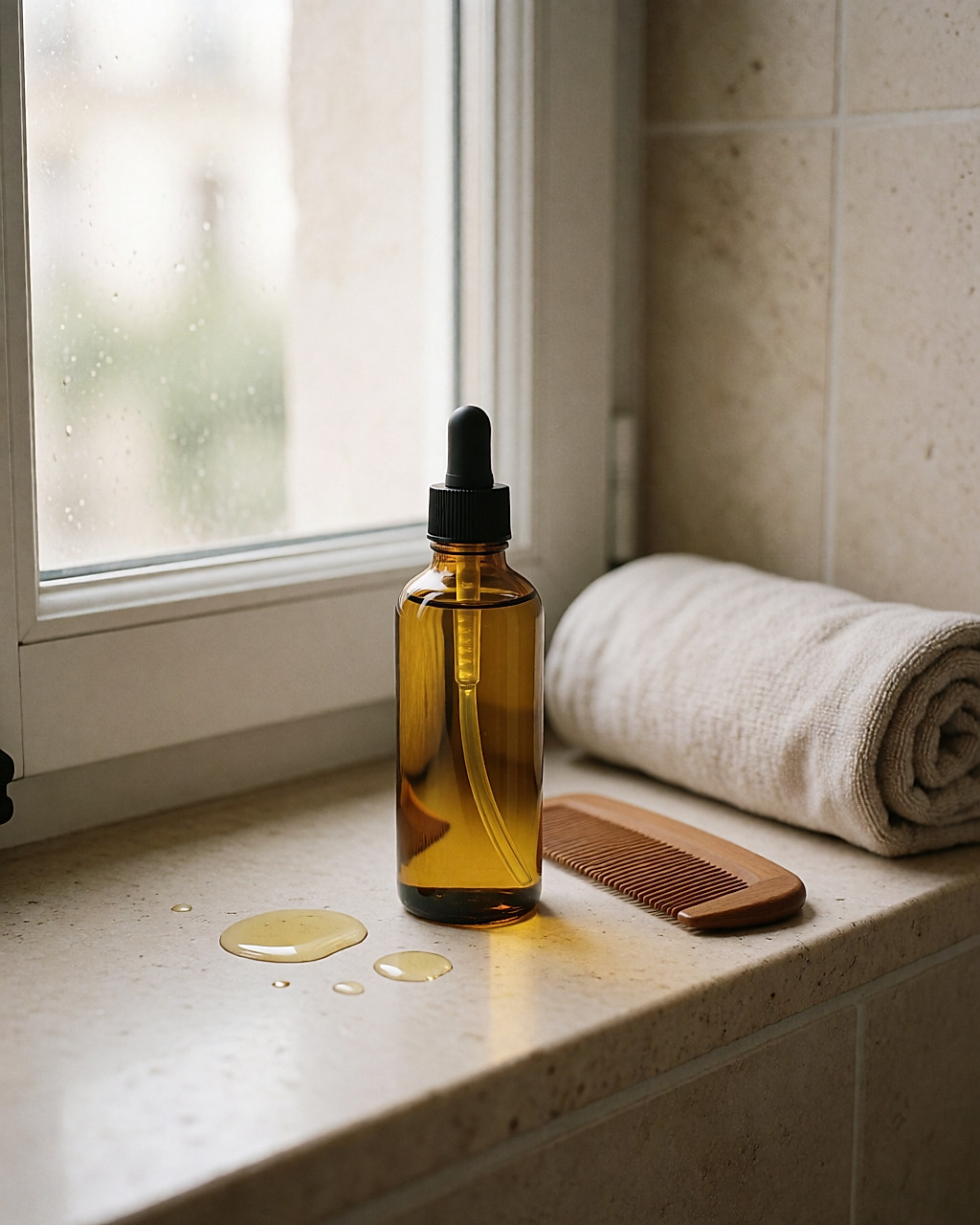
They suffer as much as skin. Dryness, split ends, colour shifting: summer leaves its mark. The useful step comes before swimming, not after: an oil or protective fluid on dry or wet hair, which limits damage from salt and chlorine. Then what? Rinse with fresh water, use a gentle shampoo, a mask, then air-dry. Brush hair upside down to remove sand, and put the blow-dry away for a few days — your hair will thank you!
On the eco side, two options stand up: a simple plant oil (coconut, sunflower) in a glass bottle, or a solid shampoo with no plastic packaging. Solid is a lovely gesture for the planet, but let's be honest for a second: with hands full of sand, it isn't always the most practical. See what suits you.
Complexion and lips: little, but well placed
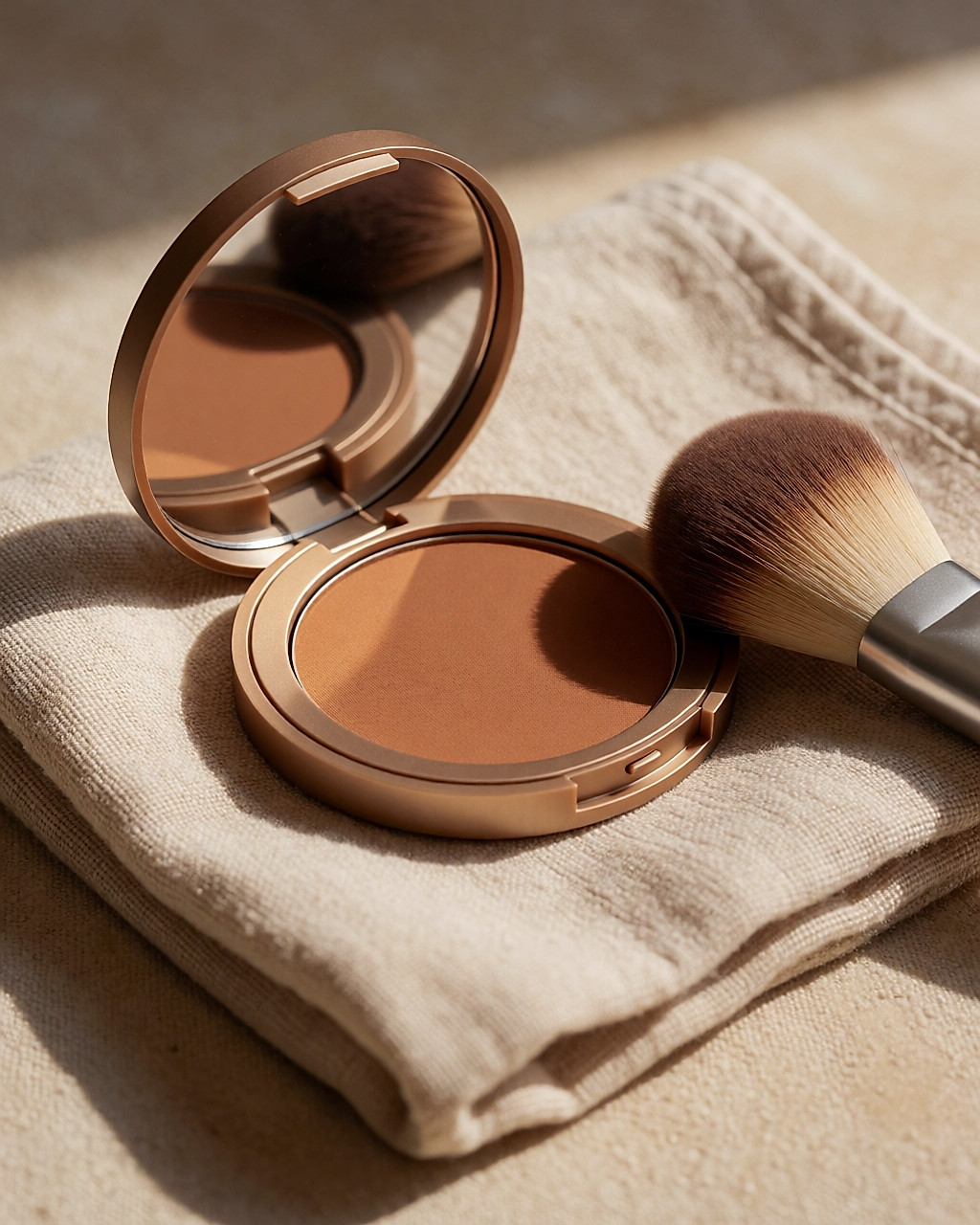
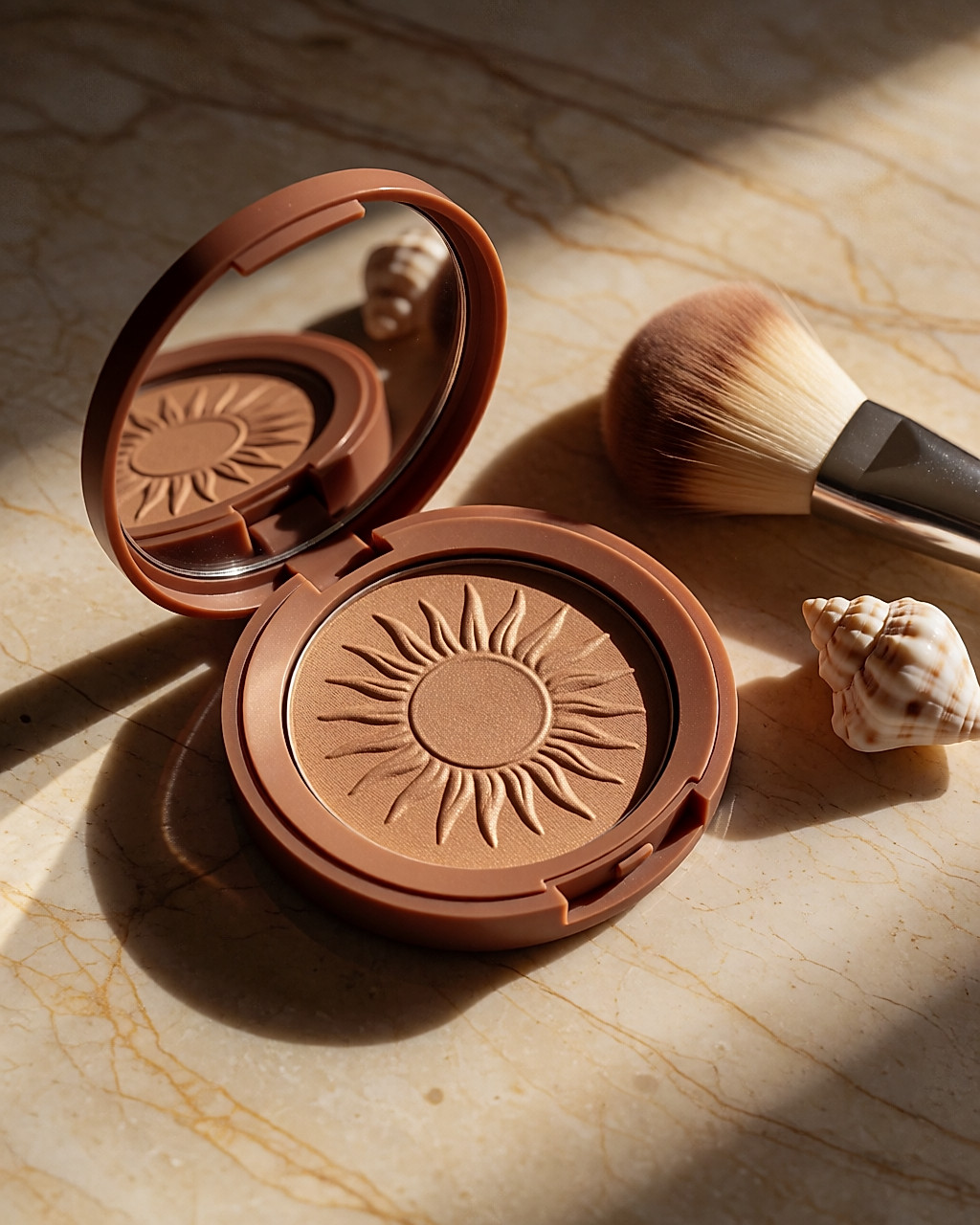
At the beach, you don't do makeup, you enhance. A bronzing powder or cream blush, in small touches on cheekbones, temples, very lightly on forehead and chin. The contours of the face stand out, the tan looks more even — and without seeming to, it changes everything in a photo!
One caution, though: powder over sunscreen is tricky. Apply it in a thin layer on well-protected skin, without rubbing, otherwise you'll move the protection around.
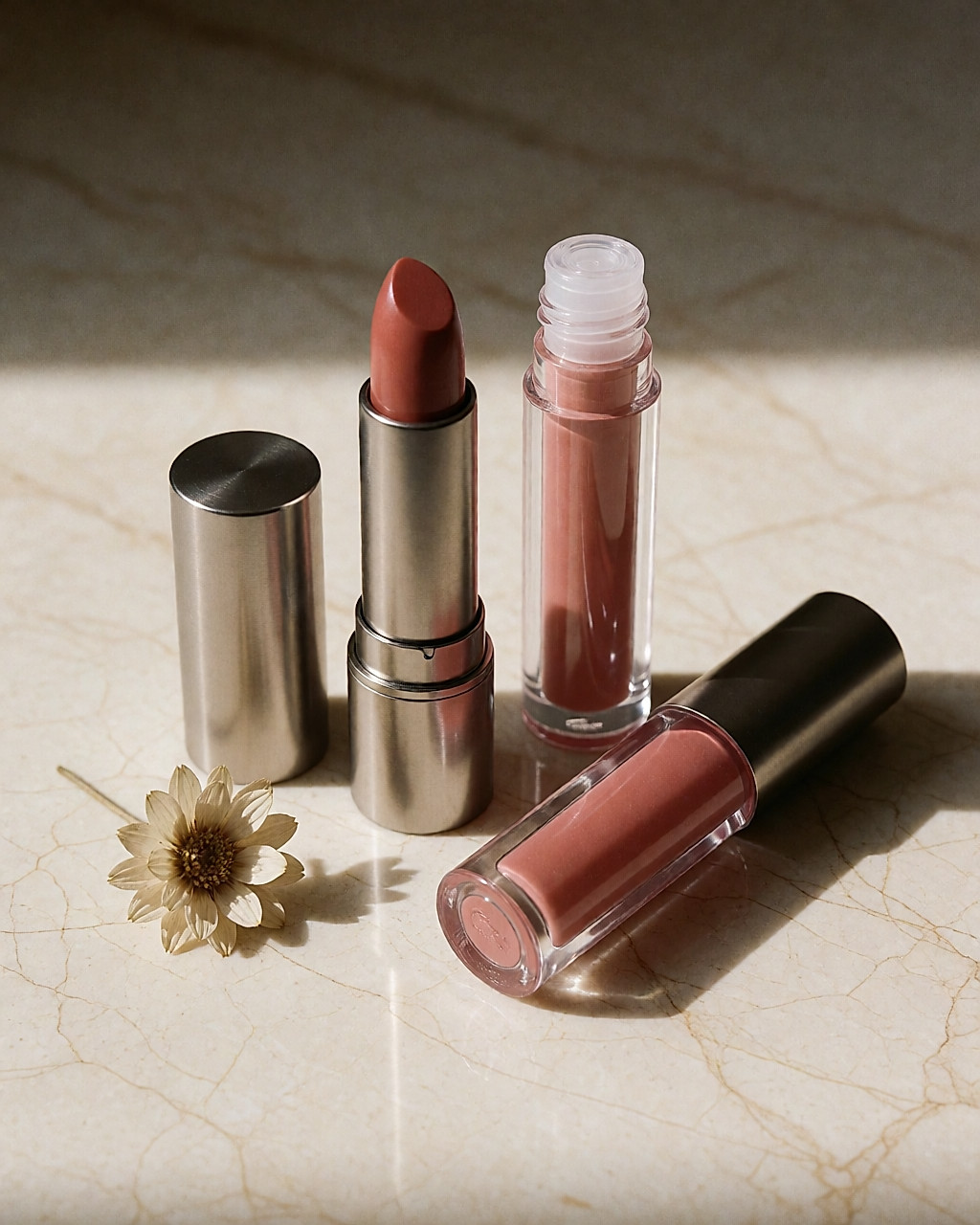
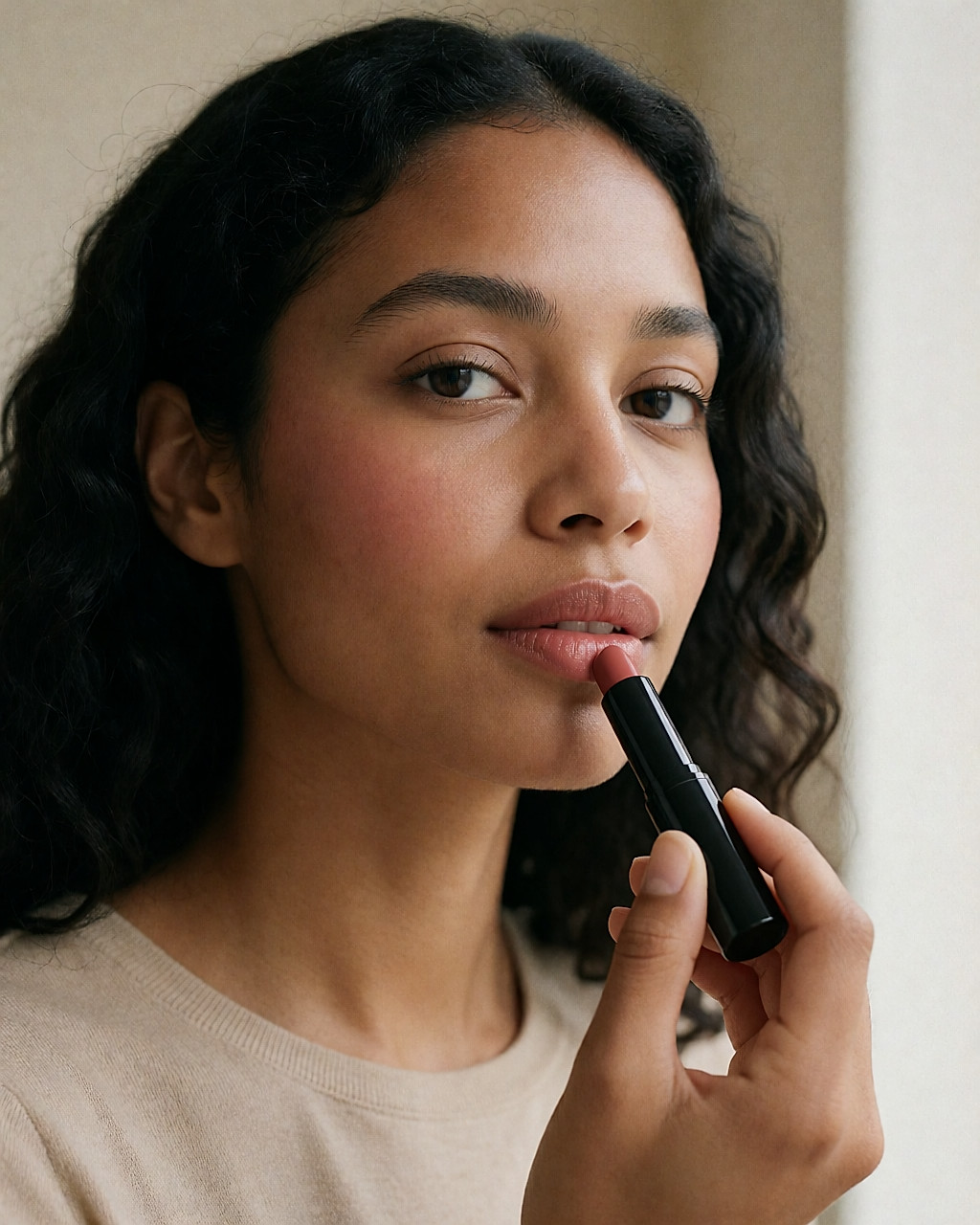
For lips, it's non-negotiable: a balm with SPF, and you reapply. This area burns quickly and heals poorly — a day at the beach without protection, and you'll feel it by the evening. A tinted balm does both jobs at once: protection and a little glow, without looking like you've made an effort.
The bag checklist, keep it to hand: a face sunscreen SPF 50, a body sunscreen SPF 30 or 50, an SPF lip balm, an after-sun, a hair oil, a gentle scrub for the week, a hat, sunglasses marked CE or UKCA category 3. And water, lots of it.
Budget
Budget-wise, don't panic: the essentials don't cost a fortune, it's mainly SPF and format that push the price up. Expect around £7 to £13 for a 50 ml face sunscreen in supermarkets, £13 to £26 in pharmacies, and £22 to £45 for premium beauty brands. For body, a 200 ml format is more like £9 to £18 in supermarkets, £13 to £26 in pharmacies. A 200 ml after-sun: £7 to £22. A protective hair oil: £9 to £22. A gentle or solid shampoo: £4 to £13. An SPF lip balm: £3 to £13. A bronzing powder or cream blush: £13 to £45.
Refills often cost less than the first purchase — and that's often where you find the most unboxed or cardboard formats, which is better for the planet and your purse. As for where to buy, anything goes: supermarkets, pharmacies, department stores, or the brand's own website. A salon body scrub is more like £35 to £70 per session, if you'd rather delegate the pampering part.
One last point we often forget: buying a brand-new sunscreen every summer out of habit is rarely useful. Check what you have left: a tube started last year can still be used, as long as the expiry date and the period-after-opening shown on the bottle are respected and it hasn't been exposed to heat.
So there you have it: everything you need to transform your next beach day. A well-applied sunscreen, an after-sun in the evening, a hair oil, a balm on your lips — and the rest is pleasure. Go on, we'll leave you to it: the warm sand is waiting!
Sources
- NHS — official website
- Cancer Research UK — official website
- Department of Health and Social Care — official website
- Met Office — official website
- World Health Organization — official website
- European Commission — Recommendation 2006/647/EC on the efficacy of sunscreen products (EUR-Lex)
- Regulation (EC) No 1223/2009 on cosmetic products (EUR-Lex)
- COSMOS-standard AISBL — official website
- British Association of Dermatologists — official website

Comments
Your opinion matters: rate the article, react and reply to comments.
Comments are moderated; AI-assisted comments are flagged. Text emoticons (8-), :-), <3…) are automatically shown as images.