

Sugar and salt do not exfoliate the same skin. Under warm water one melts before it has finished the job, leaving a film of oil behind; the other keeps its edges to the very last stroke. It all comes down to the grain — and that tells you more than any label on the pot.
Start with the grain, not the label
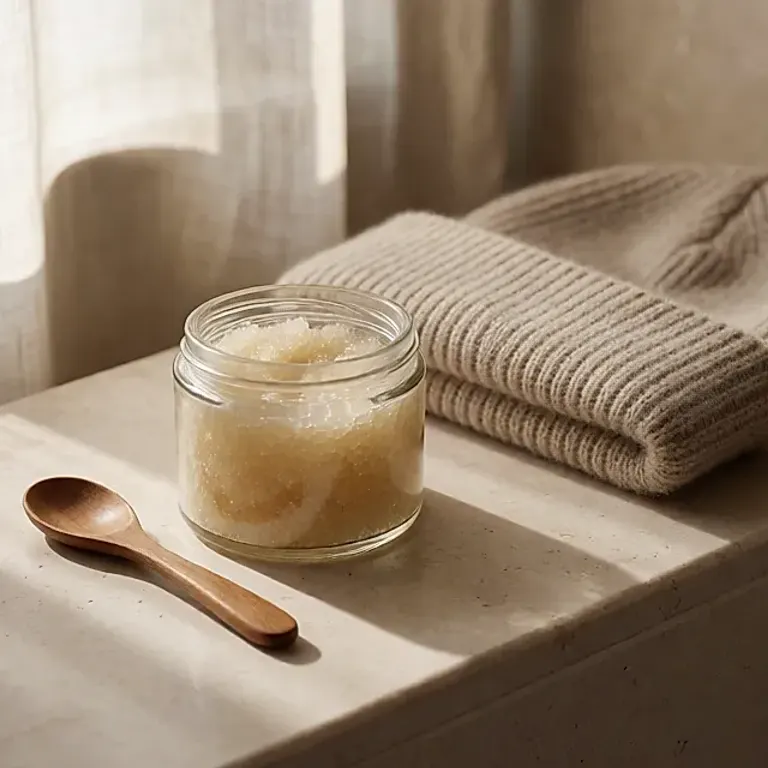
You choose a scrub the way you choose a knife: by what you need it to cut. Sugar, whether brown or golden, comes in small crystals that round off further on contact with water; it exfoliates gently and leaves on the skin the oil that carried it. Salt stays angular — that is what gives it its bite, and what should keep it off skin that already feels tight.
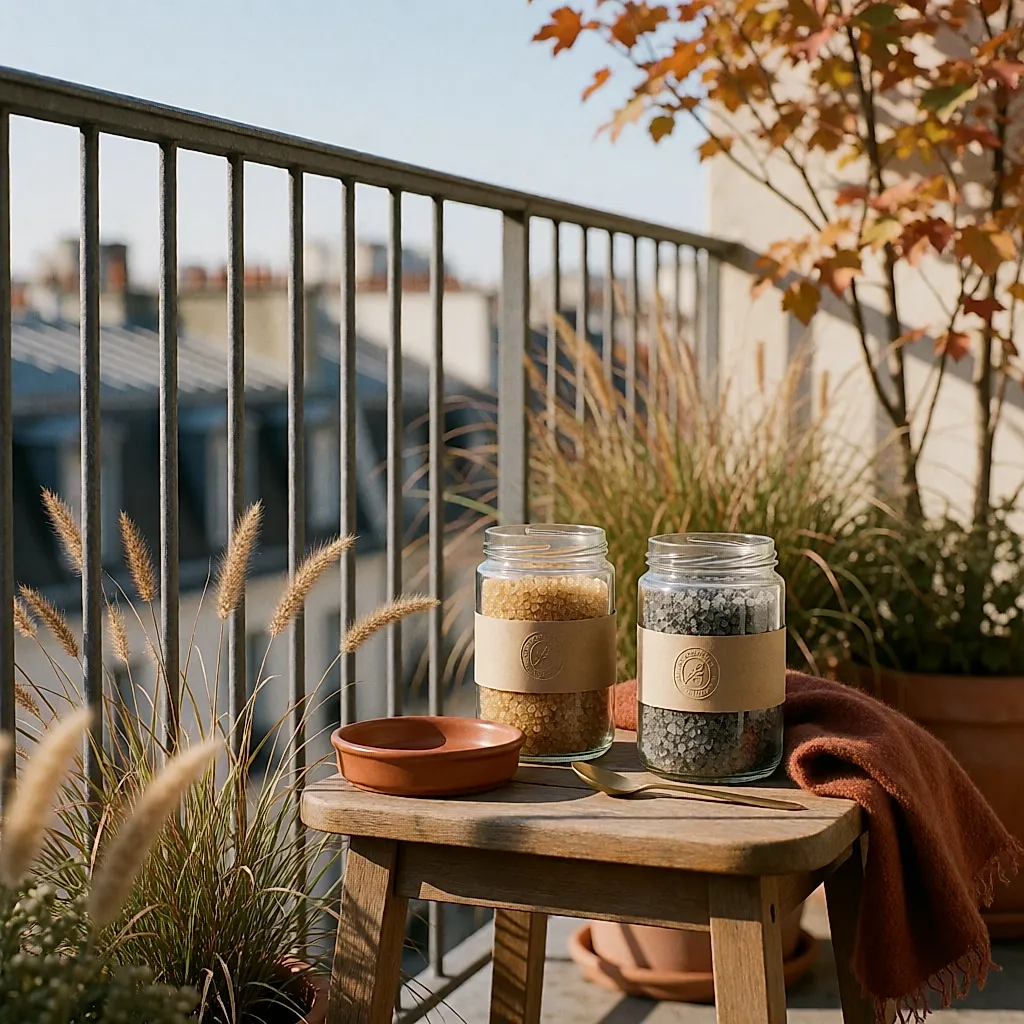
Between the two sits coffee grounds: irregular, smaller, unpredictable particles. Less chic, very honest for anyone prepared to rinse the bath twice.
In November the real question isn't which one is 'best' — they aren't aimed at the same areas. Legs in tights from morning to night, central heating drying everything out, and skin wants a scrub that leaves something behind. A heel couldn't care less.
Sugar and oil for legs that feel tight
Sugar carried in a plant oil — sweet almond, sesame, sunflower — goes on damp skin, not soaked: step out from under the shower but leave your skin warm and wet, and take a hazelnut-sized blob per leg. Not three spoonfuls 'so it lathers': a scrub is not soap and has no business foaming.
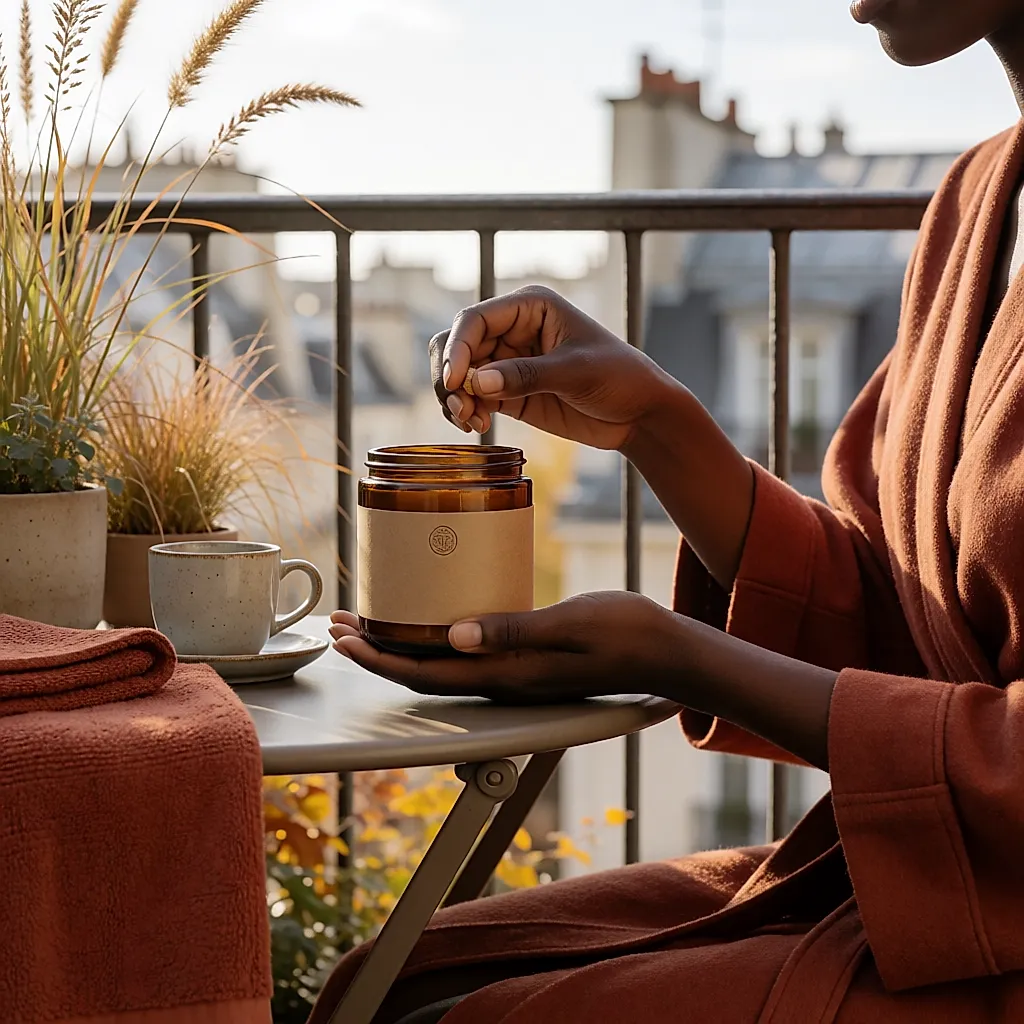
Then the movement: small circles, working upwards, without pressing as though you were stripping a piece of furniture. In practice, about 30 seconds per leg. Rinse warm — hot water wipes out the benefit of that oily film — then pat dry without rubbing.
What you'll like is what's left behind: skin that feels supple and slightly satiny, without the tightness that comes with woolly tights. What you'll like less: a shower floor that's slightly slippery. Put the foot towel down before you start and your back will thank you.
Salt is for heels and elbows
Keep it for thick-skinned areas: heels, elbows, sometimes knees. That's where the angular grain earns its keep, and the friction, frankly, feels good. A pinch in the palm of your hand, massage into damp skin, spend a little longer than you would on your legs, rinse.

The reverse — salt on a freshly shaved leg — stings, and not just a little. You've done it, you know. So leave a few days between hair removal and a salt scrub, and skip it altogether on broken or flaking skin.
Do you really need salt everywhere? No. A pot that gets used three times a year on your heels isn't a bad buy: it's just a pot that will last.
Coffee grounds, the budget option
The morning's coffee grounds, dried in the air on a plate and mixed with a neutral oil, make a perfectly decent body scrub — free. Where you can get it, grape marc plays the same game with a more wine-cellarish smell. It's the answer for anyone who doesn't fancy spending £20 to discover that scrubbing isn't their favourite part of the week.

Two serious caveats. Coffee grounds go mouldy fast: keep them only briefly in the fridge, never in an open jar. And the fine particles have a real talent for blocking the plughole. I keep mine for feet and knees, over a basin — romance guaranteed.
How much, and how often
Once or twice a week, no more. It's the practical rule of thumb that keeps coming up, and it's enough: do it daily and you're scrubbing skin that hasn't had time to recover. If you're new to it, start with once a week, see how your skin responds, adjust.

Measure it in hazelnuts: one per area, two for legs. Too much product doesn't scrub any better, it just ends up down the drain. And rinsing warm remains the step that matters most — very hot water gives the illusion of clean skin while mostly leaving it tight.
The aftercare
This is the bit you skip when you're in a hurry, and yet it's the bit that decides everything. On still-damp skin, apply an oil or balm before everything dries: the product spreads better, and you need less of it. Shea, sweet almond, organic olive oil if that's what you have — the gesture matters more than the bottle, no?
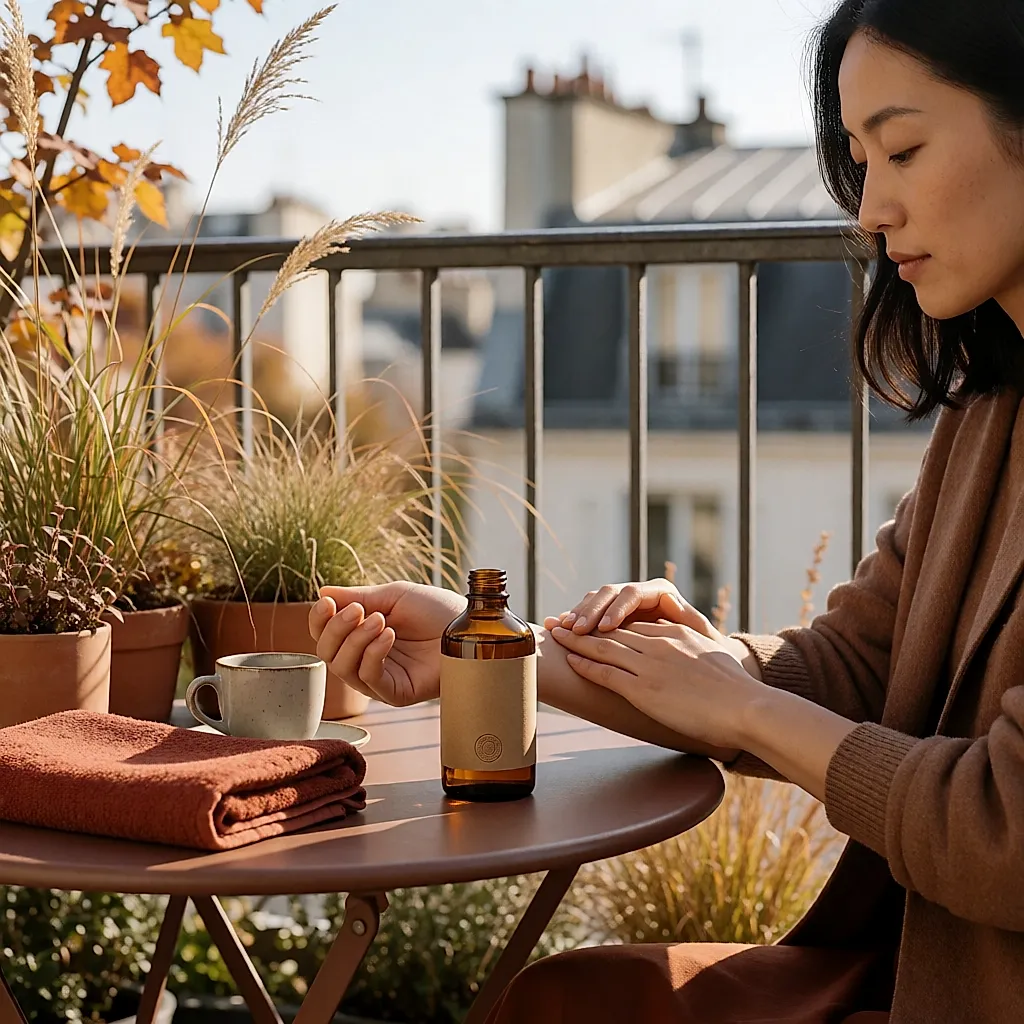
Which brings us to the bottle: glass rather than plastic, a refill where the brand offers one, loose oils from a refill or wholefood shop. A certification such as Cosmos Organic guarantees a set of standards on the share of naturally derived ingredients; it says nothing about how well the scrub works, only about what's in it. Which is something.
The elbow test: if the grain crumbles and prickles on the inside of your elbow, it's too coarse for your legs. Keep it for your heels, or loosen it with a spoonful of oil.
Budget
Expect broadly £8–£20 for a shop-bought sugar-and-oil scrub, from supermarkets, beauty retailers or health-food shops, and £10–£25 for a salt scrub, more often sold in a deep pot — bearing in mind you use very little. Prices vary, so check before you commit. Coffee grounds cost nothing, plus a neutral oil at £4 or £5 if you don't already have one in the kitchen. In a salon or spa, a body scrub tends to sit between £30 and £60, warm towel and music included.
Where you put your money is up to you: a decent pot and a plain oil do most of the work.
If you take one thing away, take this: a body scrub isn't a spa ritual, it's a five-minute job once or twice a week, with a grain that suits the area and an oil applied straight after. The rest — the pot, the label, the fragrance — is decoration. Lovely, but optional.

Comments
Your opinion matters: rate the article, react and reply to comments.
Comments are moderated; AI-assisted comments are flagged. Text emoticons (8-), :-), <3…) are automatically shown as images.