

You open the jar and the stuff inside is firm as an apricot jam left too long on the hob. A pea-sized amount on your fingertips and it melts, turns to oil and slides towards your temple before you have had time to blink. The formula didn't change on the way out of the pot: you're the one who set the transformation off.
The jar that isn't quite a cream any more
For years cream ruled: white, smooth, faintly dull, with its screw-top lid. Now jars hold firm balms that turn to oil on contact with skin, translucent jellies that become milk as you rinse, powders you mix in your palm that take on the consistency of warm cream. Three families, one idea: texture isn't decoration, it's a programme.
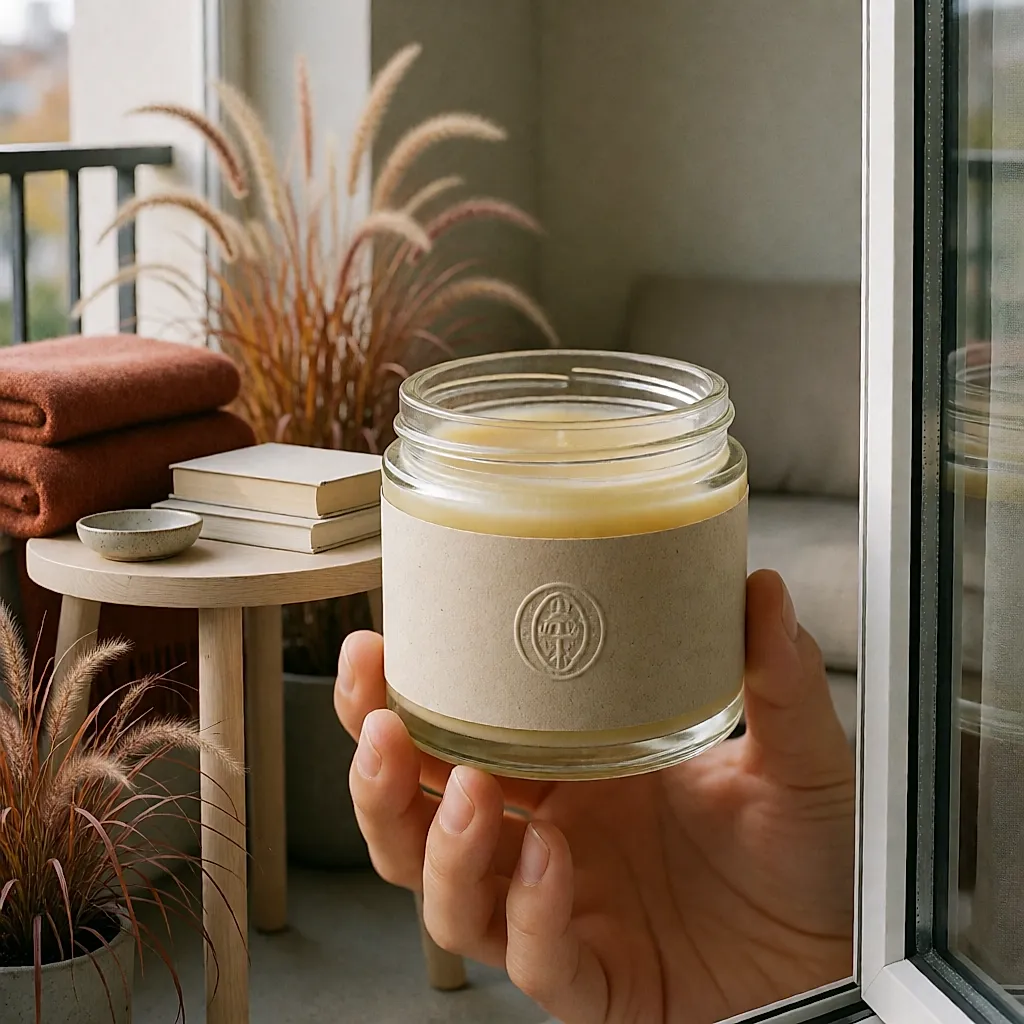
The waxes and butters chosen for this job melt on contact with skin; some surfactants only come alive in the presence of water. There is no new active ingredient in any of it — the change of state is a matter of formulation, the craft of assembling a formula so that it behaves in a particular way. It's often exactly where the difference lies between two products listing the same ingredients.
And frankly, that's what makes the shelf fun: the jelly wobbling in its glass bottle, the balm that cracks under a fingernail, the powder sitting in a neat little heap before it disappears. You're buying a moment as much as an active.
What it changes in the application, and in the amount you use
First instinct to revise: quantity. A balm that melts into oil spreads far further than you'd imagine, and a pea-sized amount is plenty for the face. The temptation of the scoop, meanwhile, is paid for in greasy film and an empty jar sooner than you'd believe — a calculation easily forgotten at the till.

Second instinct: wet hands or dry. A cleansing balm goes on dry skin, then emulsifies with a little warm water: that's the moment it becomes milk and rinses away. Applied to skin that's already wet, it slides off too fast and does half its job. Gel-to-milk, by contrast, needs that water. In short, the label isn't decoration: it tells you the order to do things in.
Third instinct, subtler: time. A material that transforms spreads in two stages, contact then melt, and that takes a few seconds longer than a cream. Sunday evening, fine. Monday, 7.12am, with a child hunting for a shoe, quite another matter — and it's precisely that gap between the promise and real life that decides whether a jar stays on the shelf or ends up at the back of a drawer.
Reading the promise another way
When a product plays the transformation card, the promise shifts. You're no longer simply sold "a concentration of actives" but an experience of touch: the cool of the gel, the warmth of the balm, the lather of the rinse. That's not nothing — sensory pleasure is why we use a product at all, and a product we actually use is more likely to do something for us.
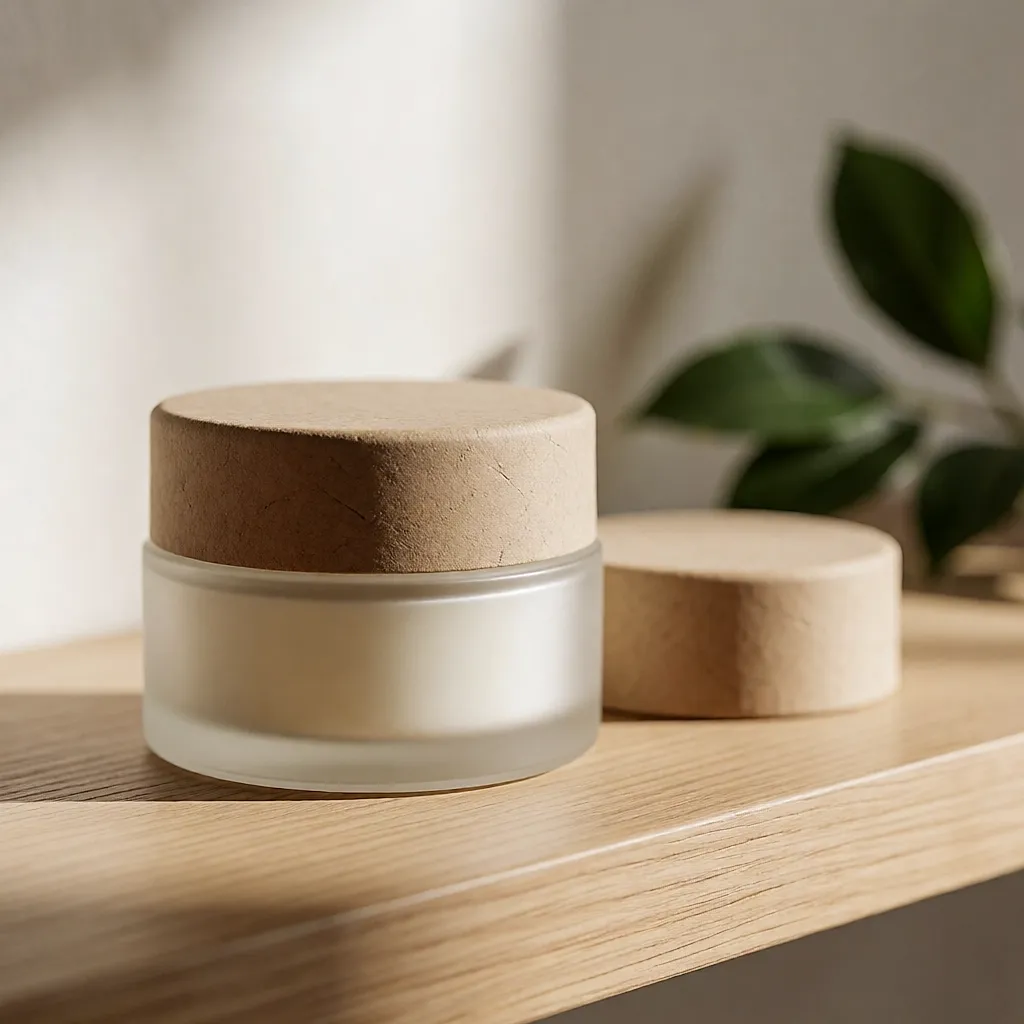
Even so, state is no proof of efficacy: a change in texture tells you nothing about the active or how much of it there is. A spectacular jelly can be mostly water and gelling agents. So look at the ingredients list, not just the demo on the back of the jar: check whether the actives being claimed sit high enough up — as a rule, the start of the list tells you more than the end.
On the packaging side, premium is quietly moving towards refillable glass and waterless solids. A label such as Cosmos Organic or Ecocert sets out the share of natural ingredients and a manufacturing charter — not efficacy, and not the biodegradability of every last thing inside. And check that a refill exists before you fall for the jar: some formats don't offer one.
Budget
As a rough guide, expect around £15–30 on the high street or online for a classic cleansing balm, £25–45 at an organic beauty shop or a pharmacy for more worked-on formulas; £12–35 for a jelly or gel-to-milk, £20–40 for a cleansing powder, whose tub often lasts a long time because you use so little. Products that openly trade on transformation tend to sit at £50–90 for a 50ml jar. Prices shift a lot between brands and retailers, so treat these as ranges rather than fixed points.
The comparison that actually matters is price per 100ml: a 30ml jar at £40 works out dearer than a 100ml jar at £70. Supermarkets and high-street beauty chains stock melting textures too, often at half the price; the difference comes down to the refinement of the formula and the fragrance, not necessarily to the effect.
The back-of-the-hand test: before you invest, ask for a sample or take a pea-sized amount. Spread it over the back of your hand, then add a drop of water. If the material transforms within seconds and rinses without a film, the step will survive in your bathroom — and you've found your texture. If it stays tacky or leaves skin tight, you'll know where you stand without having emptied the jar.
Underneath it all, these products that melt, foam and transform remind you of something simple: a texture is chosen like a pair of shoes. You try it, you see how it behaves in real life, and you keep the one you put on without thinking. No need to overhaul your routine — just take three seconds to feel what the material does under your fingers. The only step that survives when you've got five minutes is the one you want to repeat.


Comments
Your opinion matters: rate the article, react and reply to comments.
Comments are moderated; AI-assisted comments are flagged. Text emoticons (8-), :-), <3…) are automatically shown as images.