
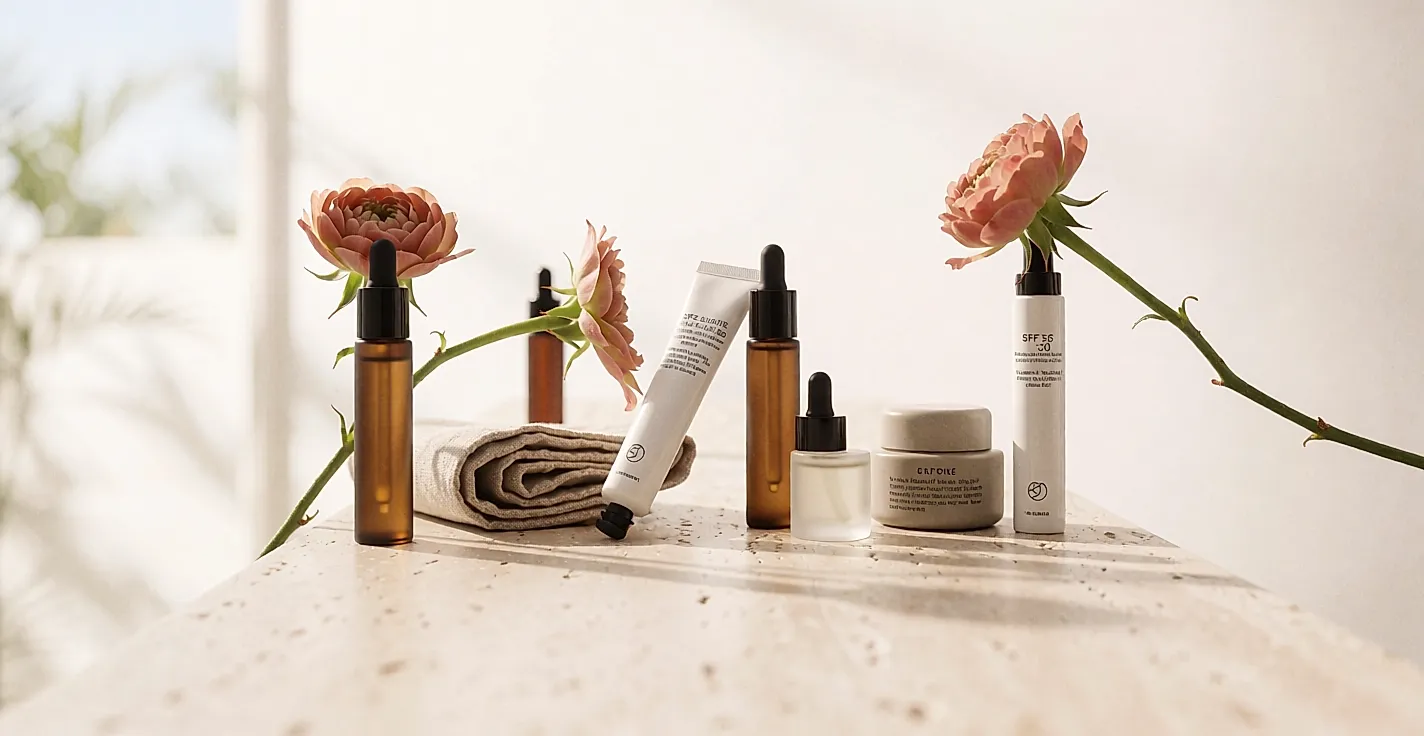
A few weeks ago, a friend sent me a very close-up photo of her forehead. The caption was one line: what is this line here? She is 33, has normal skin, and honestly there is nothing obvious to see. But you know how it goes: a fine line takes hold and you are off looking for the cream that will erase the lot. Spoiler: it does not exist.
What does exist is a method. Understand what is going on under your skin, choose two or three textures that genuinely suit your age, and stop lining up twelve bottles on the bathroom shelf. Let’s go back to the beginning.
What ages skin (and what is out of your hands)
Skin ageing has two drivers. The first is intrinsic: over the years, fibroblasts make less collagen and elastin. Skin gets thinner, looser, and its texture becomes less even. On that front, you do not have much say.
The second is extrinsic, and here you have real leverage. The sun is far and away the biggest factor: cumulative UV exposure is a major contributor to visible facial signs — deep wrinkles, pigment spots, uneven texture. Smoking and alcohol can also affect how skin ages, while pollution and lack of sleep can dull radiance and evenness of tone.
And no, there is no universal age for your first line. Phototype, genetics and lifestyle all count: some skin starts to show lines from 25, while other skin holds out until 40. Compare like with like.

Before 30: three steps, no more
At 25-30, a five-step ritual is pointless. Three steps are enough, and they are the ones doing the deeper work.
A cleanser that does not strip your skin. A gentle gel if your skin is shiny, an emulsifying oil if it feels tight. In the morning, lukewarm water can be plenty.
An antioxidant in the morning. Vitamin C — ascorbic acid or stabilised derivatives — is a common antioxidant choice for limiting oxidative stress. Choose an opaque bottle: the molecule oxidises quickly in light.
SPF 50 every day. Face, neck, backs of hands if you drive. Yes, in January; yes, under cloud. It is one of the best-documented prevention steps, full stop.
30-40: two ingredients to watch closely
Your skin dries out faster and cell turnover slows. Two ingredient families are worth your attention.
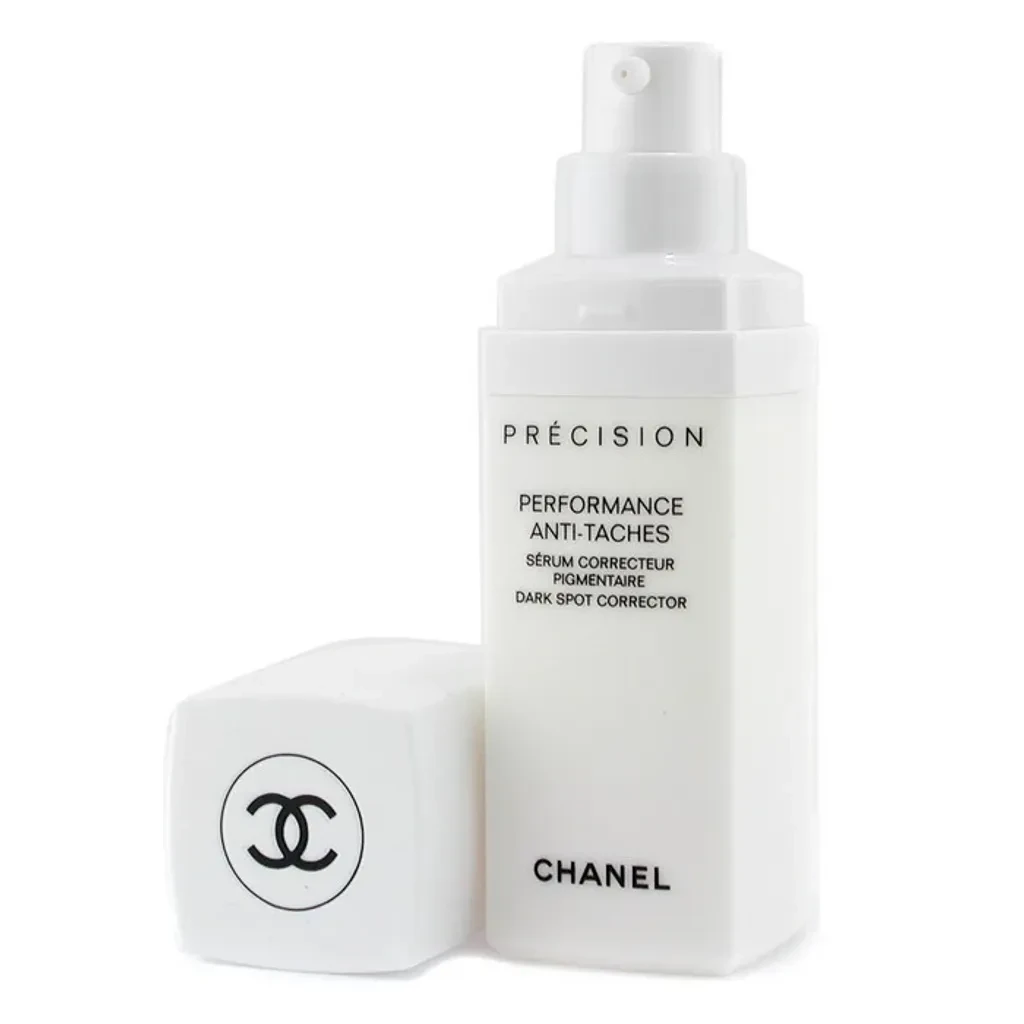
Topical retinoids — retinol, retinal — are among the best-studied classes for smoothing fine lines and refining texture. How to use them: in practice, many people start at a low concentration with one application a week, then build up gradually as their skin tolerates it. Tightness or mild flaking at the start is common. If it stings, you have gone too fast.
If your skin cannot tolerate retinoids, bakuchiol is an alternative that is often better tolerated. The data are more recent and less numerous: a serious lead, not an equivalent.
For hydration, hyaluronic acid and peptides work mainly on the surface. As for formulation, a serum sinks in faster than a rich cream: see what your skin wants at night.
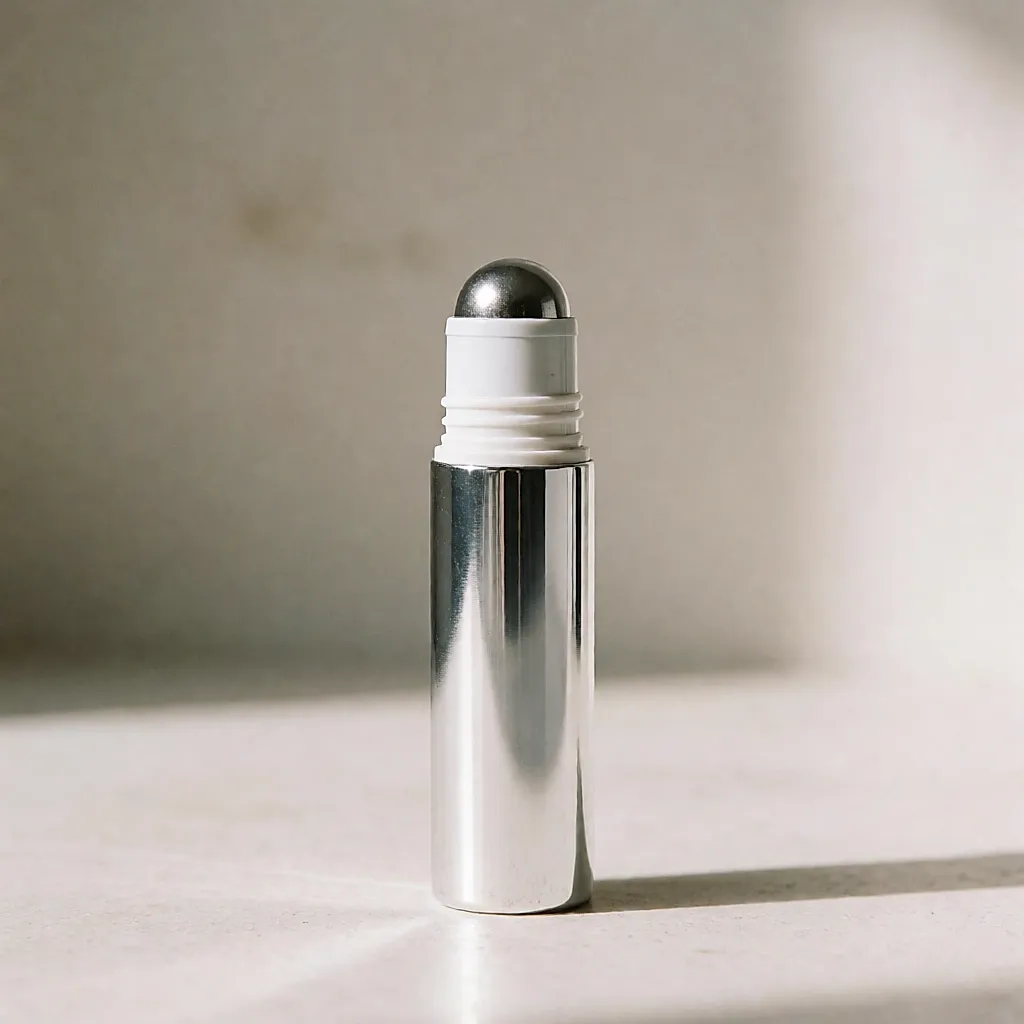
After 40: anti-pigmentation care comes into play
As oestrogen levels fall, skin thinning and dryness speed up. Pigment spots are mainly linked to age and cumulative UV exposure; they become more likely with the years. This is also the moment to add a depigmenting active to your night cream.
Hydroquinone and tretinoin are among the options used for pigmentation; in the UK, they may require a prescription. In cosmetics, you will find niacinamide, tranexamic acid, vitamin C and other brightening ingredients. And one non-negotiable: without daily SPF, an anti-pigmentation serum is unlikely to deliver much. Sun exposure can restart melanin production.
Layering: the tempting mistake
Stacking an AHA serum, retinol, vitamin C and a rich cream on the same evening is unlikely to get you there faster. It can sting, it can redden, and you risk stopping everything after a few days. One new product at a time, give your skin time to settle before adding the next, and patch-test on the inner elbow first.
On the label: the criteria that matter
Many products people cited a few years ago have been reformulated or discontinued since. Rather than chasing a discontinued bottle, aim for criteria.
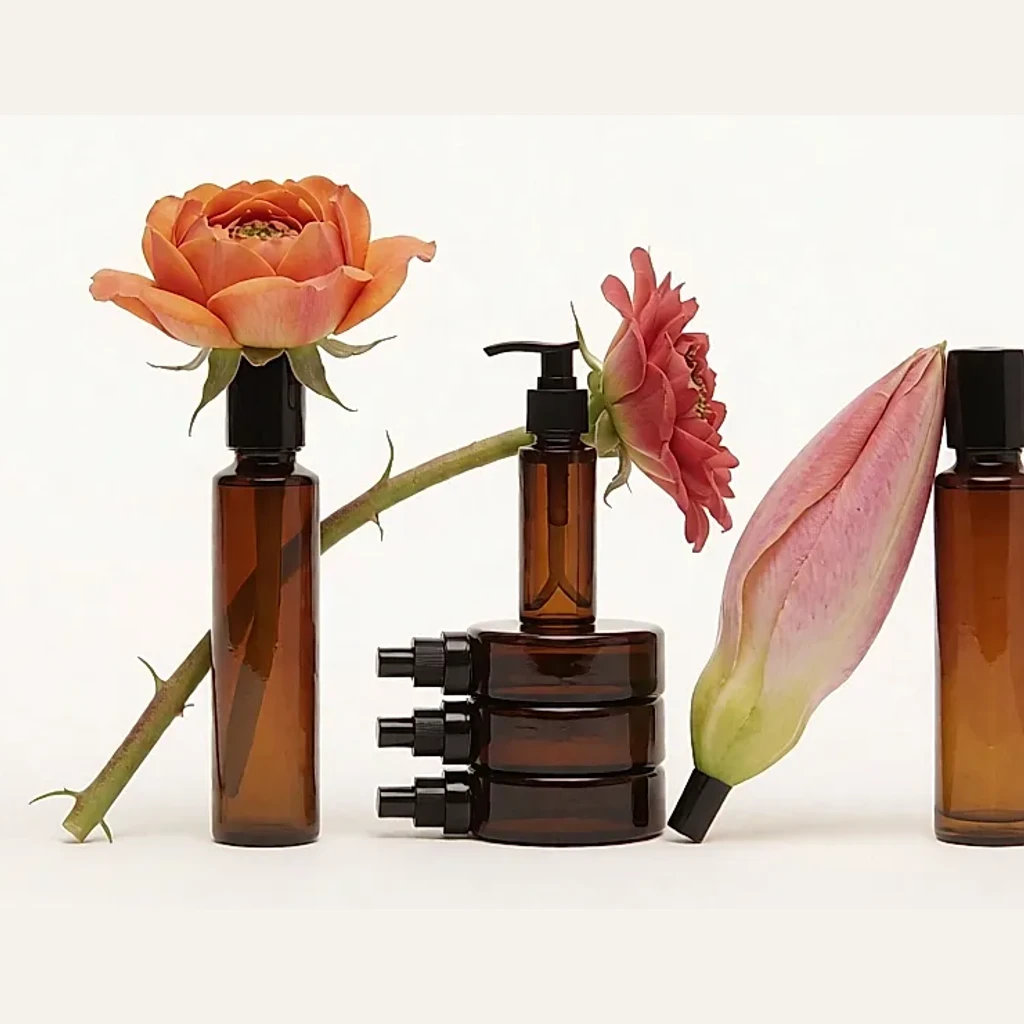
Composition first. One identifiable main active, a short list, no fragrance if your skin is reactive. Brands that show the percentage of active and the pH are easier to assess.
Labels next. Cosmos Organic, Cosmos Natural and Cosmébio are organic and natural cosmetics labels, but the detail of what each one covers lives in its own rulebook. Check the exact specification and the product's certificate on the certifier's site rather than assuming the logo covers everything. A label says what it guarantees — not that the product will suit you.
What happens to the packaging matters just as much. Refills, glass, card, refillable airless pumps: this is often where the real environmental difference lies. Some brands offer glass and refill options, and some ranges carry an organic or natural certification; check the current product page and the certifier's directory before relying on it. I have not checked every reference one by one: these are leads to check case by case, because certifications change. Availability in the UK varies, so check before you build a routine around a particular brand.
Budget
In the UK, as a rough guide:
- basic moisturiser or anti-ageing cream (supermarket, pharmacy): £10–£30;
- anti-ageing cream from a department store or dermatological brand: £30–£90;
- retinol or vitamin C serum: £20–£80;
- certified organic Cosmos skincare: £15–£45;
- SPF 50+ face sunscreen: £10–£30;
- anti-pigmentation treatment or roll-on: £15–£50;
- dermatologist consultation: in the UK, NHS care is free at the point of use for eligible patients, but you need a GP referral and waiting times apply; private consultation is chargeable and prices vary by clinic.
What moves the price: the concentration of active ingredients, the formulation (a serum costs more to formulate than a cream), the cost of organic certification, packaging and the retail channel. A higher price does not guarantee proportionally greater effectiveness. You are also paying for the brand and the bottle.
Where to buy: a pharmacy or chemist for dermatological formulas, a beauty retailer or department store for more sensorial textures, a supermarket or health-food shop for price per volume, and the brand’s own site for refills. Marketplaces sometimes undercut prices, but watch out for unsealed bottles and counterfeits.

Comments
Your opinion matters: rate the article, react and reply to comments.
Comments are moderated; AI-assisted comments are flagged. Text emoticons (8-), :-), <3…) are automatically shown as images.