

What's actually inside the OcéAnge caviar and spirulina anti-ageing cream
You've walked past it at a beauty counter, or scrolled past it online, and raised an eyebrow. A three-figure pot, a label that murmurs "caviar", the word "spirulina" dusted over the top, and an anti-ageing promise to go with it. OcéAnge or not, the range can no longer be checked in any detail — its exact references have been lost — but the formula leans on two very real actives, which can be examined level-headedly. And that is more interesting than the packaging.
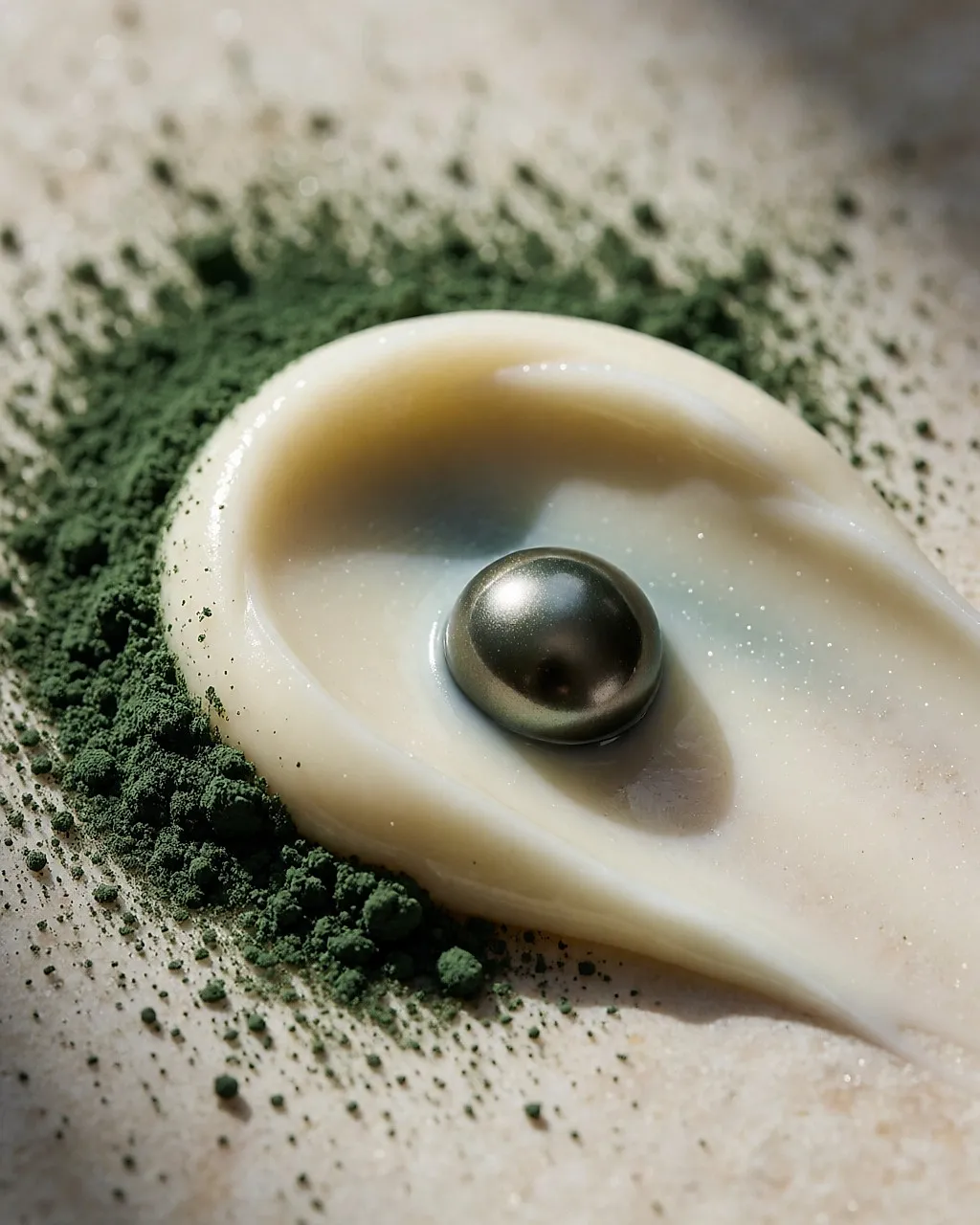
Caviar and spirulina, two actives with two different jobs
Caviar extract first. It turns up in skincare for its hydrolysed proteins and lipids. Its value is essentially cosmetic: it moisturises, helps skin hold on to water and delivers that rich, almost satin texture that is such a pleasure at night. It is a good emollient — a word worth keeping because it says exactly what it does. But don't ask for more: it is neither a synthetic active nor a treatment, and its place at the bottom of the INCI list, after the preservatives, usually says a lot about the real concentration.
Spirulina, for its part, is a cyanobacteria rich in proteins, minerals and pigments. An important nuance, and one worth repeating: most of the published science concerns spirulina that is eaten, not the topical kind. In a cream, the evidence stays thin. That doesn't cancel it out — but it does put the promises back in their place. A good moisturiser, yes; a documented anti-ageing boost, no.
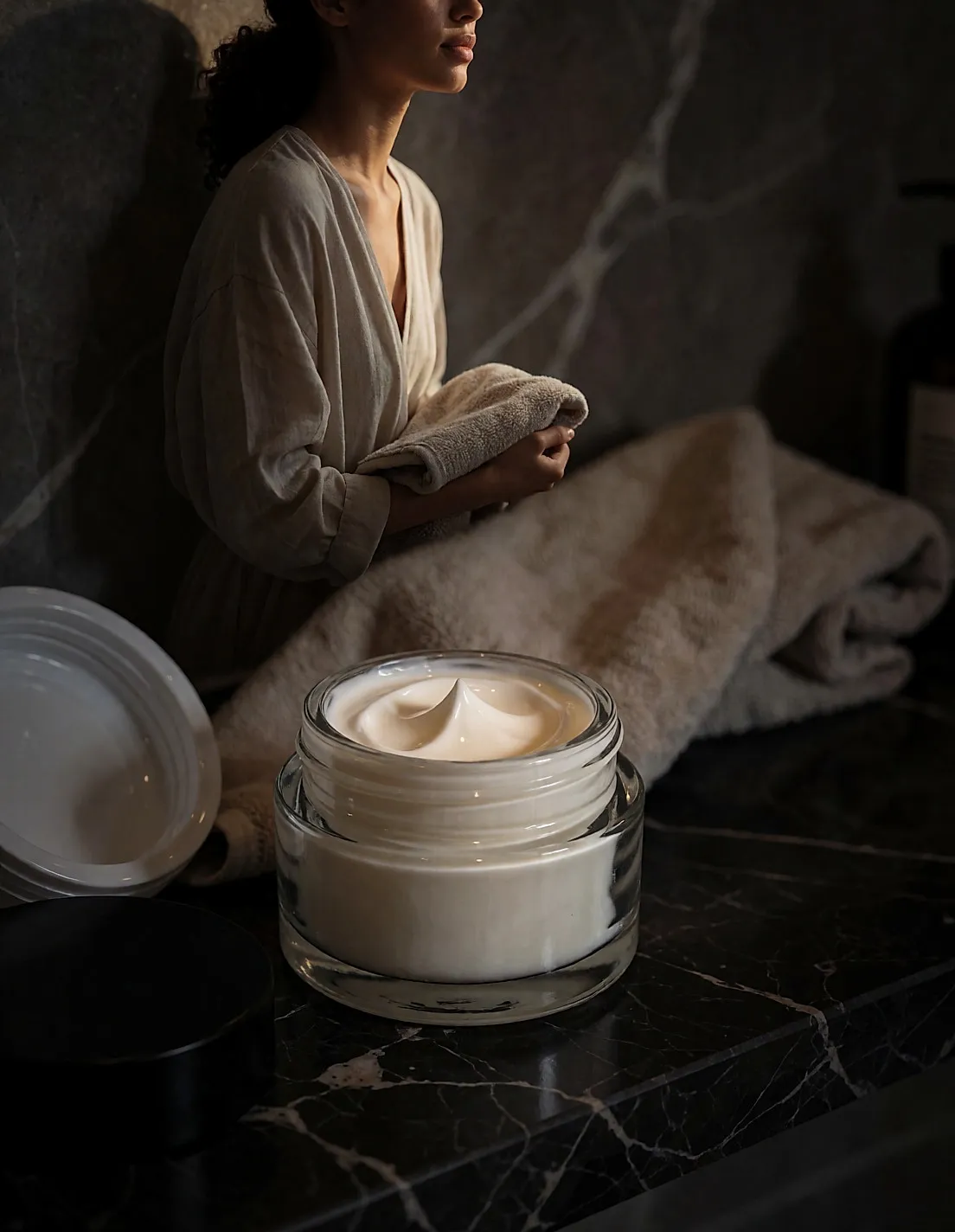
The routine matters more than the jar
Strip it back and the real difference between a day cream and a night cream is nothing spectacular: it comes down to texture and occlusion. In the morning you want something light that slips under sunscreen without making foundation pill. At night, something richer, applied to clean skin and massaged from the centre of the face outwards to wake up the microcirculation. And the thing that changes the result isn't the amount you use — it is consistency: a pea-sized amount morning and night, every day.

Two things to watch, then. A glass jar doesn't refill itself: before you commit, check that a refill really exists, and not only in the brand's copy. And be wary of "anti-ageing" claims: cosmetics claims are regulated in Europe under Regulation (EC) No 1223/2009, whose rules the UK adopted, and fuzzy wording such as "redensifying" or "plumping" has to be substantiated like any other cosmetics claim — even when its meaning stays vague, it still commits the manufacturer.
Tested or just documented? Plenty of brands namecheck spirulina or caviar in their formulas. Published clinical data on either active applied to the skin, though, remains scarce. So treat this kind of product as a good moisturiser — not as a treatment. No cream replaces a dermatologist's advice.
Three questions before you buy
Can you read the INCI list? If spirulina or caviar extract appears at the very end, the concentration is probably symbolic. Is the pot refillable? It is the easiest eco move there is: keep the glass container, buy only the refill. And does the brand publish the percentage of naturally derived ingredients? If so, that is a good sign. If not, at least you know where you stand.
Budget
On price, the gaps between one pot and another don't always reflect how much active you are getting. As a rough guide, expect £18 to £40 for a 50ml pot in a pharmacy or from organic-leaning brands, £25 to £60 in dermo-cosmetic lines sold online, and £90 and over for luxury caviar ranges. What shifts the number: the packaging (refillable glass or single-use plastic), where it is made, a label such as COSMOS ORGANIC — which guarantees a minimum level of organic ingredients and a set list of permitted ones — and the retailer. For a leaner option, look at refill formats in the pharmacy, or waterless solid skincare from some online-only brands.
Sources
- ANSES (the French food safety agency) — opinion on the risks linked to food supplements containing spirulina.
- Regulation (EC) No 1223/2009 of the European Parliament and of the Council on cosmetic products.
- European Commission — CosIng database of cosmetic ingredients.
- DGCCRF (the French consumer affairs and anti-fraud directorate) — rules and claims for cosmetic products.
Food supplements do not replace a varied, balanced diet and a healthy lifestyle.

Comments
Your opinion matters: rate the article, react and reply to comments.
Comments are moderated; AI-assisted comments are flagged. Text emoticons (8-), :-), <3…) are automatically shown as images.