
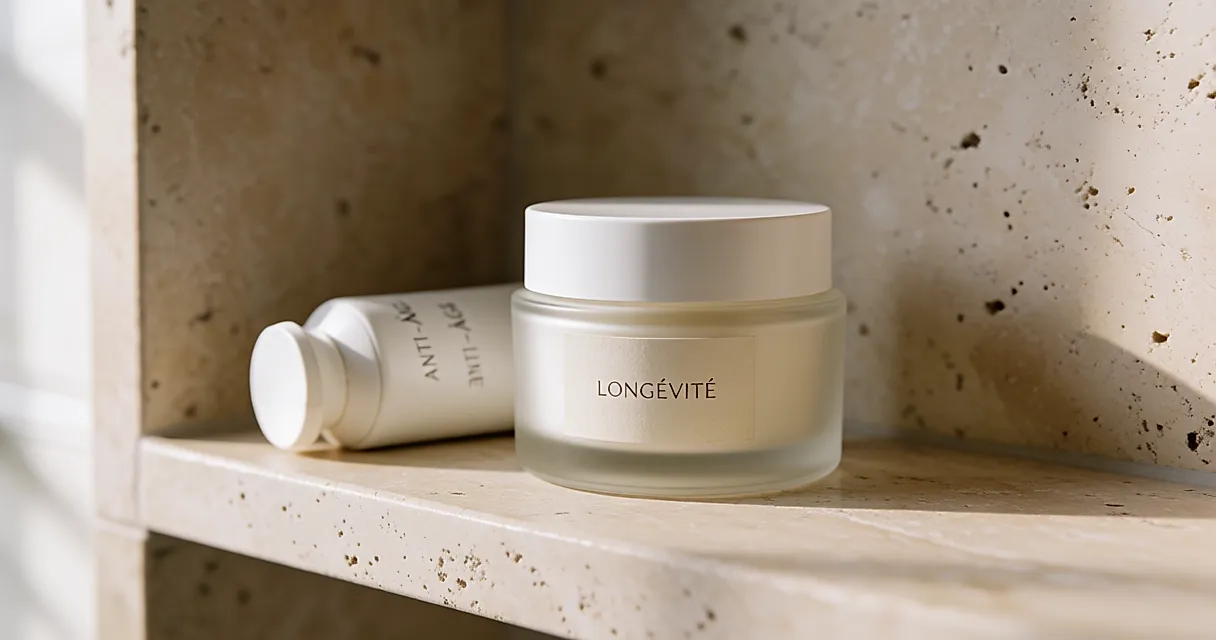
In the bathroom, the jar has changed its vocabulary. Where your night cream once said 'anti-ageing' in sensible lettering, the new bottle talks about longevity, as if we were now meant to project our epidermis into 2060. Since when did skin have a life expectancy?
The word that changed sides
'Anti-ageing' has aged. The term has worn out its last arguments from years of appearing on 30 ml tubes, and now the replacement is arriving from an entirely different world: longevity medicine, those protocols that sell not so much an appearance as an extension of time. There, the talk is of cellular senescence, mitochondrial function, low-grade inflammation – mechanisms measured across cohorts, over years, with biomarkers that researchers themselves are still arguing about.
Vocabulary, though, travels faster than evidence. One pretty bottle is all it takes for 'longevity' to leave the realm of studies and settle into the evening ritual. It isn't absurd: the word is softer than 'anti-wrinkle', broader, and it flatters the idea that we aren't fighting time so much as negotiating with it. The question we should ask every time still stands: longevity of what, exactly?
At Guerlain, three drops and a lot of time
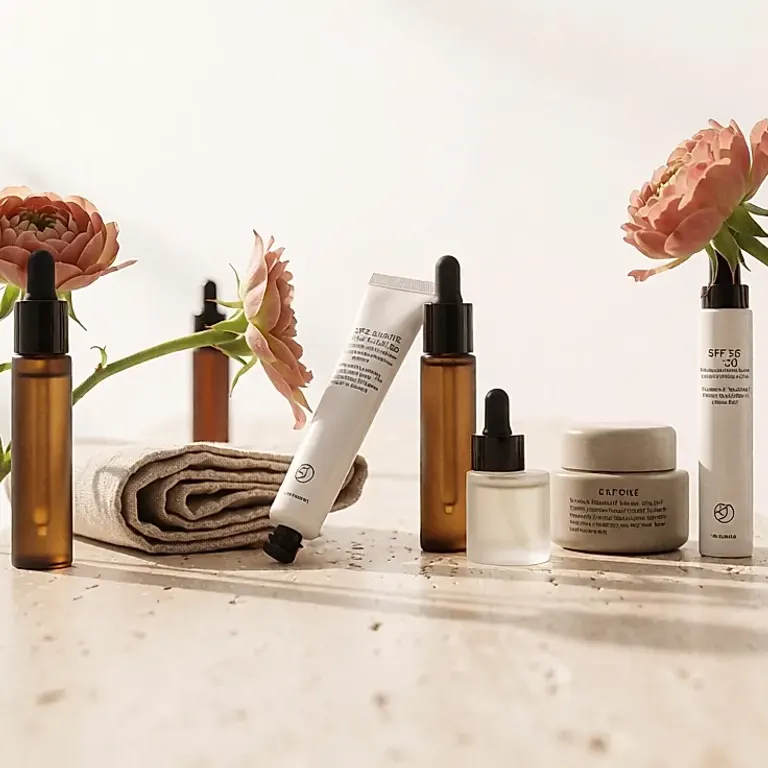
At Guerlain, tradition smells of honey and royal jelly, a story of bees and heavy jars running through the decades. A treatment concentrate from this house makes its case quickly: thick glass, a pipette, an oil texture you warm between your palms before pressing into the face, from the base of the face upwards. The gesture is delicious – and that's already a great deal.
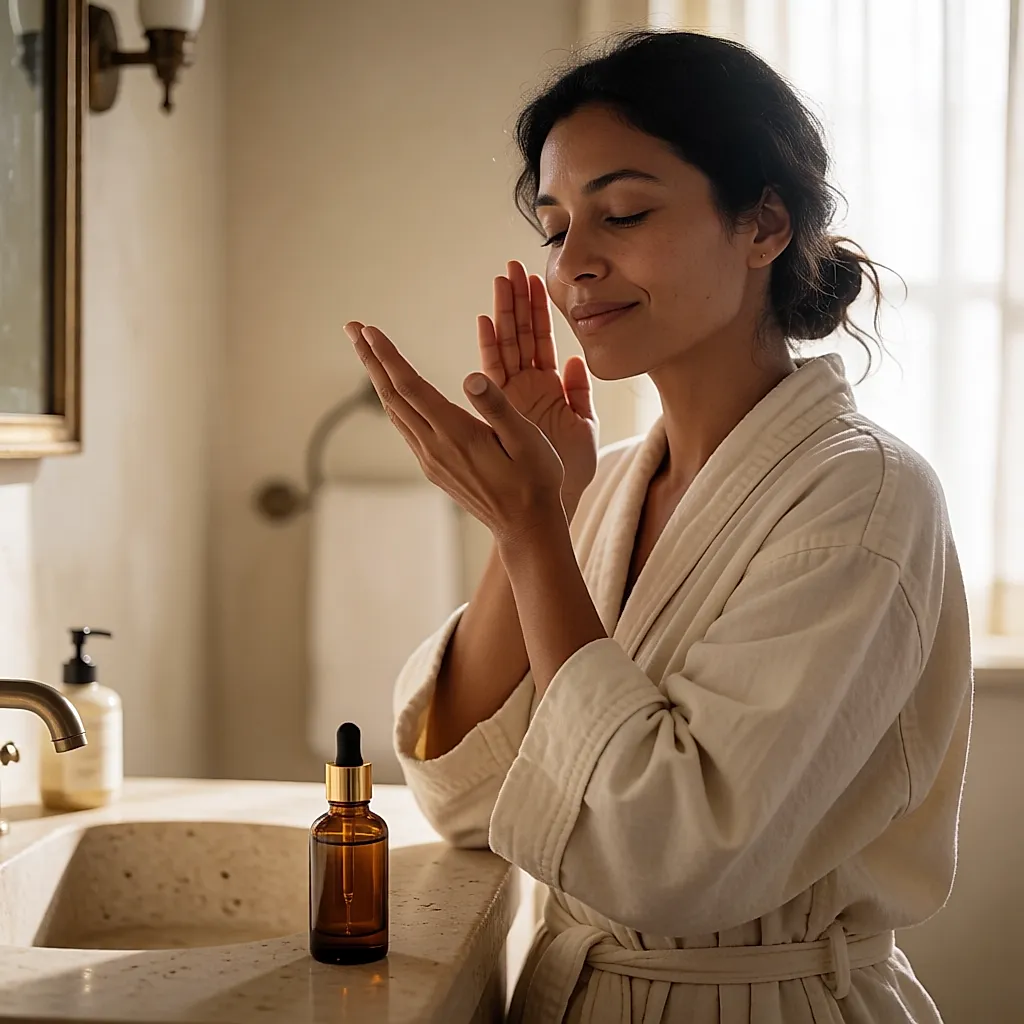
I haven't had this bottle in my hands, so I won't sell you a thrill. What I can say: this kind of treatment is designed to nourish, comfort and smooth the surface of the skin, and that's its job. Longevity, on the other hand, adds no measurement to the label: no declared duration, no numerical criterion, just the notion that by looking after your skin today you might be granting it a few extra years. A lovely line. A bit hollow, too.
In the US, longevity dissolves in a glass of water
Across the Atlantic, the same word gets swallowed. Liposomal sachets sold on subscription, tipped into a finger of water on Monday morning, between gym bag and car keys. You'll meet NAD+ precursors, urolithin A, spermidine there – three names that circulate heavily in ageing research, and just as heavily on the supplement shelves.
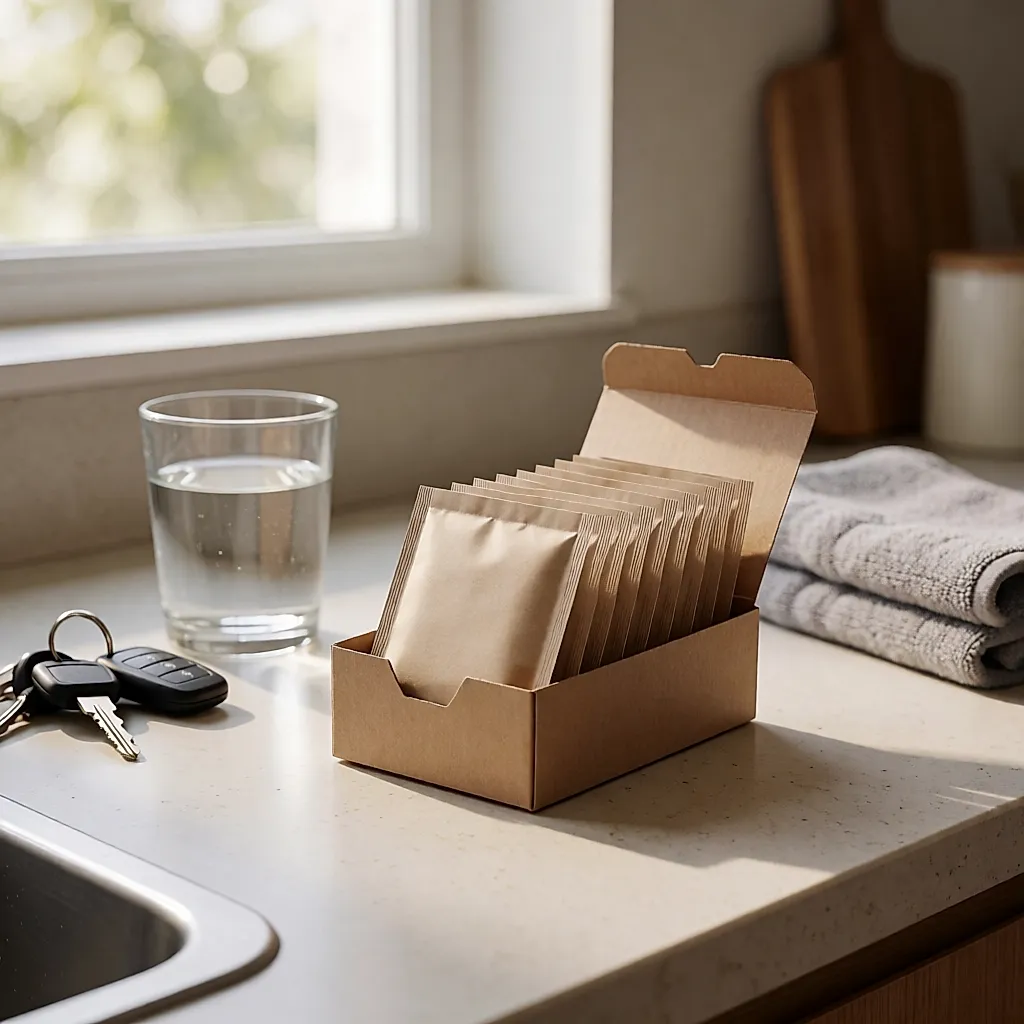
The research exists, it's serious in places, and it is a long way from delivering a verdict. The data available doesn't yet allow firm conclusions, and the much-touted 'biological clocks' meant to calculate your internal age are not, to our knowledge, validated for individual use. In other words: I don't know what these powders do over ten years, and nobody knows for you. What I do know is that subscriptions often renew themselves on their own.
What the word doesn't measure
In cosmetics, to our knowledge, no official definition fixes what 'longevity' covers. The word isn't a criterion, it's a mood. Rather like 'youth' before it, which never guaranteed anything beyond pretty packaging.
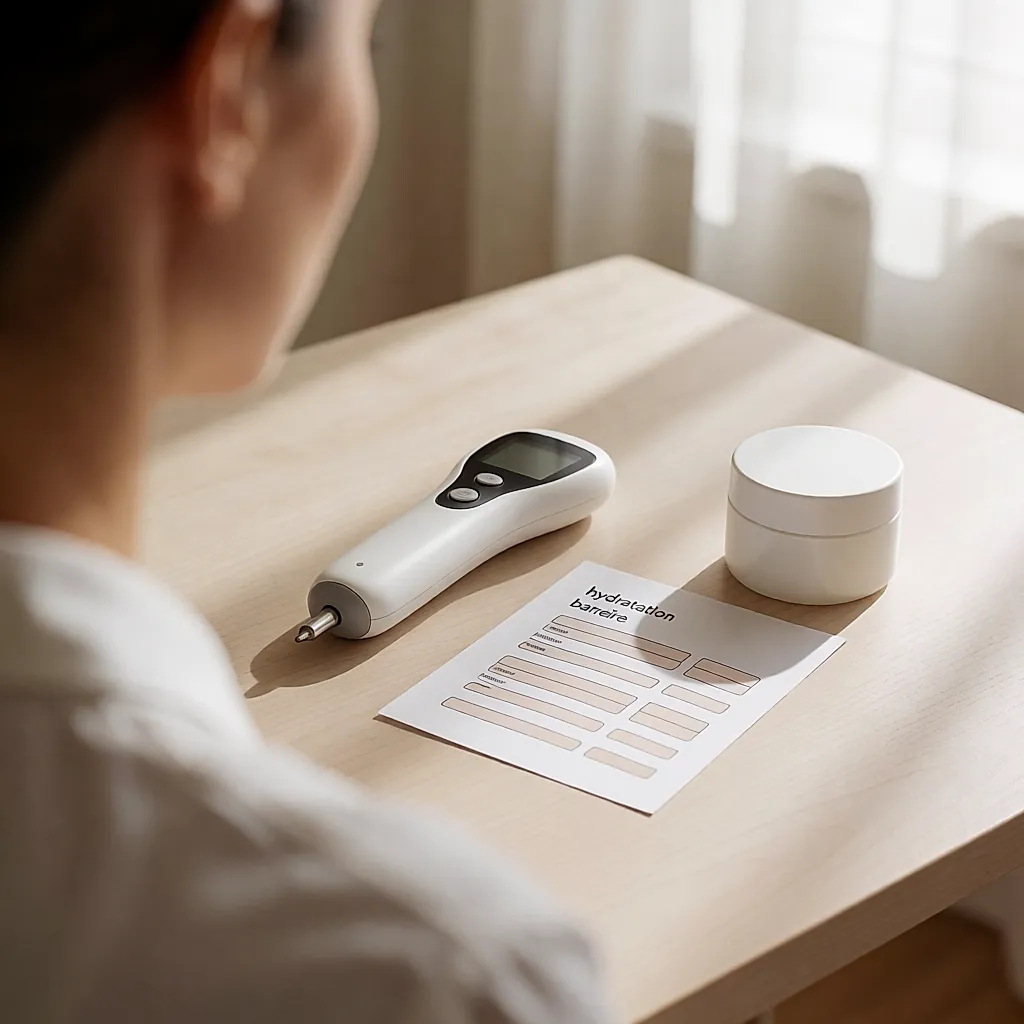
What is commonly measured on skin comes down to a short list: hydration, barrier function, firmness, wrinkles assessed by imaging. Useful, interesting, and unrelated to a 'life expectancy' of the epidermis, which doesn't exist as a quantity. On one side, a category is talking about the time of the skin; on the other, a category is talking about the time of the body. And that blur is precisely what sells.
Budget
Expect to pay somewhere around £80 to £160 for 30 ml of a luxury-house concentrate, depending on the range and where you buy it (department store beauty hall, the brand's own website, airport). On the supplement side, roughly £35 to £80 a month on subscription, often with delivery charges, and no certainty about the results. A properly formulated cream from a chemist or a supermarket costs between about £12 and £35 – and the most cost-effective step is still the simplest: sunscreen in the morning, every morning.
Before you pay for longevity, three questions to put to the bottle: does the brand say what it measures, or only what it promises? Does the word come with an identifiable active ingredient and a legible concentration? And above all, are you already wearing sunscreen every day? If the answer is no, start there: the rest can wait.
In the end, keep the word if the gesture pleases you: three warm drops, two minutes for yourself, skin you respect instead of pressing on. Just don't let a noun decide on your behalf how long your face should last. The only longevity that can be verified is that of an empty jar – and of a habit that holds.
Food supplements should not be used as a substitute for a varied, balanced diet and a healthy lifestyle.
Comments
Your opinion matters: rate the article, react and reply to comments.
Comments are moderated; AI-assisted comments are flagged. Text emoticons (8-), :-), <3…) are automatically shown as images.