

You know the scene by heart, don't you? A vitamin C serum in the morning, a touch of niacinamide, a layer of hyaluronic acid, a rich cream, an eye cream, and... nothing. Nothing that protects. I did it for years too, with the best intentions, as if stacking actives could be enough. Then one day I stopped buying a fourth serum and bought an SPF instead. Honestly, the step that changes everything isn't the most expensive one on the shelf: it's the one everyone forgets.
The sun doesn't take a holiday
Ten minutes walking, a commute on the Tube, eight hours behind an office window. You tell yourself you're sheltered, and that's exactly where it all plays out. UVA rays pass through clouds and glass, and they're there all year round, even in November, even when the sky looks grim. They're the ones responsible for skin ageing: dark spots, fine lines, loss of firmness, skin texture that slackens over the years. UVB rays are responsible for sunburn — more visible, more obvious — but they're not the only culprits. In other words: if you spend your time protecting your skin from daily aggressors with actives and leave it bare in the sun, you're building something the UV undoes. Skin isn't a canvas, it's an organ, and it takes the hit in silence.

How to read a label without being fooled
A bottle that says 'SPF 50' doesn't tell you everything. That number measures protection against UVB. For UVA, look for the small circle with 'UVA' inside: on products sold in the UK and Europe, it indicates UVA protection at least one third of the stated SPF. Without that logo, assume you have no assurance on UVA protection.
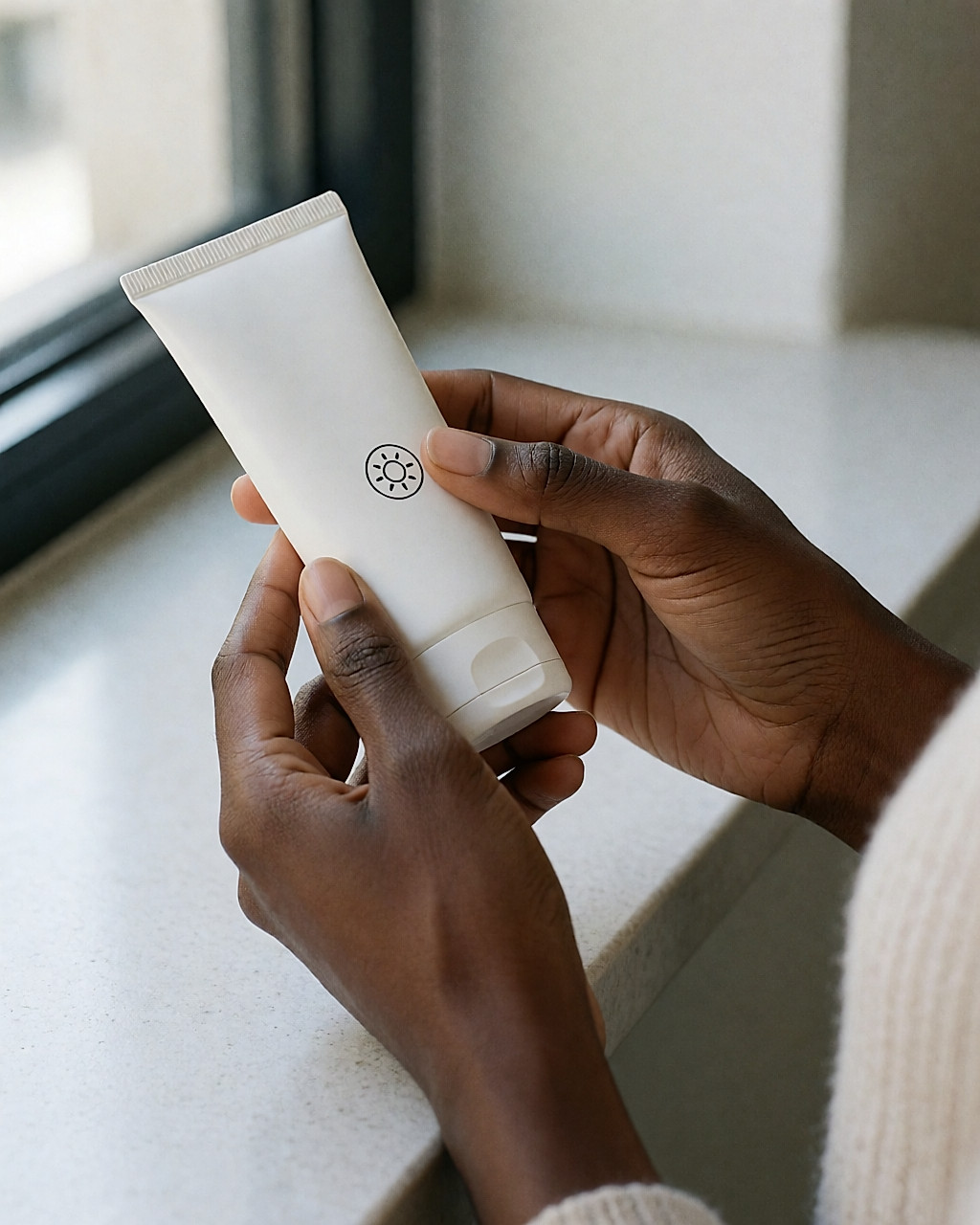
Then there's the number. Most of the work is done from SPF 30 upwards. Going up to 50 gives a little more, but it won't change your day — and above all, an SPF 50 applied at half the dose is worth less than an SPF 30 applied properly. It's the point nobody wants to hear: the dose matters more than the number.
Texture is what keeps you consistent
An SPF you don't apply protects you from nothing. So the real question isn't 'which is best?' but 'which one will I actually be happy to wear every morning without grumbling?' Three pointers to help you work it out.
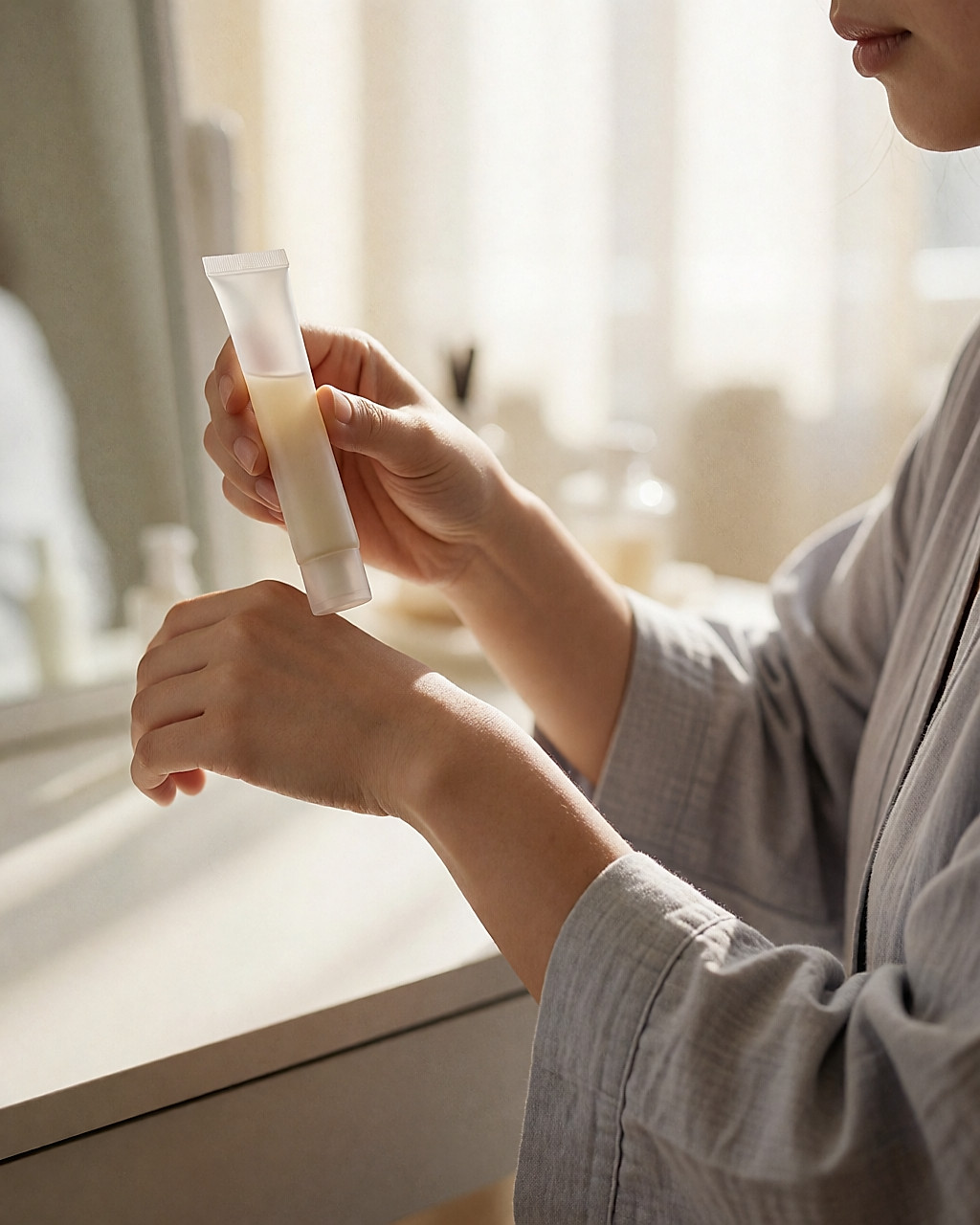
The white cast almost always comes from mineral filters — zinc oxide, titanium dioxide — especially on olive or darker skin. Chemical filters are more transparent, but can sting reactive skin: patch-test on a small area before committing.
Look for words like 'fluid', 'gel-cream', 'invisible' and 'dry touch'. Tinted versions can stand in for foundation in the morning, and that's where you genuinely save time.
The dose: your real weak spot
The rule of thumb dermatologists often share: two fingers of product for face and neck, roughly a teaspoon. Squeeze the tube, spread it along your middle and index fingers, and look at the amount. It's more than most of us apply. A lower SPF applied properly protects better than a high SPF applied at half dose.

Reapplying during the day: the realistic version
- At the office, indoors: one top-up midday is enough.
- Lunch outside: top up before you go out, then every two hours if you stay exposed.
- You're wearing make-up: pat an SPF stick over the high points (forehead, nose, cheekbones), mist over the top, and nothing gets ruined.
- Tester's tip: keep the stick in your bag, not the bathroom. The product you have to hand is the only one you'll reapply.
Budget
On price, the range is surprisingly wide, and it isn't always proportional to protection. In supermarkets and high-street shops, expect around £8–£15 for a standard SPF 30 or 50 fluid — the bottle is often 50 ml, and how long it lasts depends on the dose you apply. In pharmacies or beauty halls, the range rises to around £15–£30 depending on the formula and brand, with more refined textures and better wear under make-up. Beyond that, £30–£50 mostly pays for the packaging, the sensorial texture and the brand name — rarely a real gain in protection.
For natural and eco-conscious formulas, look for a certification that actually means something (Cosmos Organic or Cosmos Natural, Ecocert), glass or recyclable cardboard packaging, European manufacturing when that information is available, and a solid or refillable version if you want to cut plastic. A word of caution: sunscreen is a technical product, and some homemade or very small-batch mineral formulas don't always deliver the necessary filter distribution. If the best compromise for your skin is a very transparent conventional product, that's not a failure — it's a trade-off to own.
You'll find these products in pharmacies and health and beauty retailers (where you can get advice), in beauty halls, supermarkets, health food shops, or online direct from the brand — often with a refill that costs less than the original bottle, so check at the point of purchase.
What I'd do in your shoes
Choose a format you can tolerate, an SPF 50 with the UVA logo, and make it the last step in your routine: after moisturiser, before make-up. Two fingers in the morning. A quick pat at midday.
No need to throw out your serums. Just protect them. It's less glamorous than a gold bottle, but it's the step that makes the others worthwhile.
Sources
- World Health Organization — Ultraviolet radiation, fact sheet.
- NHS — Sun safety and sunscreen advice.
- Cancer Research UK — How to protect yourself from the sun.
- British Association of Dermatologists — Sun protection.
- MHRA — information on sunscreen products and UVA labelling.



Comments
Your opinion matters: rate the article, react and reply to comments.
Comments are moderated; AI-assisted comments are flagged. Text emoticons (8-), :-), <3…) are automatically shown as images.